
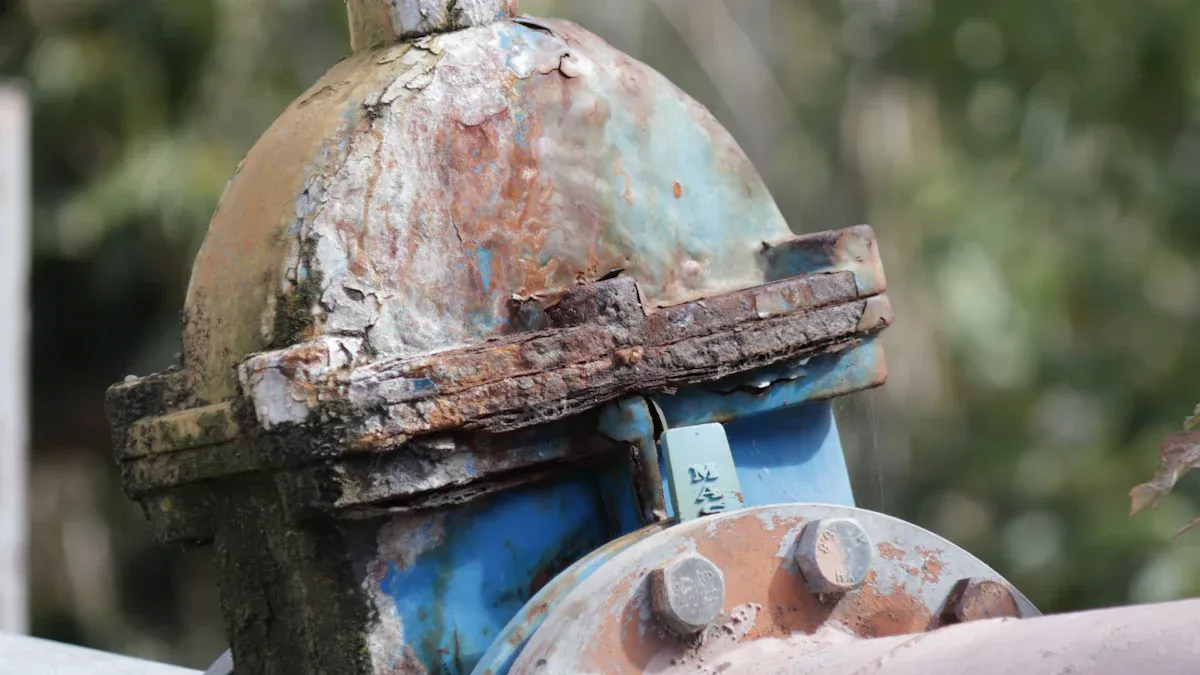
Corroded pipes in your home can put your health at risk. When galvanized water pipes start to break down, the corrosion process lets harmful substances enter your drinking water. You may face health risks like:
- Lead exposure, which can cause brain and nervous system damage, learning problems, and high blood pressure
- Heavy metals such as cadmium, which harm your kidneys and bones
- Bacterial growth that leads to infections
Galvanized steel pipe corrosion makes it important to check your pipes and protect your family from these risks.
Health Risks of Galvanized Steel Pipe Corrosion

Lead Exposure and Lead Pipes
You may think only lead pipes cause lead in water, but galvanized steel pipe corrosion can also release lead into your drinking water. Many older galvanized pipes have a zinc coating that contains lead. Over time, corrosion breaks down this coating and lets lead leach into your water. This process can be even worse if you have copper pipes connected upstream, as the interaction between metals increases lead release.
Lead exposure is especially dangerous for children and pregnant women. Even small amounts can cause learning problems, behavioral issues, and high blood pressure.
The following table shows how galvanized steel pipe corrosion leads to lead in water:
| Evidence Aspect | Description |
|---|---|
| Lead Content in Zinc Coating | Zinc coatings on galvanized steel pipes contain lead, sometimes up to 2%. This lead can leach into drinking water over time. |
| Presence of Cadmium | Cadmium is also present in zinc coatings, serving as a chemical fingerprint linking lead in water to galvanized steel coatings. |
| Laboratory Validation | Tests confirm galvanized steel pipes as a significant long-term source of lead contamination. |
| Field Sampling Results | Studies in several U.S. cities found homes with galvanized steel pipes as primary lead sources, with lead levels sometimes exceeding 100 μg/L. |
| Corrosion Interactions | Corrosion and contact with other pipe materials, like copper, can increase lead release from galvanized steel pipes. |
| Supporting References | Multiple peer-reviewed studies and standards confirm the link between corroded galvanized steel pipes and elevated lead in drinking water. |
Galvanized pipes, unlike modern plumbing materials such as PEX or copper with lead-free joints, pose greater health risks because they can release both lead and cadmium. If your home was built before the 1980s, you are more likely to have these pipes and face higher risks of lead exposure. Lead pipes and galvanized steel pipe corrosion both contribute to water contamination, but galvanized pipes can be a hidden source.
Heavy Metal Contamination
Heavy metal contamination is another serious concern with galvanized steel pipe corrosion. Besides lead, these pipes can release other heavy metals like cadmium and copper into your drinking water. Cadmium enters water through impurities in the zinc coating. Copper can come from fittings or from water that is not properly treated.
- Cadmium and lead are the main contaminants found in water from corroded galvanized pipes.
- Copper, arsenic, and mercury may also appear, but less often.
- Iron and manganese can leach from corroded pipes, causing discoloration and a metallic taste, but they are less harmful to health.
Water samples from some areas have shown lead levels as high as 720 μg/L, far above the World Health Organization’s safe limit. Cadmium has also been detected above safe levels in certain locations. The amount of heavy metals released depends on pipe age, water quality, and how long water sits in the pipes. These contaminants can cause kidney damage, bone problems, and developmental delays in children.
Bacterial and Chemical Hazards
Corroded galvanized pipes do not just release metals. They also create an environment where bacteria growth can thrive. The rough, rusty surfaces inside old pipes allow bacteria to stick and form biofilms. Some of the most common bacteria found in these systems include:
- Sulphate reducing bacteria
- Iron oxidizing and reducing bacteria
- Sulphur oxidizing bacteria
- Acid producing bacteria
Other bacteria, such as Pseudomonas species and Legionella, can also grow in corroded pipes. Legionella is especially dangerous because it can cause severe lung infections if you inhale water droplets containing the bacteria.
Corrosion also produces chemical byproducts that affect water quality. These include iron oxides (rust), zinc, lead, and cadmium. You might notice your water looks rusty, tastes bitter, or leaves stains on sinks and tubs. High levels of these byproducts can foul valves and reduce water flow. Water treatment plants often adjust water chemistry to reduce corrosion and metal leaching, but private wells may not have this protection.
If you see changes in your water’s color, taste, or flow, you could be facing risks from both contaminants and bacteria. Testing your water is the best way to know if you have potential health risks from galvanized steel pipe corrosion.
How Galvanized Water Pipes Corrode
Causes of Galvanized Steel Pipe Corrosion
You may wonder why galvanized steel pipe corrosion happens in your home. The main reason is the breakdown of the zinc coating inside the pipes. This coating protects the steel from rust and corrosion. Over time, water in drinking water distribution systems acts as an electrolyte. When water flows through the pipes, it triggers a chemical reaction called galvanic corrosion. Zinc, being more reactive, corrodes first to shield the steel. Once the zinc layer wears away, the steel underneath starts to rust.
Several factors speed up this process in drinking water distribution systems:
- Acidic water with low pH eats away at the zinc coating.
- Hard water with minerals can cause scale and speed up corrosion.
- Connecting galvanized pipe to copper pipes increases electrolysis, which damages the zinc layer.
- High levels of dissolved oxygen and chemicals in water boost corrosion rates.
- Environmental factors like moisture and certain fertilizers also break down the zinc coating.
You might notice rust and corrosion at weld joints or where pipes connect to other metals. As the zinc disappears, the steel becomes exposed and weakens. This process affects the safety of your drinking water distribution systems.
How Corrosion Leads to Water Contamination
Corrosion in distribution systems does more than damage pipes. It causes the leaching of contaminants into your drinking water. As the zinc coating breaks down, metals like iron and zinc enter the water. The zinc layer often contains impurities such as lead and cadmium. When corrosion happens, these contaminants leach into the water you use every day.
- The leaching of contaminants increases when water sits in pipes for a long time.
- Acidic or chemically treated water speeds up the release of metals.
- Lead content in some galvanized pipes can reach up to 10%, making the risk even higher.
You may notice changes in your drinking water distribution systems, such as a metallic taste, discoloration, or even a drop in water pressure. These signs point to water contamination from rust and corrosion. The leaching of contaminants like lead and cadmium poses serious health risks, especially for children. Managing corrosion and checking your drinking water distribution systems helps protect your family from these hidden dangers.
Tip: If you see rusty water or taste metal in your drinking water, consider testing your water and inspecting your pipes for corrosion.
Health Effects Linked to Lead Exposure and Corroded Pipes
Lead Poisoning Symptoms
When you drink water from corroded lead pipes or galvanized pipes, you face serious lead-related health hazards. Lead exposure can cause many symptoms, especially in children. You may notice irritability, weight loss, stomach pain, or fatigue. Children often show learning problems, lowered IQ, and behavioral changes. Adults may experience headaches, high blood pressure, joint pain, or trouble sleeping. Sometimes, you might not see any symptoms at first, but the effects can still harm your body over time. The Flint, Michigan water crisis showed how lead in drinking water can raise blood lead levels and increase health concerns for both children and adults.
Even low levels of lead exposure can cause lasting effects, especially for young children and pregnant women.
Common symptoms in children:
- Irritability
- Abdominal pain
- Fatigue
- Vomiting
- Seizures
- Hearing loss
Adults may notice:
- High blood pressure
- Muscle and joint pain
- Memory problems
- Reproductive issues
Bacterial Infections and Illnesses
Corroded galvanized pipes do more than release metals. They also create a perfect place for bacteria to grow. When you see rust in your water, you should worry about bacterial contamination. Bacteria like Legionella pneumophila thrive in these pipes. This bacteria can cause Legionnaires’ disease, a severe type of pneumonia, and Pontiac fever, a milder illness. People with weak immune systems face higher risks from these infections.
| Bacterial Species | Disease Caused | Risk Factors |
|---|---|---|
| Legionella pneumophila | Legionnaires’ disease, Pontiac fever | Corroded pipes, low water flow, water stagnation |
Rough pipe surfaces and lime scale protect bacteria from disinfectants. This makes it harder to keep your drinking water safe. You should pay attention to any changes in water quality, as these can signal increased health risks.
Long-Term Health Risks
Long-term exposure to heavy metals from corroded pipes can cause serious effects. Drinking water with lead, cadmium, or arsenic can damage your organs. Over time, you may develop kidney problems, heart disease, or even cancer. Children exposed to lead pipes may have delayed development, hearing loss, and speech difficulties. Adults can suffer from reproductive harm, blood disorders, and nervous system damage.
Chronic exposure to mixtures of heavy metals increases health concerns. You may not notice symptoms right away, but the effects build up. Lead is a probable human carcinogen and can cause neurological disorders. Arsenic and other metals from corroded pipes also raise your risk for cancer and nerve problems. Some chemicals released from corrosion, like PFAS, can change bacterial communities and increase disease risks.
Drinking water from old lead pipes or corroded galvanized pipes puts your long-term health at risk. Protect yourself by staying alert to changes in your water and taking action if you suspect contamination.
Identifying Corroded Galvanized Water Pipes
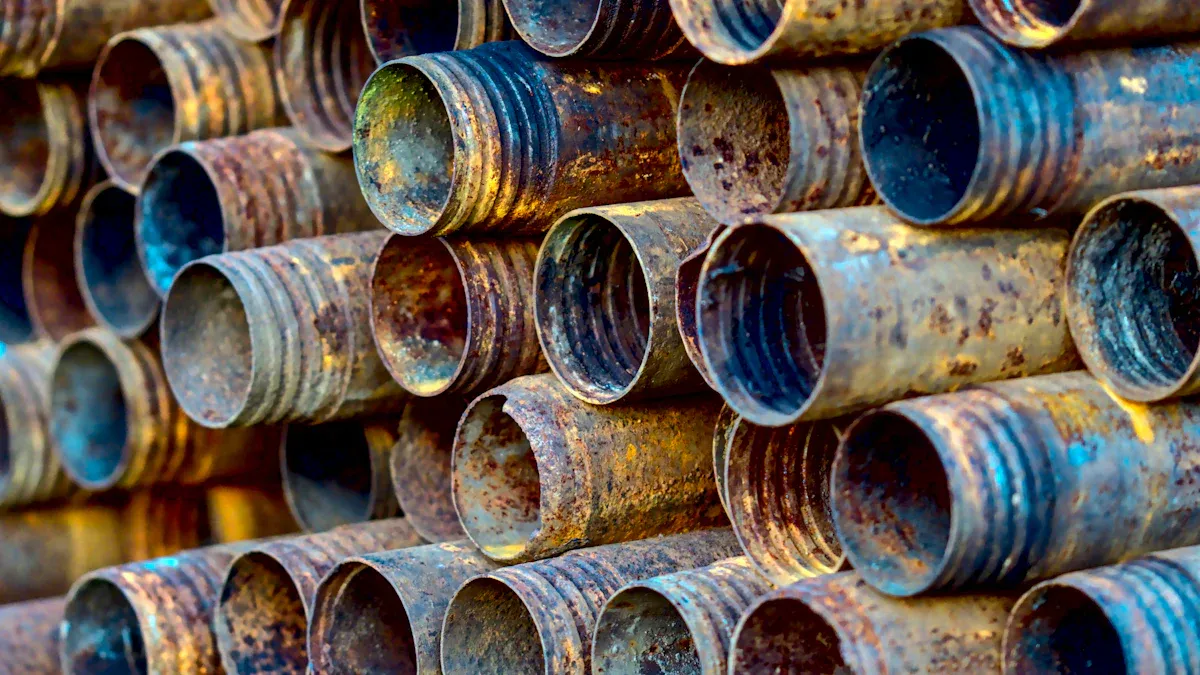
Visible Signs of Corrosion
You can spot many signs of corroded galvanized pipes by looking at exposed plumbing in your home. Watch for these common indicators:
- Rust or corrosion on pipes, especially in damp places like basements or under sinks.
- Rust-colored or brown water coming from your faucets.
- White mineral buildup or flaking metal on pipe surfaces.
- Water leaks that cause peeling paint, bubbling drywall, or damp spots on walls and ceilings.
- Noisy pipes that bang, clank, or whistle, which may mean corrosion has narrowed the water flow.
These signs show that the zinc coating has worn away. When this happens, steel inside the pipe gets exposed to water and air, which speeds up rust and pipe damage. Regular monitoring of these areas helps you catch problems early.
Water Quality Changes
Changes in your water can also signal pipe corrosion. You might notice:
- Discolored water that looks brown, yellow, or orange, sometimes with small particles.
- Water that tastes or smells metallic.
- Discoloration that is worse when you first turn on the tap or after water sits in the pipes.
- Black or unusual particles in your water.
These changes do not just affect how your water looks or tastes. They can mean your water is unsafe, especially if lead is present. Flushing your pipes may clear the problem for a short time, but persistent issues point to deeper corrosion. Monitoring water quality helps you protect your health and spot pipe failure before it causes leaks or low pressure.
Tip: If you notice any of these changes, consider testing your water and checking your pipes for damage.
At-Home Testing Methods
You can use at-home water test kits to check for heavy metals and bacteria from corroded galvanized pipes. These kits help you monitor water quality and catch problems early. Here are some popular options:
| Test Kit Name | Heavy Metals Detected | Bacteria Tested | Result Timeframe | Notes on Usage and Accuracy |
|---|---|---|---|---|
| WaterSafe City Water Test Kit | Lead, Copper, Iron, Zinc | Total Coliform Bacteria | Chemicals: minutes; Bacteria: up to 48 hours | Uses color test strips and media vials; suitable for public water; includes instructions for proper sampling |
| SafeHome City Water Test Kit | Lead, Copper, Iron, Zinc | Total Coliform Bacteria | Chemicals: minutes; Bacteria: up to 48 hours | Over 6 million tests sold; tests 12 contaminants; designed for city water |
| TestAssured Complete Water Kit | Lead, Copper, Iron | Total Coliform Bacteria | Chemicals: ~10 minutes; Bacteria: 48 hours | Professional-grade; supports both public and private water systems |
| Health Metric Drinking Water Kit | Lead, Copper | Total Coliform Bacteria | Chemicals: ~10 minutes; Bacteria: 48 hours | EPA standard design; easy to use for public and private water |
For best results, follow the instructions closely. Flush your water lines before sampling and keep everything clean. Bacteria tests may take up to 48 hours. If you want more detailed results, you can send samples to a laboratory. Regular monitoring with these kits helps you keep your water safe and your pipes in good condition.
What to Do About Corroded Galvanized Pipes
Water Testing and Professional Inspection
You should always start with water testing if you suspect problems with your pipes. Home water test kits can help you check for lead, heavy metals, and bacteria. These tests give you a quick idea of your water quality. However, professional inspection offers a deeper look at your plumbing system.
Plumbers and inspectors use several methods to find corrosion and damage in galvanized pipes:
- Visual inspection to spot rust, peeling, or surface defects.
- Measurement of the galvanized layer thickness with special meters.
- Checking for uneven zinc coating or peeling areas.
- Inspecting surface roughness to see if it meets drinking water standards.
- Looking for scratches, cracks, or other damage.
- Examining welds for defects or cracks.
- Analyzing the chemical makeup of the pipe to check for lead-containing fixtures.
- Testing the pipe’s strength and flexibility.
- Measuring the pipe’s diameter, wall thickness, and length.
- Running leak or puncture tests to make sure the pipe is tight.
These steps help you find hidden problems that could affect your drinking water. You should schedule a professional inspection if your home has old pipes or if you notice changes in water color, taste, or pressure.
Tip: Regular inspections help you catch corrosion early and keep your water safe.
Short-Term Safety Steps
If you find signs of corrosion or contamination, you can take steps to protect your health while planning for repairs or replacement. Here are some actions you can take right away:
Use Point-of-Use Water Filters:
Install certified filters at your kitchen tap or where you get most of your drinking water. Studies show these filters can lower lead from over 1,000 μg/L to less than 0.5 μg/L. They also reduce other metals like copper, iron, and zinc. Choose filters with activated carbon or reverse osmosis technology. Make sure the filter is certified for lead reduction and meets drinking water standards.Flush Your Pipes:
Run cold water for several minutes before using it for drinking or cooking. This helps clear out water that has been sitting in the pipes and may contain higher levels of metals.Avoid Hot Tap Water for Drinking:
Hot water dissolves metals more easily. Always use cold water for drinking and cooking, then heat it if needed.Check for Lead-Containing Fixtures:
Replace old faucets or valves that may add lead to your water.Maintain Your Filters:
Change filter cartridges as recommended. Dirty filters lose their ability to trap metals and bacteria.Consider Whole-House Solutions:
If your water is acidic, an acid neutralizer system can help prevent corrosion and lower lead levels.
Note: Filtration helps reduce exposure, but it does not fix the root cause. You should still plan for a permanent solution.
Pipe Replacement Solutions
Replacing corroded galvanized pipes is the best way to protect your health and meet drinking water standards. You have several options for new pipe materials and replacement methods. Each choice has its own benefits and drawbacks.
| Replacement Materials | Advantages | Disadvantages | Best Applications | Expected Lifespan |
|---|---|---|---|---|
| Bakır | Excellent corrosion resistance, biostatic properties | Higher cost, requires soldering skills | Residential potable water, high-temp uses | 50+ years |
| PEX | Flexible, no joints in continuous runs, freeze resistant | UV sensitive, cannot connect directly to galvanized | Residential distribution, under-slab | 40+ years |
| CPVC | Chemical resistance, simple installation, lightweight | Brittle at low temps, larger diameter than metal | Industrial, hot water lines | 30-50 years |
| Paslanmaz çelik | Superior corrosion resistance, strength, temperature resistance | High cost, specialized installation | Critical industrial, high-value applications | 70+ years |
| Polypropylene (PP-R) | Chemical resistance, heat fusion joints, no corrosion | Specialized tools, limited fittings | Industrial process piping, hydronic systems | 50+ years |
You can choose from several replacement methods:
- Traditional Replacement: Remove old pipes and install new ones in the same place. This works best for exposed pipes but can be disruptive.
- Parallel Replacement: Install new pipes alongside old ones, then connect the endpoints. This method causes less interruption.
- Pull-Through Method: Use the old pipe as a guide to pull new flexible pipe through. This method works well for straight runs and minimizes wall damage.
- Pipe Bursting: Break the old pipe while pulling in a new one. This method is good for underground or slab-embedded pipes.
Other best practices include checking your water chemistry, upgrading fixtures, and making sure your system meets local codes. If your plumbing system is over 50 years old or has widespread corrosion, full replacement is the safest choice.
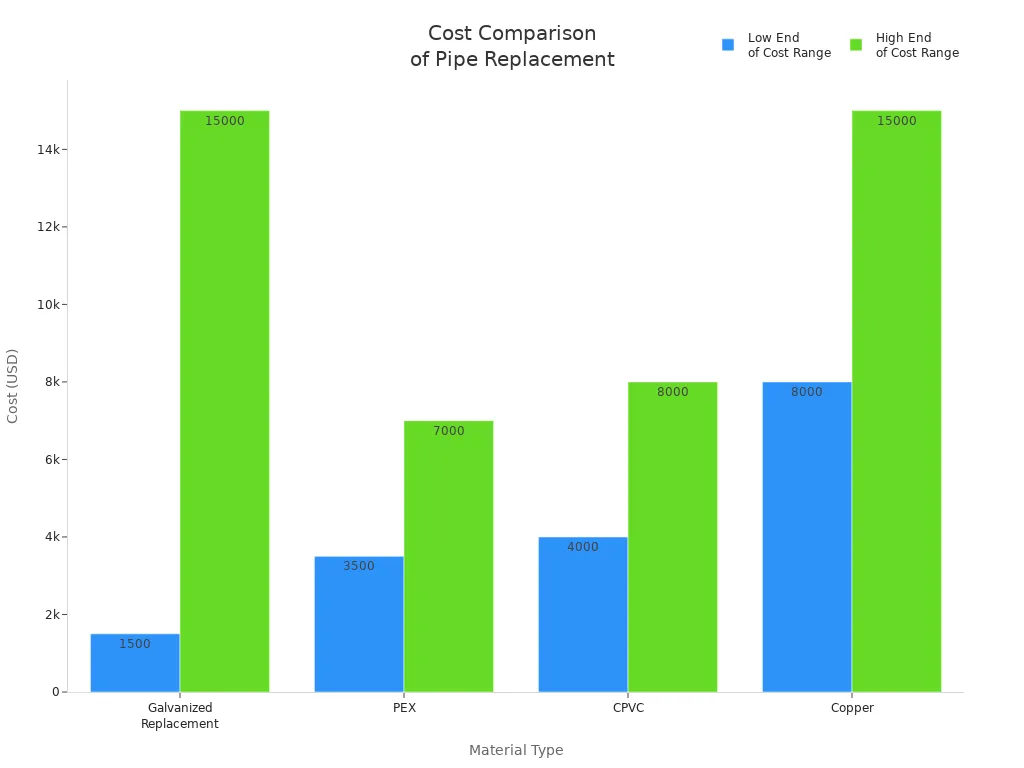
bu cost of replacing galvanized pipes depends on the material and the size of your home. Here is a breakdown of average costs:
| Material Type | Cost Range (Materials and Labor) | Notes |
|---|---|---|
| Galvanized Pipe Replacement | $1,500 – $15,000 | Labor-intensive due to corrosion and integration with modern pipes |
| PEX | $3,500 – $7,000+ | Most cost-effective modern alternative, flexible and easier to install |
| CPVC | $4,000 – $8,000+ | Budget-friendly, prone to leaks if improperly installed |
| Bakır | $8,000 – $15,000+ | Most expensive, durable, requires more labor and access |
Most homeowners spend about $7,500 for a full repipe. The price depends on your home’s size, the amount of pipe replaced, and the type of material you choose. Labor costs range from $1 to $4 per linear foot. Material costs vary by pipe type. You should always hire a professional plumber for this work. Pipe replacement is complex and mistakes can lead to leaks or water damage.
Replacing old galvanized pipe with modern materials protects your drinking water and your family’s health for decades.
Corroded galvanized water pipes can put your health at risk, especially from lead exposure. You might notice signs like rusty water, low pressure, or leaks. Early detection helps you avoid serious problems, such as lead poisoning or costly repairs. Public health experts recommend replacing old pipes with safer materials. Some cities offer loan programs to help with costs. By acting quickly, you protect your family and improve your home’s water safety.
Remember: No amount of lead is safe for children. Replacing old pipes is the best way to keep your water clean.
SSS
What health problems can corroded galvanized pipes cause?
You can face lead poisoning, kidney damage, and bacterial infections from corroded galvanized pipes. Children may have learning problems. Adults may see high blood pressure or joint pain. You should always check your water if you have old pipes.
How do I know if my pipes are galvanized and corroded?
You can look for gray metal pipes with threaded joints. Rust, white buildup, or brown water are signs of corrosion. If you see these, your pipes may be galvanized and need attention.
Can I drink water from corroded galvanized pipes?
You should avoid drinking water from corroded galvanized pipes. These pipes can release lead and other metals. Use a certified filter or bottled water until you replace the pipes.
How often should I test my water if I have old pipes?
You should test your water at least once a year. If you notice changes in color, taste, or smell, test it right away. Regular testing helps you catch problems early.
What is the best way to fix corroded galvanized pipes?
You should replace corroded galvanized pipes with safer materials like PEX or copper. This is the most effective way to protect your health and improve water quality.