
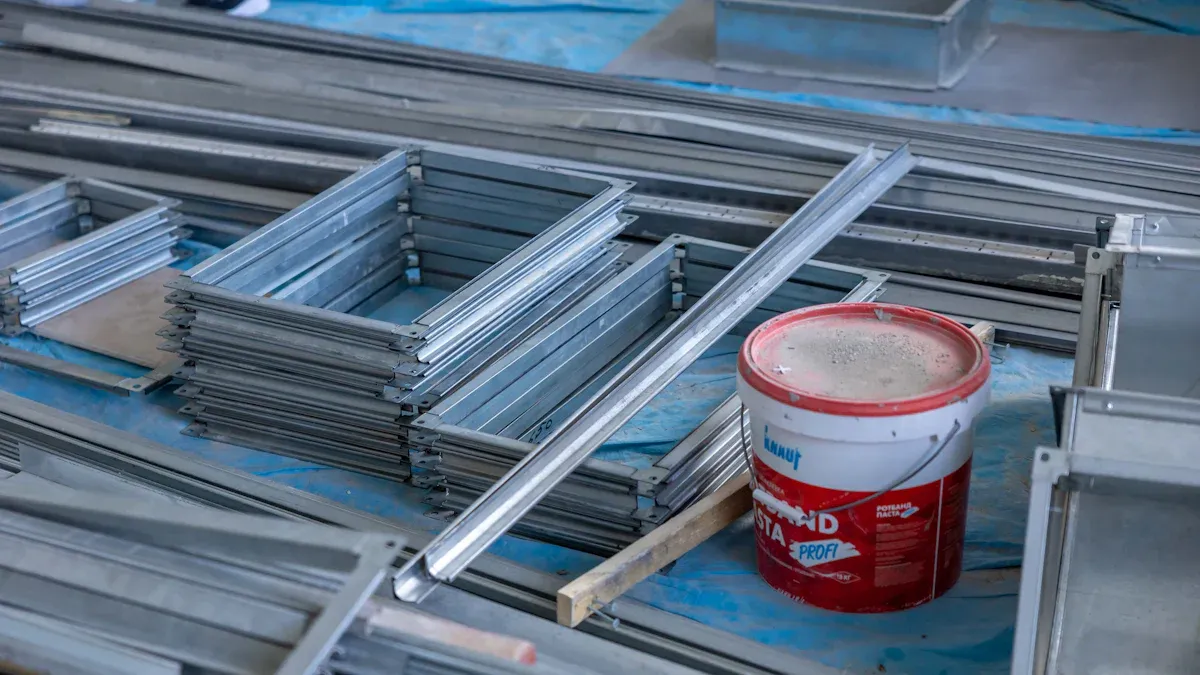
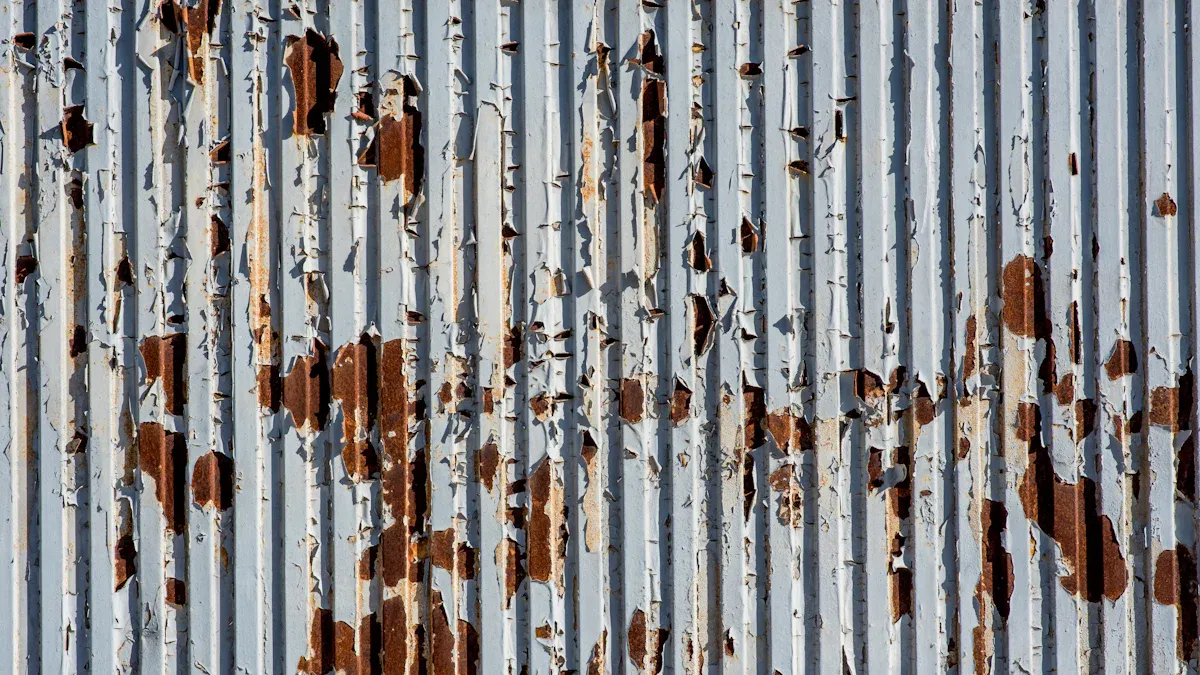
Many people want to know how do i paint galvanized steel so the finish lasts. If you skip steps like cleaning and priming, the paint can peel or rust may form. Homeowners often ask how do i paint galvanized steel to avoid these problems. Common reasons for paint failure include:
- Skipping degreasing or rust removal before painting galvanized metal.
- Trapped moisture under paint causing blisters.
- Cracks in paint letting water reach the steel.
Good preparation and the right products help you get strong, lasting results.
How do I paint galvanized steel: Clean and Prime
Wash the Surface with a Degreaser
You need to clean the surface before you start painting. The galvanizing process leaves an oily film that can stop paint from sticking. Use a water-based cleaner or a mild alkaline solution. These cleaners remove grease and dirt without harming the zinc coating. You can also use mineral spirits or a solvent-based cleaner for tough spots. After you clean the surface, rinse it with fresh water to remove any leftover cleaner. Dry the metal with a clean cloth. This step helps the primer stick well and prevents peeling later.
Tip: Always avoid strong acids like hydrochloric acid. They can damage the zinc layer on galvanized steel.
- Recommended cleaning agents:
- Mild alkaline cleaning solutions (10:1 water to cleaner)
- Solvent cleaners like mineral spirits
- Freshwater rinsing after cleaning
Wipe Down with White Vinegar for Etching
After you clean the surface, you can use white vinegar to help the paint stick. Vinegar contains acetic acid, which gently etches the zinc coating. This process creates a slightly rough texture for better paint adhesion. Soak a cloth in white vinegar and wipe the metal. Let it sit for a few minutes, then rinse and dry the surface. Vinegar works well for small projects or custom designs. For bigger jobs, commercial etching solutions give faster and more reliable results. These products remove waxes and oils that can block paint from bonding.
Note: Vinegar is safe and easy to use, but commercial etching products work better for long-term paint jobs.
Apply a Primer Made for Galvanized Steel
You need to prime galvanized metal before painting. The right primer helps paint stick and protects the surface from rust. In 2025, professional painters recommend the INSL-X STIX Waterborne Bonding Primer as the best primer for galvanized metal. This acrylic-urethane primer bonds well to glossy and hard-to-coat surfaces. Apply the primer in a thin, even layer. Let it dry fully before you paint. Using a primer made for galvanized steel prevents peeling and fading. It also gives you a smooth base for your topcoat.
- Why use a primer?
- Improves paint adhesion
- Stops rust and corrosion
- Makes the finish last longer
If you want to know how to paint galvanized metal for a finish that lasts, always clean the surface, etch it, and use the best primer for galvanized metal. These steps answer the question, “how do i paint galvanized steel” and help you get professional results.
Paint galvanized steel: Use Specialized Paints
Choose Paints Formulated for Galvanized Metal
When you paint galvanized steel, you need to pick paints made for this type of metal. Regular paints do not stick well and can peel or crack. Specialized paints for galvanized metal contain ingredients that bond tightly to the zinc coating. These paints protect the surface from rust and weather damage. Many new paints in 2025 use water-based formulas and eco-friendly additives. You help the environment and get better results when you choose these products.
Tip: Always check the label to make sure your paint is safe for galvanized surfaces and meets the latest environmental standards.
Top Paint Brands and Products for 2025
You have many choices for supplies for painting galvanized metal. Some brands lead the market with advanced formulas. Here is a table comparing cold galvanized paint and traditional paint:
| Aspect | Cold Galvanized Paint (Zinc-Rich Coating) | Traditional Paint |
|---|---|---|
| Kompozisyon | Contains ~95% pure zinc in dried film | Contains binders, pigments, solvents |
| Corrosion Protection | Active cathodic protection; self-healing | Passive barrier only |
| Performance on Damage | Protects even if scratched | Exposed metal rusts if coating is damaged |
| Durability & Longevity | Long-lasting, like hot-dip galvanizing | Deteriorates faster |
| Maintenance Cost | Lower over time | Higher due to frequent recoating |
| Environmental Impact | Zero-VOC, lead- and chromate-free options | Often contains VOCs |
Top brands in 2025 include ZRC, Rust-Oleum, and Sherwin-Williams. These companies offer direct-to-metal (DTM) coatings and zinc-rich primers. You can find products that meet strict EPA rules and use fewer harmful chemicals.
Application Tips for a Smooth, Lasting Finish
You want your painting galvanized metal project to last. Start by making sure the surface is clean and dry. Use a primer designed for galvanized steel. Apply paint in thin, even coats. Let each coat dry fully before adding the next. New DTM coatings let you skip the separate primer step, but always follow the product instructions. Paint in mild weather for best results.
- Use a brush, roller, or sprayer for even coverage.
- Wear gloves and a mask to protect yourself from fumes.
- Store leftover paint and primer safely.
By following these steps, you answer the question, “how do i paint galvanized steel” and avoid common problems. Innovations in painting galvanized steel now include smart coatings with self-healing and anti-corrosion features. These new products help you protect your surface and meet environmental standards. When you choose the right supplies for painting galvanized metal, you get a finish that lasts.
Painting galvanized metal: Surface Preparation Techniques

Light Sanding, T-Wash, or Sweep Blasting
You want your paint to last on galvanized steel. The right prep work makes all the difference. Industry experts recommend several ways to prepare the surface before painting galvanized metal:
- Clean the surface to remove dirt, oil, and grease.
- Use light sanding with fine-grit sandpaper. This roughens the smooth zinc surface and helps the paint stick better.
- Try T-wash or a vinegar solution. This step removes leftover oils and lightly etches the zinc, which improves paint adhesion and prevents peeling.
- Sweep blasting uses fine abrasives to create a uniform, matte finish. This method gives you the most durable results, but you must avoid removing too much of the zinc layer.
Tip: Always inspect the surface under good lighting. Make sure you remove any rust, old paint, or mill scale before you start painting galvanized metal.
Why Proper Surface Prep Prevents Peeling
If you skip surface preparation, your paint may peel or bubble. The zinc coating on galvanized steel feels smooth, which makes it hard for paint to grip. When you roughen the surface with sanding, T-wash, or sweep blasting, you give the paint something to hold onto. This step boosts paint adhesion and helps your project last longer. Using the right primer after prepping the surface also protects against rust and weather damage. Good prep work means fewer repairs and a better-looking finish.
Safety Tips for Prepping Galvanized Steel
Safety matters when you prepare galvanized steel for painting. You should:
- Work in a well-ventilated area.
- Wear gloves, a mask, and safety glasses to protect yourself from dust and fumes.
- Clean the surface with safe cleaners and rinse with water. Let it dry fully before moving on.
- Follow all instructions for etching solutions and primers.
- Apply paint in thin, even coats and let each coat dry before adding another.
Note: Always follow the manufacturer’s guidelines for every product you use. This keeps you safe and helps your paint job last.
How to paint galvanized metal: Pro Tips for Long-Lasting Results
Best Drying Times and Weather Conditions
You get the best results when you paint galvanized steel in the right weather. Paint manufacturers recommend working in mild temperatures and low humidity. This helps the paint dry and cure properly. Use the table below to guide your project:
| Aspect | Recommended Conditions / Times |
|---|---|
| Temperature Range | 50°F to 85°F (10°C to 29°C) |
| Relative Humidity | Below 75% (some sources say up to 85%) |
| Primer Drying Time | 30 minutes to 1 hour |
| Drying Time Between Coats | 2 to 4 hours |
| Full Curing Time | 7 to 14 days |
| Primer Type | Self-etching primers, zinc-rich epoxy primers |
| Paint Type | Epoxy-based coatings, acrylic latex, fortified alkyds |
| Application Methods | Spray, brush, roller; gradual application of two coats |
| Additional Notes | Avoid overcoating before primer cures; low humidity and proper temperature ensure adhesion and durability |
Tip: High humidity or low temperatures slow down drying and curing. Wait longer between coats if the weather is damp or cold. Rushing can cause peeling or uneven finishes.
Maintenance Tips to Extend Paint Life
You can keep your painted galvanized steel looking new with regular care. Follow these steps to extend the life of your paint:
- Clean the surface with mild soap and water. This removes dirt and pollution.
- Check for chips, scratches, or peeling every few months.
- Touch up any damaged spots right away to stop rust from forming.
- Avoid harsh chemicals that can break down the paint.
- Plan to repaint every 5 to 10 years, depending on wear and weather.
- Watch for rust and fix it quickly with spot priming and repainting.
Regular maintenance protects your investment and keeps your project looking great.
Common Mistakes to Avoid
Many people make mistakes when painting galvanized metal. These errors can shorten the life of your paint job:
- Skipping surface preparation leads to poor adhesion and early paint failure.
- Using the wrong paint, such as non-zinc-based types, causes peeling and flaking.
- Ignoring bi-metallic corrosion, which happens when galvanized steel touches other metals, speeds up rust and damages the paint.
- Not waiting long enough for each coat to dry can cause bubbling, cracking, or peeling.
- Applying paint too thin or too thick gives poor protection or causes cracking.
Note: Take your time with each step. Careful work prevents problems and gives you a strong, lasting finish when painting galvanized metal.
You can achieve a durable, professional finish by following three easy steps: clean and prime, use specialized paints, and prepare the surface well. Professional painters highlight that careful preparation and the right products make all the difference. The table below shows why each preparation method matters:
| Preparation Method | Purpose and Description | Relevance to Galvanized Steel Painting |
|---|---|---|
| SSPC-SP1 (Solvent Cleaning) | Removes oils, grease, and soluble contaminants to ensure clean surface | Essential first step to remove contaminants before further preparation |
| SSPC-SP2 (Hand Tool Cleaning) | Removes loose mill scale, rust, and paint using non-powered hand tools | Removes loose materials without damaging adherent coatings |
| SSPC-SP12 (Waterjetting) | High-pressure water cleaning to remove loose rust and coatings without profiling | Cleans fully weathered galvanized surfaces, preparing them for paint adhesion |
| SSPC-SP16 (Brush-off Blast Cleaning) | Creates a profile on galvanized surfaces after cleaning to promote paint adhesion | Provides suitable surface texture for durable coating application |
| ASTM D6386 and D7803 | Standards referencing these preparation methods for galvanized steel | Guide proper surface treatment before painting or powder coating |
When you ask, “how do i paint galvanized steel,” remember that good preparation and product selection save money over time. The chart below shows how proper painting and maintenance lower costs compared to frequent repainting:
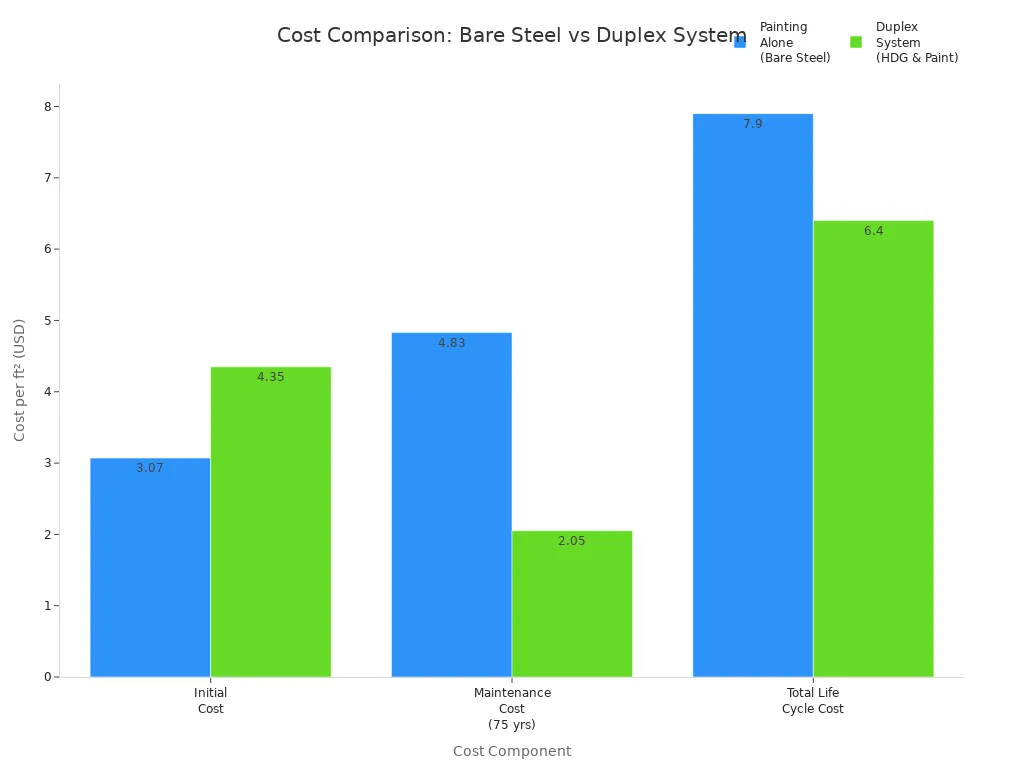
If you follow these steps for painting galvanized metal, you protect your project and your budget.
SSS
Can you paint galvanized steel without a primer?
You should not skip primer. Paint sticks better and lasts longer when you use a primer made for galvanized steel. Primer also helps stop rust.
How long does paint last on galvanized steel?
Paint can last 5 to 10 years if you clean, prime, and use the right paint. Regular cleaning and quick touch-ups help your paint job last even longer.
What is the best way to clean galvanized steel before painting?
Use a mild degreaser or soapy water. Rinse well and dry the surface. For better results, wipe with white vinegar to lightly etch the metal.
Can you use spray paint on galvanized steel?
Yes, you can use spray paint. Pick a spray paint labeled for galvanized metal. Always clean and prime the surface first for best results.
Why does paint peel off galvanized steel?
Paint peels when you skip cleaning, priming, or use the wrong paint. The smooth zinc surface needs roughening and a good primer for paint to stick well.