

When you want to paint galvanized steel, you need to start with the right steps. Good preparation stops paint from peeling or bubbling. Most paint failures come from poor surface prep, moisture, or using the wrong products. The chart below shows how often these problems happen:
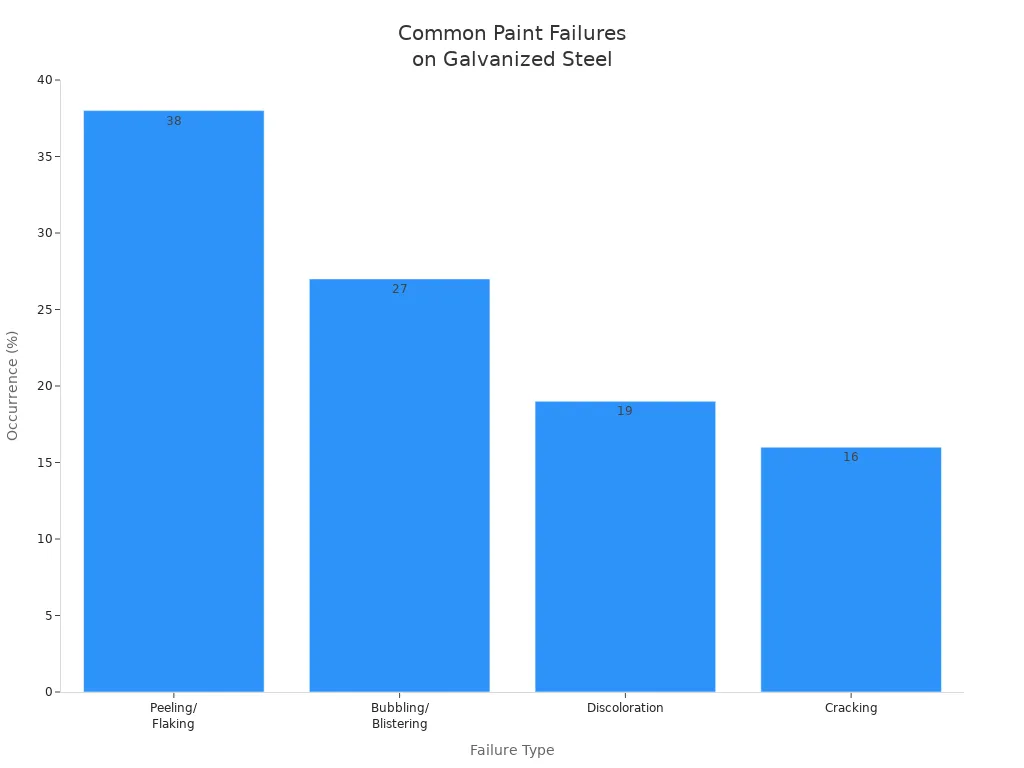
You can prevent these issues by learning how to clean galvanized steel, treat the surface, and choose the right primer and paint. Each step helps your paint last longer.
Assessing Galvanized Steel Condition
Identifying New, Weathered, or Previously Painted Surfaces
Before you start painting, you need to know what kind of galvanized steel you have. Each type—new, weathered, or previously painted—needs a different approach. You can spot the differences by looking at the color, shine, and any paint or stains on the surface. The table below helps you identify each condition:
| Surface Condition | Visual Indicators | Physical Indicators / Notes |
|---|---|---|
| New Hot-Dip Galvanized | Bright or natural matte gray appearance | Coating thickness measurements confirm non-ferrous coating presence but do not specify coating type |
| Weathered Galvanized | Matte gray, uniformly weathered surface, possible brown staining | Surface shows natural zinc patina; coating thickness still measurable; no bright/shiny appearance |
| Previously Painted | Presence of blisters and chips; surface color different from natural matte gray | Paint over galvanized coating possible; coating thickness measurements confirm non-ferrous coating but not type |
Tip: If you want to be sure about the coating type, laboratory tests like spectroscopy can show the zinc content and layers. Most home projects do not need this step, but it helps for industrial jobs.
Inspecting for Contaminants and Damage
You must check the steel for dirt, oil, rust, and other problems before painting. These steps help you find and fix issues:
- Look for bumps, runs, or drips. These show extra zinc that you should remove by grinding or filing.
- Check the surface condition. Decide if the steel is new, weathered, or painted. Each needs a special cleaning method.
- Test for oil and grease. Use a cleaning solution or solvent to see if the surface feels slick.
- Rinse and dry the steel. After cleaning, rinse with fresh water and dry right away to stop new stains from forming.
- Profile the surface. Use sweep blasting to roughen the steel so paint sticks better.
- Check for chromate coatings. The ASTM B201 test can show if a chromate layer is present. Remove it with sanding or sweep blasting.
- Look for rust. Clean rusty spots with a brush or power tool.
By following these steps, you make sure the steel is ready for painting. Clean, damage-free steel helps your paint last longer and look better.
How to Clean Galvanized Steel

Removing Oils, Dirt, and Grease
You need to start with a clean surface before painting galvanized steel. Oils, dirt, and grease can stop paint from sticking. If you want to know how to clean galvanized steel the right way, you should follow these steps:
Inspect the Surface
Look for any oily or greasy spots. You can use your eyes and hands to check. Wipe the steel with a clean cloth. If you feel slickness or see smudges, you have oil or grease.Choose a Cleaning Method
You can use either an alkaline cleaner or a solvent cleaner. Both methods work well for removing oils and dirt.Aqueous Alkaline Cleaning
Mix an alkaline solution with a pH between 11 and 13. Apply it by spraying, brushing, or dipping the steel. Use a soft brush to scrub the surface gently. Rinse the steel with hot or pressurized water. Dry the steel with heat or let it air dry completely.Solvent Cleaning
Use a solvent like mineral spirits or high-flash naphtha. Follow the SSPC SP1 standard for this process. Wipe the steel with clean rags or brushes. Change the rags often so you do not spread the oil around. Rinse the steel with hot water and dry it well.
Avoid Certain Methods
Do not use water quenching or chromate conversion coatings. These can make it hard for paint to stick. Pickling with acid is not recommended because it can damage the zinc coating. If you must use acid, rinse and neutralize the steel right away, then dry it quickly.
Tip: Always dry the steel completely after cleaning. Water left on the surface can cause rust or stains.
Recommended Cleaning Products and Methods for 2025
You have many choices when you decide how to clean galvanized steel in 2025. New studies show that some products work better and are safer for both you and the environment.
Best Commercial Cleaners
The American Galvanizers Association tested many products. They found that Kean-Strip, Graffiti Remove, and Motsenbockers Lift Off4 remove oil, grease, and even marker stains without harming the zinc coating. For everyday cleaning, Simple Green and Comet are also safe and effective.Gentle Household Solutions
You can use mild dish soap mixed with warm water for light dirt and oily spots. For white rust, a vinegar-water solution works well. Automotive cleaners made for gentle use can help with stubborn oily residues. Always use a soft cloth or sponge to avoid scratching the surface.Special Stain Treatments
If you see red rust, you may need a phosphoric acid cleaner. For white rust, use a weaker acid like vinegar. After using any acid, rinse the steel very well and dry it right away.
| Cleaner Type | Example Products | Use Case | Safety Notes |
|---|---|---|---|
| Commercial Cleaners | Kean-Strip, Graffiti Remove, Motsenbockers Lift Off4 | Heavy oil, marker, spray paint | Test on small area first |
| Mild Cleaners | Dish soap, Simple Green, Comet | Light dirt, grease | Use gloves, rinse well |
| Acid Cleaners | Vinegar, phosphoric acid | White rust, red rust | Rinse and dry immediately |
Note: Avoid harsh chemicals like bleach, ammonia, or strong acids. These can damage the zinc coating and make the steel rust faster. Always test any cleaner on a small spot first.
When you learn how to clean galvanized steel, you also need to think about safety. Wear gloves and safety glasses. Make sure you have good airflow if you use chemicals. Never use metal brushes or abrasive pads, as these can scratch the zinc layer. After cleaning, dry the steel fully to stop water stains or rust from forming.
If you follow these steps and use the right products, you will prepare your galvanized steel for painting. Clean steel helps paint stick better and last longer.
Treating the Passivation Layer
Understanding Passivation and Its Impact on Paint
When you look at new galvanized steel, you may notice a clear, shiny film on the surface. This is the passivation layer. Manufacturers apply this thin coating after hot-dip galvanizing to protect the zinc from reacting with water and carbon dioxide during storage and transport. The passivation layer often contains chromium or alkaline chemicals. It helps stop white rust from forming for about six weeks.
You might think this layer is helpful, but it creates a big problem if you want to paint the steel. The passivation film blocks paint from sticking to the zinc. Paint will not bond well, and you may see peeling or flaking soon after painting. Chromium-containing passivation gives great corrosion resistance, but it causes poor adhesion for organic coatings like paint. If you leave the passivation layer on, your paint job will likely fail.
Note: The passivation film is not wax or oil. Solvents will not remove it. You need special acid-based cleaners to get rid of it.
If you plan to paint galvanized steel, you should always check for a passivation layer. Removing it is a key step in preparing the surface. This step matters just as much as knowing how to clean galvanized steel before painting.
Neutralizing or Removing Passivation with Modern Solutions
You have several ways to deal with the passivation layer in 2025. Modern solutions make this process safer and more effective than older methods.
1. Acid-Based Detergents
The most common way to remove the passivation film is with acid-based cleaners. These products break down the clear, glossy coating so paint can stick to the zinc. You can find commercial acid detergents made for galvanized steel at most hardware stores. Always follow the instructions on the label. Wear gloves and safety glasses to protect yourself.
2. Chemical Surface Treatments
Some new treatments do not remove the passivation layer completely. Instead, they change the surface so paint can stick better. These treatments use acidic solutions with special metal ions. They work by changing the chemical structure of the passivation film. This method keeps some corrosion protection while letting paint adhere well.
3. Sweep Blasting or Light Abrasion
If you cannot use chemicals, you can try sweep blasting. This method uses fine abrasive material to lightly roughen the surface. It removes or breaks up the passivation layer without damaging the zinc underneath. Use this method only if you have the right equipment and training.
4. Testing for Passivation Removal
After you treat the steel, test a small area with a drop of water. If the water beads up, the passivation layer may still be there. If the water spreads out, you have likely removed the film.
| Method | Effectiveness | Safety Level | Notes |
|---|---|---|---|
| Acid-based detergent | High | Medium | Rinse well after use |
| Chemical surface treatment | Medium-High | High | Keeps some corrosion protection |
| Sweep blasting | Medium | Medium | Needs special equipment |
Tip: Always rinse the steel with clean water after using any acid or chemical treatment. Dry the surface right away to stop new stains or rust.
Learning how to clean galvanized steel includes knowing how to remove the passivation layer. If you skip this step, your paint may not last. Modern products and methods help you get the best results with less risk. Take your time with this step, and your paint will stick better and last longer.
Profiling the Surface
Sweep Blasting Techniques
You need to create a rough surface on galvanized steel so paint can stick well. Sweep blasting is the best way to do this for most projects in 2025. This method uses a gentle stream of abrasive particles to clean and texture the steel without removing too much zinc. You should follow these steps for the best results:
- Use abrasive sweep or brush blasting with quick nozzle movement. This roughens the surface but keeps the zinc layer safe.
- Choose abrasive particles between 8 and 20 mils in size. Good options include aluminum/magnesium silicate, corundum, limestone, corn cobs, and walnut shells.
- Keep the air pressure low (2.0–3.0 bar) and move the nozzle quickly. This prevents damage to the zinc.
- Make sure the steel stays at least 5°F above the dew point to avoid moisture problems.
- After blasting, clean the surface with compressed air. Paint within 60 minutes to stop new zinc oxide from forming.
Tip: Sweep blasting works best for new or slightly weathered galvanized steel. It removes white rust and passivation, giving you a surface that paint can grip.
Here is a quick comparison of sweep blasting and chemical etching:
| Method | Advantages | Disadvantages / Considerations |
|---|---|---|
| Sweep Blasting | – Mechanical roughening with mild blast pressure – Preserves zinc surface – Improves paint adhesion – Removes minimal oxide – Needs careful media selection | – Must avoid iron grit – Needs control of angle and distance |
| Chemical Etching | – Good for older/weathered surfaces – Works when blasting is not suitable | – Not for fresh galvanized steel – Limited use based on surface age |
Chemical Etching Methods
If sweep blasting is not possible, you can use chemical etching. This method uses mild acids to create a dull, rough surface. You should start by cleaning the steel with a mild alkaline or solvent cleaner to remove oil and dirt. Then, prepare an etching solution by mixing 20 parts concentrated hydrochloric acid with 80 parts distilled water. Immerse the steel for 2–4 minutes at room temperature. Rinse the metal with cold water and dry it in an oven at 60–70°C for 20–30 minutes. Paint the steel as soon as it is dry.
Some advanced products, like T-Wash or special etch primers, also work well. These treatments change the zinc surface and show a color change when ready. Chemical etching is best for older or weathered galvanized steel. You should not use it on fresh steel, as it can damage the zinc layer.
Note: Always wear gloves and safety glasses when working with acids. Rinse and dry the steel completely before painting.
Priming Galvanized Steel
Choosing the Right Primer
You need to pick a primer that matches your galvanized steel and the environment. Not all primers work the same way. Some stick better, while others protect against rust or harsh weather. Here are the main things you should look for when choosing a primer:
- Type of Metal and Surface Prep: Make sure your primer is made for galvanized steel. Some primers only work on bare or rusted metal, not on zinc-coated surfaces.
- Environmental Conditions: Think about where you will use the steel. If it will face salt water or harsh weather, zinc-rich primers give extra protection. For indoor projects, latex primers work well if the area stays dry and at a steady temperature.
- Performance and Appearance: Choose a primer that matches your paint. Using products from the same brand helps them work together.
- Application Method: Some primers work best with a brush, roller, or spray. Pick one that fits your tools and skills.
- Expert Advice: If you have a special project, talk to a paint manufacturer or a local expert before you buy.
Tip: Oil or alkyd primers do not stick well to most galvanized steel. Only use them on old, rusted areas where the zinc is gone.
You should always follow ASTM standards for galvanizing and repairs. This helps your paint job last longer.
Application Tips for Even Coverage
You want your primer to cover the steel smoothly and stick well. Many people make mistakes that cause paint to peel or flake. Avoid these common problems by following these steps:
- Clean the steel first. Remove all dirt, grease, and zinc salts with a mild degreaser or acid wash.
- Dry the surface fully before you start.
- Use only primers made for galvanized steel. Do not use regular wall or wood primers.
- Read and follow the instructions on the primer can. Each product has its own drying times and best temperature range.
- Paint when the temperature is between 50°F and 85°F and the humidity is below 75%. Wet or very hot days can ruin your finish.
- Apply thin, even coats. Hold your spray can or brush about 8–12 inches from the surface.
- Let the primer dry for at least 24 hours before you touch or paint over it. Full curing can take up to 7 days.
| Step | Why It Matters |
|---|---|
| Clean and dry steel | Stops peeling and flaking |
| Use right primer | Ensures strong adhesion |
| Follow instructions | Prevents bubbles and uneven coverage |
| Control environment | Helps primer cure and last longer |
If you follow these tips, your primer will stick well and your paint will look great for years.
Painting Galvanized Steel

Selecting Compatible Paints for 2025
You need to choose the right paint for galvanized steel. Not all paints work well on this surface. In 2025, new paint formulas give you better results and longer-lasting color. The table below shows which paint types work best:
| Paint Type | Compatibility with Galvanized Steel (2025) | Key Notes on Usage and Conditions |
|---|---|---|
| Epoxy-Polyamide Cured | Highly compatible | Superior adhesion, best for durable coatings |
| Latex Acrylics | Compatible | Eco-friendly, good for new or weathered surfaces |
| Bituminous | Compatible, especially for buried use | Good for chemical environments and soil burial |
| Vinyls | Compatible with surface profiling | Needs surface profiling, check VOC limits |
| Powder Coatings | Highly compatible | Low-temp curing, excellent for galvanized steel |
| Acrylics | Compatible on new/weathered surfaces | Watch for high pH, may react with zinc |
| Coal Tar Epoxies | Sometimes compatible | Rare, mainly for buried parts |
| Epoxies | Sometimes compatible | Must be made for galvanized steel |
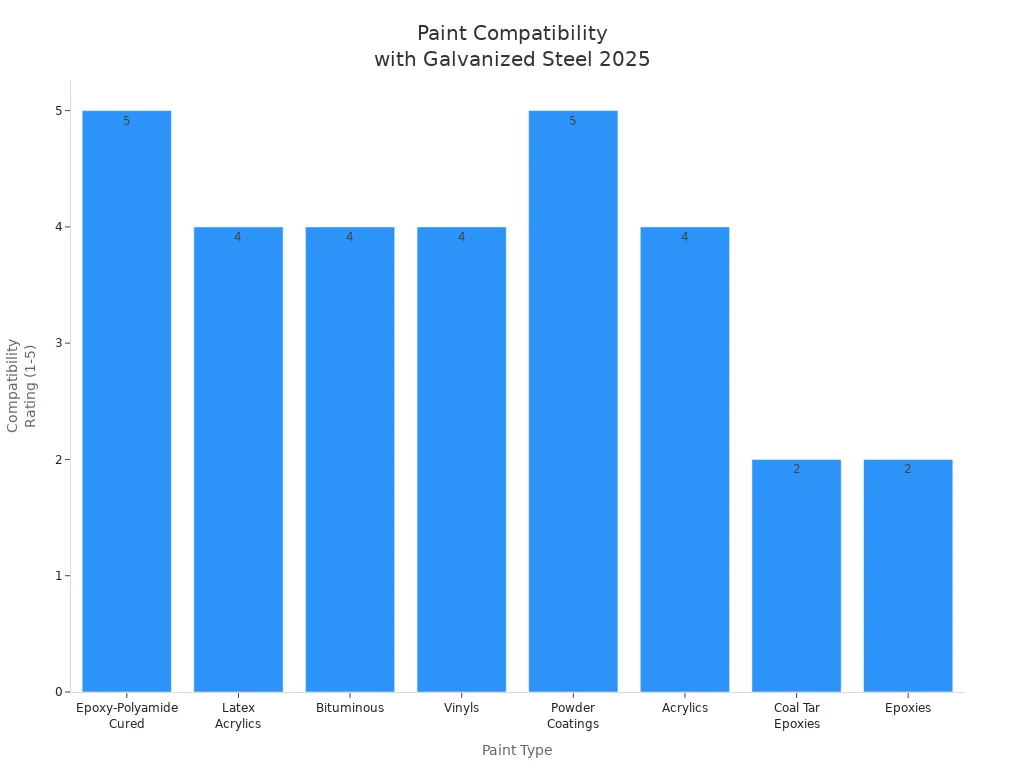
You get the best results with epoxy-polyamide cured coatings and powder coatings. Latex acrylics also work well for most home projects. Always check the label to make sure the paint is safe for galvanized steel. Good surface preparation is just as important as the paint you pick. If you skip cleaning or priming, even the best paint will peel.
Tip: Galvannealed steel holds paint better than galvanized steel. If you have a choice, use galvannealed for painted projects.
Best Application Methods
You want your paint job to last. The way you apply paint matters as much as the type you use. Follow these steps for the best finish:
- Clean the steel. Remove dirt, oil, and grease with the right cleaner.
- Rinse and dry the surface. Make sure no water stays on the steel.
- Etch the surface if needed. Use an etching solution or light abrasion to help paint stick.
- Apply a primer made for galvanized steel. Cover the surface evenly.
- Let the primer dry fully. Wait at least 24 hours.
- Paint in thin, even coats. Use a brush, roller, or spray. Thin coats stop peeling.
- Let each coat dry before adding the next. This helps the paint last longer.
- Allow the final coat to cure. Wait at least 24 hours before using the steel.
Always follow the instructions on your paint and primer. Wear gloves and work in a well-ventilated area. If you follow these steps, your painted galvanized steel will look great and resist peeling or flaking.
Drying and Curing for Durability
Recommended Drying Times
You need to let each layer of paint and primer dry fully before moving to the next step. Drying times can change based on the type of product and the weather around you. If you rush this step, your paint may peel or look uneven.
- Most primers for galvanized steel dry in 1 to 2 hours. Always check the label for exact times.
- Acrylic latex paints made for galvanized steel need about 1 to 2 hours to dry between coats.
- Some brands, like Benjamin Moore Ultra Spec HP D.T.M., suggest waiting 4 hours between topcoats and at least 1 hour between touch-ups.
- For best results, apply three thin, even coats instead of one thick coat.
- Humid or cool weather slows down drying. If you paint on a damp day, you may need to wait longer between coats.
Tip: Oil-based paints and primers do not work well on galvanized steel. They can react with the zinc and cause peeling.
If you want your paint to last, always follow the drying times on the product label. Rushing this step can lead to problems later.
Ensuring Proper Curing
Drying and curing are not the same. Drying means the paint feels dry to the touch. Curing means the paint has reached full strength and will protect your steel for years.
Several things affect how well your paint cures:
- Humidity and Temperature: High humidity or low temperatures slow down curing. Try to paint when the air is dry and the temperature is between 50°F and 85°F.
- Surface Condition: If you do not clean the steel or remove old corrosion, the paint will not stick well. You need to remove loose rust and dirt before painting.
- Environmental Exposure: Pollution, salt, and moisture in the air can change how the paint cures. These factors can also shorten the life of your paint job.
- Surface Treatments: Some treatments, like chromate quenching, can block paint from sticking. Always clean the steel well if it has been treated.
Make sure you let the paint cure fully before using or exposing the steel to harsh weather. Proper curing gives you a strong, long-lasting finish. If you skip this step, your paint may fail sooner than you expect.
Troubleshooting Common Issues
Dealing with Peeling or Flaking Paint
Peeling or flaking paint on galvanized steel can frustrate anyone. You want your project to look smooth and last for years. If you see paint lifting or coming off in sheets, you need to find the cause before you repaint.
The most common reasons for peeling or flaking paint include:
- Oil-based paints react with zinc and do not stick well. This reaction, called saponification, breaks the bond between paint and steel.
- Skipping proper cleaning leaves oils or dirt behind. Paint cannot grip a dirty surface.
- Using the wrong primer or paint type causes poor adhesion. Some products work only on wood or bare metal, not galvanized steel.
- High humidity, extreme temperatures, or dust during painting weaken the paint’s hold.
- Smooth galvanized surfaces lack texture. Paint needs a rough surface to grab onto.
- Layering different paint types, such as oil-based over latex, leads to peeling.
- Low-quality paints crack and peel faster than high-quality options.
- Applying paint with the wrong tools or in coats that are too thin prevents strong bonds.
- Corrosive chemicals or salt exposure can blister and peel paint.
Tip: Always check the paint label. Make sure it says “for galvanized steel.” Clean and roughen the surface before you start.
If you already have peeling paint, scrape off all loose material. Clean the steel with a degreaser. Profile the surface with sweep blasting or etching. Use a primer made for galvanized steel, then repaint with a compatible topcoat.
Solutions for Uneven Coverage or Bubbling
Uneven paint or bubbling can ruin the look of your project. You might see thin spots, streaks, or raised bubbles after painting. These problems often start with poor surface prep or rushing the job.
To fix and prevent these issues:
- Check for moisture. Paint will bubble if water gets trapped under the surface. Always dry the steel completely before painting.
- Use the right tools. Brushes, rollers, or sprayers each give different results. Pick the tool that matches your paint and project size.
- Apply thin, even coats. Thick layers trap air and cause bubbles. Let each coat dry before adding another.
- Control your environment. Paint when the temperature is between 50°F and 85°F. Avoid painting on humid or windy days.
- Mix paint well. Stir your paint before and during use to keep the color and texture even.
If you see bubbles or uneven spots, sand them smooth after the paint dries. Clean the area, then touch up with a thin coat. Careful prep and patience give you a smooth, lasting finish.
Product Recommendations for 2025
Top Cleaners and Degreasers
You want your paint to last, so you need to start with a clean surface. The right cleaner removes oil, dirt, and grease from galvanized steel. In 2025, you have many safe and effective options.
- Simple Green All-Purpose Cleaner: This cleaner works well for light dirt and oily spots. You can use it with a soft cloth or sponge.
- Kean-Strip Cleaner: This product removes heavy grease and marker stains. It does not harm the zinc coating.
- Motsenbockers Lift Off4: You can use this for tough stains like spray paint or marker. It is safe for galvanized steel.
- Mild Dish Soap and Warm Water: For small jobs, mix dish soap with water. This solution works for most household cleaning needs.
Always rinse the steel with clean water after using any cleaner. Dry the surface right away to prevent new stains or rust.
If you want to know how to clean galvanized steel, start with these products. They help you get a surface that is ready for paint.
Best Primers and Paints
Choosing the right primer and paint makes your project last longer. In 2025, you have access to products that give strong adhesion and a smooth finish.
| Ürün adı | Tip | Best Use Case |
|---|---|---|
| INSL-X STIX Waterborne Primer | Acrylic-Urethane Primer | Maximum adhesion on galvanized steel |
| Rust-Oleum Zinsser Primer | Stain-Blocking Primer | Good for tough stains, needs surface prep |
| Rust-Oleum Gloss Black Spray | Durable Topcoat | Weather-resistant finish, use with primer |
| Krylon COLORmaxx | Spray Paint | Smooth color, needs primed surface |
You get the best results when you use INSL-X STIX Waterborne Bonding Primer. This primer sticks to glossy, hard-to-coat surfaces like galvanized steel. After priming, you can use Rust-Oleum or Krylon spray paints for a strong, weather-resistant finish. Always make sure you prime the steel first. This step helps the paint bond and stops peeling or flaking.
Tip: Always follow the instructions on the product label. Good prep and the right products give you a finish that lasts.
Quick-Reference Checklist
Step-by-Step Preparation Summary
You want your paint job on galvanized steel to last. Follow this checklist to make sure you do not miss any important steps:
Inspect the Surface
Look for dirt, oil, rust, or old paint. Remove any attachments or hardware.Clean Thoroughly
Wash the steel with hot soapy water. Rinse well and let it dry. For stubborn spots, use a cleaner like Simple Green or a mild dish soap solution.Treat the Passivation Layer
Mix Clean ‘n Etch solution with water (1:2 ratio). Spray the solution on the steel and let it sit for 20 minutes. Rinse before it dries. Dry the surface with air or a clean cloth.Wipe with Vinegar or Ammonia Solution
Use a rag with white vinegar or a weak ammonia solution. This step helps paint stick better.Sand and Profile the Surface
Sand all areas, including dents and crevices, with heavy-duty sandpaper. For large projects, use sweep blasting or a chemical etch to roughen the surface.Remove Dust
Wipe the steel with a tack cloth to pick up any dust left from sanding.Prime the Surface
Apply a primer made for galvanized steel. Start at the top and work down. Remove drips right away. Let the primer dry as directed.Check Primer Coverage
Inspect the surface to make sure you did not miss any spots.Paint with the Right Product
Use paint designed for galvanized steel. Apply thin, even coats. Let each coat dry before adding another.Final Inspection
Look for full coverage and a smooth finish.
🛡️ Tip: Always wear gloves, goggles, and a mask when using chemicals or sanding. Test the surface with a GalvaCheck kit if you want to confirm readiness for painting.
This checklist helps you get strong paint adhesion and a finish that lasts.
You can achieve a durable, professional finish on galvanized steel by following these essential steps:
- Clean the surface thoroughly to remove dirt and oils.
- Etch or roughen the steel for better paint adhesion.
- Rinse and dry the metal completely.
- Apply a primer made for galvanized steel.
- Finish with a compatible topcoat.
🛡️ Always follow each step in your checklist. Careful preparation and the right products help your paint last for decades and resist peeling or rust.
SSS
How do you know if galvanized steel is ready for paint?
You can check by dropping water on the surface. If water spreads out, the steel is ready. If it beads up, you need to clean or etch more.
Can you paint over old paint on galvanized steel?
You should remove loose or peeling paint first. Sand the surface to smooth rough spots. Clean well before priming and painting again.
What happens if you skip the primer?
Paint may peel, bubble, or flake quickly. Primer helps paint stick to galvanized steel. Always use a primer made for galvanized surfaces.
Do you need special paint for galvanized steel?
Yes. Use paint labeled for galvanized steel. Regular paint will not stick well and may fail. Check the label before you buy.
How long does painted galvanized steel last?
With good prep and the right products, your paint can last 10 years or more. Weather and use can affect how long the finish stays strong.
🛠️ Tip: Always follow each step in the guide for the best results.