
When you choose the right square tube for your project, you must match the size, strength, and corrosion resistance to your needs. The galvanized steel square market continues to grow, driven by infrastructure and construction demands.
Galvanized square tubes are used in roads, bridges, railways, and renewable energy projects because of their durability and strength.
Check the table below for key market facts:
| Metrik | Değer | Timeframe |
|---|---|---|
| Projected market size | USD 268.73 billion | 2033 |
| Growth rate (CAGR) | ~4% | 2025-2033 |
Always verify the steel square tube quality and choose reputable suppliers to avoid costly mistakes.
Quick Criteria Checklist for Choosing the Right Square Tube
Key Factors for Galvanized Steel Square Selection
When you choose the right square tube, you need to look at several important details. These key factors help you match the square tube specifications to your project. Here is a checklist to guide you:
- Carrying capacity: Make sure the steel tubing can handle the pressure, impact, and load your project needs.
- Use environment: Pick tubular steel based on where you will use it. Galvanized steel tubing works best in outdoor or corrosive places, while carbon steel tubing fits indoor jobs.
- Size and specifications: Check the outer size and wall thickness. Common square tube specifications include 20x20mm, 25x25mm, and 40x40mm. The right size keeps your structure safe and strong.
- Protective effect: For safety rails or barriers, select tubular steel with enough size and strength for protection.
- Shape consideration: Choose between square, round, or rectangular tubing. Square tube gives good strength and a clean look.
- Quality inspection: Always check welds, seams, and the surface finish. Good steel tubing lasts longer and stays strong.
- Cost considerations: Balance price and quality. Never pick cheap tubular steel if it means lower safety or performance.
- Adherence to standards: Use steel tubing that meets standards like ASTM, EN, or JIS. This ensures your square tube specifications are safe and reliable.
You should also look at mechanical properties such as tensile strength and impact resistance. The zinc coating on galvanized tubular steel protects against rust and lowers maintenance. Always match the material grade, size, and wall thickness to your project.
Common Pitfalls When Choosing the Right Square Tubing
Many people make mistakes when choosing the right square tubing. Watch out for these common problems:
- Surface issues: You might see mottling, dull or shiny spots, or zinc flakes on the tubing. These often happen during the galvanizing process. Most do not affect the strength, but peeling or flaking can mean the coating is too thick or not applied well.
- Welding challenges: Galvanized steel tubing can be hard to weld. The zinc coating may cause burn-through, porosity, or spatter. Thin tubular steel is even harder to weld without problems.
- Wrong size or wall thickness: If you do not match the square tube specifications to your load needs, your structure may fail.
- Ignoring standards: Using steel tubing that does not meet industry standards can lead to safety risks.
- Overlooking quality checks: Skipping inspection of welds or surface finish can shorten the life of your tubular steel.
Tip: Always review the key factors to consider when choosing tubular steel before you buy. This helps you avoid costly mistakes and keeps your project safe.
Understanding Galvanized Steel Square Tubing
What Is a Galvanized Steel Square Tube?
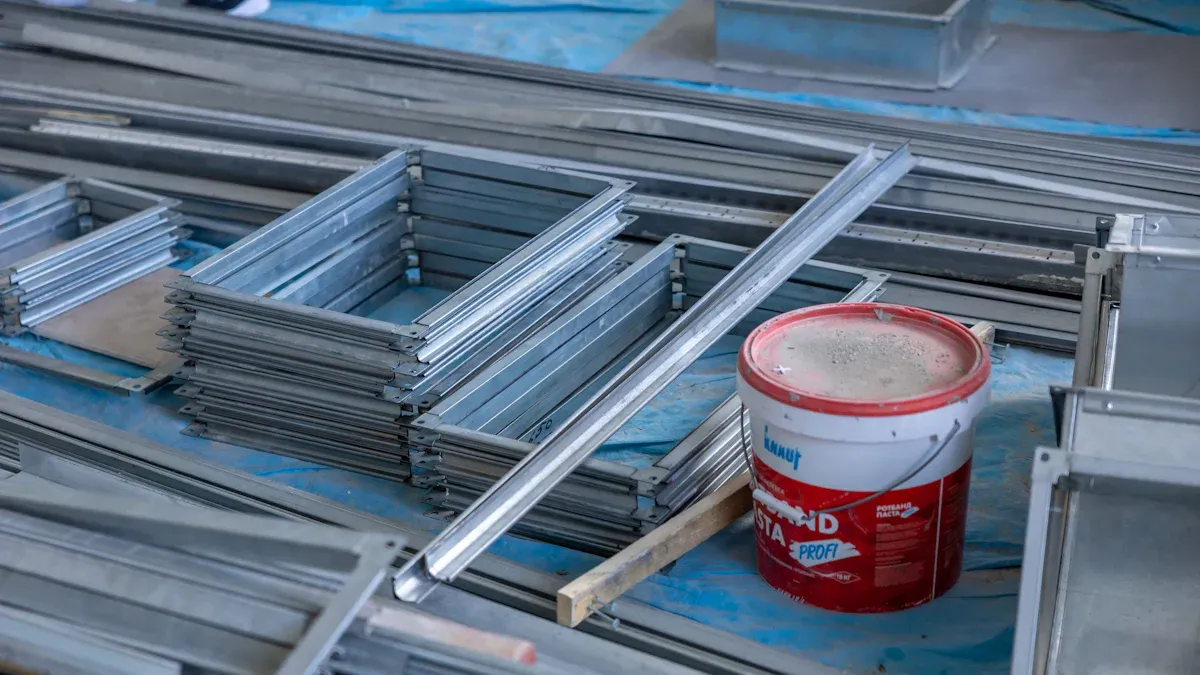
You use a galvanized steel square tube when you need strong, long-lasting support for your project. This type of tubing has a square shape and a protective zinc coating. The zinc layer shields the steel tubing from rust and weather. You often see square steel tubing in construction, fencing, and machinery frames. Tubular steel comes in many sizes and wall thicknesses, so you can match it to your needs. High-quality pre-galvanized square tubes give you a smooth finish and extra protection.
The global market for galvanized steel square tubing keeps growing. You can see how different regions and industries use this tubing by looking at the table below:
| Metric / Segment | Description / Data Covered |
|---|---|
| Market Valuation & Forecast | Global hot-dipped galvanized steel pipe market value in US$ million for 2023 and forecast to 2030 |
| Regional Market Forecasts | North America, Asia-Pacific, Europe, China, Japan, Southeast Asia, Latin America with production and consumption data |
| Product Type Segmentation | Round pipe, square pipe, and others with output/shipments in kilotons and revenue data |
| Application Segmentation | Architecture, mining industry, chemical industry, others with market share and growth trends |
| Key Manufacturers | Company profiles including production capacity and market share (e.g., Zhejiang Kingland, AK Steel) |
You can choose between square tube, rectangular tubing, or round tubing. Square steel tubing gives you even strength on all sides, while rectangular tubing works well for flat surfaces.
Benefits of Using Galvanized Steel Square Tubing
When you pick galvanized steel square tubing, you get many advantages. The zinc coating protects the tubular steel from rust for many years. You can use this tubing outdoors, in wet places, or in harsh weather. High-quality pre-galvanized square tubes last longer and need less maintenance.
Industry studies show that square steel tubing has excellent strength and durability. Tests on concrete-filled tubular steel columns prove that these tubes hold heavy loads and keep their shape even after strong impacts. You can trust galvanized steel square tubing for both safety and long-term use.
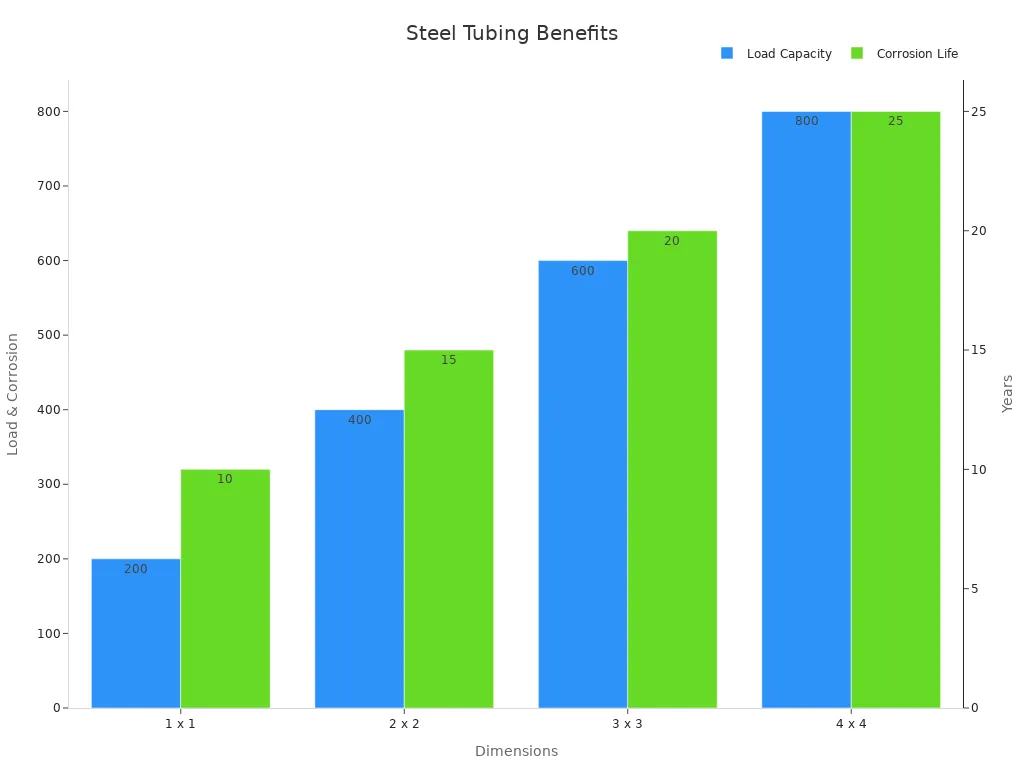
| Dimension (inches) | Material Thickness (gauge) | Weight per Foot (lbs) | Load Capacity (lbs) | Corrosion Resistance (Years) |
|---|---|---|---|---|
| 1 x 1 | 16 | 1.2 | 200 | 10 |
| 2 x 2 | 14 | 2.5 | 400 | 15 |
| 3 x 3 | 12 | 3.6 | 600 | 20 |
| 4 x 4 | 11 | 5.0 | 800 | 25 |
You can also see the relationship between load capacity and corrosion resistance in the chart below:
You get strong, reliable support with galvanized steel square tubing. You can use tubular steel for frames, supports, and barriers. High-quality pre-galvanized square tubes give you a good balance of cost, strength, and long life. You can also use rectangular tubing for projects that need a flat surface or a different look. Tubular steel gives you many choices for your next project.
Key Selection Factors for Steel Square Tube
Load Capacity and Strength-to-Weight Ratio
You need to consider load capacity and strength-to-weight ratio when you select square tube for your project. These two factors help you decide if the tubing can support the weight and pressure your structure will face. Square steel tubing gives you high strength and good support for many uses. You get better load-bearing strength when you choose the right wall thickness and size. Thicker walls increase the carrying capacity and help prevent bending or buckling.
Many technical reports show that wall thickness, shape, and size all affect the strength of tubular steel. You should also look at the material type. Galvanized steel square tubing offers both strength and corrosion resistance. Carbon steel gives you high strength, while paslanmaz çelik works well in highly corrosive areas. Aluminum tubing is lighter but not as strong.
Tip: Always match the load requirements of your project to the square tube specifications. If you are unsure, ask an expert to help you calculate the right strength-to-weight ratio.
You can see from research that square tube with larger cross-sectional areas spreads out the load. This makes the tubing stronger and safer for load-bearing capacity. Experimental studies on concrete-filled tubular steel columns show that the right square tube can handle heavy impacts and keep its shape. These studies also show that the strength-to-weight ratio improves with the right internal profiles and higher impact energies.
- Square tube gives you even strength on all sides.
- Rectangular tubing works well for flat surfaces and can handle different types of loads.
- Tubular steel with the right specifications keeps your structure safe and strong.
Size, Wall Thickness, and Dimensions
You must check the size, wall thickness, and dimensions before you choose square tube for your project. The size and specifications of the tubing affect both the strength and the weight. You can find square tube in many standard sizes, so you can match the tubing to your needs. The right wall thickness increases the carrying capacity and helps the tubing last longer.
Here is a table showing common square tube specifications for A500 grade steel tubing:
| Size (inches) | Duvar kalınlığı | Weight (lb/ft) |
|---|---|---|
| 5″ x 5″ | 3/8″ | 15.62 |
| 5″ x 5″ | 1/2″ | 23.12 |
| 5″ x 5″ | 1/2″ | 28.43 |
| 6″ x 6″ | 11 gauge (1/8″) | 9.85 |
| 6″ x 6″ | 3/16″ | 14.65 |
| 6″ x 6″ | 1/4″ | 19.02 |
You can also see the relationship between tube weight, wall thickness, and size in the chart below:
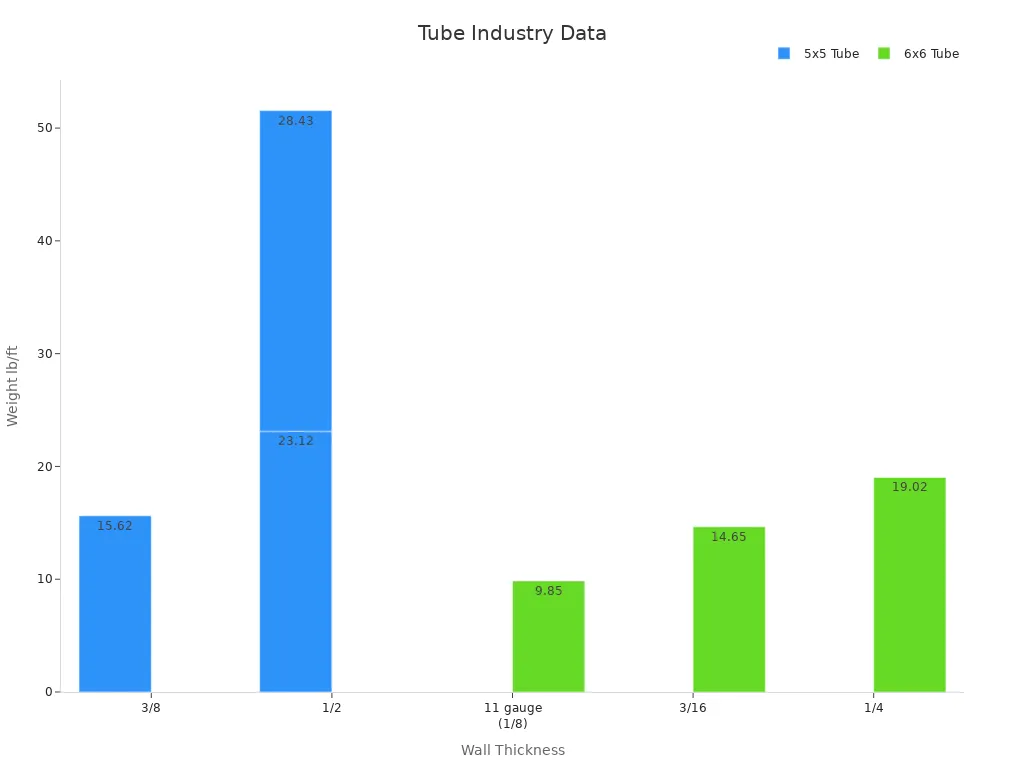
When you pick square steel tubing, always check the size and wall thickness against your project’s needs. If you need more strength, choose a thicker wall or a larger size. For lighter structures, you can use thinner tubing. Rectangular tubing gives you more options for different shapes and load directions. Tubular steel comes in many dimensions, so you can find the right fit for your project.
Environmental Exposure and Corrosion Resistance
You should always think about where you will use the square tube. Environmental exposure affects how long your steel tubing will last. Galvanized steel square tubing works well outdoors and in wet or harsh places. The zinc coating protects the tubular steel from rust and weather. If you use carbon steel tubing, you may need extra coatings to stop corrosion.
Different types of corrosion can damage your tubing. These include pitting, crevice, and even microbially influenced corrosion. You can prevent these problems by choosing the right material and coating. Stainless steel tubing works best in highly corrosive areas, but galvanized square tube gives you a good balance of cost and protection.
- Use galvanized square tube for outdoor, agricultural, or marine projects.
- Pick rectangular tubing or tubular steel with extra coatings for special environments.
- Always check the square tube specifications for coating type and thickness.
You can also ask your supplier for custom finishes or extra protection if your project needs it. Many suppliers offer technical support to help you choose the best tubular steel for your environment. When you match the right material and coating to your project, you get longer life and less maintenance.
Coating Type, Thickness, and Process
When you choose steel square tubing, you need to pay close attention to the coating. The coating protects the steel from rust and damage. You will see different types of coatings, each with its own benefits.
Types of Coatings for Steel Square Tubing:
Hot-Dip Galvanizing:
You dip the steel tube into molten zinc. This process covers the tube with a thick, even layer of zinc. Hot-dip galvanizing gives you strong protection against rust. You often see this method used for outdoor projects.Pre-Galvanizing:
You coat the steel strip with zinc before forming it into a tube. This process gives you a smooth finish. Pre-galvanized tubes work well for indoor or light outdoor use.Electro-Galvanizing:
You use electricity to apply a thin layer of zinc to the steel. This method gives you a smooth and shiny surface. Electro-galvanized tubes are best for projects that need a clean look but do not face harsh weather.
Tip: Always ask your supplier about the coating type. The right coating helps your tubing last longer.
Why Coating Thickness Matters
The thickness of the coating affects how long your steel tubing will resist rust. Thicker coatings give you better protection. You measure coating thickness in microns (µm) or ounces per square foot.
| Coating Type | Typical Thickness (µm) | Best Use Case |
|---|---|---|
| Hot-Dip Galvanized | 45-85 | Outdoor, heavy-duty |
| Pre-Galvanized | 15-25 | Indoor, light outdoor |
| Electro-Galvanized | 5-15 | Decorative, dry environments |
If you use tubing in a wet or salty place, you should pick a thicker coating. For indoor projects, a thinner coating may be enough.
How the Galvanizing Process Works
You need to understand how the galvanizing process protects your steel. The zinc forms a barrier that keeps water and air away from the steel. If the coating gets scratched, the zinc still protects the steel by corroding first. This is called “sacrificial protection.”
Here is a simple step-by-step look at the hot-dip galvanizing process:
- Clean the steel tube to remove dirt and oil.
- Dip the tube in acid to remove rust.
- Rinse the tube with water.
- Dip the tube in molten zinc.
- Cool and inspect the finished tube.
Note: The quality of the galvanizing process affects how well your tubing resists rust. Always check for even coating and no bare spots.
You should always match the coating type and thickness to your project’s needs. The right choice gives you strong, long-lasting protection. You get the best value when you pick the right galvanized steel square tubing for your environment.
Matching Galvanized Steel Square Tubing to Your Application
Construction and Structural Projects
You often see square tube used in construction and architecture. This tubing gives you strong support for buildings, bridges, and towers. You can use square tube for columns, beams, and frames. Tubular steel helps you build safe structures because it spreads weight evenly. When you pick square steel tubing, you get both strength and a clean look. Many builders choose tubular steel for its easy installation and long life. You can also use this tubing for diy and home improvement projects, such as making fences or gates.
Manufacturing, Industrial, and Material Handling Uses
You find square tube in many factories and warehouses. This tubing works well for conveyor systems, racks, and machine frames. Tubular steel stands up to heavy loads and daily use. You get high strength and good corrosion resistance, which means less maintenance. The market for steel tubing in these areas reached about $6 billion in 2022. Square pipe now makes up 30% of the market, and its share keeps growing because of construction and architecture needs.
| Aspect | Details |
|---|---|
| Market Size (2022) | Approximately $6 billion globally |
| Fastest Growing Pipe Type | Square Pipe, driven by construction and architecture |
| Key Application with Largest Share | Architecture sector with 35% market share |
| Material Advantages | High strength, corrosion resistance, durability, cost-effectiveness |
You can see how different regions lead the market in the chart below:
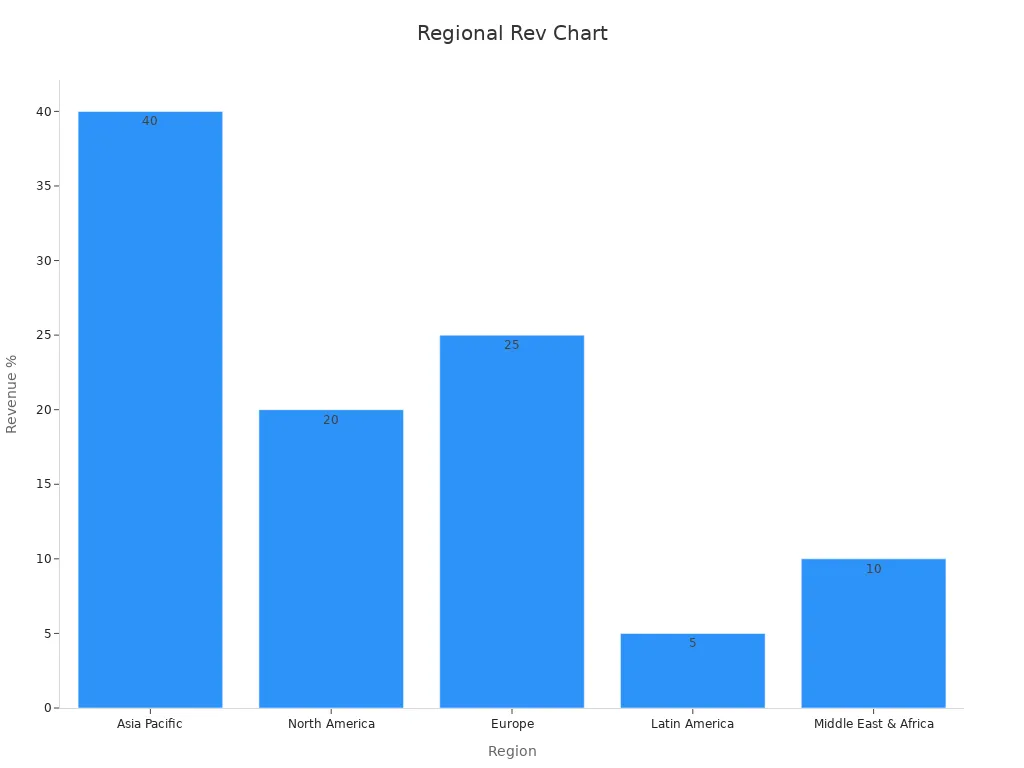
Tubular steel gives you reliable performance in tough environments. Advanced galvanizing and CNC machining make tubing even more precise and efficient.
Outdoor, Agricultural, and Decorative Applications
You can use square tube for outdoor projects like railings, signposts, and playgrounds. Tubular steel resists rust, so it lasts longer outside. Farmers use this tubing for animal pens, greenhouses, and equipment frames. You also see tubular steel in decorative work, such as garden arches or modern furniture. Square tube gives you both strength and style. When you choose the right steel tubing, you get a product that stands up to weather and daily use.
Ensuring Quality and Value When You Choose the Right Square Tube
Quality Checks and Certifications for Steel Square Tube
You want your square tube to last and perform well. Start by checking for quality certifications. Certified tubing meets strict requirements for strength, finish, and durability. Look for signs of poor quality, such as folds, cracks, or a dull surface. These problems often mean the tubing did not pass proper inspections. Reliable square tube suppliers use advanced labs and third-party inspections to test for straightness, wall thickness, and strength. They also use protective coatings and clear labeling to keep your tubing safe during shipping. When you choose certified tubing, you avoid costly repairs and replacements.
| Aspect | Details |
|---|---|
| Sertifikasyon | DIN 2445, ASTM, and other square tube standards |
| Testing & Inspection | Dimensional checks, mechanical tests, non-destructive tests, chemical analysis |
| Ambalajlama | Protective coating, end caps, secure bundling, clear labeling |
Tip: Always ask for proof of certification and quality checks before you buy square tube.
Industry Standards and Compliance
You need to make sure your square tube meets industry standards. Square tube standards like ASTM and DIN 2445 set the rules for strength, size, and coating. When your tubing follows these standards, you know it will work in tough environments. Stainless steel tubing, especially grades 304 and 316, meets high square tube standards for corrosion resistance and strength. This means less maintenance and lower costs over time. Tubular steel that meets these standards can handle extreme temperatures and harsh chemicals. You also help the environment because stainless steel is recyclable and supports sustainability.
Note: Following square tube standards protects your project and gives you long-term value.
Sourcing Tips and Choosing a Reputable Supplier
You should research suppliers before you buy square tube or tubing. Use trusted online platforms to compare suppliers by their certifications and product range. Check reviews and client feedback to see if the supplier delivers quality tubing. Ask for samples to check the finish and size. Build a good relationship with your supplier by staying in touch and visiting their facility if possible. Compare prices and negotiate for better deals, especially if you order in bulk. Remember, metal sourcing costs have gone up by about 10% in the past year, so plan your budget carefully.
| Supplier Location | Material Type | Standard Size (mm) | Minimum Order Quantity | Pricing per kg (USD) | Lead Time (weeks) |
|---|---|---|---|---|---|
| Japan | Galvanized Steel | 60×60 | 150 | 4.0 | 5 |
When you follow these steps, you get high-quality square tube that meets your needs and lasts longer.
Balancing Cost, Durability, and Maintenance
When you plan your project, you need to consider the cost, durability, and maintenance of your materials. Galvanized steel square tubing stands out because it lasts a long time and needs little care. You might see a higher price at first, but you save money over the years because you do not need to repaint or repair it often.
Here is a table that compares hot-dip galvanizing with paint systems:
| Aspect | Hot-Dip Galvanizing (HDG) | Paint Systems |
|---|---|---|
| Typical Service Life | Up to 75 years with minimal or no maintenance | Requires repainting every few years |
| Maintenance Needs | Generally none over project life | Regular maintenance and repainting required |
| Life-Cycle Cost (Example) | $0.03 per year (30-year project) | $0.15 per year (30-year project) |
| Cost Components | Initial cost spread over long life, minimal maintenance | Initial cost plus recurring maintenance and repainting |
| Corrosion Protection | Cathodic protection, barrier effect, patina formation | Barrier protection only |
| Economic Advantage | More economical over long term | Lower initial cost but higher total cost |
You should also look at these key points:
- Galvanized steel square tubes last 20 to 50 years, even in tough weather.
- You only need to check them sometimes. No painting or extra coatings are needed.
- Their strong zinc layer protects against rust, making them great for outdoor and industrial jobs.
- You can recycle the material, which helps the environment.
- Compared to wood or mild steel, you get better strength and lower upkeep costs.
The steel pipe industry focuses on giving you strong products that do not need much care. Hot-dip galvanized tubing helps you save on repairs and keeps your project running longer. Routine checks and quick fixes can cut maintenance costs by up to 30%. When you consider the cost over the life of your project, galvanized steel square tubing gives you the best value. You get a strong, reliable, and low-maintenance solution for many uses.
Choosing the right galvanized steel square tubing starts with a careful review of your project’s needs. Use the quick criteria checklist to evaluate tensile strength, wall thickness, and coating quality.
- Check certifications and inspection reports for quality.
- Measure dimensions to ensure a proper fit.
- Inspect the surface for cracks or defects.
- Consult experts to match tubing to your application.
You protect your investment and ensure long-term value when you focus on quality, fit, and expert advice.
SSS
What sizes of galvanized steel square tubing can you buy?
You can find many sizes, from small 20x20mm tubes to large 100x100mm options. Check with your supplier for a size chart. Most projects use standard sizes, but you can ask for custom cuts.
How do you know if the zinc coating is thick enough?
Ask your supplier for the coating thickness in microns. Hot-dip galvanized tubes usually have 45–85 µm. Thicker coatings last longer outdoors.
Tip: Use a coating gauge for a quick check.
Can you weld galvanized steel square tubing?
Yes, you can weld it. Remove the zinc coating from the weld area first. Always wear a mask and work in a well-ventilated space. Zinc fumes can be harmful.
What is the best way to cut galvanized steel square tubing?
Use a metal-cutting saw or an angle grinder. Mark your cut line with chalk. Clamp the tube for safety.
- Wear gloves and goggles.
- Clean the cut edge after finishing.