
You can make costly errors if you rush your decision when selecting galvanized steel beams for a construction project. Many builders forget to check the right load for their structure. Others ignore how the environment can affect galvanized steel. Some pick the wrong size or type of steel beam. You might also overlook the importance of proper galvanized coating. Always keep safety and construction codes in mind when choosing galvanized steel for any job.
Tip: Careful planning helps you avoid these common mistakes with galvanized steel beams.
Misjudging Load Requirements for Galvanized Steel Beams
Importance of Accurate Load Calculations in Construction Projects
You need to start every construction project with careful load calculations. These calculations help you choose the right steel beam for your structure. When you know the exact load, you can avoid costly mistakes and keep your project safe. Accurate load calculations play a big role in structural safety. They help you understand how much weight your galvanized steel beams must support.
Here are some reasons why accurate load calculations matter:
- You determine the correct size and strength of each steel beam, so it can safely support the expected weight.
- You account for all types of loads, such as dead, live, seismic, and wind loads, which is critical in construction.
- You meet building codes and safety standards, which helps prevent collapse or deformation.
- You optimize your design, using just enough steel for safety and cost savings.
- You lower the risk of structural failures, which protects property and public health.
Tip: Always double-check your load calculations before you order materials.
Risks to Safety and Structural Integrity
If you misjudge the load, you put your construction project at risk. The wrong steel beam can lead to bending, cracking, or even collapse. These problems threaten safety for everyone on the site and anyone who uses the building later. Structural safety depends on matching the load-bearing capacity of your steel beams to the real demands of your project. Even a small mistake in load calculations can cause big problems.
Ensuring the Right Steel Beam Selection
You can avoid these risks by focusing on the load-bearing capacity of each steel beam. Start by defining your project requirements. This step guides you to the right galvanized steel beams. Choose the proper gauge and thickness to match your load needs. Thicker steel gives you more support. Make sure your materials meet industry standards for quality and performance. Think about environmental factors, such as corrosion, when you select your steel.
- Defining project requirements, including load-bearing capacity, guides your selection.
- Choosing the right gauge and thickness ensures your steel beam meets load demands.
- Meeting industry standards keeps your construction safe.
- Considering environmental factors, like corrosion, helps you pick the best galvanized steel.
Note: Consulting a structural engineer can help you make the best choices for safety and durability.
Overlooking Environmental Exposure and Corrosion Risks
How Environmental Factors Affect Galvanized Steel
You need to consider the environment where you will use galvanized steel beams. Different conditions, like humidity, temperature, and pollution, can change how fast galvanized steel corrodes. For example, high chloride levels or acid rain can speed up the loss of the zinc coating. The table below shows how some key environmental factors affect galvanized steel:
| Environmental Parameter | Value / Condition | Corrosion Rate / Effect on Galvanized Steel | Corrosivity Category (ISO 9223) | Notes |
|---|---|---|---|---|
| Chloride deposition rate | 50.85 mg/m²/day (low) | Corrosion rate ~2.00 μm/year | C3 | Moderate corrosion, thickness loss ~8% in 3 years |
| SO₂ content | 3.53 mg/m²/day (high) | No increase in galvanized steel corrosion rate | C3 | Zinc coating blocks SO₂ attack |
| Temperature | ~21 °C | Moderate corrosion rates | N/A | Lower than hotter, wetter sites |
| Relative Humidity | 73% | Stable corrosion rate | N/A | Lower RH means less corrosion |
| Rainfall | 760-1028 mm/year | Rain dissolves corrosion products | N/A | Affects thickness of corrosion layer |
| Exposure time | 1 to 3 years | Corrosion rate drops over time | N/A | Thickness loss ~8% after 3 years |
Galvanized steel usually corrodes much slower than unprotected steel. Over three years, galvanized steel loses only about 4-5.6% as much thickness as bare steel. Even after long exposure, it keeps most of its strength and toughness.
Choosing the Right Galvanized Steel Coating
You must match the galvanized steel coating to the environment. Not all coatings work the same in every place. Research shows that:
- In the air, a zinc patina forms and protects the steel beam. Pollution, sea spray, and wet-dry cycles can change how long the coating lasts.
- In soil, the coating’s life depends on soil type, pH, and water. Thicker coatings last longer, sometimes over 75 years in mild soils.
- In freshwater, hard water slows corrosion. Impurities and temperature also matter.
- In seawater, chloride and sulfide ions increase corrosion, but magnesium and calcium help protect the zinc.
- Tools like service life charts help you pick the right coating thickness for your project.
Tip: Always check the environment before you choose a galvanized steel coating. The right choice gives you better durability and performance.
Protecting Steel Beams for Long-Term Durability
You want your galvanized steel beams to last. Long-term tests show that galvanized steel keeps its strength and stiffness even after years in harsh conditions. For example, beams exposed to sunlight and saltwater for up to two years did not lose strength or show much corrosion. In some cases, the steel beam even became stronger. Cracks started later, and the beams stayed safe and solid. Galvanized coatings help prevent rust and keep the steel beam working well for a long time. You can trust galvanized steel for long-term performance and durability, even in tough climates.
Selecting the Wrong Steel Beam Size or Type
Common Sizing Errors in Construction Projects
You might think picking any steel beam will work for your construction project, but sizing mistakes happen often. Many builders choose a beam that is too small or too large. A beam that is too small cannot support the load, which puts your project at risk. A beam that is too large wastes money and space. Sometimes, you may overlook the need to match the beam’s length and depth to the span and load. These errors can lead to weak structures or extra costs. Always check the measurements and requirements before you order your steel beam.
Matching Steel Beam Profiles to Project Needs
Every construction project has unique needs. You must match the steel beam profile to your project’s demands. Different profiles, like I-beams or H-beams, have different strengths. Studies show that the resistance of steel I-beams depends on the quality and properties of the steel. Researchers use statistical models to compare how different profiles perform under load. These studies confirm that strict quality controls help beams meet safety standards. When you choose the right profile, you make sure your structure stays strong and safe. You also avoid problems with bending or twisting.
Tip: Use tables or charts to compare beam profiles and pick the best one for your project.
Consulting Professionals for Safety
You should always ask a professional for help when choosing a steel beam. The right choice keeps your construction project safe and cost-effective. Here are some reasons to consult an expert:
- Professionals know how to check different beam designs and structural needs.
- They use special software to calculate bending, strength, and size.
- These tools help spot design problems before you start building.
- Experts make sure your steel beam supports the load and meets safety rules.
- They can compare materials and designs to find the best and most affordable option.
When you work with a professional, you lower the risk of mistakes. You also make sure your galvanized steel beams fit your project and last a long time.
Ignoring Galvanized Steel Coating Specifications and Quality
Types of Galvanized Steel Coatings
You need to know the different types of galvanized steel coatings before you choose materials for your project. The two most common coatings are Galvalume and traditional galvanized. Galvalume uses a mix of zinc, aluminum, and silicon, while galvanized uses pure zinc. Each type has its own strengths and best uses. The table below compares these coatings:
| Aspect | Galvalume Coating | Galvanized Coating |
|---|---|---|
| Kompozisyon | Zinc, Aluminum, Silicon alloy | Pure Zinc |
| Coating Process | Continuous hot-dip alloy coating | Hot-dip galvanization or electroplating |
| Korozyon Direnci | Superior, for harsh environments | Robust, sacrificial zinc layer |
| dayanıklılık | Long-lasting, heat reflective | Durable, but less than Galvalume |
| Cost | Higher | Lower, cost-effective |
| Uygulamalar | Automotive, agriculture, appliances | Construction, automotive, agriculture, appliances |
| Advantages | Enhanced resistance, longevity, heat reflectivity | Cost-effective, flexible, sacrificial protection |
| Limitations | Higher cost | Shorter lifespan in harsh environments |
Galvanized steel gives you strong protection against rust. The zinc coating acts as a barrier and can even protect the steel if the surface gets scratched. You can use galvanized steel in many places, like buildings, cars, and farm equipment.
Impact of Coating Thickness on Performance
The thickness of the galvanized coating makes a big difference in how well your steel beams last. Thicker coatings give better corrosion resistance and help your beams stay strong for many years. The table below shows how coating thickness affects key features:
| Performance Metric | Value/Range | Effect of Coating Thickness |
|---|---|---|
| Coating Thickness | 45 to 150 micrometers | Thicker = better corrosion resistance |
| Moment of Inertia | Up to 22% increase | More stiffness after galvanizing |
| Mass Increase | 15-17% more after galvanizing | Added zinc layer boosts durability |
| Adhesion Strength | Over 3 MPa | Strong bond keeps coating in place |
| Impact Resistance | 10-20 Joules | Thicker coating resists damage |
| Service Life | 50+ years (sheltered) | Longer life with thicker coating |
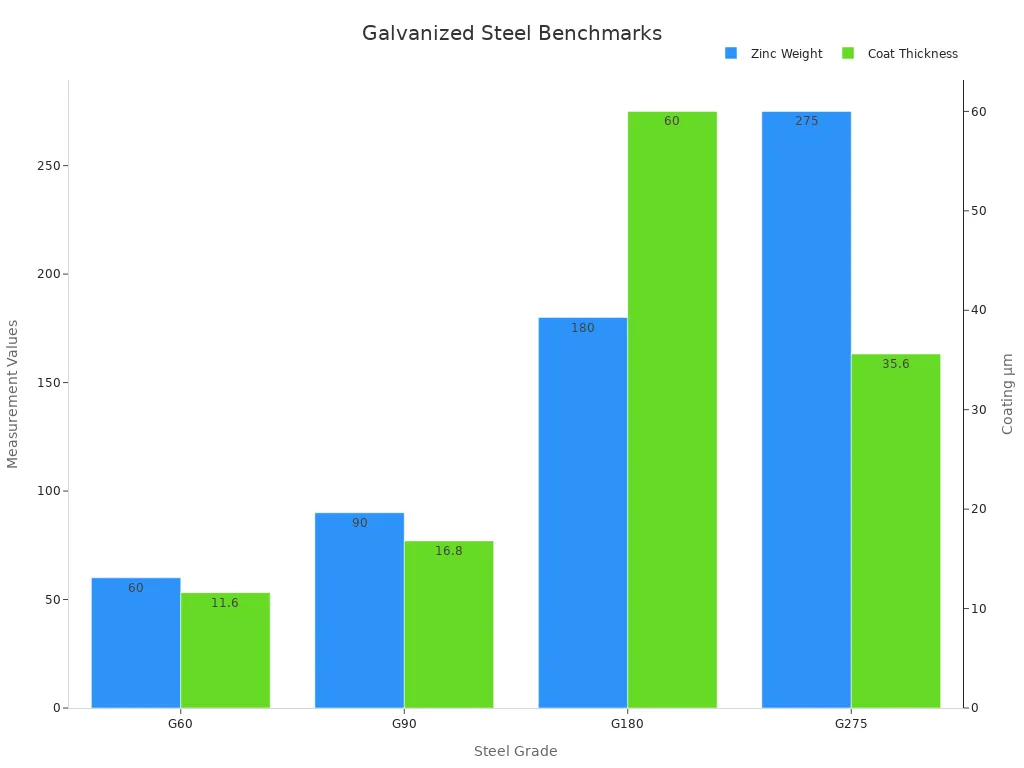
Tip: Always check the coating thickness when you buy galvanized steel. Thicker coatings mean longer-lasting beams and better performance.
Verifying Galvanized Steel Standards
You should always check that your galvanized steel meets industry standards. Reliable standards, like ASTM A123, A153, and A767, set rules for coating thickness, finish, and appearance. The table below lists some key benchmarks:
| ASTM Standardı | Key Criteria | Details |
|---|---|---|
| A123/A123M | Coating Thickness | Minimum thickness, no maximum limit |
| Bitiş | Smooth, uniform coating | |
| Appearance | No uncoated areas or harmful defects | |
| Adherence | Strong bond for long service life | |
| A153/A153M | Coating Thickness | Minimum thickness, threads exempted |
| Bitiş | Smooth, uniform, includes threads | |
| Appearance | No uncoated areas or defects | |
| Adherence | Strong bond, embrittlement precautions | |
| A767/A767M | Coating Thickness | Varies by rebar size |
| Finish/Appearance | Same as A123 and A153 | |
| Adherence | Same as A123 and A153 | |
| Extra Requirements | Material tracking, passivation, bend rules |
You can trust galvanized steel that meets these standards to give you the best protection and quality for your project.
Neglecting Safety, Code Compliance, and Supplier Quality
Meeting Construction Project Codes and Regulations
You must follow strict codes and regulations when you use galvanized steel beams in any construction project. These rules protect everyone’s safety and help your project pass inspections. IAPMO-ES reports give you proof that your galvanized steel meets quality and performance standards. These reports cover material quality, design, and how the beams perform under different loads and weather. They also show that your beams meet local and national building codes.
Membership in groups like the Steel Deck Institute (SDI) means your supplier follows these standards. When you use products with IAPMO-ES reports and SDI membership, you make the permitting process easier. You also get clear instructions for installation and maintenance, which helps you keep your project safe and compliant.
Tip: Always ask for documentation that proves your galvanized steel beams meet all required codes.
Choosing Reliable Galvanized Steel Suppliers
Picking the right supplier for galvanized steel beams can make a big difference in your construction project. Start by defining what type and quantity of steel you need. Research suppliers by checking recommendations and reading customer reviews. Look for suppliers with certifications like ISO or ASTM and ask for samples to check quality.
A reliable supplier should deliver on time and offer fair prices. Good customer service and support matter, too. Many builders prefer suppliers who want long-term partnerships because this leads to better service.
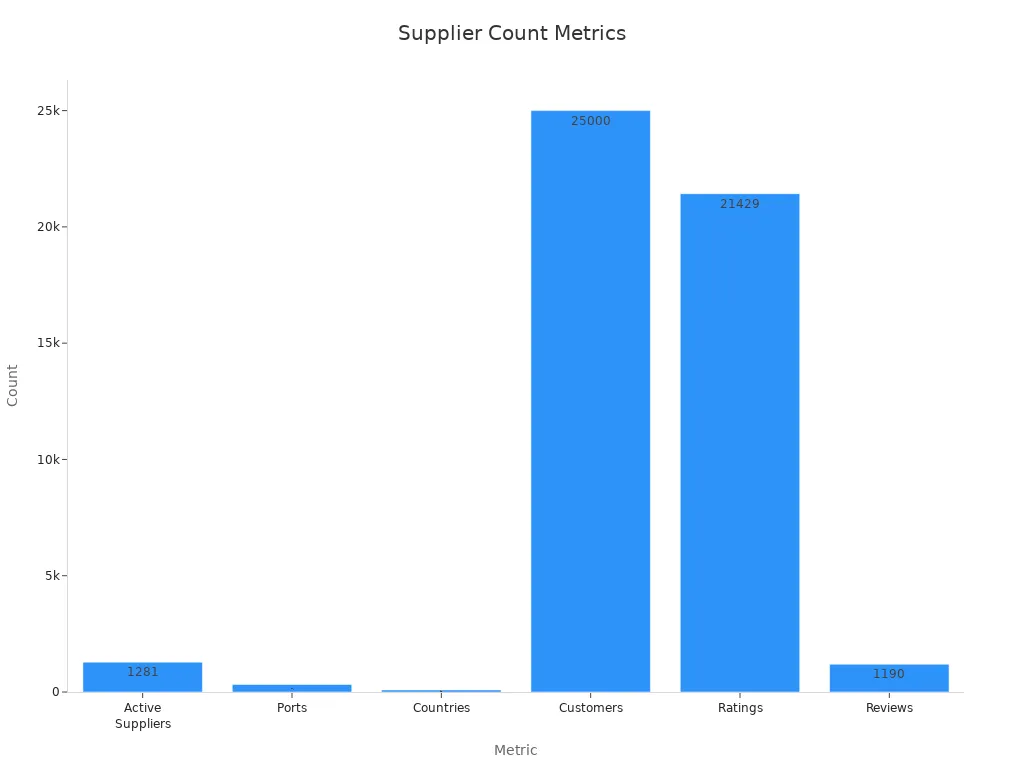
The table below shows what to look for in a supplier:
| Aspect | Details |
|---|---|
| Number of Active Suppliers | Over 1,281 global galvanized beam suppliers |
| Data Parameters Analyzed | Shipping invoices, export frequency, pricing, clients |
| Key Features | Exporter activity, price analysis, contract monitoring, competitor alerts |
| User Base and Feedback | 25,000+ customers, 4.7/5 rating from 1,190 reviews |
| Supplier Examples | SAWARIA PIPES PVT LTD, KARAMTARA ENGINEERING PVT LTD, EMIL LUX GMBH CO KG |
Ensuring Product Warranties and Support
You should always check if your galvanized steel beams come with a warranty. A good warranty protects you if there are problems with the coating or the steel itself. Make sure you follow the manufacturer’s instructions for installation and care. This keeps your warranty valid and helps your beams last longer.
Strong support from your supplier means you get help fast if you have questions or issues. This support adds another layer of safety for your construction project.
When you plan a construction project, avoid these common mistakes:
- Using the wrong steel type or size for your environment.
- Modifying beams by drilling or re-straightening, which weakens them.
- Ignoring regular inspections and safety standards.
You improve safety and compliance by following building codes and using new, approved materials. Always consult professionals and use a checklist that covers load, span, support, and environmental risks. Careful planning helps your construction stay strong and reliable.
SSS
What is the main benefit of using galvanized steel beams?
You get strong protection from rust and corrosion. The zinc coating helps your beams last longer, even in tough weather. You save money on repairs and replacements.
How do you know which size steel beam to choose?
You should check your project’s load needs. Use tables or charts to compare beam sizes. Ask a structural engineer for help if you are unsure.
Can you cut or drill galvanized steel beams?
You can cut or drill them, but you must protect the exposed steel. Use a zinc-rich paint or spray to cover any bare spots. This keeps your beam safe from rust.
How long do galvanized steel beams last?
Galvanized steel beams can last over 50 years in mild environments. In harsher places, they may last 20 to 30 years. Regular checks help you spot problems early.
Do you need to clean galvanized steel beams?
Yes, you should clean them to remove dirt and debris. Use water and a soft brush. Avoid harsh chemicals. Clean beams last longer and look better.