
You might wonder about the difference between galvanized and stainless steel. Galvanized steel uses a thick zinc layer, usually 10 to 20 micrometers, to protect its surface from rust. This coating can last up to 312 years in harsh environments but much less in cities or coastal areas. Stainless steel, on the other hand, resists corrosion because it contains chromium throughout. When you compare the difference between galvanized and stainless steel, you see that each offers unique protection. Knowing the difference between galvanized and stainless steel helps you choose the right material for your project.
What is Galvanized Steel?
Definition and Manufacturing Process
You use galvanized steel when you need strong protection against rust. Galvanized steel means regular steel covered with a layer of zinc. This zinc layer shields the steel from moisture and air, which helps prevent rust. You can find several types of galvanized steel, such as hot-dip galvanized, electrogalvanized, Galvalume, and Galfan. Each type uses a different process to apply the zinc coating.
The most common method is hot-dip galvanizing. In this process, you dip the steel into a bath of molten zinc. The zinc bonds to the steel and forms a tough, protective layer. Electrogalvanizing uses electricity to coat the steel with zinc. Both methods give you strong corrosion resistance, but hot-dip galvanized steel usually has a thicker coating.
Manufacturers focus on quality and efficiency. Many companies use automation and robotics to make sure the zinc coating is even and strong. Digital tools help them track production and spot problems early. These steps improve the quality of galvanized steel and make it more reliable for you.
Here is a quick overview of the industry:
| Aspect | Details |
|---|---|
| Manufacturing Types | Hot-Dip Galvanized Steel, Electrogalvanized Steel, Galvalume Steel, Galfan Steel |
| Coating Thickness | Light, Medium, Heavy |
| Application Areas | Automotive, Construction, Industrial, Energy, Infrastructure |
| Key Industry Players | Tata Steel, Nippon Steel, ArcelorMittal, thyssenkrupp |
| Market Size & Growth | USD 241.87 billion (2024), projected USD 353.51 billion (2030), CAGR 6.9% |
Key Properties
Galvanized steel stands out because of its excellent corrosion resistance. The zinc coating acts as a barrier and also sacrifices itself to protect the steel underneath. This means the zinc will corrode first, keeping the steel safe for a longer time. You see this in real-world tests, where galvanized steel lasts much longer than plain steel, even in tough environments.
- The zinc layer gives you strong corrosion resistance in marine, industrial, and outdoor settings.
- Galvanized steel needs less maintenance because the coating protects it from damage.
- You get a longer lifespan for posts, beams, and other structures made from galvanized steel.
- The coating thickness and method affect how well the steel resists corrosion.
- Galvanized steel supports sustainability because it can be recycled and has a lower carbon footprint.
You can trust galvanized steel for its durability and strong corrosion resistance. These properties make it a top choice for construction, automotive, and many other industries.
What is Stainless Steel?
Definition and Manufacturing Process
You use stainless steel when you need a material that stays strong and shiny, even in tough conditions. Stainless steel is a type of steel that contains chromium. This chromium mixes with oxygen to form a thin, invisible layer on the surface. This layer protects the metal from rust and damage. You can find different types of stainless steel, such as ferritic, austenitic, martensitic, duplex, and precipitation-hardening grades. Each type has its own mix of elements and special uses.
Here is a table that shows important facts about stainless steel today:
| Aspect | Details |
|---|---|
| Market Size (2024) | Approx. USD 135.9 billion |
| Projected Market Size (2033) | USD 204.8 billion |
| CAGR (2025-2033) | About 4.6% |
| Key Market Drivers | Infrastructure, urbanization, energy savings, sustainability, recycling |
| Manufacturing Insights | New eco-friendly methods, more recycled steel, advanced technology plants |
| Market Segmentation by Type | Ferritic, Austenitic, Martensitic, PH, Duplex, Others |
| Sustainability Focus | Over 50% made from recycled scrap |
| Regional Insights | Asia-Pacific leads; North America strong in automotive; Europe strong in tech and sustainability |
You see that companies now use advanced technology to make stainless steel. Plants like Outokumpu’s in Finland focus on quality and eco-friendly production. More than half of all stainless steel comes from recycled scrap. This saves energy and raw materials. The process uses careful mixing of metals, heating, and shaping. Chromium is the key element. It forms a passive oxide layer that gives stainless steel its famous corrosion resistance.
Key Properties
Stainless steel stands out because of its unique properties. You get excellent corrosion resistance, which means the metal does not rust easily. Chromium in the steel forms a strong, invisible shield. This shield repairs itself if scratched. Adding molybdenum and nickel makes the corrosion resistance even better, especially in salty or acidic places.
- Chromium forms a passive oxide layer that protects against rust and damage.
- Molybdenum helps the steel resist pitting and crevice corrosion, especially in harsh environments.
- Nickel improves toughness, formability, and corrosion resistance in acidic conditions.
- Stainless steel keeps its strength at high and low temperatures.
- You can shape, weld, and clean stainless steel easily.
You also benefit from the way stainless steel handles heat and cold. Annealing, a heat treatment, makes the metal more flexible and less likely to crack. Stainless steel can be magnetic or non-magnetic, depending on its type and how you treat it. You can use stainless steel in many industries because it lasts long and needs little care.
Tip: When you choose stainless steel, you get a material that combines strength, beauty, and top-level corrosion resistance. This makes it perfect for buildings, cars, kitchens, and even medical tools.
Stainless steel gives you a reliable choice for projects where corrosion resistance and durability matter most. Its properties make it a favorite for engineers, builders, and designers around the world.
Key Difference Between Galvanized and Stainless Steel
Durability and Strength
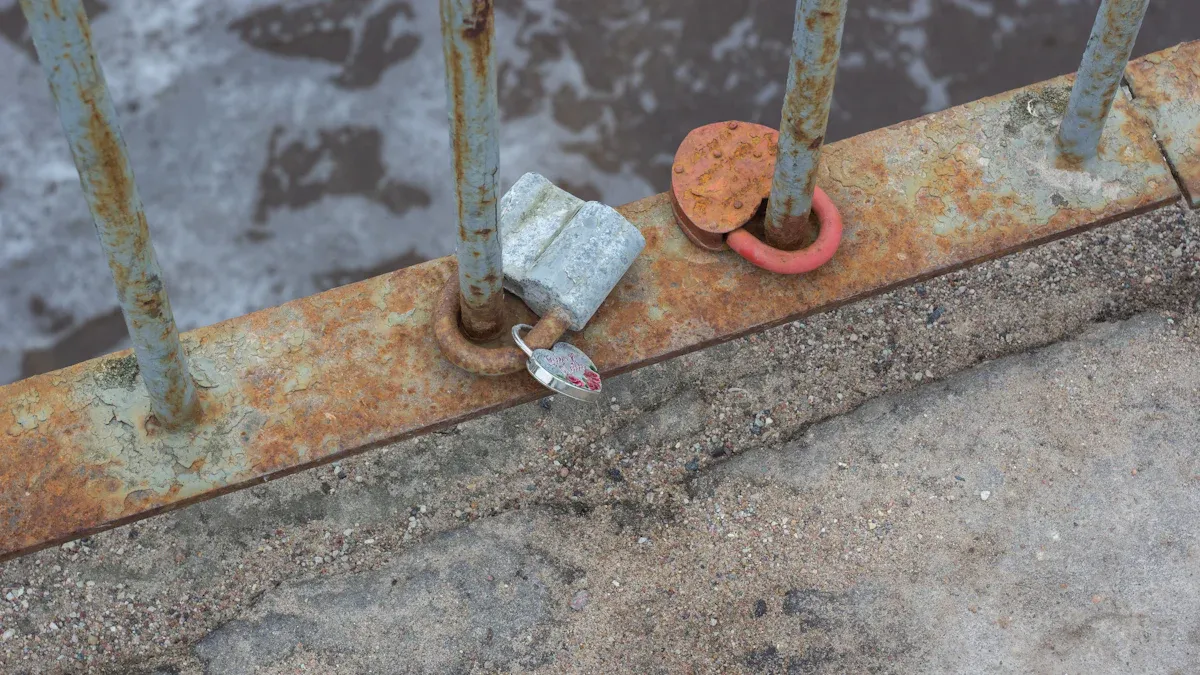
When you look at the difference between galvanized and stainless steel, you notice that both materials offer strong performance in construction. Galvanized steel gets its strength from the base steel, which is then coated with zinc. This zinc layer protects the steel but does not make it stronger. If the coating wears off or gets scratched, the steel underneath can start to rust. You often see galvanized steel used in construction for fences, beams, and outdoor structures because it stands up well to weather for many years.
Нержавеющая сталь, on the other hand, has strength built into its entire structure. The chromium in stainless steel mixes throughout the metal, not just on the surface. This means you get the same level of protection and strength even if the surface gets scratched or damaged. Stainless steel keeps its shape and toughness in both hot and cold temperatures. You find stainless steel in construction projects that need extra durability, like bridges, skyscrapers, and high-traffic public spaces.
Note: If you need a material that stays strong even after years of use or exposure, stainless steel gives you more long-term durability than galvanized steel.
Устойчивость к коррозии
Corrosion resistance is one of the most important factors when you choose materials for construction. Galvanized steel uses a zinc coating to block moisture and air. This coating acts as a barrier and also sacrifices itself to protect the steel underneath. When the zinc layer is thick and undamaged, galvanized steel resists rust very well. You see this in construction projects like guardrails, street signs, and farm equipment.
Stainless steel takes corrosion resistance to a higher level. The chromium in stainless steel forms a thin, invisible layer that protects the metal from rust. This layer repairs itself if scratched, so you do not have to worry about small damages. Stainless steel also resists corrosion from chemicals, salt, and acids. You often see stainless steel in construction for bridges near the ocean, water treatment plants, and food processing factories where high corrosion resistance is needed.
Here is a quick comparison:
| Feature | Galvanized Steel | Нержавеющая сталь |
|---|---|---|
| Устойчивость к коррозии | Good (depends on zinc layer) | Excellent (built-in, self-healing) |
| Protection Location | Surface only (zinc coating) | Throughout the entire metal |
| Reaction to Scratches | May rust if coating is damaged | Still resists corrosion if scratched |
| Best Use | Outdoor, less harsh environments | Harsh, chemical, or marine environments |
Tip: For construction in areas with lots of moisture, salt, or chemicals, stainless steel gives you the best corrosion resistance.
Cost Comparison
Cost plays a big role when you pick between galvanized and stainless steel for construction. Galvanized steel usually costs less at first. The zinc coating process is cheaper than making stainless steel. You see galvanized steel used in large construction projects where budget matters, like warehouses, barns, and utility poles.
Stainless steel costs more to produce because it uses chromium and sometimes other metals like nickel and molybdenum. The higher price means you often use stainless steel in construction projects where long life and low maintenance are more important than saving money up front.
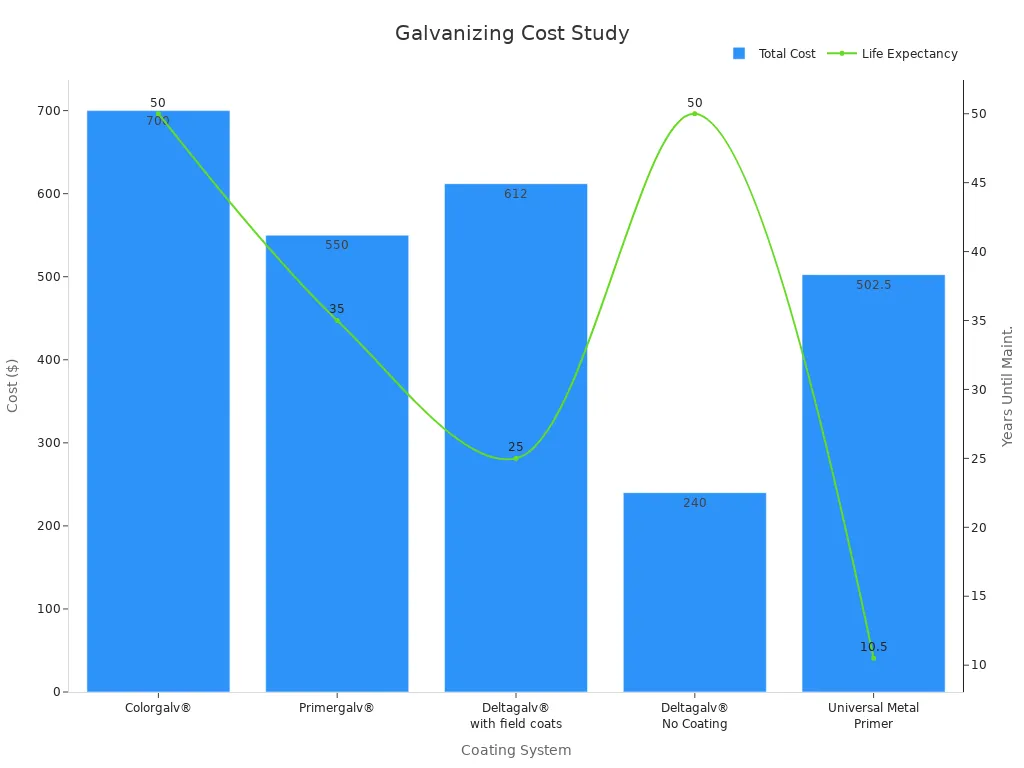
The American Galvanizers Association offers a Life-Cycle Cost Calculator. This tool helps you compare the initial and long-term costs of galvanized steel with other coatings. Studies show that galvanized coatings like Colorgalv® can last up to 50 years with little or no maintenance. Here is a table with some real numbers:
| Coating System | Initial Cost Per Ton | Time Until First Maintenance (Years) | Maintenance Cost Per Ton | Maintenance Interval (Years) | Total Cost Over 50 Years Per Ton |
|---|---|---|---|---|---|
| Colorgalv® | $700 | 50 | $0 | 50 | $700 |
| Primergalv® | $550 | 35 | $288 | 25 | $1,298 |
| Deltagalv® with field coats | $612 | 25 | $564 | 20 | $1,889 |
| Deltagalv® – No Coating | $240 | 50 | $0 | 50 | $240 |
| Shop applied Universal Metal Primer with two coats of High Gloss Enamel | $502.50 | 10.5 | $752.50 | 8 | $4,217.89 |
You can see that galvanized steel offers a lower total cost over 50 years, especially when you choose coatings that last longer. Stainless steel does not appear in this table, but you should know that its higher initial cost often pays off in places where you need top corrosion resistance and almost no maintenance.
Remember: If you want to save money on construction and do not need the highest level of corrosion resistance, galvanized steel is a smart choice. If you need a material that lasts for decades with almost no care, stainless steel is worth the investment.
Appearance and Finish
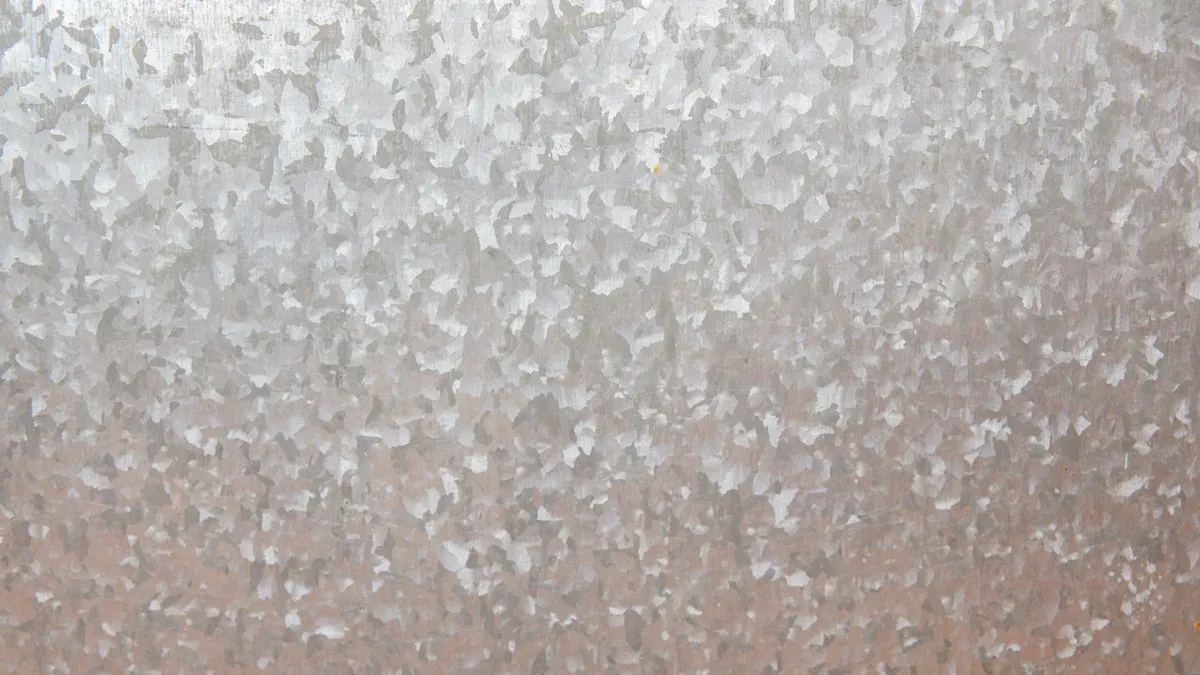
When you compare the appearance of galvanized and stainless steel, you notice clear differences. Galvanized steel has a matte, gray finish. You often see a spangled pattern on its surface. This pattern comes from the zinc coating process. The finish can look rough or uneven, especially on hot-dip galvanized products. Over time, the zinc layer may dull or develop a white, powdery film called “white rust.” This does not always affect performance, but it changes how the metal looks.
Stainless steel gives you a smooth, shiny surface. You can choose from many finishes, such as brushed, mirror, or matte. The surface stays bright and attractive for many years. Stainless steel does not develop rust stains or discolor easily. You often see it used in kitchens, hospitals, and modern buildings because it looks clean and professional.
Tip: If you want a material that keeps its shine and looks modern, stainless steel is the better choice. If you need a tough, protective finish for outdoor use, galvanized steel works well.
Maintenance Needs
You need to think about maintenance when you choose between galvanized and stainless steel. Galvanized steel needs more care, especially in harsh environments. Salt, chemicals, and pollution can wear down the zinc coating faster. You should check galvanized steel often to make sure the coating stays thick and undamaged.
- Marine areas with salty air require more frequent cleaning and inspection.
- Industrial sites with chemicals increase the risk of corrosion.
- Urban areas cause slower corrosion, but you still need regular checks.
- Indoor use means less corrosion and less maintenance.
You should follow a schedule for galvanized steel:
- Inspect the surface every week for damage or rust.
- Do a detailed check every month.
- Perform a full evaluation every three months.
- Get a professional assessment once a year.
Cleaning is important. Wash away salt and dirt with fresh water each week. Use pH-neutral cleaners every month. Avoid using rough tools that can scratch the zinc layer. Store galvanized steel in dry, ventilated places. Keep it off the ground and away from chemicals. If you find damage, clean the area and use zinc-rich paint to repair it.
Stainless steel needs much less maintenance. The chromium in stainless steel forms a self-healing layer. This layer protects the metal from rust, even if you scratch the surface. You do not need to inspect or clean stainless steel as often. Grades like 304 and 316 resist corrosion very well, even in tough environments. You only need to wipe the surface with a damp cloth to keep it looking new.
Note: Galvanized steel needs regular care to stay strong, while stainless steel saves you time and effort with its low maintenance needs.
Environmental Impact
You should also consider the environmental impact of your choice. Stainless steel production uses more energy at first. Factories use electric arc furnaces and mix several metals to make stainless steel. This process creates a higher carbon footprint. However, stainless steel lasts much longer and is fully recyclable. You can recycle it many times without losing quality. Its long life means you replace it less often, which reduces waste.
Galvanized steel uses less energy during production. The process involves coating steel with zinc, which creates fewer emissions at first. However, the zinc layer wears away over time. You need to re-coat or replace galvanized steel more often. This increases waste and uses more resources in the long run. Recycling galvanized steel is possible, but you must remove the zinc first, which takes extra energy.
- Stainless steel production uses more energy but offers full recyclability and a longer lifespan.
- Galvanized steel has lower initial emissions but needs more frequent replacement and maintenance.
- Stainless steel’s durability and corrosion resistance help reduce waste and support green building projects.
🌱 If you want a material that supports sustainability and reduces waste, stainless steel is the better option for the environment.
Galvanized Steel Applications in 2025
Construction and Infrastructure
You see galvanized steel everywhere in modern construction. In 2025, you will notice its use growing in bridges, buildings, and power lines. Galvanized steel wire supports new infrastructure, especially in fast-growing regions like Asia-Pacific. Urbanization and industrial growth drive demand for strong, long-lasting materials. You find galvanized steel in renewable energy projects, such as wind turbines and solar panel frames. Hot-dip galvanized steel wire stands out for its superior corrosion resistance, making it perfect for long-term construction projects.
- Galvanized steel wire is used in electricity and communication networks.
- Builders choose galvanized products for their durability and low maintenance.
- Companies like ArcelorMittal and Bekaert SA invest in new technologies to improve corrosion resistance and strength.
- Digital transformation and sustainability trends shape the market, leading to eco-friendly and corrosion-resistant materials.
Note: Galvanized steel faces challenges like raw material price changes and environmental rules, but ongoing innovation helps solve these problems.
Automotive and Transportation
You rely on galvanized steel in cars, trucks, and trains. In 2025, automotive manufacturers use galvanized steel for body panels, chassis, and powertrain parts. Hot-dip galvanized steel sheets protect vehicles from rust and damage. Passenger cars use galvanized steel for doors, roofs, and fenders. Electric vehicles use it for battery enclosures and chassis. Advanced high-strength galvanized steel improves safety and fuel efficiency.
| Application Area | Usage in 2025 (%) | Benefit |
|---|---|---|
| Body-in-white | 74 | Corrosion resistance |
| Underbody protection | 63 | Longer component life |
| Electric vehicle chassis | 62 | Lightweight, rust protection |
| Commercial vehicle chassis | 68 | Durability in harsh conditions |
Automakers invest in new coatings and smart materials to meet safety and environmental standards. You see galvanized steel as a key part of industrial applications in transportation.
Agriculture and Outdoor Uses
You find galvanized steel in many outdoor applications on farms and in gardens. Farmers use it for fencing, irrigation systems, animal pens, and storage buildings. The zinc coating protects equipment from rust, even after scratches or impacts. Galvanized steel lasts up to 50 years in outdoor applications, reducing repair and replacement costs. You can clean and paint galvanized surfaces easily, which helps keep equipment in good shape.
- Galvanized steel is used for tractor parts, trailers, and marine construction.
- The abrasion-resistant surface stands up to debris and weather.
- Despite higher upfront costs, you save money over time with less maintenance.
| Aspect | Benefit or Challenge |
|---|---|
| Устойчивость к коррозии | Zinc coating slows rust, even if scratched |
| Долговечность | Lifespan up to 50 years in outdoor applications |
| Cost-Effectiveness | Lower long-term costs due to fewer repairs |
| Environmental Impact | Requires careful handling of chemicals during production |
| Изготовление | Needs special welding and painting techniques |
Tip: Galvanized steel gives you reliable performance in harsh outdoor and industrial environments, making it a top choice for many applications.
Emerging Trends
You will see many new trends shaping the future of galvanized steel. These trends help you understand why galvanized products remain important for many industries. In 2025, you notice that galvanized steel continues to grow in popularity because of its improved performance and wider range of applications.
- Manufacturers now use zinc-aluminum-magnesium alloy coatings. These new coatings make galvanized steel last longer and resist corrosion better than before.
- Smart manufacturing and automation play a big role. Factories use digital tools and robots to make galvanized products faster and with higher quality.
- Sustainability matters more than ever. You find that many companies recycle galvanized steel and follow circular economy principles. This helps protect the environment and saves resources.
- The market for galvanized steel grows quickly in Asia-Pacific and North America. Infrastructure projects and electric vehicles drive this demand.
- New coating technologies, like continuous hot dip galvanizing and electro-galvanizing, improve the quality and efficiency of production.
- Advanced high strength steel (AHSS) appears in more galvanized applications. This lets you use lighter and stronger parts in cars and buildings.
- Governments and environmental groups push for eco-friendly galvanized products. You see more rules and certifications that support green production.
- Galvanized steel now appears in more forms, such as sheets, wires, coils, pipes, and roof panels. These products focus on corrosion resistance, lightweight design, and environmental performance.
Tip: If you want to stay ahead in your industry, watch for new galvanized steel applications in renewable energy, electrical appliances, and agriculture. These areas show strong growth and offer new opportunities.
You also notice that packaging, construction, and logistics use more galvanized steel straps. As safety and security become more important, demand for these products rises. Companies invest in better manufacturing and expand their product lines to meet new needs.
Galvanized steel keeps evolving. You benefit from its durability, low maintenance, and expanding applications. These trends show that galvanized steel will remain a key material for many years.
Stainless Steel Applications in 2025
Architecture and Interior Design
You see stainless steel everywhere in modern architecture. Builders and designers choose it for its strength, durability, and clean look. In 2025, you will notice more buildings using stainless steel for both structure and decoration. Flat stainless steel products, like panels and sheets, make up over 60% of the market. These products give you strong, lightweight, and beautiful surfaces for walls, roofs, and interiors. The austenitic type holds the largest share because it resists corrosion and looks attractive in any setting.
| Aspect | Details Supporting Architectural & Interior Design Applications in 2025 |
|---|---|
| Market Growth Drivers | Increasing demand in building & construction sector due to stainless steel’s durability, corrosion resistance, aesthetic appeal, and sustainability |
| Flat Stainless Steel Segment | Expected to dominate with over 60% market share in 2025; favored for strength, durability, and visual qualities relevant to architecture and interior design |
| Austenitic Stainless Steel | Forecasted to hold largest share (~46%) due to corrosion resistance, aesthetic appeal, and suitability for construction and design projects |
| Application Segment | Metal products segment (including architectural components) expected to hold largest share (~34.3%) driven by demand for lightweight, corrosion-resistant, and sustainable materials |
| Regional Market | Asia-Pacific to dominate with over 66% share, driven by major producers and infrastructure development, supporting global demand for stainless steel in construction and design |
| Growth Factors | Urbanization, infrastructure development, sustainability emphasis, and design flexibility align with architectural and interior design trends |

You benefit from stainless steel in applications like railings, elevators, and decorative panels. Its use in architecture supports sustainability and modern design.
Food Processing and Medical Equipment
You rely on stainless steel in food processing and medical equipment because it keeps things safe and clean. SUS304 stainless steel meets FDA standards and SGS certification, so you know it is safe for direct contact with food. Its non-porous surface makes cleaning easy, which helps prevent germs and keeps food safe. Grades 304 and 316 are common in food processing applications because they resist corrosion and last a long time.
In hospitals and clinics, stainless steel is trusted for surgical tools, trays, and even implants. The FDA and ECRI confirm that stainless steel works well in medical devices. Most patients have no problems with stainless steel implants. You see this material in operating rooms and labs because it does not rust and is easy to sterilize. These applications help protect health and support strict hygiene rules in both food and medical industries.
Energy and Technology
You find stainless steel at the heart of many energy and technology applications. It plays a big role in renewable energy, such as solar panels, wind turbines, and hydrogen storage. Stainless steel is strong, resists corrosion, and lasts for years, even in tough environments. You see it used in solar panel frames and wind turbine parts, where it helps reduce maintenance and increase service life.
- Stainless steel is a key material in renewable energy technologies like solar panels, wind turbines, and hydrogen storage.
- It is fully recyclable, and recycling uses less energy than making new steel.
- AI in production improves energy efficiency, reduces waste, and lowers emissions.
- Stainless steel supports wind energy by lasting longer in harsh conditions.
- It is crucial in nuclear reactors, power plants, and other industrial energy systems.
- The energy sector used about 1.5 million tons of stainless steel in 2022, and this number keeps growing.
- Stainless steel improves energy efficiency in insulation and heat exchangers, and it helps electric vehicles by making parts lighter and more durable.
You see stainless steel in many industrial applications because it saves energy, supports recycling, and helps new technology grow.
Future Developments
You will see exciting changes in stainless steel by 2025. Many companies and researchers focus on new ways to make and use stainless steel. Over 2.26 million patents have been filed worldwide, showing strong interest in new technologies. More than 17,000 companies have received grants to support their work. These efforts help create better stainless steel for many applications.
You can expect new applications in energy, transportation, and construction. Metal additive manufacturing lets you build complex shapes with less waste. Digital twin technology helps you monitor and improve stainless steel products in real time. Machine vision systems check quality faster and more accurately. These tools make stainless steel safer and more reliable.
Nickel plays a big role in stainless steel. Experts predict a 6.5% rise in nickel ore production and a 10% jump in refined nickel output by 2025. This growth supports the rising demand for stainless steel in green energy and electric vehicles. The need for nickel will go up by 7%, driven by new applications and the energy transition.
Here is a table that shows some key trends shaping the future of stainless steel:
| Trend or Indicator | Description or Data |
|---|---|
| Patent Filings | 2.26 million+ patents filed globally |
| Grant-backed Companies | 17,619 companies with tech development grants |
| Funding Rounds | 37,579 rounds, average $56 million each |
| Emerging Technologies | Additive manufacturing, digital twins, machine vision |
| Nickel Production Growth | 6.5% in ore, 10% in refined output by 2025 |
| Demand for Nickel | 7% increase, driven by stainless steel and energy applications |
| Workforce Size | 30.1 million in metals industry, 1.1 million new jobs last year |
You will also notice more startups working on recycling and new fabrication methods. Top hubs for stainless steel innovation include the USA, Germany, India, China, and the UK. Cities like Mumbai, London, and New York lead in research and development. These changes mean you will find stainless steel in even more applications, from smart buildings to advanced medical devices.
Tip: Watch for new stainless steel applications in green energy and digital technology. These areas will shape the future of the industry.
How to Choose Between Galvanized and Stainless Steel
Environmental Considerations
When you want to make an environmentally friendly choice, you need to look at how each material affects the planet. Both galvanized and stainless steel have unique impacts on the environment. You should think about how they are made, how long they last, and how easy they are to recycle.
Here is a table that helps you compare the environmental aspects of both materials:
| Aspect | Galvanized Steel | Нержавеющая сталь |
|---|---|---|
| Production Process | Mining of steel and zinc; energy consumption and emissions involved | Mining and energy use; manufacturing advances reduce environmental footprint |
| Lifespan | Shorter lifespan (10-20 years); more frequent replacements increase waste | Longer lifespan (50+ years); reduces waste and replacement frequency |
| Corrosion Protection | Zinc coating acts as sacrificial barrier; coating wears off over time | Chromium oxide layer is self-healing; minimal degradation over time |
| Maintenance | Requires periodic cleaning, inspections, recoating; labor-intensive | Minimal maintenance; occasional cleaning sufficient |
| Recyclability | Recyclable but shorter lifecycle impacts overall sustainability | Highly recyclable; longer lifecycle enhances sustainability |
| Environmental Impact | Higher due to frequent replacements and maintenance needs | Lower due to durability, reduced maintenance, and recyclability |
You see that galvanized steel needs more maintenance and replacement. This means you create more waste over time. Stainless steel lasts much longer and needs less care. You help the environment by choosing materials that last and can be recycled many times. If you want to support green building or reduce your carbon footprint, stainless steel is often the better choice.
🌱 Tip: If you want a material that supports sustainability and reduces waste, stainless steel is the better option for the environment.
Budget and Cost Factors
You need to think about your budget before you choose between galvanized and stainless steel. Galvanized steel costs less at first. The process to add a zinc coating is simple and does not use expensive metals. This makes galvanized steel a good choice for projects where you need to save money, like fences, sheds, or farm equipment.
Stainless steel costs more to make. It uses chromium and sometimes nickel, which are expensive. You pay more at the start, but you save money later because stainless steel lasts longer and needs less care. In places with lots of moisture, salt, or chemicals, stainless steel can save you money over time.
Here is a table that shows how the costs compare:
| Cost Factor | Galvanized Steel | Нержавеющая сталь |
|---|---|---|
| Initial Cost | Lower initial cost due to relatively inexpensive galvanizing process | Higher initial cost due to complex manufacturing and expensive alloying elements |
| Maintenance Cost | Can be higher over time due to need for inspections, touch-ups, and repairs | Generally lower due to inherent corrosion resistance and less frequent maintenance |
| Lifecycle Cost | May require more frequent replacements or repairs, especially in harsh environments | Lower total cost of ownership due to durability, corrosion resistance, and longer lifespan |
| Environmental Impact | Requires maintenance to prevent rust if coating is damaged | 100% recyclable with long lifespan, offering sustainability advantages |
You should pick galvanized steel if you have a tight budget and can handle regular maintenance. Stainless steel works best when you want to avoid repairs and replacements, especially in tough environments.
💡 Note: Galvanized steel is cost-effective for freshwater and general construction projects where maintenance is possible. Stainless steel is a smart investment for harsh environments, even if it costs more at first.
Longevity and Maintenance
You want your project to last as long as possible. Galvanized steel gives you good protection for 10 to 20 years, depending on the environment. The zinc coating keeps rust away, but it can wear off if scratched or exposed to harsh weather. You need to check galvanized steel often. You may need to clean, repaint, or recoat it to keep it strong.
Stainless steel lasts much longer. You can expect it to stay strong and shiny for over 50 years. The chromium in stainless steel forms a layer that heals itself if scratched. You do not need to do much to keep stainless steel looking new. Just wipe it clean once in a while.
Here are some tips to help you decide:
- Choose galvanized steel for short-term projects or places with low risk of corrosion.
- Pick stainless steel for long-term projects, especially in wet, salty, or chemical-heavy areas.
- Think about how much time and money you want to spend on maintenance.
🛠️ Tip: If you want a material that needs little care and lasts for decades, stainless steel is the best choice. If you do not mind regular checks and repairs, galvanized steel can work well for you.
Aesthetic Preferences
When you choose between galvanized and stainless steel, you often think about how each one looks. Galvanized steel gives you a dull, gray finish. You see a spangled pattern on the surface. This pattern comes from the zinc coating. Some people like this industrial look. Others think it looks rough or unfinished. Over time, galvanized steel can develop a white, powdery film. This film does not hurt the steel, but it changes the way it looks.
Stainless steel gives you a bright, shiny surface. You can pick from many finishes. Some finishes look like a mirror. Others have a soft, brushed look. Stainless steel keeps its shine for many years. It does not stain or rust easily. You see stainless steel in kitchens, hospitals, and modern buildings. Designers like it because it looks clean and elegant.
Here is a quick comparison to help you decide:
| Feature | Galvanized Steel | Нержавеющая сталь |
|---|---|---|
| Чистота поверхности | Matte, gray, spangled | Shiny, smooth, or brushed |
| Changes Over Time | May dull or get white film | Stays bright and clean |
| Design Appeal | Industrial, rugged | Modern, sleek, elegant |
| Common Uses | Fences, outdoor structures | Kitchens, elevators, décor |
💡 Tip: If you want a modern and polished look, stainless steel is the best choice. If you prefer a tough, industrial style, galvanized steel works well.
Sustainability
You care about the environment when you pick building materials. Both galvanized and stainless steel offer ways to support sustainability, but they do so in different ways.
Galvanized steel uses a zinc coating to protect the steel. Making galvanized steel uses less energy at first. The process, however, relies on mining both steel and zinc. Studies show that steel and zinc production add to global warming and acidification. The energy used to heat the zinc bath also increases the environmental impact. You can make galvanized steel more sustainable by using recycled zinc and by making the pickling bath last longer. These steps help save resources and lower pollution.
Stainless steel costs more energy to produce, but it lasts much longer. Over half of all stainless steel comes from recycled scrap. This high recycling rate saves energy and raw materials. Stainless steel resists rust for decades, so you do not need to replace it often. This long life means less waste goes to landfills. Stainless steel is also 100% recyclable at the end of its use. You can melt it down and make new products without losing quality.
Organizations like the American Galvanizers Association use life cycle assessments to measure the true impact of steel production. These studies look at the whole process, from mining to recycling. They help you see the trade-offs between cost, energy use, and environmental effects. Some reviews also include social factors, such as worker safety and community impact.
You can use this table to compare the sustainability of both materials:
| Sustainability Factor | Galvanized Steel | Нержавеющая сталь |
|---|---|---|
| Energy Use (Production) | Lower at first | Higher at first |
| Main Environmental Impact | Steel and zinc mining, energy use | Energy use, alloying metals |
| Recycling Rate | Moderate | Over 50% recycled content |
| Lifespan | 10-20 years (usually) | 50+ years |
| End-of-Life | Recyclable, but zinc removal needed | 100% recyclable, easy to reuse |
| Ways to Improve | Use recycled zinc, extend bath life | Increase recycled content, energy efficiency |
🌱 When you want to lower your environmental impact, stainless steel gives you a longer life and higher recycling rates. Galvanized steel can also be sustainable if you use recycled materials and improve production methods. Always look for products made with resource efficiency in mind.
You now understand that galvanized steel protects with a zinc coating, while stainless steel uses chromium throughout for lasting corrosion resistance. You often choose galvanized steel for cost-sensitive, outdoor, or short-term projects. Stainless steel works best for long-term, high-performance needs. Decision-making models like AHP-VIKOR help you weigh factors such as corrosion, cost, and environment. As new technologies emerge, you can expect smarter, more sustainable choices for every project.
Часто задаваемые вопросы
What is the main difference between galvanized and stainless steel?
You see the main difference in how each metal fights rust. Galvanized steel uses a zinc coating on the surface. Stainless steel mixes chromium throughout the metal. This gives stainless steel built-in corrosion resistance.
Can you weld galvanized or stainless steel?
You can weld both types, but you need to take care. Welding galvanized steel releases zinc fumes, so you must use good ventilation. Stainless steel welds cleanly, but you should use the right filler material for strong joints.
Which steel lasts longer outdoors?
Stainless steel lasts longer outdoors. It resists rust even if scratched. Galvanized steel protects well, but the zinc coating can wear away over time. You may need to recoat galvanized steel in harsh weather.
Is stainless steel more expensive than galvanized steel?
Yes, you pay more for stainless steel. The higher cost comes from the chromium and sometimes nickel inside. Galvanized steel costs less at first, but you may spend more on maintenance later.
Can you recycle galvanized and stainless steel?
You can recycle both metals. Stainless steel is 100% recyclable and keeps its quality. Galvanized steel is also recyclable, but you must remove the zinc coating first. Recycling helps save resources and energy.