
Stainless steel brass galvanic corrosion happens when you connect stainless steel and brass in the presence of moisture. This process creates an electrical current that causes corrosion in metals, often damaging the brass part first. In 2025, you face more mixed metal systems in plumbing and marine environments, so galvanic corrosion becomes a serious risk. You may notice leaks or weakened parts as corrosion eats away at the metals. If you ignore stainless steel brass galvanic corrosion, your systems can fail faster.
Causes of Galvanic Corrosion in Stainless Steel and Brass
Electrochemical Mechanism of Galvanic Corrosion
When you connect stainless steel and brass in a moist environment, you create a small battery. This battery forms because the two metals have different electrode potentials. The metal with the lower potential, usually stainless steel, acts as the anode and starts to corrode. Brass, which contains copper, acts as the cathode and stays protected.
- The main anodic reaction is the oxidation of iron from stainless steel, which releases iron ions into the surrounding water.
- On the brass surface, a reduction reaction happens. This process uses up electrons that flow from the stainless steel.
- The electrolyte, such as water, lets ions move between the metals. This movement completes the electrical circuit and drives galvanic corrosion.
Tip: The galvanic series helps you predict which metal will corrode first. Brass sits higher on the series than stainless steel, so stainless steel usually corrodes faster in this pair.
You see galvanic corrosion in metals when you join different metals and expose them to an electrolyte. The difference in electrode potential between stainless steel and brass creates a galvanic cell. This cell causes the metal with the more negative potential to corrode faster. The electrolyte, like water, helps ions move and keeps the process going.
Role of Electrolytes in Mixed Metal Systems
Electrolytes play a huge role in the causes of galvanic corrosion. Saltwater, with its high sodium chloride content, acts as a strong electrolyte. It lets electric current flow easily, which speeds up galvanic corrosion between stainless steel and brass. Chloride ions in saltwater can cause pitting and crevice corrosion, making the damage worse.
Water quality also matters. If tap water has more than 100 ppm of chloride, it can increase corrosion of stainless steel. Hard water, which contains calcium and magnesium, causes scaling. This scaling can change how corrosion happens. Deionized water, which has fewer minerals, lowers the risk of galvanic corrosion. Some chemicals, like tolyltriazole for brass and phosphate for steel, can slow down corrosion. Keeping water moving and avoiding stagnant spots also helps reduce corrosion.
The conductivity of the electrolyte affects how fast galvanic corrosion happens. High conductivity, like in saltwater, lets ions move quickly and increases the corrosion rate. In highly conductive electrolytes, corrosion can spread farther from the metal junction. In low-conductivity electrolytes, corrosion stays close to where the metals touch. Other factors, such as temperature, pH, and oxygen levels, also affect how fast corrosion occurs.
Types of Galvanic Corrosion in Stainless Steel and Brass
You will find several types of galvanic corrosion when you use stainless steel and brass together. The most common types of galvanic corrosion are pitting and dezincification. Pitting happens when small holes form in the brass, especially in moist or salty environments. Dezincification removes zinc from brass, leaving behind a weak, spongy copper structure.
| Material Pair | Corrosion Risk Level | Practical Observations and Notes |
|---|---|---|
| Brass C37700 + 304SS/CF8 | Low–Moderate | Brass may experience pitting and dezincification indoors and in chloride-rich environments like coastal areas. |
| Brass C37700 + 316SS/CF8M | Moderate | Requires dielectric isolation in marine environments to prevent moderate corrosion of brass components. |
Galvanic corrosion often appears near the contact point between the metals. Localized corrosion, such as pitting and dezincification, can cause rapid damage to brass. Stainless steel may also suffer from localized attack, especially in chloride-rich environments. Uniform corrosion, which spreads evenly across the metal, is less common and usually less severe. Localized corrosion is more dangerous because it can quickly create holes or weak spots.
Note: Understanding the types of galvanic corrosion helps you spot problems early and choose the right materials for your system.
The Galvanic Series and Stainless Steel Brass Galvanic Corrosion
Position of Stainless Steel and Brass in the Galvanic Series
You can use the galvanic series to see how metals react when you join them in wet environments. This series ranks metals by their corrosion potential, showing which ones will corrode first. Stainless steel sits near the top of the series, making it more noble and less likely to corrode. Brass sits lower, so it is less noble and more likely to corrode when paired with stainless steel.
Here is a simple table to help you understand their positions:
| Metal/Alloy | Position in Galvanic Series (Stagnant Seawater) |
|---|---|
| Stainless Steel 316 (passive) | Near the top (more noble) |
| Stainless Steel 304 (passive) | Near the top (more noble) |
| Admiralty Brass | Lower down (less noble) |
| Yellow Brass | Lower down (less noble) |
This order means that when you connect stainless steel and brass, the brass becomes the anode. The corrosion potential difference between these metals causes brass to corrode faster, while stainless steel stays protected.
Predicting Corrosion Risk in Mixed Metal Systems
You can predict the risk of galvanic corrosion by looking at the corrosion potential of each metal. The bigger the difference, the higher the risk. For stainless steel and brass, the corrosion potential difference is about 0.20 volts. This creates a moderate risk for corrosion, especially for brass.
To lower the risk of stainless steel brass galvanic corrosion, you should:
- Check the galvanic series before choosing metals.
- Watch for moisture, salt, or other electrolytes that speed up corrosion.
- Inspect joints for early signs of corrosion, like green stains or pitting.
- Use insulating materials, such as dielectric unions, to keep metals apart.
- Apply coatings or sealants to block water and air.
- Keep the stainless steel surface area smaller than the brass area to slow corrosion.
- Use monitoring tools to check for early corrosion damage.
Tip: Always teach your team about corrosion risks and how to spot problems early. This helps you protect your mixed metal systems and avoid costly repairs.
By understanding the galvanic series and corrosion potential, you can make smart choices and prevent damage from galvanic corrosion in your systems.
Conditions That Accelerate Stainless Steel Brass Galvanic Corrosion
Environmental Factors Affecting Galvanic Corrosion
You face the highest risk of galvanic corrosion when your system sits in a corrosive environment. Several environmental factors can speed up the process:
- Saltwater or acidic rain acts as a strong electrolyte, making it easier for corrosion to start.
- High temperatures increase the rate of chemical reactions, so corrosion happens faster.
- Acidic pH levels make metals lose their protective layers, which increases corrosion.
- Humidity and moisture allow electrolytes to form on metal surfaces, which is essential for galvanic corrosion.
- Pollutants like salt, industrial emissions, and airborne chemicals attack metals and break down their protective coatings.
- Coastal areas with salt spray and high humidity create the perfect conditions for rapid corrosion.
When you see temperature changes or high humidity, you should expect faster corrosion. These conditions help electrolytes form and allow chemical reactions to happen more quickly. If you work in a coastal or industrial area, you need to pay extra attention to stainless steel brass galvanic corrosion.
Tip: Always check for moisture and pollutants in your environment. These factors can turn a safe system into a high-risk one.
Design and Installation Mistakes
Many cases of galvanic corrosion start with design or installation errors. You can avoid most problems by following best practices:
- Never use stainless steel screws directly in brass parts without insulating washers or inserts.
- Always use dielectric unions or insulating sleeves to keep metals apart.
- Select materials based on the environment and their corrosion resistance.
- Apply protective coatings or sealants to block moisture and air.
- Avoid direct metal-to-metal contact, especially in areas exposed to water.
- Do not ignore the galvanic series when choosing materials for your system.
Improper insulation or poor joint design lets metals touch and creates a path for electrical current. Even a small mistake, like missing an insulating washer, can lead to rapid corrosion. Mechanical damage during installation, such as drilling or scratching, exposes fresh metal and increases the risk.
Common Triggers in Real-World Applications
You often see galvanic corrosion in places where stainless steel and brass touch and moisture is present. Some common triggers include:
- Condensation or leaks that let water bridge the gap between metals.
- Humid air or seawater in marine environments.
- Fasteners or bolts that connect stainless steel and brass without insulation.
- Oxygen concentration cells under gaskets or deposits.
- Turbulent fluid flow near joints, which increases wall thinning and corrosion.
In real-world systems, even a small amount of moisture can start the corrosion process. If you do not use proper insulation or protective coatings, you will see damage appear quickly. Maintenance practices, such as checking for leaks and keeping joints dry, help reduce the risk.
Identifying and Preventing Galvanic Corrosion
Signs and Symptoms of Galvanic Corrosion
You can spot galvanic corrosion between stainless steel and brass by looking for several clear signs. These signs help you catch problems early and take action before serious damage happens.
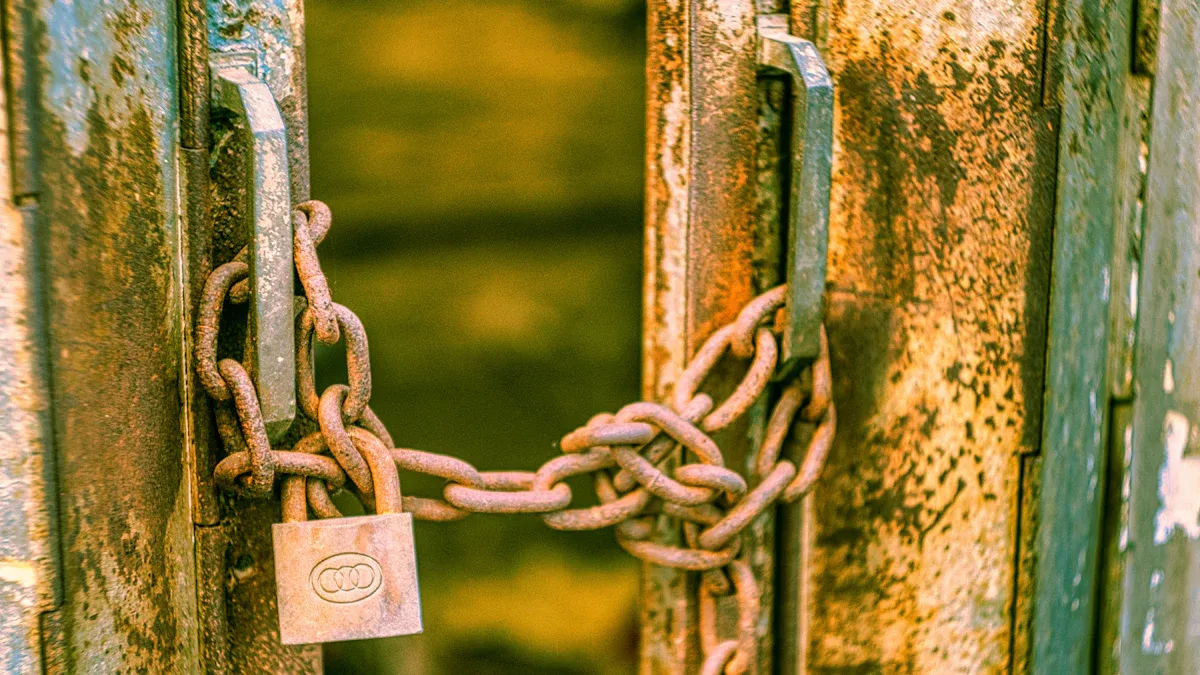
- Reddish or pink discoloration appears on brass surfaces. This color change comes from copper building up as zinc leaves the brass.
- The brass may lose its shine and look dull or matte, especially where it used to be polished.
- Surface cracks and flaking material often show up in areas where corrosion is active.
- You might notice a porous or spongy texture on the brass. This means the metal has lost strength.
- Brass parts can become brittle and fragile. If you handle them, they may break more easily than before.
If you see these symptoms, you should act quickly to prevent galvanic corrosion from spreading. In aggressive environments like marine or industrial areas, these signs can appear much faster.
Inspection and Testing Methods
You need to use both visual checks and advanced testing to find galvanic corrosion early. Regular inspection helps you prevent galvanic corrosion before it causes leaks or failures.
Visual Inspection
Walk through your system and look for color changes, cracks, or flaking. Pay close attention to joints where stainless steel and brass meet.Non-Destructive Testing (NDT)
Use ultrasonic thickness measurement to check for hidden material loss. Magnetic particle testing and eddy current testing help you find cracks or weak spots without damaging the parts. Radiographic testing can show you internal cavities caused by corrosion.Corrosion Sensors and Monitoring
Install sensors that track changes in electrical resistance, pH, or corrosion rate. These tools give you early warnings so you can prevent galvanic corrosion before it gets worse.Advanced Techniques
Electrochemical methods, like electrochemical tomography, provide detailed information about corrosion activity. These methods combine measurements and computer models to show you exactly where corrosion happens and how fast it spreads.
Combining several inspection methods gives you the best chance to catch problems early. Regular checks and monitoring are key to keeping your system safe.
How to Prevent Galvanic Corrosion in 2025
You can prevent galvanic corrosion by using smart design, careful material selection, and modern technology. Here are the most effective ways to protect your mixed metal systems:
- Use dielectric unions or insulating fittings to keep stainless steel and brass apart. This stops electrical contact and helps prevent galvanic corrosion.
- Apply protective coatings, such as epoxy, to brass surfaces. These coatings act as barriers and prevent galvanic corrosion by blocking moisture and electrical flow.
- Install barrier gaskets in flange connections. These gaskets physically and electrically separate the metals.
- Add a sacrificial anode, like zinc or magnesium, to your system. The sacrificial anode will corrode first, protecting your brass and stainless steel parts.
- Design your system to avoid having a small anode (brass) connected to a large cathode (stainless steel). This reduces the rate of galvanic corrosion.
- Make sure your system drains well and does not trap water. Stagnant moisture increases the risk of corrosion.
- Group similar metals together in the same loop or zone. This limits the chance for galvanic corrosion to start.
- Avoid using conductive joint sealants, especially those with graphite, because they can increase galvanic currents.
- Check your system often for signs of corrosion, such as green stains, pitting, or leaks.
- Monitor water chemistry and use corrosion inhibitors or adjust pH as needed to prevent galvanic corrosion.
- Replace metal-to-metal unions with dielectric flanges. This method has worked well in municipal water and brewery systems.
- Consider cathodic protection methods, such as galvanic anode cathodic protection (GACP) or impressed current cathodic protection (ICCP), for long-term management.
- Choose your materials carefully. Good material selection based on the galvanic series helps you prevent galvanic corrosion from the start.
Recent advances in protective coatings and corrosion inhibitors make it easier to prevent galvanic corrosion. New coatings can protect both stainless steel and brass at the same time. If you cannot isolate the metals, use vapor phase corrosion inhibitors or liquid rust preventatives to form a barrier and prevent galvanic corrosion.
Remember, the best way to prevent galvanic corrosion is to combine good design, regular inspection, and the latest technology. If you follow these steps, you can keep your mixed metal systems safe and reliable in 2025.
Real-World Examples of Stainless Steel Brass Galvanic Corrosion
Case Studies from Plumbing and Marine Systems
You often see stainless steel brass galvanic corrosion in places where water, salt, and mixed metals come together. In plumbing, you might find brass valves attached to stainless steel pipes. In marine environments, you see these metals used in seawater piping and HVAC systems. The table below shows some common examples:
| Material Pairing | Corrosion Risk Level | Typical Application Environment |
|---|---|---|
| Brass C37700 + 304 Stainless Steel (CF8) | Low to Moderate | Coastal or marine environments with brass drain valves on 304SS lines. Pitting and dezincification often occur. |
| Brass C37700 + 316 Stainless Steel (CF8M) | Moderate | High-purity water systems using 316SS valves and brass parts. Long-term damage happens without dielectric isolation. |
Brass works well in many hydraulic and marine systems because it resists corrosion and stays tough. Stainless steel, especially grades 304 and 316, protects against harsh conditions like seawater. When you connect these metals in plumbing or marine systems, galvanic corrosion in marine environments can start quickly if water or salt bridges the connection. This problem also appears in other fields, such as galvanic corrosion in electronics, galvanic corrosion in oil and gas industry, and galvanic corrosion in renewable energy systems. In each case, the less noble metal, usually brass, corrodes faster.
The cost of corrosion is huge. Every year, corrosion causes about $2.5 trillion in damage worldwide. You see this in lost equipment, repairs, and even safety risks. For example, corroded pipes in oil and gas fields can leak, causing environmental harm and expensive cleanups. Galvanic corrosion in industrial environments and galvanic corrosion in aerospace also lead to equipment failures and safety hazards.
Lessons Learned and Best Practices
You can learn a lot from past failures. Many problems happen when you connect metals that are far apart in the galvanic series. You should always:
- Pick metals close together in the galvanic series to lower the risk.
- Insulate dissimilar metals to stop electrical contact.
- Use protective coatings, but avoid coating only the anodic metal.
- Match fasteners to the metals they join.
- Insert barriers between brass and aluminum if you use stainless steel bolts.
Tip: Always check your design and material choices before building. In large projects, work with experts to make sure you avoid galvanic corrosion in electronics, oil and gas industry, and renewable energy systems.
Building codes and standards now reflect these lessons. For example, new rules require better attachment and insulation in mixed metal systems. You see these updates in industries like oil and gas, aerospace, and industrial environments. By following best practices, you can prevent galvanic corrosion in marine environments and keep your systems safe and reliable.
- Galvanic corrosion happens when you connect stainless steel and brass with moisture present.
- Brass corrodes faster because it is more anodic than stainless steel.
- You can prevent damage by choosing metals with similar corrosion potentials, avoiding direct contact, and controlling water chemistry.
- Proactive steps, like using cathodic protection and regular inspections, help you avoid costly repairs and keep your systems safe.
- New technologies, such as self-repairing coatings and AI-driven monitoring, will make it easier for you to protect mixed metal systems in 2025.
Remember, you protect your equipment and save money when you act early to stop galvanic corrosion.
Часто задаваемые вопросы
What is the main cause of galvanic corrosion between stainless steel and brass?
You create galvanic corrosion when you connect stainless steel and brass with moisture present. The metals have different electrical potentials. This difference causes one metal, usually brass, to corrode faster.
How can you quickly spot galvanic corrosion in your system?
Look for green or reddish stains, pitting, or dull spots on brass parts. You may also see leaks or brittle metal. These signs often appear near joints where the metals touch.
Can you stop galvanic corrosion once it starts?
You cannot reverse existing damage, but you can slow or stop further corrosion. Use insulating fittings, apply protective coatings, or add sacrificial anodes. Regular inspections help you catch problems early.
Does water quality affect galvanic corrosion?
Yes. Water with high salt or chloride speeds up corrosion. Soft, clean water lowers the risk. You should test your water and use corrosion inhibitors if needed.
What is the best way to prevent galvanic corrosion in 2025?
Use dielectric unions, protective coatings, and regular inspections. Choose metals close together in the galvanic series. Monitor water chemistry. These steps help you keep your system safe and reliable.