

When you choose a metal for your project, rust resistance becomes a top priority. Aluminum and stainless steel both offer strong natural protection against corrosion. However, rusted galvanized steel can still perform well in many environments, especially when you select the right alloy. Modern technology uses big data and machine learning to help you pick metals with the best corrosion resistance for construction. Your choice will shape the strength and lifespan of your structure.
Rust Resistance: Galvanized Steel vs Aluminum vs Stainless Steel
How Each Metal Resists Corrosion
You want your project to last, so you need to understand how each metal fights rust. Galvanized steel, aluminum, and stainless steel all offer corrosion resistance, but they do it in different ways.
Galvanized steel uses a zinc coating to protect the steel underneath. This zinc layer acts as a shield. When the surface gets scratched, the zinc sacrifices itself to stop rust from reaching the steel. This process is called “sacrificial protection.” You often see galvanized steel in outdoor structures, fences, and roofing because it stands up well to rain and moisture.
Aluminum forms a thin oxide layer when it meets air. This layer seals the metal and keeps water and oxygen out. Because of this, aluminum stays corrosion-resistant even if you scratch it. You find aluminum in window frames, gutters, and car parts. It works well in many environments, including places with salty air.
Stainless steel contains chromium. When chromium mixes with oxygen, it creates a tough, invisible film on the surface. This film blocks rust and keeps the metal shiny. Stainless steel is famous for its corrosion resistance. You see it in kitchens, hospitals, and even on ships.
Tip: If you need a metal that stays clean and rust-free with little care, stainless steel is often your best choice.
Here is a table that shows how different metals resist corrosion in various environments:
| Metal | Environment | Corrosion Rate Evidence / Model Details |
|---|---|---|
| Carbon Steel | Atmospheric (China) | Regional Environmental Corrosion Model (RECM) uses 9 factors for high-precision after 1 year exposure. |
| Carbon Steel | Atmospheric (Iran) | Corrosion rates at 15 sites showed DRF model was not accurate in most areas. |
| Zinc | Atmospheric (Switzerland) | DRF model did not predict corrosion rates well at 9 sites with different environments. |
| Cobre | Atmospheric (Switzerland) | DRF model also inaccurate for copper. |
| Carbon Steel, Zinc, Copper, Aluminum | Atmospheric (ISO9223-2012 standard) | DRF model used to measure 1-year corrosion loss, but results vary by region. |
| Various Metals | Marine (Ships) | Ship corrosion models use real data to estimate corrosion rates, showing variability and risk. |
| Steel | Soil | Long-term soil data (up to 17 years) show corrosion depends on soil type and oxygen. |
You can see that corrosion resistance changes with the environment. For example, aluminum often shows lower corrosion rates in marine settings, while galvanized steel depends on the quality of its zinc coating. Stainless steel usually performs best in most conditions.
When Rusted Galvanized Steel Becomes a Problem
You might think rusted galvanized steel always means trouble, but that is not true in every case. The zinc coating protects the steel for many years. Over time, weather and chemicals can wear down this layer. When the zinc is gone, the steel underneath starts to rust quickly.
If you use galvanized steel in a place with lots of salt, acid, or pollution, the zinc coating can break down faster. Once rusted galvanized steel loses its protective layer, it becomes weak. Holes and flakes can form, which can make fences, pipes, or beams unsafe.
Empirical data from ships and soil studies show that corrosion rates can change over time. Some models suggest that aluminum’s corrosion rate may drop to almost zero after a while, but steel does not behave this way. In soil, rusted galvanized steel can suffer from localized corrosion, especially if the soil has large particles or low oxygen. Long-term exposure tests prove that real-world conditions matter more than lab results.
You should check rusted galvanized steel often if you use it in harsh environments. If you see red rust or the zinc layer looks thin, you may need to replace the part. Stainless steel and aluminum do not have this problem because their corrosion-resistant layers repair themselves. That is why you see stainless steel in places where safety and cleanliness matter most.
Note: Always match the metal to your environment. If you expect lots of moisture or salt, stainless steel or aluminum may last longer than galvanized steel.
What Is Galvanized Steel?
How Galvanized Steel Is Made
You might wonder how galvanized steel gets its special protection. The process starts with regular steel. You dip the steel into a bath of molten zinc. This step creates a strong zinc coating that covers every part of the steel, even corners and edges. The zinc bonds to the steel, forming several layers. Each layer helps protect the steel from rust and damage.
Many industries follow strict rules to make sure galvanized steel meets high standards. Here is a table showing some important standards and what they cover:
| Padrão | Scope / Application | Notes / Details |
|---|---|---|
| ASTM A123/A123M | Zinc (Hot-Dip Galvanized) Coatings on Iron and Steel Products | Covers single steel pieces and fabrications; coating thickness minimums; finish must be continuous and uniform. |
| ASTM A153/A153M | Zinc Coating (Hot-Dip) on Iron and Hardware | Applies to fasteners and small products; includes centrifuging to remove excess zinc; embrittlement considerations. |
| ASTM A767/A767M | Zinc-Coated (Galvanized) Steel Bars for Concrete Reinforcement | For reinforcing steel bars (rebar); coating thickness based on bar size; includes chromating treatment. |
| ISO 1461 | Hot-Dip Galvanized Coatings on Fabricated Iron and Steel Assemblies Specifications and Test Methods | International standard covering coating and testing methods. |
These standards make sure the zinc coating is thick enough and covers the steel evenly. You can trust that galvanized steel made this way will last a long time.
Key Properties of Galvanized Steel
Galvanized steel stands out because of its zinc coating. This coating gives you several important benefits:
- The zinc coating offers strong corrosion resistance. It protects the steel even if you scratch the surface.
- The zinc coating can repair itself by forming zinc oxide and zinc carbonate over small damaged spots.
- Galvanized steel keeps its strength after the zinc coating is added. Tests show almost no change in yield or tensile strength.
- You get a metal that is heavier and stronger than aluminum. The density is about 7.85 g/cm³.
- Galvanized steel is magnetic, which makes it useful for many building projects.
- The zinc coating thickness affects how long the steel lasts. Thicker coatings mean better protection.
- You do not need to do much maintenance. The zinc coating keeps working for years.
Tip: If you need a tough, rust-resistant metal for outdoor use, galvanized steel is a smart choice. The zinc coating gives you peace of mind in many environments.
Galvanized steel works well for fences, beams, and other structures. You get a balance of strength, durability, and cost. The zinc coating makes sure your project stays safe from rust and damage.
What Is Aluminum?
How Aluminum Is Made
You might see aluminum everywhere, but do you know how it starts? The journey begins with bauxite mining. Bauxite is a rock rich in aluminum oxide. Workers extract bauxite from the earth and send it to a refinery. There, the Bayer process removes impurities like iron and silicon. This step leaves behind pure alumina powder.
Next, the Hall-Héroult process takes over. In this step, factories dissolve alumina in molten cryolite and use electricity to separate pure aluminum metal from oxygen. This process happens at very high temperatures, around 960°C. The result is molten aluminum with a purity of about 99.8%. Factories then cast this aluminum into shapes like ingots, slabs, or billets.
After casting, you see aluminum shaped by rolling, extrusion, or forming. These steps let you get sheets, rods, or custom parts. Recycling also plays a big role. Old aluminum products are collected, melted, and reused. This saves energy and keeps the quality high.
Tip: Recycling aluminum uses much less energy than making new aluminum from bauxite. You help the environment when you recycle.
Key Properties of Aluminum
Aluminum stands out for its light weight. You can lift and move aluminum parts more easily than steel. This makes installation and transportation simpler and cheaper. Aluminum also resists rust because it forms a thin oxide layer that protects it from water and air.
You can shape aluminum into many forms. Alloying with elements like copper, magnesium, or silicon changes its strength, flexibility, and resistance to corrosion. Heat treatments create different grades, so you can pick the right type for your project.
Here is a table showing why aluminum is a popular choice:
| Property | Benefit for You |
|---|---|
| Leve | Easier handling and lower shipping costs |
| Resistência à corrosão | Lasts longer outdoors |
| Malleability | Easy to shape and form |
| Electrical Conductivity | Good for wiring and electronics |
| Recyclability | Saves energy and resources |
Aluminum may not match galvanized steel in strength, but you get easy installation and less weight. If you want a metal that is easy to work with and resists rust, aluminum is a smart choice.
What Is Stainless Steel?
How Stainless Steel Is Made
You see stainless steel in kitchens, hospitals, and even skyscrapers. This metal gets its strength and shine from a careful process. Here is how manufacturers make stainless steel:
- Melt and cast raw materials to create the first batch of stainless steel.
- Form the metal into shapes like slabs, rods, or tubes.
- Use hot rolling to set rough dimensions above the metal’s recrystallization temperature.
- Apply cold rolling for a smooth finish and precise size.
- Heat treat the metal by annealing. This step softens stainless steel and relieves stress.
- Remove surface scale with pickling or electro-cleaning. This step reveals a clean, bright surface.
- Cut or machine the aço inoxidável to the right size using special tools.
- Finish the surface with grinding, polishing, or buffing to improve appearance and corrosion resistance.
- Inspect and test the stainless steel for strength, hardness, and chemical makeup. This ensures it meets strict standards.
Organizations like ASTM and ISO set rules for each step. These standards help you get stainless steel that is strong, safe, and reliable.
Key Properties of Stainless Steel
Stainless steel stands out because it resists rust and stains. You can use it in wet or salty places without worry. The secret is the chromium in the alloy. When chromium meets air, it forms a thin, invisible layer that blocks rust. This layer repairs itself if scratched.
You get more than just corrosion resistance. Stainless steel also offers high strength and toughness. It keeps its shape under heavy loads. You can bend or stretch it without breaking. Tests on many samples show that stainless steel stays strong at both room and high temperatures. Engineers trust it for bridges, tools, and medical devices.
Stainless steel comes in many grades. Each grade has a different mix of elements. Some grades resist heat better. Others handle acids or salt water. Standards like ASTM A240 make sure each grade meets the right level of corrosion resistance and strength.
Tip: If you want a metal that lasts, choose stainless steel. It gives you a clean look, easy cleaning, and long life.
Statistical research shows that stainless steel’s corrosion resistance depends on its alloy mix. Scientists measure how fast tiny pits form in salty water. They use this data to predict how stainless steel will perform in tough environments. This helps you pick the right grade for your project.
Aluminum vs Galvanized Steel: Strength, Weight, and Durability
Comparing Strength and Flexibility
When you compare aluminum vs galvanized steel, you see big differences in strength and flexibility. Galvanized steel gives you high strength because it is dense and tough. You often find it in building frames, ladders, and roofs where strong support matters. Aluminum is not as strong as steel by weight, but it can be forged to boost its strength. If you look at the strength to weight ratio, aluminum stands out. It can handle a lot of force for its lightness, which is why you see it in airplanes and cars.
To measure these properties, experts use tests like flexural testing and tensile testing. Flexural testing bends the metal to see how much it can flex before breaking. Tensile testing stretches the metal to find its breaking point. These tests help you pick the right metal for your project.
Tip: If you need a material that bends without breaking, aluminum’s flexibility can help. For projects that need high strength and less bending, galvanized steel is a better choice.
Weight and Handling Differences
You will notice a big difference in weight when you handle these metals. Aluminum is much lighter than galvanized steel. Its density is about 2.7 g/cm³, while galvanized steel is over 7.7 g/cm³. This means you can lift and move aluminum parts more easily. The strength to weight ratio of aluminum makes it perfect for jobs where every pound counts.
| Property | Aluminum | Galvanized Steel |
|---|---|---|
| Densidade | 2.7 g/cm³ | 7.7-8.1 g/cm³ |
| Weight Implication | Easy to carry and install | Heavy, needs more effort to move |
| Malleability/Ductility | High, easy to shape | Lower, less flexible |
| Handling Advantages | Simple for one person to manage | Often needs more than one person |
If you want to save time and energy during installation, aluminum is the better pick. Galvanized steel works best when you need extra support and do not mind the extra weight.
Durability in Real-World Use
Both metals last a long time, but they handle stress in different ways. Galvanized steel uses a zinc coating to fight rust. Over time, this coating can wear off, so you need to check it and do some maintenance. Aluminum resists corrosion naturally, so it needs less care. Both can last about 20 years in outdoor use, like gutters.
Long-term tests show that metals face stress from bending, stretching, and weather. Fatigue strength tells you how well a metal handles repeated use. Creep strength shows how it holds up under steady pressure and heat. Aluminum’s strength to weight ratio helps it stay tough without getting too heavy. Galvanized steel’s high strength makes it reliable for heavy-duty jobs, but you must watch for rust if the coating wears away.
Note: For projects in harsh weather or where weight matters, aluminum gives you less maintenance and easier handling. For heavy loads and strong support, galvanized steel is the top choice.
Cost and Value Comparison
Upfront Costs
When you plan a project, you want to know how much each metal will cost at the start. Galvanized steel, aluminum, and stainless steel all have different price points. You can use the Producer Price Index (PPI) to compare these metals. The PPI shows how prices change over time for different metal products.
Here is a table that helps you see the average price levels for 2024:
| Metal Category | Annual Average PPI | Description |
|---|---|---|
| Iron and Steel | 309.1 | Includes galvanized steel products |
| Aluminum Mill Shapes | 235.2 | Rolled or shaped aluminum products |
| Secondary Aluminum | 266.3 | Recycled aluminum products |
| Secondary Nonferrous Metals | 330.6 | Includes stainless steel and other nonferrous metals |
| Steel Mill Products | 291.4 | General steel products |
| Copper (alloyed/unalloyed) | 793.2 | Much higher cost than steel or aluminum |
You can see that aluminum mill shapes usually cost less than galvanized steel. Aço inoxidável, which falls under secondary nonferrous metals, often costs more than both. Copper is the most expensive by far.
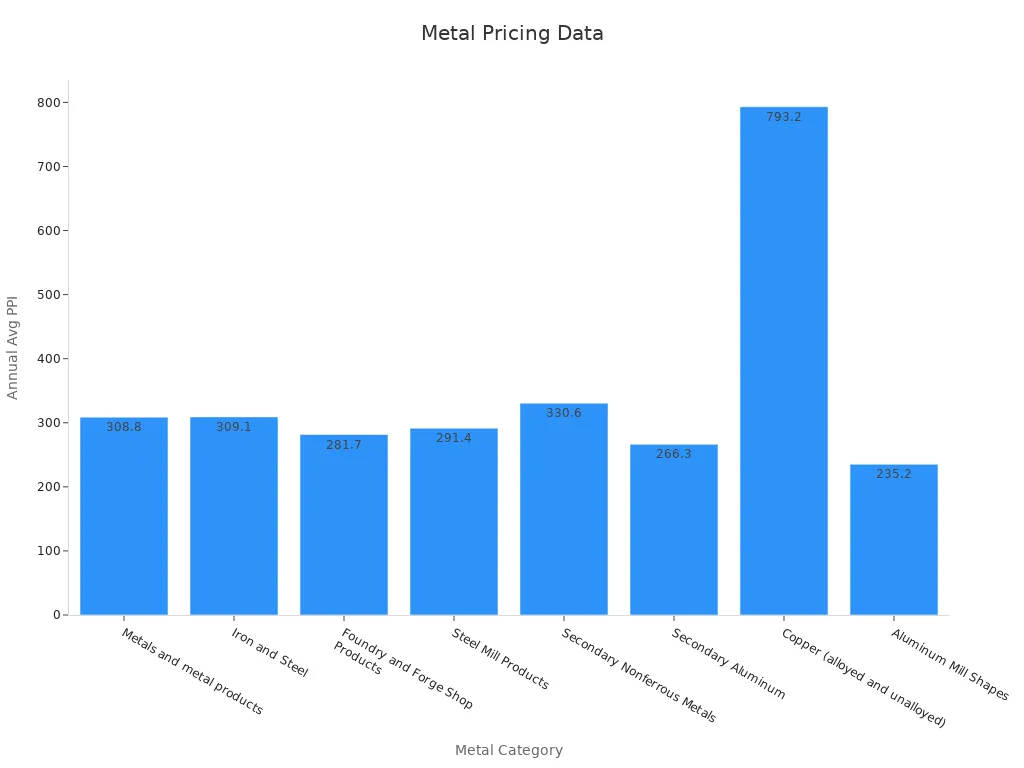
Tip: If you want to save money at the start, aluminum often gives you the lowest upfront cost. Galvanized steel sits in the middle, while stainless steel usually costs the most.
Long-Term Value and Maintenance
You should also think about how much you will spend over time. Galvanized steel needs some care because the zinc coating can wear down. You may need to check it and repaint or replace parts after many years. Aluminum resists rust on its own, so you spend less on upkeep. Stainless steel almost never rusts, so you rarely need to do any maintenance.
Here are some points to help you compare:
- Galvanized steel: Lower initial cost, but may need repairs if the coating wears off.
- Aluminum: Low upfront cost, very little maintenance, and easy to recycle.
- Stainless steel: Highest initial cost, but almost no maintenance and longest lifespan.
If you want a metal that saves you money over many years, stainless steel gives you the best value. Aluminum also works well if you want low maintenance and easy handling. Galvanized steel is a good choice when you need strength and do not mind some upkeep.
Pros and Cons of Galvanized Steel, Aluminum, and Stainless Steel
Galvanized Steel: Pros and Cons
Galvanized steel gives you a strong and affordable option for many projects. The zinc coating protects the steel from rust, even if you scratch the surface. You can use galvanized steel for fences, roofs, and animal enclosures. It works well in places with moisture because the zinc acts as a barrier.
Here is a table to help you see the main pros and cons:
| Pros | Cons |
|---|---|
| Good corrosion resistance from zinc coating | Zinc coating can wear off and expose steel to rust |
| Cost-effective for large projects | Needs maintenance in harsh environments |
| Long service life with proper care | Not ideal for high temperatures |
| Easy to inspect for coating thickness | Zinc fumes can be harmful during welding |
| Suitable for many construction uses | Recycling is harder due to zinc layer |
Note: Galvanized steel may last over 50 years in mild conditions, but only about 20 years in tough, wet places.
Aluminum: Pros and Cons
Aluminum stands out for its light weight and natural corrosion resistance. You can carry and install aluminum parts easily. It works well in marine and outdoor settings. Aluminum also shapes easily, so you can use it for many designs.
Pros:
- Lightweight and easy to handle
- High corrosion resistance, even in salty air
- Good strength-to-weight ratio
- Easy to recycle and shape
- Good heat conductor
Cons:
- Lower strength than steel for the same size
- Can dent or scratch more easily
- Higher cost than galvanized steel
- Not good for high-temperature jobs
- Needs special care to avoid corrosion with other metals
Tip: Aluminum tanks and parts need painting in marine settings to prevent corrosion, which adds to maintenance.
Stainless Steel: Pros and Cons
Stainless steel gives you the best corrosion resistance. You can use it in kitchens, hospitals, and even on ships. The chromium in stainless steel forms a protective layer that repairs itself if scratched. You get a clean, shiny look that lasts for years.
| Pros | Cons |
|---|---|
| Excellent corrosion resistance | Highest upfront cost |
| Very strong and tough | Heavier than aluminum |
| Easy to clean and keeps a shiny appearance | Can be harder to cut and shape |
| Long lifespan with almost no maintenance | Needs special tools for welding |
| Works in harsh and salty environments | Some grades are more expensive than others |
Stainless steel is the top choice when you need strength, durability, and the best protection against rust.
Typical Applications for Each Metal
Galvanized Steel Uses
You see galvanized steel in many industries because it stands up to rust and lasts a long time. Builders use it for roofing, wall panels, and framing in houses and large buildings. Water and gas companies choose galvanized steel pipes for their strength and ability to resist corrosion. Appliance makers use it for panels in washing machines and refrigerators. Farmers rely on it for fencing, gates, and animal enclosures. The construction industry leads in market share, showing how often you find galvanized steel in infrastructure projects. Tube and pipe segments grow quickly, especially for water and gas distribution. The table below shows how different industries use galvanized steel:
| Segment/Industry | Common Uses |
|---|---|
| Construção | Roofing, framing, wall panels |
| Tube and Pipe | Water and gas distribution, scaffolding |
| Home Appliances | Washer and fridge panels, oven parts |
| Agriculture | Fencing, gates, animal enclosures |
| Automotivo | Body panels, underbody parts |
Note: The global market for galvanized steel keeps growing, with strong demand in Asia-Pacific and new uses in renewable energy.
Aluminum Uses
You find aluminum in places where light weight and corrosion resistance matter most. Airplanes use aluminum for airframes because it is strong and light. Car makers use it for body panels and engine parts. Builders choose aluminum for window frames, doors, and siding. You see it in power lines, bike frames, and even soda cans. Aluminum rigid conduit appears in large projects like GE Appliance Park and Tyson Foods, where miles of conduit protect wiring. The ASI Performance Standard helps make sure aluminum products meet high environmental and safety standards. Here is a table with common aluminum uses:
| Inscrição | Description |
|---|---|
| Aviation | Airframes, wings, and fuselage |
| Construção | Window frames, doors, siding |
| Elétrico | Power lines, wiring, rigid conduit |
| Transportation | Car panels, bike frames, ship parts |
| Consumer Goods | Cans, cookware, furniture |
- Aluminum alloys improve strength, weldability, and corrosion resistance for special jobs.
- Anodized aluminum gives extra protection and color for building facades and electronics.
Stainless Steel Uses
Stainless steel works best where you need strength, a clean look, and top corrosion resistance. You see it in kitchens for sinks, countertops, and appliances. Hospitals use it for surgical tools and medical equipment. Builders use stainless steel for beams, railings, and cladding in skyscrapers and bridges. The automotive and aerospace industries use it for exhaust systems, frames, and engine parts. In agriculture, stainless steel makes feeding pails, fences, and milking equipment last longer. The 300 series grades, like 304 and 316, lead the market for food processing and chemical plants. Here are some key uses:
- Food and beverage: Sinks, utensils, brewing tanks
- Medical: Surgical tools, hospital equipment
- Construction: Beams, railings, roofing, decorative panels
- Transportation: Car exhausts, train parts, aircraft components
- Consumer goods: Washers, fridges, cookware
Stainless steel’s recyclability and long life make it a top choice for sustainable building and modern infrastructure.
How to Choose the Right Metal for Your Project
Key Factors to Consider
Choosing the right metal for your project can feel overwhelming. You want your choice to match your needs, budget, and environment. To help you make a smart decision, you can use a method called Multi-Criteria Decision-Making (MCDM). This approach lets you compare metals based on measurable features like strength, cost, and durability. You look at each factor, give it a score, and see which metal fits your project best. This way, you use real data to guide your choice, not just guesswork.
When you select a metal, you should think about several important factors. Research shows that these six points matter most:
- Market Demand: You need to know if there is a strong need for the metal. High demand often means better support and more options.
- Relative Technological Performance: Check the quality, how much material you use, production time, and how easy it is to work with the metal.
- Cost Factors: Look at the price, total cost, and effort needed. Cost is important, but not always the top concern.
- Environmental Factors: Think about standards, where you are located, and the impact on the environment.
- Availability of Skilled Operators and Education: Make sure you or your team have the skills to work with the metal.
- Technology Maturity and Innovation Support: Choose metals and methods that are proven and have good support for new ideas.
Tip: Always match the metal to your project’s needs, not just the lowest price. A careful choice saves you time and money later.
You now know the main differences between galvanized steel, aluminum, and stainless steel. Galvanized steel gives you strength and value for outdoor projects. Aluminum offers light weight and easy handling. Stainless steel stands out for top corrosion resistance and a clean look.
Tip: Choose galvanized steel for strong structures, aluminum for light and easy jobs, and stainless steel for harsh or wet places. Always match your metal to your project’s needs.
Perguntas frequentes
What metal should you use for outdoor projects?
You should use galvanized steel or stainless steel for most outdoor projects. Galvanized steel works well for fences and roofs. Stainless steel lasts longer in wet or salty places. Aluminum also resists rust but may dent more easily.
Can you weld galvanized steel, aluminum, and stainless steel?
You can weld all three metals, but you need special skills and tools. Welding galvanized steel releases zinc fumes, so you must work in a well-ventilated area. Aluminum and stainless steel need different welding techniques than regular steel.
Which metal is easiest to recycle?
Aluminum is the easiest to recycle. You can melt and reuse it many times without losing quality. Stainless steel also recycles well. Galvanized steel is harder to recycle because of its zinc coating.
How do you know if a metal is rusting?
You can look for color changes. Rust on steel looks red or brown. Aluminum forms a white powder. Stainless steel may show small pits or stains if it starts to corrode. Regular checks help you spot problems early.
Is stainless steel always the best choice?
Stainless steel gives you top corrosion resistance and strength. It costs more than other metals. You should choose it for harsh or wet environments. For simple or low-cost projects, galvanized steel or aluminum may work better.