
You want your fence to last, so picking the right posts matters. Most 2 3 8 galvanized steel fence posts come in 16, 15, or 13 gauge. Think about how strong you need each post to be. Galvanized posts stand up to rust and weather. If your area gets strong winds, you might need thicker posts. Galvanized steel gives your fence a longer life. Focus on your needs, and you will find that choosing the best post is simple.
What Does Gauge Mean for 2 3 8 Galvanized Steel Fence Posts?
Understanding Gauge and Steel Thickness
When you look at 2 3 8 galvanized steel fence posts, you will see the word “gauge” used often. Gauge tells you how thick the wall of each post is. A lower gauge number means a thicker wall. For example, 13 gauge is thicker than 16 gauge. This system helps you compare the strength of different posts. The American Wire Gauge system started in 1855 and is still used today. It measures the wall thickness in inches.
Here is a table showing the thickness for common gauges used in galvanized posts:
| Steel Gauge | Thickness (inches) | Thickness (millimeters) |
|---|---|---|
| 16 | 0.0625 | 1.5875 |
| 15 | 0.0703 | 1.7859 |
| 13 | 0.09375 | 2.3813 |
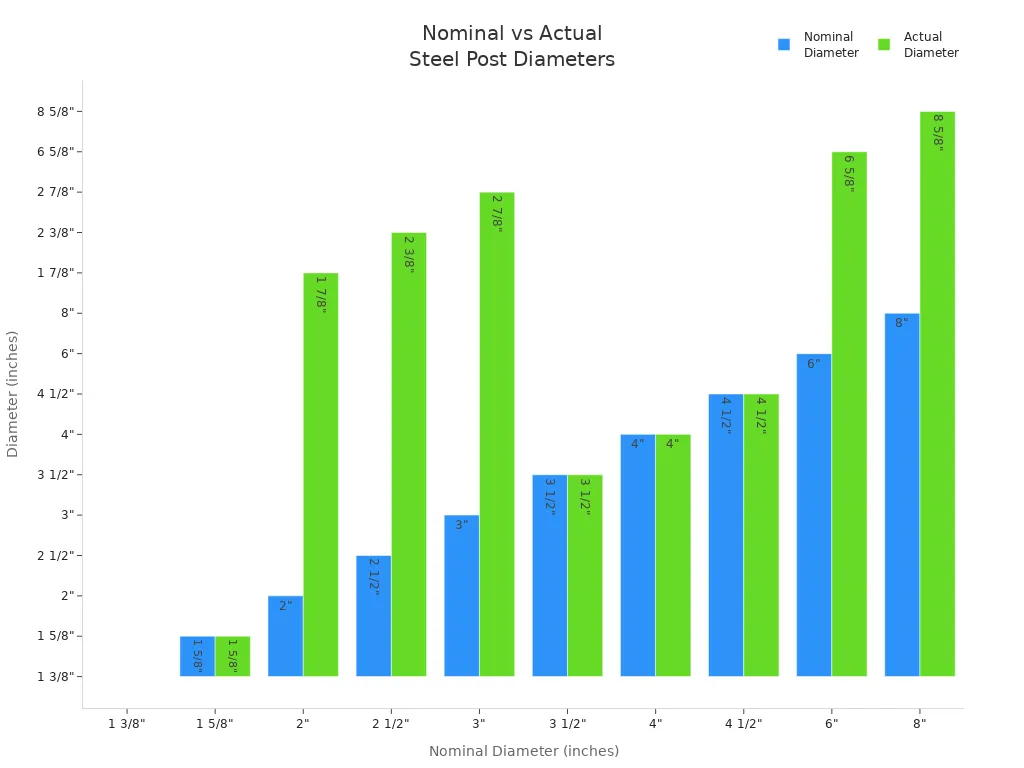
You can see that as the gauge number goes down, the wall thickness goes up. This means a 13 gauge post will feel heavier and stronger than a 16 gauge post. The fence industry uses the actual outside diameter to measure posts, but gauge tells you about the wall thickness.
Why Gauge Matters for Strength and Durability
You want your fence to last through storms, wind, and daily use. The gauge of your galvanized posts plays a big role in this. Thicker posts, like 13 gauge, give your fence more strength and help it stand up to heavy loads. Thinner posts, such as 16 gauge, work well for lighter jobs or areas with mild weather.
If you choose the right gauge, your fence will have better durability. Thicker wall thickness means the posts resist bending and damage. Galvanized coating also protects the steel from rust, adding to the post’s lifespan. When you match the gauge to your needs, you get posts that support your fence and keep it standing strong for years.
Recommended Gauges for 2 3 8 Galvanized Steel Fence Posts
16 Gauge for Standard Residential Fences
You often see 16 gauge used for most home fences. This gauge gives you a good balance between strength and cost. When you choose 16 gauge, you get posts that are strong enough for most backyards and gardens. The wall thickness of 16 gauge posts helps them stand up to normal wind and weather. You do not need to worry about rust because the galvanized coating protects the steel.
Many major manufacturers, like TrafficSign.com, offer 2 3 8 galvanized steel fence posts in 16 gauge. This size is popular because it fits most residential needs. You can expect these posts to last a long time. Most 16 gauge posts come with a zinc coating and a powder finish. These features help your posts resist rust and damage. In many cases, you will see warranties of 10-15 years for these posts. You will not need much maintenance, so you save time and money.
Tip: If you want a fence that looks good and lasts for years, 16 gauge is a smart choice for your home.
15 Gauge for Added Strength
Sometimes you need a little more strength than what 16 gauge offers. That is where 15 gauge comes in. This gauge gives you thicker posts, which means more support for your fence. You might pick 15 gauge if you live in a place with strong winds or if you want to hang heavy gates on your posts.
The 15 gauge size works well for larger yards or places where you expect more pressure on the fence. You get better performance from your posts because the thicker steel resists bending and damage. You still get the benefits of galvanized protection, so your posts will not rust easily. Many people choose 15 gauge when they want a fence that can handle more stress but do not need the heaviest option.
- 15 gauge posts are a good middle ground.
- You get more strength without a big jump in price.
- Your fence will stay upright even in tough weather.
13 Gauge for Heavy Duty and Commercial Use
When you need the strongest posts, 13 gauge is the best choice. This gauge gives you the thickest wall and the most support. You should use 13 gauge for commercial fences, sports fields, or places with high traffic. These posts can handle heavy loads and strong impacts.
You will notice that 13 gauge posts feel much heavier than other sizes. The extra thickness means your fence will not bend or break easily. Some manufacturers also offer 12 gauge, but 13 gauge is a common heavy-duty option for 2 3 8 galvanized steel fence posts. You get top performance and long life from these posts. The galvanized coating keeps them safe from rust, even in harsh conditions.
| Gauge | Best Use | Grubość ściany | Performance Level |
|---|---|---|---|
| 16 | Residential | 0.0625 in | Standard |
| 15 | Stronger Residential | 0.0703 in | Enhanced |
| 13 | Commercial/Heavy Duty | 0.09375 in | Maximum |
Note: Choose 13 gauge if you want your posts to last the longest and support the heaviest loads.
You can match the gauge to your needs by thinking about the size of your fence, the weather in your area, and how much performance you want from your posts. The right gauge will help your fence stand strong for many years.
Pros and Cons of Each Gauge
When you choose a gauge for your fence posts, you want to know what you gain and what you might give up. Each gauge offers its own set of strengths and weaknesses. Here is a clear breakdown to help you decide:
Advantages:
- You get superior durability compared to wood. Steel posts do not rot, shrink, or crack.
- Galvanized coating protects against rust. Your posts can last more than 25 years.
- Thicker gauges, like 13 and 15, give you more strength. These posts resist bending and work well for privacy fences.
- You do not need much maintenance. Galvanized steel stays strong with little care.
- If you set posts deep in clay soil, you may not need concrete for installation.
Disadvantages:
- You pay more upfront than you would for wood posts. You also need extra hardware, such as brackets and post caps.
- Some people do not like the look of round galvanized posts. They may not match wood pickets.
- Thin posts, especially those below 14 gauge, can bend or fail under stress.
Note: Powder coating over the galvanized layer can make your posts even more resistant to corrosion. Some posts come with long warranties and wind ratings, which give you peace of mind about their quality.
Here is a quick table to compare the pros and cons of each gauge:
| Gauge | Pros | Cons |
|---|---|---|
| 16 | Affordable, good for most homes, low upkeep | Less strong, not for heavy-duty use |
| 15 | Stronger, handles wind and gates, still fair price | Slightly higher cost, heavier |
| 13 | Maximum strength, best for commercial use | Most expensive, heavier, harder to install |
Typical Use Cases for Each Gauge
You want your fence to fit your needs. The right gauge helps you get the best results for your project. Here are the most common uses for each size:
16 Gauge:
You should use this gauge for standard residential fences. It works well for backyards, gardens, and places with mild weather. If you want a fence that looks good and lasts, this is a smart choice for most homes.15 Gauge:
This gauge fits larger yards or areas with strong winds. You can use it if you plan to hang heavy gates or need extra support. It gives you more strength without a big jump in price.13 Gauge:
You need this gauge for heavy-duty jobs. It is best for commercial properties, sports fields, or places with high traffic. If you want your 2 3 8 galvanized steel fence posts to last the longest and handle the most stress, pick this size.
Tip: Always match the gauge to your fence’s purpose. Think about the weather, the load, and how long you want your fence to last.
Key Factors to Consider When Choosing Gauge
Fence Purpose and Expected Load
You need to think about why you want a fence and what it will hold back. The purpose of your fence shapes your choice of gauge. If you want a simple backyard fence, you can use a lighter gauge. For a sports field or a high-security area, you need a thicker, stronger post. The gauge number tells you how thick the steel is. Lower numbers mean thicker steel, which gives more strength.
- Residential fences often use lighter gauges. These work well for gardens or to keep pets in the yard.
- Commercial or heavy-duty fences need thicker posts. These can handle more weight and pressure.
- If you plan to hang a heavy gate, choose a thicker gauge for extra support.
The height of your fence also matters. Taller fences need thicker posts to resist bending and wind. You should always match the gauge to the job. Selecting the correct type of fence post helps your fence last longer and stay strong.
Tip: Always check local rules. Some places have codes that set the minimum gauge for certain types of fences.
Local Weather and Soil Conditions
Weather and soil play a big part in your fence’s life. If you live in a place with lots of rain or snow, you need posts that resist rust. Galvanized steel works well because it has a coating that protects against water. In wet or humid areas, you might want posts with a thicker coating or even vinyl-coated posts for extra protection.
Soil type affects how deep you set your posts. Clay or sandy soils may need deeper posts for stability. The depth of fence posts helps keep your fence upright during storms or strong winds. If your area gets high winds, use thicker posts and make sure you have the correct spacing between them. Standard spacing for fence posts is usually 6 to 8 feet, but you may need to adjust this based on your soil and weather.
- In coastal areas, salt can cause rust. Choose posts with extra protection.
- In dry areas, you may not need as much coating, but strong winds can still be a problem.
- Always check the fence post spacing to make sure your fence can handle local weather.
Note: The right gauge and coating can lower the need for repairs and replacements, which is better for the environment.
Budget and Cost Considerations
You want a fence that fits your budget but also lasts a long time. Thicker posts cost more at first, but they often save money over time. You will not need to replace them as often, and they need less care. Metal fence posts usually cost between $30 and $60 each, depending on size and material. The cost per linear foot for galvanized steel fencing can range from $30 to $200.
When you plan your project, think about the total cost. This includes the posts, rails, and any coatings. Thicker gauges and better coatings cost more, but they give you more years of use. You should also think about the cost of installation. If you use the correct spacing and set the posts at the right depth, you can avoid problems later.
- Lighter gauges are cheaper but may not last as long.
- Thicker gauges cost more but give better strength and durability.
- Vinyl or extra coatings add to the price but protect your fence from rust.
Remember: Spending a little more now on the right gauge can save you money on repairs and replacements in the future.
Longevity and Maintenance Needs
When you choose a gauge for your 2 3 8 galvanized steel fence posts, you decide how long your fence will last and how much work you will need to do to keep it strong. Thicker posts usually last longer and need less care. Thinner posts may save you money at first, but you might spend more time and money fixing them later.
How Gauge Affects Longevity
- Thicker gauge (lower number): These posts resist bending, rust, and damage. You can expect them to last 20 years or more with little trouble.
- Thinner gauge (higher number): These posts work for lighter jobs. They may bend or rust faster, especially in tough weather.
| Gauge | Expected Lifespan | Maintenance Level | Best For |
|---|---|---|---|
| 16 | 10-15 years | Low | Standard home fences |
| 15 | 15-20 years | Very Low | Stronger home fences |
| 13 | 20+ years | Minimal | Commercial, heavy-duty |
Tip: If you want your fence to last a long time, pick a thicker gauge. You will spend less time on repairs.
Maintenance Needs for Galvanized Steel Posts
Galvanized steel posts need less care than wood or plain steel. The zinc coating protects the steel from rust and weather. You do not need to paint or stain these posts. You only need to check them once or twice a year.
Here is a simple maintenance checklist:
- Walk along your fence and look for rust spots or dents.
- Wipe off dirt or mud with a damp cloth.
- Check that the posts stand straight and do not wobble.
- Tighten any loose hardware, like brackets or caps.
- If you see rust, use a wire brush to clean the spot. Cover it with cold galvanizing spray.
Note: If you live near the ocean or in a place with lots of rain, check your posts more often. Salt and moisture can wear down the coating faster.
How to Make Your Fence Last Longer
- Set your posts deep enough in the ground. This helps them stand up to wind and rain.
- Use concrete for extra support, especially in soft or sandy soil.
- Keep plants and soil away from the base of the posts. Wet soil can speed up rust.
- Choose posts with a powder coating for even more protection.
You can enjoy a strong, long-lasting fence with just a little care. Pick the right gauge, follow simple maintenance steps, and your 2 3 8 galvanized steel fence posts will serve you well for many years.
How to Match Gauge to Your Chain Link Fence Project
Step-by-Step Guide to Choosing the Right Gauge
You want your chain link fence to last and stay strong. Picking the right gauge for your galvanized chain link posts and chain link fabric makes a big difference. Follow these steps to match the gauge to your project:
Decide the Fence Type
Start by thinking about where you will use your chain link fence. Residential fences often use lighter gauges. Commercial and industrial fences need thicker, lower gauge numbers for more strength.Measure Fence Height and Length
Taller fences need thicker posts and chain link fabric. Write down the height and total length of your fence installation.Check Local Weather and Soil
Look at your area’s weather. Strong winds or soft soil mean you need thicker posts and chain link fabric for better support.Pick the Right Post Diameter and Wall Thickness
Use this table to help you choose:Fence Type Gauge Recommendation Post Diameter Grubość ściany Residential 11 to 12.5 2 3/8 to 3 inches Schedule 10 to 40 Commercial 9 to 11 2 3/8 to 3 inches Schedule 10 to 40 Industrial 6 to 9 2 3/8 to 3 inches Schedule 10 to 40 Choose the Right Post Types
Use terminal posts at corners, ends, and gates. Place line posts along the fence. Add brace posts at changes in direction for extra stability.Plan Post Spacing and Depth
Space posts 6 to 8 feet apart. Adjust spacing if your soil is soft or your chain link fence faces strong winds. Set posts deep enough for your area.Select Gauge Chain Link Fabric
Match the gauge chain link fabric to your posts. Thicker fabric works best for high-traffic or high-security areas.
Tip: Always check local codes before starting your fence installation project. Some places have rules about post size and gauge.
Quick Checklist for Decision-Making
Use this checklist to make sure you pick the right gauge for your chain link fence:
- [ ] What is the purpose of your chain link fence (residential, commercial, or industrial)?
- [ ] What is the height and length of your fence?
- [ ] What are the local weather and soil conditions?
- [ ] Did you choose the correct post diameter and wall thickness?
- [ ] Did you select the right post types (terminal, line, brace)?
- [ ] Did you plan proper post spacing and depth for your installation?
- [ ] Did you match the gauge chain link fabric to your posts?
- [ ] Did you check local codes and requirements?
A good chain link fence needs the right galvanized chain link posts and chain link fabric. When you follow these steps, your fence installation will be strong and last for years. You will avoid common mistakes and get the best results for your yard or business.
Common Mistakes to Avoid with 2 3 8 Galvanized Steel Fence Posts
Choosing Too Thin or Too Thick a Gauge
You might think all 2 3 8 galvanized steel fence posts work the same, but gauge matters a lot. If you pick a gauge that is too thin, your posts can bend or fail, especially when you use heavy chain link fabric or build a tall fence. Many people believe 16 gauge posts work for every project, but this is not true. Thinner posts may cost less at first, but they often need repairs or replacement after storms or years of use. For example, after Hurricane Katrina, many thin posts failed while thicker ones stayed strong. On the other hand, choosing a gauge that is too thick can add unnecessary cost and weight to your project. You want to match the gauge to your fence’s height, the weight of your chain link fabric, and your local wind conditions.
Tip: Always check the thickness of your posts and the type of chain link fabric you plan to use. Thicker posts last longer, especially in tough weather.
Ignoring Local Conditions and Codes
You should never ignore your local weather, soil, or building codes when planning your galvanized chain link fence. Wind, rain, and soil type all affect how your fence stands up over time. For example, a fence in a windy area needs thicker posts and closer spacing. If you use the wrong gauge or ignore proper fence post spacing, your fence may lean or fall. Local codes often set rules for post spacing, post depth, and even the gauge you must use. Not following these rules can lead to failed inspections or costly repairs. Always check your city’s requirements before starting installation.
- Windy areas: Use thicker posts and reduce spacing.
- Soft soil: Set posts deeper and use concrete.
- High fences: Increase post thickness and reduce spacing.
Overlooking Long-Term Costs and Maintenance
You might want to save money by choosing thinner posts or lighter chain link fabric, but this can cost you more in the long run. Thicker gauge posts cost more at first, but they last longer and need less maintenance. If you use thin posts, you may have to replace them sooner, especially if your chain link fabric is heavy or your fence faces strong winds. Galvanized coating also matters. A thicker coating protects your posts from rust and reduces repair costs.
- Thicker gauge steel posts cost more upfront.
- Thicker posts and better coatings mean fewer repairs and replacements.
- Thinner posts may need more frequent maintenance, especially if you use heavy chain link fabric or have wide spacing.
Note: Investing in quality posts and chain link fabric at the start can save you time and money over the life of your fence.
Not Consulting Manufacturer Specifications
You might feel tempted to skip reading the manufacturer’s specifications when picking your 2 3/8 galvanized steel fence posts. This is a common mistake, but it can lead to problems with your fence’s strength and lifespan. Manufacturers give you important details about each post, such as wall thickness, material quality, and how deep to set the posts. These details help you match the right gauge to your project.
For example, a manufacturer may list a 2 3/8 inch galvanized steel post with a wall thickness of .095 inches. This matches a 13 gauge post, which works well for privacy fences that need extra strength. If you do not check these specs, you might choose a post that is too thin or not strong enough for your needs. Some posts come in 16 gauge with a .065 inch wall thickness, which is better for lighter chain link fences. The manufacturer will also tell you how deep to set the posts. For an 8-foot fence, you may need to set the corner post 36 inches in the ground. This helps your fence stand up to wind and pressure.
Manufacturer specifications also cover material quality and resistance to rust or bending. You want posts that last a long time and do not fail in bad weather. The specs will show if the post has a strong galvanized coating or if it needs extra protection. You will also find out if the post fits with your fence brackets and panels.
Tip: Always read the manufacturer’s instructions before you buy or install your fence posts. This ensures your posts will support your fence and last for years.
Here is a quick list of what you learn from manufacturer specifications:
- Correct gauge and wall thickness for your fence type
- Material quality and rust resistance
- Recommended installation depth for stability
- Compatibility with other fence parts
When you follow these guidelines, you avoid costly mistakes and build a fence that stands strong. Manufacturer specifications are your best tool for making the right choice.
You can choose the right 2 3 8 galvanized steel fence post gauge by thinking about your fence’s purpose, local weather, and budget. With accurate information, you make sure your posts last and support your fence well:
- 16 gauge posts resist rust and work for most homes.
- Proper gauge and depth help your fence stand strong in any weather.
- Galvanized coating keeps your fence looking good for years.
When you know what to look for, picking the right gauge feels simple. You can feel confident and enjoy a sturdy, long-lasting fence.
Często zadawane pytania
What does “2 3 8” mean for galvanized steel fence posts?
“2 3 8” means the post has an outside diameter of 2 and 3/8 inches. You often see this size used for chain link fences. This measurement helps you match posts with the right fittings and hardware.
How do I know which gauge is best for my fence?
You should think about your fence’s purpose, local weather, and budget. For most homes, 16 gauge works well. For stronger fences or windy areas, choose 15 or 13 gauge. Always check local codes before you buy.
Can I use 16 gauge posts for a tall fence?
You can use 16 gauge for fences up to 6 feet tall in mild weather. For taller fences or windy spots, pick a thicker gauge. Thicker posts give your fence more strength and help it last longer.
How do I prevent my galvanized posts from rusting?
Galvanized posts already have a zinc coating that protects against rust. You should check your posts once a year. If you see rust spots, clean them and use a cold galvanizing spray. Keep soil and plants away from the base.
Do I need concrete to set my 2 3 8 galvanized steel fence posts?
You do not always need concrete. In clay or firm soil, you can set posts deep without it. For sandy or loose soil, or for heavy-duty fences, use concrete for extra support. Concrete helps your fence stay upright in strong winds.