
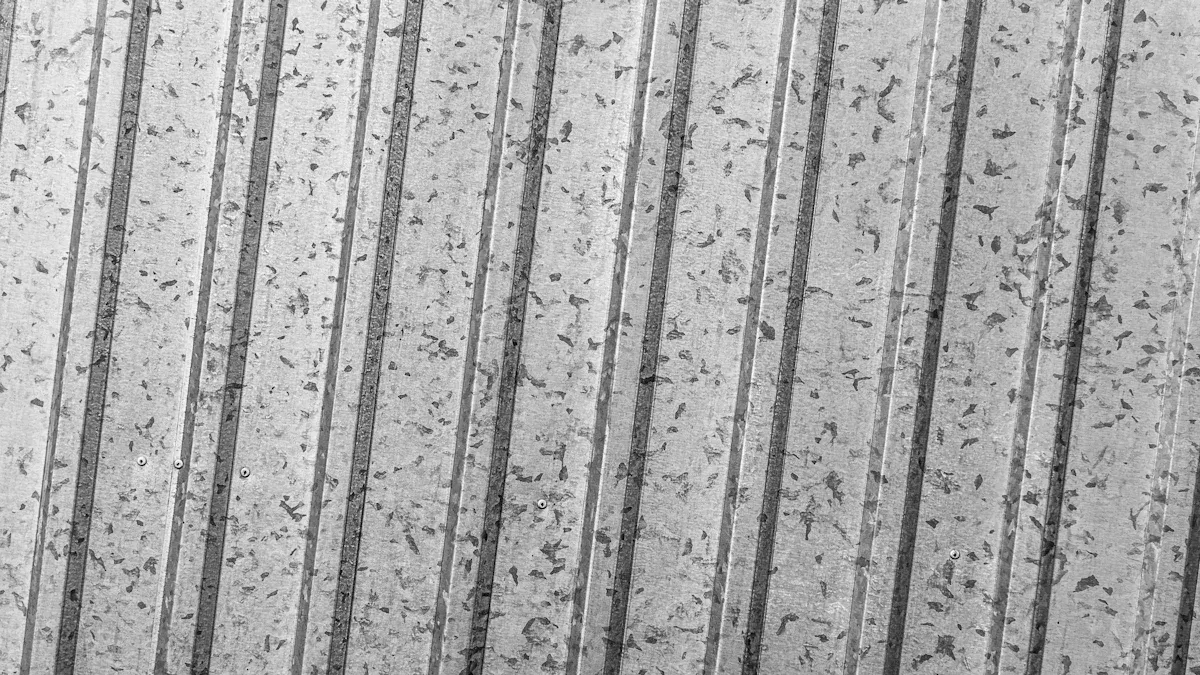
You may find that working with galvanized steel can be tricky. The zinc layer on galvanized steel often causes problems during powder coating. If you skip careful surface preparation, you risk poor adhesion and surface defects. Many people ask, “Can you powder coat galvanized steel?” The answer is yes, but you must follow the right steps. Galvanized steel needs special attention for successful powder coating. Each piece of galvanized steel reacts differently, so always check your process. Powder coating galvanized steel protects the steel and keeps it looking new.
Challenges of Powder Coating Galvanized Steel
Zinc Layer and Its Effects on Powder Coating
When you work with galvanized steel, you face unique challenges. The zinc layer on galvanized steel protects the steel from rust. This layer also creates problems during powder coating. The zinc can react with the powder coating process. You may see poor adhesion if you do not prepare the surface well. The zinc layer can trap air and moisture. This trapped air can cause bubbles or pinholes in the powder coating. You need to understand how the zinc layer affects the process. If you skip this step, you may see defects in your finished product.
Tip: Always check the surface of galvanized steel before you start powder coating. Look for shiny or oily spots. These areas can make adhesion harder.
Common Problems: Adhesion, Pinholes, and Outgassing
You will notice several challenges of powder coating galvanized steel. The most common problem is poor adhesion. The powder coating may not stick well to the galvanized surface. This can lead to peeling or flaking. Pinholes are another issue. These tiny holes form when air or gas escapes from the zinc layer during curing. Outgassing happens when the steel heats up and releases trapped gases. This process creates bubbles or craters in the powder coating.
Here are some challenges you might face:
- Adhesion failure, where the powder coating does not bond to the galvanized steel.
- Pinholes that make the surface rough and weak.
- Outgassing that causes bubbles and defects in the finish.
- Surface contamination from oils or dirt, which makes adhesion worse.
- Uneven coating thickness due to the zinc layer.
You can solve many of these challenges by preparing the galvanized steel properly. Clean the surface, remove oils, and use the right pre-treatment. This will help you get a smooth and strong powder coating.
Can You Powder Coat Galvanized Steel? Key Considerations
When you ask, “Can you powder coat galvanized steel?” you need to look at several key factors. Galvanized steel brings unique challenges to the powder coating process. You must understand how timing and surface treatments affect your results. If you skip these steps, you may see poor adhesion or surface defects. Quality benchmarks help you decide if powder coating galvanized steel is the right choice. These benchmarks include appearance, durability, and environmental safety. New powder coating technology now meets strict standards for galvanized steel. You can achieve a smooth, strong finish if you follow the right process.
Here is a table showing important quality benchmarks for powder coating galvanized steel:
| Quality Benchmark / Metric | Description | Impact on Powder Coating Feasibility on Galvanized Steel |
|---|---|---|
| Material Specification Standardization | Use of ASTM and ISO standards (e.g., ASTM A653 for galvanized steel, ISO 9001 for QMS) | Ensures consistent material properties, safety, and compliance for coating application |
| Tolerancje wymiarowe | Standards like ISO 2768 define tolerances for sheet metal fabrication | Minimizes variations and defects, improving coating uniformity and adhesion |
| Quality Control Processes | First Article Inspection (FAI), Production Part Approval Process (PPAP) | Reduces defects and ensures functional and aesthetic performance of coatings |
| Finish Details Specification | Specifying powder coating types and finishes (matte, gloss, textured) | Guarantees desired appearance and functional characteristics of the coating |
| Environmental and Cost Metrics | Compliance with ISO 14001 and cost considerations | Supports sustainable and economically viable powder coating processes |
Timing After Galvanization
You should always consider the timing after the galvanization process. Freshly galvanized steel often has a reactive surface. If you apply powder coating too soon, you may face challenges with adhesion. Waiting a few days allows the zinc to stabilize. This step helps you avoid surface defects during the powder coating process. If you wait too long, the steel may develop a passivation layer. This layer can make powder coating more difficult. Always check the surface before you start. A stable, clean surface gives you the best results.
Avoiding Passivation and Chromate Layers
Passivation and chromate layers protect galvanized steel from corrosion. However, these layers can cause challenges for powder coating. They act as barriers and prevent the powder from sticking to the steel. You need to remove these layers before you start the powder coating process. Use proper cleaning and surface preparation methods. If you skip this step, you may see peeling or flaking after curing. Always inspect the galvanized steel for any signs of passivation or chromate. Removing these layers helps you achieve a strong, lasting finish.
Step 1: Surface Preparation for Successful Powder Coating
Removing Oils, Dirt, and Contaminants from Galvanized Steel
You need to start with a clean surface when working with galvanized steel. Oils, dirt, and other contaminants can stop powder coating from sticking well. If you leave these on the steel, you may see poor coating and weak spots. You should use both mechanical and chemical cleaning methods. Media blasting removes rust and old coatings. Alkaline cleaners break down oils and grease. Acid cleaners help remove oxides. After cleaning, check the surface with tests like the White Cloth Wipe Test or the Water-Break-Free Test. These steps help you get the best results.
- Remove all oils, dirt, and rust from the galvanized steel.
- Use solvents or degreasers for organic contaminants.
- Use blasting or sanding for dust and rust.
- Test the surface for cleanliness before moving to the next step.
Cleanliness is key. A clean surface gives you strong powder coating adhesion.
Dealing with Passivation Layers and Surface Defects
Passivation layers protect galvanized steel but can block powder coating from bonding. You must remove these layers before coating. Surface defects like pinholes or rough spots also cause problems. These defects can lead to corrosion and weak spots in the coating. Light blasting or chemical etching helps remove passivation and smooth out defects. The table below shows how to prepare galvanized steel based on its condition:
| Galvanizing Condition | Surface Preparation Steps |
|---|---|
| New (≤48 hours exposure) | Remove protrusions, runs, drips; remove organic contaminants and chromate if present; rinse and dry; coat within 48 hours; if >48 hours, prepare per SSPC-SP 16 or SP 11 or apply zinc phosphate or acrylic passivation |
| Partially Weathered (2 days to 1 year) | Remove chromate conversion coating if present; remove wet storage stain; sweep blast or use clean and etch products; coat as soon as feasible |
| Weathered (>1 year exposure) | Remove grease and oils; pressure wash with warm water; remove corrosion if present; coat as soon as feasible |
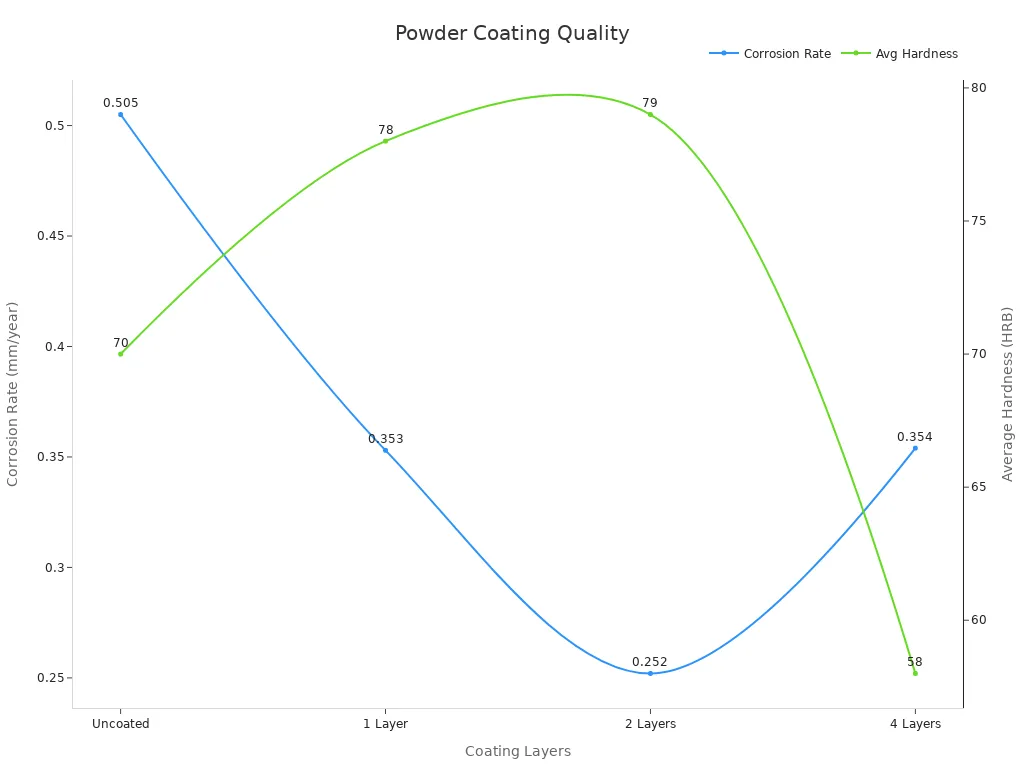
Surface defects and poor passivation control can increase corrosion. The chart below shows how different coating layers affect corrosion rate and hardness:
Drying and Handling Tips to Prevent Contamination
After cleaning, you must dry the galvanized steel completely. Wet surfaces can trap dirt and cause powder coating defects. Let the steel cool to about 80-90°F before applying powder. Hot parts can cause the powder to melt too soon and create uneven layers. Use cooling tunnels or fans to bring the temperature down quickly. Keep the work area clean and control humidity around 50%. Use filtered air to keep dust away from the steel. Store powder in a cool, dry place to prevent clumping and surface blemishes.
- Always handle galvanized steel with clean gloves.
- Avoid touching cleaned surfaces with bare hands.
- Use sanitary pans under conveyors to catch drips and shavings.
Proper drying and careful handling help you achieve successful powder coating on galvanized steel.
Step 2: Addressing Adhesion and Pinhole Issues in Powder Coating
Understanding Outgassing and Pinholes on Galvanized Steel
When you work with galvanized steel, you often face the tough task of achieving adhesion. Outgassing is a main cause of pinholes during powder coating. This happens when trapped gases in the galvanized layer escape as the steel heats up. Experts say that moisture inside the steel, not just humidity in the air, leads to these problems. If you do not remove grease or other contaminants, pinholes can form. Preheating the galvanized steel at about 200°C helps drive out these gases before you start the application. Books like “Industrial Powder Coating: Basics, Methods, Practical Application” explain that using powders made for outgassing can help, but you still need to control the process. Pinholes let moisture reach the steel, which can cause corrosion and weaken the coating.
Techniques to Improve Adhesion, Including Sweep Blasting and Primers
You can use several techniques to improve adhesion on galvanized steel. Sweep blasting is a gentle blasting method that roughens the surface without removing too much zinc. This gives the powder coating something to grip. Primers designed for galvanized steel also help with the tough task of achieving adhesion. These primers fill tiny gaps and create a strong bond between the steel and the powder coating. Using a fluoride etch before a zirconium pretreatment breaks down the galvanized surface and boosts adhesion. Outgassing-forgiving powders and proper application settings also reduce pinholes and improve the final result.
Addressing adhesion and pinhole issues is critical. If you ignore them, you risk coating failure, corrosion, and poor wear resistance.
- Pinhole defects allow corrosion and delamination.
- Poor adhesion leads to peeling and weak spots.
- Uniform, durable coatings depend on good adhesion and pinhole control.
Preventing Surface Defects Before Powder Coating
You can prevent surface defects on galvanized steel by following a few key steps:
- Use a fluoride etch before pretreatment to improve adhesion.
- Outgas the part in a dry-off oven at a temperature about 50°F above the powder cure temperature.
- Clean the steel to remove oil, grease, and other contaminants.
- Monitor process variables like temperature and coating thickness using Statistical Process Control methods.
- Use proper hangers to keep the part stable during application.
Heating the substrate to at least 20°C above the powder coating’s cure temperature before application lets gases escape. Apply the powder before the steel cools to prevent air from re-entering. Always follow the powder coating technical data sheet for film thickness. Outgassing-forgiving powders or additives can help with porous galvanized surfaces.
Careful preparation and the right techniques make a big difference in powder coating success on galvanized steel.
Step 3: Best Pre-Treatment Methods for Galvanized Steel
Mechanical Abrasion: Sweep Blasting and Surface Grinding
You can use mechanical abrasion to prepare galvanized steel for powder coating. Sweep blasting is a gentle technique that roughens the zinc surface without removing too much of it. This process gives the powder coating something to grip. Surface grinding works well for removing stubborn spots or defects. These techniques help you create a clean, even surface. You should choose the right abrasive material and pressure to avoid damaging the galvanized layer. Sweep blasting is often the best choice for new galvanized steel because it keeps the zinc protection intact.
Tip: Always check the steel after blasting. Look for a uniform, dull finish. This shows the surface is ready for the next step.
Chemical Pre-Treatments: Zinc Phosphate, Acid Etching, and Pickling
Chemical pre-treatments offer another way to get galvanized steel ready for powder coating. Zinc phosphate is a popular choice. It improves adhesion and gives strong corrosion resistance. Acid etching removes surface oxides and helps the powder coating stick better. Pickling cleans the steel by removing rust and other contaminants. You can also use silane-based treatments to boost adhesion, but these do not protect against corrosion as well as chromate coatings. Research shows that zinc phosphate works best for hot rolled steel, while acid etching suits different zinc layer thicknesses.
| Pre-Treatment Method | Use Case | Effectiveness |
|---|---|---|
| Zinc Phosphate | Hot rolled or galvanized steel | Best for adhesion and corrosion |
| Acid Etching | Varies with zinc thickness | Good for cleaning and activation |
| Pickling | Rust or heavy contamination | Effective for deep cleaning |
Choosing the Right Pre-Treatment for Your Powder Coating Project
You need to match the pre-treatment process to your specific project. Think about the type of galvanized steel, the level of cleanliness, and your production scale. For large batches, dip tanks or spray washers save time. For small jobs, manual techniques like abrasive blasting work well. Chemical methods give great adhesion but may need careful handling. Eco-friendly options, such as zirconium-based coatings, help reduce environmental impact. Always consider the finish you want and the conditions your steel will face. The right effective pre-treatment ensures your powder coating lasts and protects the galvanized surface.
Note: Cleanliness, adhesion, and environmental safety all matter when you choose your pre-treatment method.
Step 4: Powder Coating Application Techniques for Galvanized Steel
Selecting the Right Powder Coating Type for Galvanized Steel
You need to choose the right powder coating for galvanized steel to get the best performance. Polyester powders work well because they resist weather and UV light. For galvanized steel, always pick a powder labeled as “degassing grade.” This type helps stop pinholes caused by trapped gases. You should also check that the powder matches your project’s needs for durability and finish. Using the right powder coating type gives you strong protection and a smooth look.
Tip: Always apply powder coating within 12 hours after galvanizing. This step helps you avoid surface contamination and poor adhesion.
Adjusting Application Settings for Successful Powder Coating
You can improve your results by adjusting application techniques and settings. Start with a clean, dry galvanized steel surface. Use sweep blasting with soft abrasive media like aluminum silicate or organic materials. This method roughens the surface without removing too much zinc. Automated spray booths and electronic controls help you get uniform coverage and reduce powder waste.
- Set electrostatic spray guns to the recommended voltage for even powder distribution.
- Control film thickness by measuring before curing. Too much powder can cause poor adhesion or incomplete curing.
- Preheat the steel to drive out trapped air and moisture. This step reduces defects like pinholes and bubbles.
| Application Aspect | Details |
|---|---|
| Surface Preparation | Sweep blasting with soft abrasives (Mohs ≤5) for optimal adhesion |
| Application Techniques | Automated booths, adjustable spray devices for uniform coverage |
| Film Thickness | Measure and control before curing to prevent defects |
| Preheating | Preheat steel to reduce outgassing and improve powder bonding |
Curing Time and Temperature Considerations to Prevent Defects
You must cure powder coating at the right temperature and time to avoid defects. For galvanized steel, set the oven to about 180°C (400°F) and cure for 10 minutes. Preheating heavy or thick steel parts helps speed up curing and ensures full cross-linking of the powder. Adjust line speed and preheat controls to match the thickness of your galvanized steel. Always use a curing oven with good heat control for the best results.
| Metric / Parameter | Details / Values | Purpose / Effect on Defect Prevention |
|---|---|---|
| Curing Temperature | 180°C (400°F) | Ensures full cross-linking of powder coating |
| Curing Time | 10 minutes | Complete curing, especially for thick galvanized steel |
| Pre-heating | Recommended before powder application | Reduces pinholes and improves bonding |
| Powder Type | Degassing grade polyester powder | Reduces pinholes from gas bubbles |
Note: Proper curing gives you a durable finish and long-lasting performance for your galvanized steel project.
Step 5: Quality Control and Inspection for Powder Coated Galvanized Steel
Visual Inspection for Defects and Surface Quality
You need to check every piece of galvanized steel after powder coating. Start with a careful visual inspection. Look for runs, sags, pinholes, and spots where the coating looks thin or uneven. These defects can weaken the protection and make the finish look bad. Always record the time between cleaning and coating. This step helps you prevent oxidation. Measure and note the temperature, humidity, and dew point before and after coating. These checks help you avoid zinc salt contamination. Use a dry film thickness gauge to make sure the powder coating covers the galvanized steel evenly.
Here is a table showing common inspection methods and what they detect:
| Inspection Method | What It Detects | Best Use Case |
|---|---|---|
| Visual Inspection | Runs, sags, pinholes, holidays | All powder coated galvanized steel |
| Eddy Current Testing | Surface cracks ≥ 0.5 mm | Non-conductive coatings |
| Magnetic Particle Testing | Surface/subsurface flaws | Ferromagnetic galvanized steel |
| Dye Penetrant Inspection | Surface-breaking flaws | Clean, uncoated surfaces |
Tip: Good lighting helps you spot small defects during your inspection.
Adhesion Testing Methods for Powder Coating
You must test adhesion to make sure the powder coating sticks well to the galvanized steel. The cross-hatch test works well. You cut a grid into the coating, apply tape, and then pull it off. Rate the adhesion from 0 to 5 based on how much coating peels away. The pull-off test uses a special tool to measure how much force it takes to pull the coating from the steel. Bend tests and impact tests also show how the coating holds up under stress. The knife test lets you check if the coating lifts at a cut. These tests follow standards like ASTM D3359, D6677, and ISO 2409. High adhesion grades mean your powder coating will last longer and protect the galvanized steel better.
- Cross-hatch test: Checks for peeling after tape removal.
- Pull-off test: Measures force needed to remove coating.
- Bend test: Looks for cracks or peeling after bending.
- Knife test: Checks if coating lifts at a cut.
Always document your adhesion test results for quality control.
Touch-Up and Rework Tips for Galvanized Steel
Sometimes you find defects after powder coating galvanized steel. You can fix small areas by cleaning and sanding the spot before recoating. This step helps new powder coating stick and improves adhesion. Spot touch-ups with powder can be hard because the new coating may not blend well. For large repairs, recoat the whole part to keep the finish even. Liquid polyurethane paints work for touch-ups and give better results than spray cans, but you may still see lines. Always check the repaired area for adhesion and coating thickness. When you recoat, adjust your powder coating settings to help the powder stick to the insulated surface. Adding a full second coat can improve both wear resistance and appearance.
Note: Careful touch-up and rework keep your galvanized steel looking good and protected.
You can achieve a durable, high-quality finish on galvanized steel by following each step in the powder coating process. Careful surface cleaning, chemical activation, and the right conversion coatings all boost durability. Drying and curing the surface set a strong base for powder coating. Adjust your process for galvanized steel’s unique needs. Regular maintenance and quality checks help prevent defects and improve durability. Always test your process on a small area first to ensure successful powder coating and long-lasting durability.
- Clean the surface to remove oils and contaminants.
- Activate the surface with chemical treatments for better adhesion.
- Apply conversion coatings to increase bonding and durability.
- Dry and cure the surface before powder coating for maximum durability.
Remember, attention to detail at every stage of the process leads to the best durability and powder coating results.
Często zadawane pytania
Can you powder coat over old galvanized steel?
You can powder coat old galvanized steel. Clean the surface well. Remove rust, oils, and any old coatings. Use sweep blasting or chemical etching to prepare the surface. Always check for passivation layers before you start.
Why do pinholes appear in my powder coating?
Pinholes form when trapped gases escape during curing. These gases come from the zinc layer or moisture in the steel. Preheat the steel and use degassing-grade powders to reduce pinholes. Always clean and dry the surface before coating.
What is the best way to improve adhesion on galvanized steel?
You can improve adhesion by sweep blasting the surface. Use a primer made for galvanized steel. Chemical pre-treatments like zinc phosphate also help. Always test a small area first to check the results.
How soon should you powder coat after galvanizing?
You should powder coat within 12 to 48 hours after galvanizing. This timing helps you avoid passivation layers and surface contamination. If you wait too long, clean and prepare the surface again before coating.
Can you touch up powder coated galvanized steel?
You can touch up small defects with liquid polyurethane paint. Clean and sand the area first. For large repairs, recoat the whole part for a smooth finish. Always check the repaired area for good adhesion and coverage.