
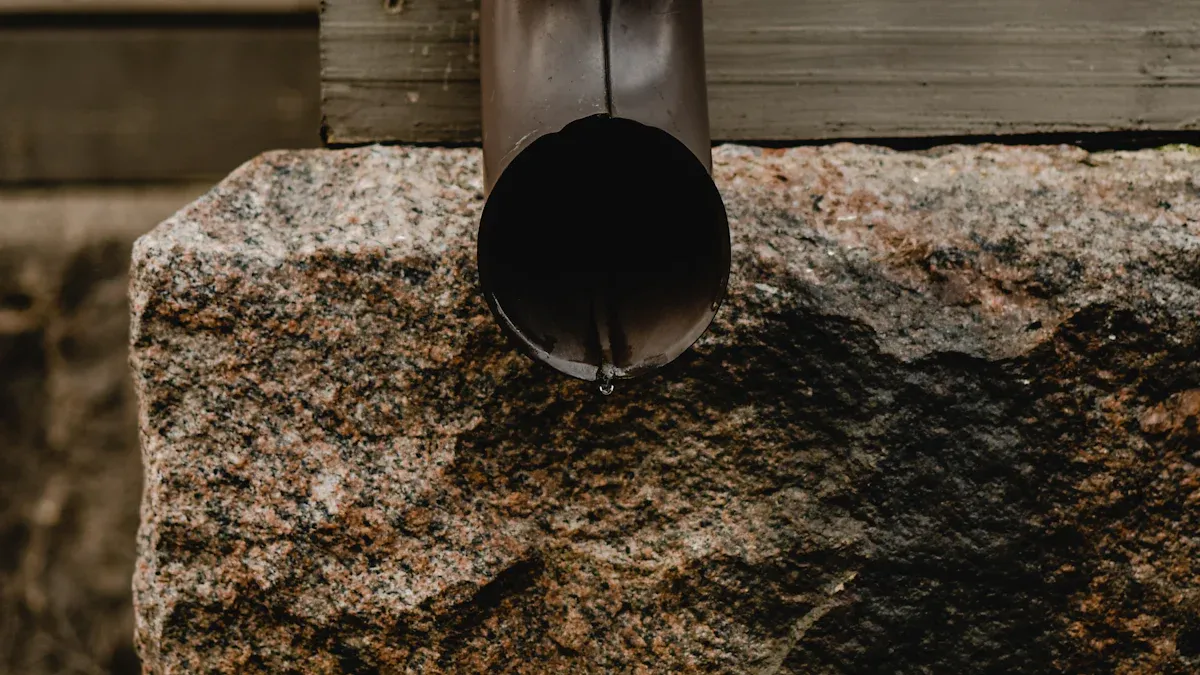
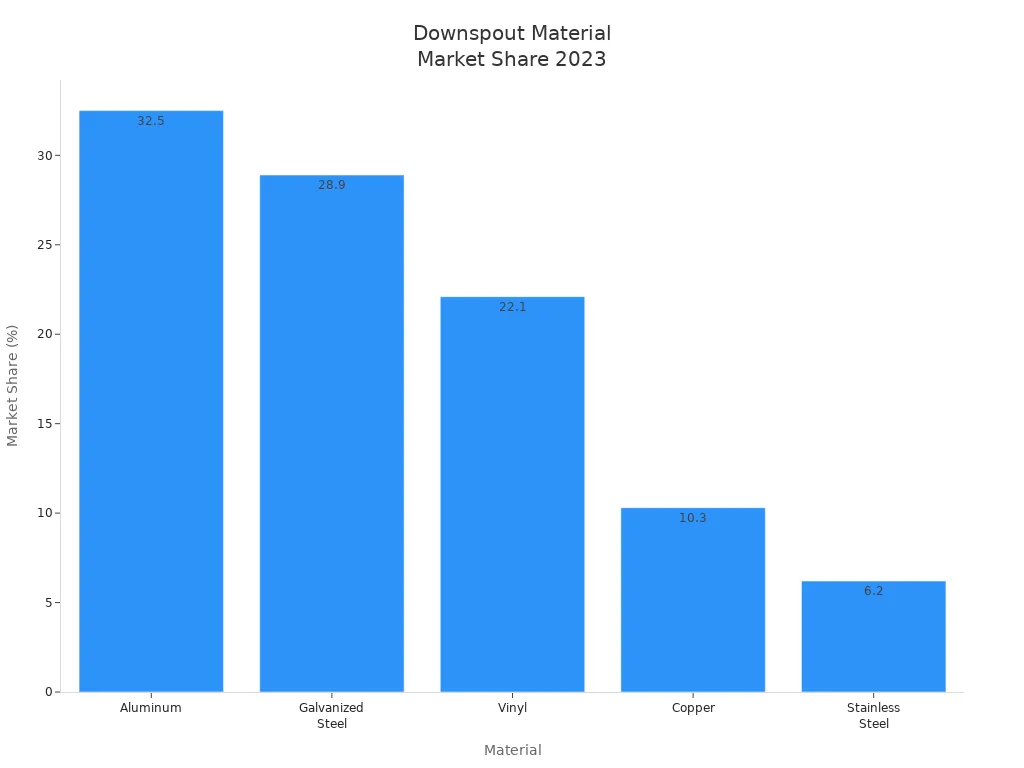
Should you choose galvanized steel downspouts for your home? Many homeowners do. In 2023, about 28.9% of homeowners picked galvanized steel, making it the second most popular choice after aluminum.
| Materiale | Market Share in 2023 (%) |
|---|---|
| Aluminum | 32.5 |
| Galvanized Steel | 28.9 |
| Vinyl | 22.1 |
| Rame | 10.3 |
| Acciaio inossidabile | 6.2 |
You might want galvanized steel downspouts if you need strength and do not mind regular upkeep. They last 15–20 years and can handle harsh weather, but they need more care than low maintenance options like aluminum. For homes facing heavy rain or snow, galvanized steel downspouts offer solid protection.
What Are Galvanized Steel Downspouts?

How Galvanized Steel Downspouts Are Made
You might wonder how galvanized gutters get their strength and weather resistance. Manufacturers start with steel sheets and coat them with zinc using a process called hot-dip galvanizing. This process involves several steps:
- Workers clean and prepare the steel to help the zinc stick.
- They dip the steel into molten zinc at about 840°F (450°C).
- The zinc bonds with the steel, forming a tough zinc-iron layer.
- The steel cools, leaving a shiny zinc coating on the outside.
This zinc layer acts as a shield. If the surface gets scratched, the zinc will corrode first, protecting the steel underneath. Because of this, galvanized gutters last longer and resist rust better than plain steel gutters. The process also keeps the steel strong, so you get downspouts that can handle tough weather and heavy use.
Tip: The zinc coating not only protects but also allows the steel to be shaped into different downspout styles without losing strength.
Why Homeowners Choose Galvanized Steel Gutters
Many homeowners pick galvanized gutters for their homes because these gutters offer a mix of strength, durability, and value. Here are some reasons you might consider them:
- Galvanized gutters can last 20 to 30 years if you take care of them.
- The zinc coating helps prevent rust, even in wet or snowy climates.
- Steel gutters stay strong during storms and heavy rainfall.
- These gutters resist dents better than aluminum or vinyl.
- Galvanized steel gutters cost less than copper but still give you a sturdy metal option.
- You can paint galvanized gutters to match your home’s look.
- They handle heavy water flow and debris, making them a smart choice for areas with harsh weather.
If you want gutters that can stand up to tough conditions and still look good, galvanized gutters might be the right fit for your home.
Pros of Galvanized Steel Downspouts
Durability and Strength of Galvanized Gutter Systems
When you choose galvanized gutter systems, you get some of the strongest gutters available for your home. Galvanized steel downspouts stand out because they have higher tensile strength than both aluminum and vinyl. Aluminum gutters are light and strong for their weight, but they do not match the toughness of steel gutters. Vinyl gutters are even less sturdy and can crack or warp when temperatures change.
Galvanized gutter systems hold up well under pressure. You can count on them to resist dents from ladders, falling branches, or even the occasional bump from yard tools. This strength means you do not have to worry as much about damage during storms or heavy use. If you live in an area with harsh weather, the advantages of galvanized gutter systems become clear. They can handle heavy rainfall and strong winds without bending or breaking.
Note: Galvanized gutters are a smart choice if you want a gutter system that will not let you down when the weather gets rough.
Weather Resistance and Longevity
Galvanized gutter systems offer excellent protection against the elements. You get a gutter system that can handle almost anything nature throws at it. Here are some key benefits you will notice:
- Steel gutters and metal roofing have a Class 4 UL 2218 Impact Resistance rating, so they resist hail and flying debris better than most other materials.
- Galvanized gutter systems withstand heavy snow loads. Their smooth surfaces help snow slide off, which lowers the risk of damage.
- Even if hail leaves small dents, the structure of your gutters stays strong.
- Galvanized gutters resist cracking, warping, and corrosion, even in freezing temperatures or heavy rain.
- Protective coatings on steel gutters help prevent rust and corrosion, so your gutters last longer.
- With regular maintenance, galvanized gutter systems can last about 20 years or more.
You should also know that proper sizing and secure attachment of downspouts are important. Larger downspouts, like 4-inch round or 3×4-inch rectangular, help move more water during heavy rain. This reduces the chance of clogs and overflow. Regular cleaning and checks keep your galvanized gutters working well, even during severe storms.
Classic Appearance and Versatility
Galvanized gutter systems do more than protect your home—they also add to its curb appeal. You can find galvanized gutters in many shapes and styles. For a modern look, you might choose downspouts without corrugated ribs. These smooth, boxy designs match well with contemporary homes and commercial buildings. They give your home a clean, upscale appearance.
If you prefer a traditional style, galvanized steel gutters work well with K-style gutters. These have a decorative profile that looks like crown molding. You can pair them with rectangular downspouts for a classic look. Half-round gutters, which have a timeless, elegant shape, also use round corrugated galvanized steel downspouts. This pairing fits both historic and modern homes.
Galvanized gutter systems let you paint or finish your gutters to match your home’s color scheme. This versatility is one of the main advantages of galvanized gutter systems, making them a popular choice for many homeowners.
No matter your home’s style, you can find galvanized gutters that fit your needs. Their classic look and flexible design options make them a smart investment for both new and older homes.
Handles Heavy Water Flow and Debris
When you live in an area with heavy rain or lots of falling leaves, you need gutters and downspouts that can keep up. Galvanized gutters stand out because they move large amounts of water quickly and do not clog as easily as weaker materials. You get peace of mind during storms because these gutters do not bend or break under pressure.
Galvanized steel downspouts work well with galvanized gutter systems to direct water away from your home. The strong steel gutters resist dents from sticks, rocks, or even ice chunks that might flow through the system. You do not have to worry about the gutters collapsing or splitting when debris builds up. This strength helps protect your home’s foundation and landscaping.
Here are some reasons why galvanized gutter systems handle water and debris better than other options:
- Galvanized gutters have a tough zinc coating that shields the steel from damage.
- Steel gutters offer more impact resistance than aluminum or vinyl, so they do not crack or warp when hit by branches or hail.
- You can count on steel gutters to keep working even when leaves, twigs, or pine needles pile up.
- Galvanized gutters move water quickly, which helps prevent overflow and water damage.
- The smooth surface inside steel gutters allows debris to wash out more easily during heavy rain.
Tip: Regular cleaning and inspections help you get the most out of your galvanized gutter systems. Check for clogs and remove debris to keep water flowing smoothly.
Steel gutters do need some care. Over time, you might see rust if you do not maintain them. You should check your gutters every season and fix any scratches or worn spots. This simple routine helps your galvanized gutters last longer and keeps your home safe from water problems.
When you compare steel gutters to other materials, you see clear differences:
- Aluminum downspouts are lighter and resist rust better, but they dent more easily.
- Vinyl downspouts cost less, but they can crack and do not last as long.
- Copper downspouts last a long time and resist corrosion, but they cost much more than steel gutters.
If you want a gutter system that stands up to tough weather and heavy debris, galvanized gutters give you reliable performance. You get strong protection for your home, even during the worst storms.
Cons of Galvanized Steel Downspouts
Cost Compared to Other Galvanized Gutters
When you look at the price of galvanized gutters, you will notice they cost more than vinyl and aluminum options. You pay less than you would for copper, but the upfront cost is still higher than many homeowners expect. The price for galvanized steel downspouts usually falls in the middle range.
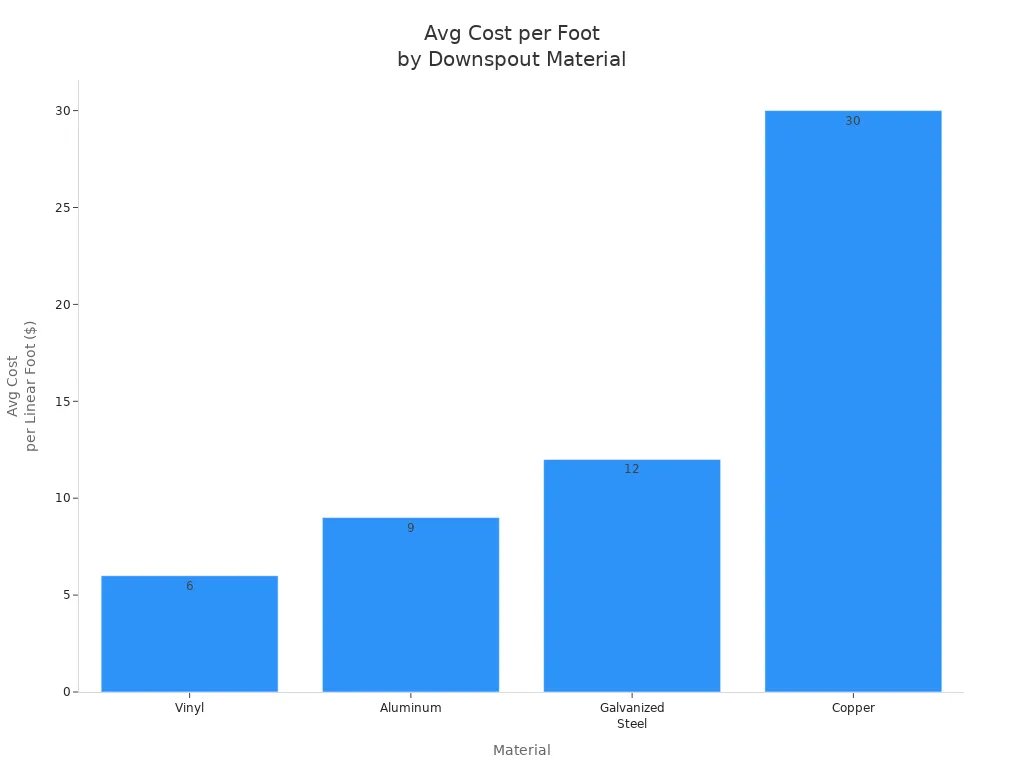
Here is a table that shows the average cost per linear foot for different gutter materials:
| Materiale | Average Cost per Linear Foot | Cost Range per Linear Foot |
|---|---|---|
| Vinyl | $6 | $4 – $8 |
| Aluminum | $9 | $6 – $13 |
| Galvanized Steel | $12 | $8 – $16 |
| Rame | $30 | $24 – $36 |
You can also see the cost differences in this chart:
Galvanized steel gutters require professional installation because of their weight and rigidity. This adds to your total cost. You may find that installation for steel gutters is more expensive than for aluminum or vinyl. Over a 10-year period, you will likely spend more on maintenance and repairs for galvanized gutters than for aluminum or vinyl. Copper gutters cost the most but last the longest with the least maintenance.
Note: If you want a budget-friendly option, vinyl or aluminum may suit you better. Galvanized gutters offer strength, but you pay more for that benefit.
Maintenance Needs for Galvanized Steel Gutters
You need to keep up with regular maintenance if you choose galvanized gutters. These steel gutters need more care than aluminum or vinyl. You must clean them at least twice a year, usually in spring and fall. If your home sits under trees or in a stormy area, you may need to clean them more often.
Here are the main maintenance tasks for galvanized gutters:
- Clean out leaves, sticks, and debris to prevent clogs and standing water.
- Inspect gutters after big storms to catch problems early.
- Check for leaks, rust spots, and alignment issues every year.
- Repaint or recoat the gutters every 5 to 10 years to keep the zinc layer strong.
- Make sure downspouts drain away from your foundation.
The average annual maintenance cost for galvanized steel downspouts ranges from $100 to $300. Every 5 to 10 years, you may need to repaint or recoat, which can cost $200 to $600. If you skip these steps, you risk rust and leaks. Installing gutter guards can help reduce cleaning, but you still need to check your gutters often.
🛠️ Tip: Regular cleaning and inspections help you avoid bigger repair bills later. Galvanized gutters last longer if you keep up with maintenance.
Risk of Corrosion and White Rust
One of the main disadvantages of galvanized gutter systems is the risk of corrosion and white rust. The zinc coating on steel gutters protects them, but it can wear down over time. When this happens, moisture and chemicals can reach the steel underneath.
Several factors increase the risk of corrosion:
- High humidity (above 60%)
- Salt in the air, especially near the coast
- Acid rain or polluted air
- Contact with acidic woods like cedar or pine
- Moss, lichen, or bird droppings on the gutters
- Water with minerals like calcium or magnesium
- Galvanic corrosion from touching other metals, such as copper
If you live in a wet or coastal area, your galvanized gutters may rust faster. Acidic rainwater and pollution also speed up the process. White rust forms when the zinc reacts with moisture and air, leaving a powdery white coating. This weakens the corrosion resistance of your steel gutters.
Alert: If you see white rust or rusty spots, act quickly. Clean the area and apply a protective coating to stop further damage.
These potential drawbacks mean you must stay alert and take care of your gutters. Galvanized steel gutters give you strength, but you need to protect them from the elements. If you want a gutter system with less risk of rust, you may want to consider aluminum or copper instead.
Installation Challenges and Weight
When you choose galvanized gutters, you get strength and durability. You also face some unique installation challenges. The weight of galvanized steel downspouts makes them much heavier than aluminum or vinyl. This extra weight means you usually need a professional to install them. Trying to do it yourself can be risky and difficult.
You will notice that galvanized gutters require more labor and time to install. The steel is not only heavy but also rigid. Installers often need special tools and skills, such as soldering, to connect the sections. The weight makes it hard to lift and hold the gutters in place, especially on taller homes. Because of this, labor costs go up. For a typical 150-foot system, you might pay between $2,100 and $3,300 just for materials. Labor adds even more to the total cost.
🛠️ Tip: Always hire experienced local contractors for galvanized gutters. They know how to handle the weight and follow building codes for your area.
Here are some common installation challenges you might face with galvanized gutters:
- Incorrect pitch or slope can cause water to pool near your home. This can lead to foundation problems.
- If installers do not use enough hangers or space them too far apart, gutters and downspouts can sag or even collapse.
- The zinc coating on galvanized gutters can scratch easily. Scratches expose the steel underneath, which can rust quickly.
- Downspouts that are too short will not move water far enough from your foundation. This increases the risk of water damage.
- Debris like leaves and twigs can clog the system. Clogs stop water from flowing and can cause leaks.
- Harsh weather or improper fastening can cause downspouts to detach from the wall or gutter.
- If you do not secure the downspouts well, they may sag over time.
You need to pay attention to these issues during installation. Proper pitch, enough brackets, and careful handling of the zinc coating help prevent most problems. Regular cleaning and inspections keep your galvanized gutters working well.
Here is a quick table to compare installation factors for different gutter materials:
| Materiale | Weight | DIY Friendly | Labor Cost | Special Skills Needed |
|---|---|---|---|---|
| Vinyl | Light | Yes | Low | No |
| Aluminum | Light | Yes | Low | No |
| Galvanized Gutters | Heavy | No | High | Yes (soldering) |
| Rame | Heavy | No | Very High | Yes (soldering) |
You see that galvanized gutters are not the best choice for a quick or easy DIY project. The weight and complexity mean you should plan for higher installation costs and more time. If you want a gutter system that lasts and handles tough weather, you must be ready for these extra steps.
Note: Regular maintenance and inspections help you avoid many installation-related problems. Check your galvanized gutters for sagging, leaks, and scratches every season.
Galvanized Steel Downspouts vs. Other Downspout Materials
Aluminum Downspouts
You may notice that aluminum downspouts are a popular choice for many homes. Aluminum is lighter than steel, which makes it easier to install and handle. You can often install aluminum gutters yourself, saving on labor costs. Aluminum does not rust, so you do not have to worry about corrosion. However, aluminum can dent more easily than steel, especially during storms or if hit by debris.
Here is a quick comparison:
| Aspect | Galvanized Steel Downspouts | Aluminum Downspouts |
|---|---|---|
| Cost | About $3 per linear foot for materials; higher installation costs due to weight and specialized labor | About $2 per linear foot for materials; easier and cheaper installation due to flexibility and lighter weight |
| Durata | More durable, holds shape better, performs well in extreme weather (especially winter/ice); prone to rust as zinc coating wears off | Rust-proof, lower maintenance, but more prone to dents, cracks, and leaks due to expansion/contraction with temperature changes |
| Maintenance | Requires regular cleaning, inspection of zinc coating, and rust prevention | Generally less maintenance; monitor for dents and leaks but no rust concerns |
| Lifespan | Approximately 20 years with proper maintenance | Approximately 20 years with proper maintenance |
You get more strength with galvanized steel, but you pay more and need to check for rust. Aluminum gives you a lighter, rust-free option, but it may not last as long in harsh weather.
Vinyl Downspouts
Vinyl downspouts offer a budget-friendly and lightweight solution. You can snap vinyl sections together without special tools, making them a favorite for DIY projects. Vinyl will not rust or corrode, and the color goes all the way through the material, so scratches are less visible. However, vinyl can crack in cold weather and sag under heavy loads or strong winds.
Here is a table to help you compare:
| Aspect | Vinyl Downspouts | Galvanized Steel Downspouts |
|---|---|---|
| Weight | Lightweight, easy to handle and install, suitable for DIY | Heavier, making installation more difficult |
| Installation | Sections snap together, no joints or riveting needed, lower cost | Requires soldering and riveting, higher installation cost, harder to find installers |
| Maintenance | Low-maintenance, won’t rust or corrode, color embedded to resist visible damage | Initially rust-resistant due to zinc coating, but zinc layer wears off eventually leading to rust |
| Durata | Prone to sagging, cracking, shorter lifespan especially in wet/harsh climates | Strong, durable, withstands heavy loads and extreme weather better than vinyl |
| Lifespan | Up to 20 years in dry climates, less in wet climates | Typically lasts about 20 years before rust appears; stainless steel variants last longer but cost more |
| Color Options | Wide variety of colors, no need to paint | Fewer color options, often requires painting to match house |
| Leak Resistance | More seams, seams not soldered, more prone to leaks | Seams soldered and riveted, less likely to leak |
| Climate Suitability | Best for mild, dry climates | Better for harsh weather and climates with heavy snow, rain, or wind |
| Cost | Budget-friendly, suitable for DIY projects | Higher cost due to material and installation complexity |
Vinyl works best in mild, dry climates. If you live in an area with heavy rain or snow, galvanized steel downspouts will give you better protection.
Copper Downspouts
Copper downspouts stand out for their beauty and long life. You get a shiny, elegant look at first, and over time, copper develops a green or brown patina that protects it from corrosion. Copper can last 50 to 100 years with little maintenance. You do not need to paint copper, and it resists rust and weathering.
Here is a comparison:
| Feature | Copper Downspouts | Galvanized Steel Downspouts |
|---|---|---|
| Longevity | Highly durable; lasts 50 to 100+ years; resistant to corrosion; develops protective patina | Lasts around 50 to 60 years with maintenance; zinc coating resists rust but corrodes over time |
| Appearance | Elegant, timeless; natural shine when new; develops green/brown patina with age | Sleek, industrial look; can be painted; does not develop patina |
| Maintenance | Minimal maintenance; does not rust | Requires maintenance to prevent rust; heavier and prone to eventual rusting |
| Cost | More expensive; premium look and longer lifespan | More cost-effective; strong but shorter lifespan |
📝 Tip: Copper downspouts cost much more than steel or aluminum, but you get unmatched durability and a unique look. If you want a classic appearance and do not mind the price, copper is a top choice.
Key Factors to Consider Before You Install Galvanized Gutters
Local Climate and Weather Conditions
You should always think about your local climate before you install galvanized gutters. Galvanized steel works best in certain weather conditions. Here are some points to help you decide:
- Galvanized steel downspouts handle heavy snow and ice better than most other materials. Their strength makes them a top choice for cold, snowy regions.
- In hot and dry climates, galvanized steel can last a long time if it has a good coating. The metal may get hot, but it will not warp or crack.
- If you live near the coast, salt air and high humidity can cause the zinc coating to wear off faster. This leads to rust and shortens the lifespan of your gutters.
- Standing water and frequent rain can also speed up corrosion. You need to keep gutters clean to avoid rust.
- Proper installation, like using stronger hangers and a steeper pitch, helps galvanized gutter systems last longer in harsh winter weather.
Tip: Galvanized steel is not the best choice for coastal or highly corrosive environments. Choose another material if you live near the ocean.
Budget and Long-Term Value
When you plan your budget, look at both the upfront cost and the long-term value. Galvanized steel downspouts cost more at first than aluminum or vinyl. However, they often last much longer and need fewer repairs. Check out this table for a quick comparison:
| Attribute | Galvanized Steel Downspouts | Less Expensive Alternatives (Aluminum) |
|---|---|---|
| Longevity | Often 50+ years | 12–25 years |
| Durata | High resistance to dents and stress | Prone to dents and bending |
| Maintenance | Needs repainting every 8–12 years | Minimal, but more frequent repairs |
| Cost Efficiency | Higher initial, better long-term | Lower initial, more replacements |
You get a strong product that stands up to snow, ice, and wind. Galvanized steel is also recyclable, making it a smart choice for the environment. If you want a gutter system that gives you value over decades, galvanized steel is a good investment.
Willingness to Maintain Galvanized Gutter Systems
You need to ask yourself how much time you want to spend on upkeep. Galvanized steel downspouts need regular cleaning and inspections. You must check for rust, especially after storms or in wet climates. Repainting or recoating every 8–12 years helps protect the zinc layer. If you want a low maintenance option, you may prefer aluminum or vinyl. Galvanized steel lasts longer with care, but it does not stay trouble-free on its own.
🛠️ Note: If you enjoy home projects and do not mind routine checks, galvanized steel can reward you with many years of service.
Home Style and Curb Appeal
When you choose downspouts, you want them to match your home’s style. Galvanized steel downspouts offer a classic look that fits many types of homes. You see them on both old and new houses. Their shiny silver finish gives a clean, industrial feel. You can also paint them to match your trim or siding.
Here are some ways galvanized steel downspouts can boost your curb appeal:
- Timeless Appearance: The metallic finish works well with brick, stone, and wood exteriors. You get a look that never goes out of style.
- Versatility: You can pick from round, rectangular, or custom shapes. This lets you match the gutters to your home’s design.
- Paintable Surface: If you want a different color, you can paint galvanized steel. This helps you blend the downspouts with your home’s color scheme.
🏡 Tip: If you have a historic or craftsman-style home, galvanized steel downspouts can help keep the original charm. For modern homes, smooth or boxy downspouts give a sleek look.
Table: How Galvanized Steel Downspouts Fit Different Home Styles
| Home Style | Galvanized Steel Downspout Fit | Paint Recommended? |
|---|---|---|
| Colonial | Good | Optional |
| Craftsman | Excellent | Optional |
| Modern/Contemporary | Excellent (smooth/boxy) | Yes (for color) |
| Victorian | Good (with decorative shapes) | Yes |
| Ranch | Good | Optional |
You should also think about how visible your downspouts will be. If you want them to stand out, keep the metal finish. If you want them to blend in, paint them to match your siding. Galvanized steel gives you options for both.
Note: Well-chosen downspouts can make your home look more polished and cared for. They add value and help your house stand out in your neighborhood.
Who Should Choose Galvanized Steel Downspouts?
Best Fit Scenarios for Galvanized Gutters
You might find galvanized steel downspouts a smart choice if your home faces tough weather or physical impacts. These downspouts work well in areas with heavy rain, strong winds, or wildfire risk. If you often use ladders near your gutters or have trees that drop branches, the strength of galvanized steel helps protect your home. Many early 20th-century homes used metal gutters, so if your house has a historic style or features half-round gutters, galvanized steel can match the original look.
Galvanized steel downspouts also suit homes where durability matters most. You get strong protection against dents and damage. If you want a gutter system that stands up to storms and keeps working year after year, this material is a solid pick.
Tip: If you live in a region with frequent storms or want to keep your home safe from falling debris, galvanized steel offers peace of mind.
When to Consider Alternatives to Galvanized Steel
Some homeowners may want to look at other options. You might want an alternative if your home sits under many trees that drop leaves or needles all year. If your gutters are hard to reach or you want to avoid climbing ladders, a lower-maintenance material could be safer. Vacation homes or properties left alone for long periods also benefit from easier-care systems.
- Homes surrounded by trees with constant leaf and needle debris
- Properties where regular maintenance is difficult due to height or access
- Older homeowners who want to avoid ladder work
- Vacation homes with little supervision
- Areas with heavy seasonal debris, like spring pollen or autumn leaves
- Regions where standing water can attract mosquitoes
- Northern climates with lots of snow and ice
- Places where roof work or replacement could be complicated by traditional downspouts
You can also consider rain chains, French drains, or rain gardens. These options help manage water flow and reduce maintenance. They work well if you want to protect your home but need a different approach.
You have learned the pros and cons of steel gutters. Galvanized steel downspouts give you strength and classic style, but they need regular care and cost more than vinyl or aluminum. If you want to decide, ask yourself these questions:
- Does your home face harsh weather?
- Are you willing to do regular maintenance?
- Do you want a classic look?
Think about your needs and budget before you choose.
FAQ
How long do galvanized steel downspouts last?
You can expect galvanized steel downspouts to last about 20 years with regular care. In dry climates, they may last even longer. Regular cleaning and repainting help extend their lifespan.
Can you paint galvanized steel downspouts?
Yes, you can paint galvanized steel downspouts. Use a primer made for metal surfaces. Paint helps protect the zinc coating and lets you match your home’s color.
Do galvanized steel downspouts rust?
Galvanized steel downspouts resist rust because of the zinc coating. Over time, scratches or worn spots can lead to rust. Regular inspections and touch-ups help prevent this problem.
Are galvanized steel downspouts hard to install?
Galvanized steel downspouts weigh more than aluminum or vinyl. You usually need a professional installer. The extra weight and special tools make DIY installation difficult.