

Choosing the right galvanized steel angle protects your project from common problems. If you pick the wrong size or type, you might see rust, cracks, or a poor fit. Drilling into the coating can let water in and cause corrosion. Surface defects and incorrect size also weaken your build.
| Common Failure Type | Description | Impact |
|---|---|---|
| Surface Defects | Rust, burrs, or scales on the angle | Faster corrosion, weakens |
| Dimensional Inaccuracies | Wrong size or poor fit | Structural problems |
| Internal Defects | Cracks or voids inside the steel | Safety risk |
Selecting the right galvanized steel angle with the correct size helps you avoid costly repairs and keeps your project strong.
Identify Project Needs Before You Choose the Right Metal
Define the Application for Galvanized Steel Angles
Before you choose the right metal, you need to know how you will use galvanized steel angles in your project. These steel angles work in many construction projects. You can use them for structural support in buildings, roofing, and framing doors or windows. They also help in scaffolding, machine frames, and storage racks. In transportation, you might see them in vehicle bodies or railway structures. Many people use galvanized steel angles in energy projects like solar panel mounts and wind turbine supports. You can even find them in marine construction, such as docks and boat building. Each application needs a different size and strength, so always match the steel angles to your project’s needs.
Tip: Make a list of all the ways you plan to use steel angles in your building projects. This helps you choose the right metal for every job.
Assess Environmental and Corrosion Resistance Requirements
You must think about the environment where you will use galvanized steel angles. Outdoor and moist places need extra protection. Galvanized steel angles have a zinc coating that protects against rust and corrosion. This makes them a good choice for construction projects in wet or coastal areas. Look at the table below to see how different factors affect corrosion resistance:
| Environmental Factor | Impact on Corrosion Resistance |
|---|---|
| Temperature | High heat speeds up corrosion, especially if the coating is damaged. |
| Humidity | More moisture means faster corrosion. |
| Chloride ions (salt) | Salt causes pitting and breaks down protective layers. |
| Sulfate ions | These speed up corrosion. |
| pH | Alkaline helps, but salt can still cause damage. |
| Microorganisms | Bacteria can damage the zinc layer. |
| Mechanical damage | Scratches or dents let rust start faster. |
| Marine/industrial air | Salt and pollution increase corrosion rates. |
If your application faces high humidity, salt, or pollution, galvanized steel angles offer strong protection.
Determine Load and Structural Demands
You must check the load and structural support your project needs. Some construction projects need steel angles that hold heavy weights, while others need lighter support. Think about both constant and changing loads. Make sure the width and thickness of the steel angles match your design. Accurate load calculations keep your project safe and strong. Always follow building codes and design rules for your application. If you feel unsure, ask a structural expert for help.
How to Measure Galvanized Steel Angles and Select the Right Size

Measure Leg Length, Thickness, and Angle Metal Bar Dimensions
You need to measure galvanized steel angles carefully before you start your project. Start by checking the leg length. Each steel angle has two legs that form an L-shape. Use a tape measure or caliper to find the length of each leg. Next, measure the material thickness. This tells you how strong the angle metal bar will be. You also need to check the overall length of the steel angles you plan to use.
Accurate measurements help you avoid problems later. If you make mistakes, you might see poor fit, weak joints, or even safety risks. Here are some important points to remember:
- Precise dimensional inspection ensures the angle metal bar fits well and stays strong.
- Accurate coating thickness measurement protects against corrosion.
- Use magnetic or eddy current gauges to check the zinc coating.
- Follow ASTM and ISO standards for measuring angle sizes.
- Visual inspection and adhesion tests help you spot defects.
Note: Measurement errors can cause joint slip, which leads to more movement and less stiffness in your structure. Always double-check your measurements to keep your project safe.
Decide Between Equal and Unequal Galvanized Steel Angles
When selecting angle metal bars, you must choose between equal and unequal galvanized steel angles. The difference comes from the length of the legs. Equal angles have legs of the same length. Unequal angles have one leg longer than the other. This choice affects how your structure handles weight and force.
Here is a table to help you compare the two types:
| Feature | Equal Galvanized Steel Angles | Unequal Galvanized Steel Angles |
|---|---|---|
| Leg Dimensions | Both legs are of equal length (L1 = L2) | Legs have different lengths (L1 ≠ L2) |
| Symmetry | Symmetrical shape | Asymmetrical shape |
| Load Distribution | Uniform load distribution | Eccentric load distribution |
| Force | Balanced strength in both directions | Greater strength in the direction of the longer leg |
| Design Complexity | Simple to design | Needs detailed calculations |
| Typical Use | General framing, balanced loads | Custom supports, uneven loads |
You should select the right type based on your project’s needs. Equal galvanized steel angles work well for general framing and balanced loads. Unequal angles help when you need extra strength in one direction or have special design needs. Both types of angle irons are made from strong steel and can be galvanized for better corrosion resistance.
Choose Standard or Custom Lengths
You also need to decide if you want standard or custom lengths for your steel angles. Most suppliers offer galvanized steel angles in standard lengths. The most common sizes you will find are 4 feet, 6 feet, 8 feet, 10 feet, and 20 feet. These lengths are easy to find and usually cost less. If your project needs a special length, you can order custom sizes, but this may take more time and money.
When selecting angle metal bars, think about how the thickness and length will affect your build. The appropriate size depends on your design and the space you have. Standard lengths work for most jobs, but custom lengths help when you need a perfect fit.
Tip: Always check with your supplier to see what angle sizes they have in stock. This helps you plan your project and avoid delays.
Choosing the appropriate size for your galvanized steel angle means looking at leg length, material thickness, and overall length. Measure carefully, compare equal and unequal types, and pick the right length for your job. This process helps you build strong, safe, and long-lasting structures.
Evaluate Material Properties of Galvanized Steel Angles
Understand the Benefits of Galvanization
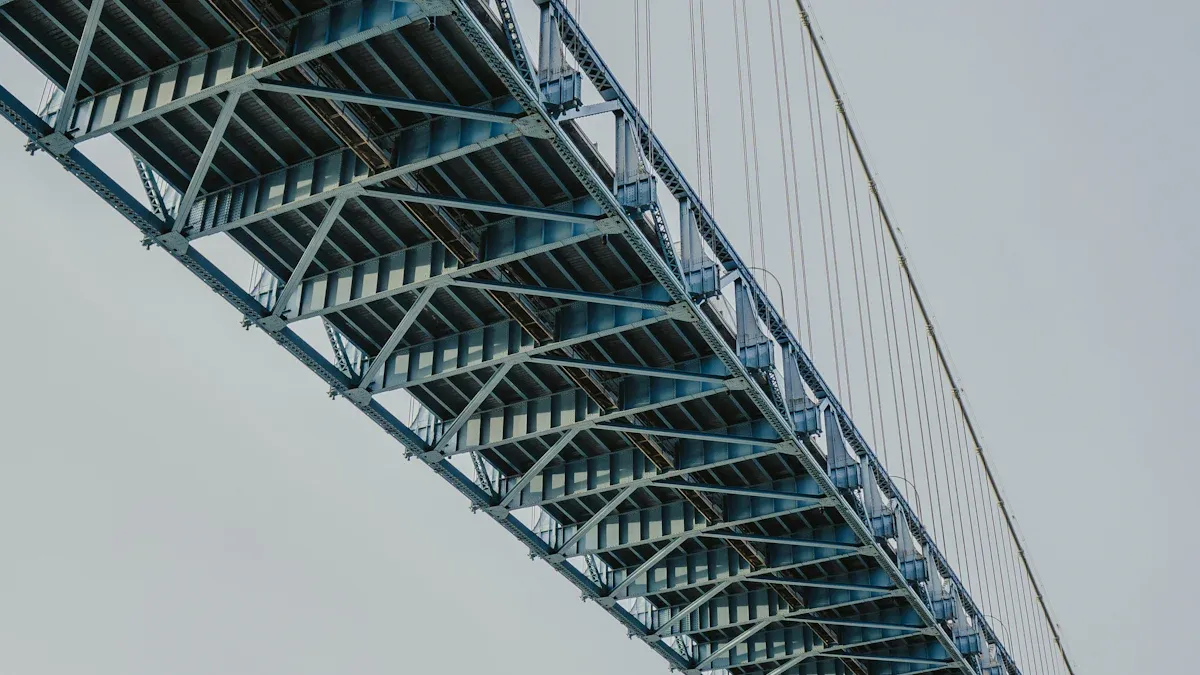
When you choose steel angles for your project, you want them to last a long time. Galvanized steel has a zinc coating that protects the metal from rust and damage. This coating forms a strong barrier against moisture and air. You get a much longer lifespan compared to non-galvanized steel angles. For example, the Governor Mario M. Cuomo Bridge uses galvanized steel that can last up to 100 years with very little maintenance. The zinc layer even heals itself if it gets scratched, so your steel angles stay strong and safe. You spend less time and money on repairs because the coating keeps rust away. This makes galvanized steel a smart choice for projects that need durability and low upkeep.
| Aspect | Galvanized Steel Angles | Non-Galvanized Steel Angles |
|---|---|---|
| Lifespan | Decades longer | Shorter, needs more care |
| Maintenance | Rarely needed | Needs regular painting |
| Cost | Higher at first | Lower at first |
| Applications | Great for outdoors | Best for dry, indoor spots |
Tip: Hot-dip galvanization gives the best protection. The steel angles get dipped in molten zinc, which covers every surface and edge.
Check Strength, Durability, and Flexibility
You need steel angles that can handle heavy loads and tough conditions. Galvanized steel angles offer high strength and durability. The zinc coating keeps the steel from getting weak or brittle over time. You can use these angles in many places, from buildings to bridges. They also have enough flexibility to handle small shifts or vibrations without cracking. This means your project stays safe and strong for years. When you focus on application-specific material selection, you make sure your steel angles match your project’s needs.
Match Corrosion Resistance to Your Project Environment
Not all environments are the same. You must pick steel angles that fit your project’s location. Galvanized steel angles work well outdoors and in places with moisture. The zinc coating acts as a shield and even protects the steel if it gets scratched. In areas with lots of salt or pollution, you may need to check the coating more often. Stainless steel and aluminum offer even more corrosion resistance, but they cost more. Galvanized steel gives you a good balance of durability and price for most jobs.
- Galvanized steel angles protect against rust by letting the zinc corrode first.
- Aluminum forms a natural shield, making it great for salty or wet places.
- Stainless steel works best in harsh, coastal, or industrial areas.
Note: Painting galvanized steel angles can add extra protection from sunlight and weather.
Ensure Load-Bearing Capacity and Safety Standards for Angle Metal Bar
Calculate Load Capacity and Weight Support
You must know how much weight your angle metal bar can hold before you start your project. The load-bearing capacity depends on the size, thickness, and material of the angle metal bar. You can calculate the weight by using the material’s density, the cross-sectional area, and the length. These measurements help you find the weight per meter. You can use standard weight tables or do simple math with the width and thickness. Accurate calculations keep your structure safe and help you control costs. If your project has complex loads, like bending or twisting, you need to check for stability. Eccentric loads, which do not push straight down, can change how the angle metal bar fails. New formulas now include these effects, so you get a better idea of the real load-bearing capacity. Always check the weight and load for each part of your build.
Review Building Codes and Industry Standards
You need to follow building codes and industry standards when you use angle metal bars. These rules tell you the minimum load-bearing capacity for different projects. Codes help you choose the right size and type of angle metal bar for your job. They also set safety margins so your structure stays strong over time. You can find these standards in documents from groups like ASTM and ISO. Always check the latest codes before you start. This step helps you avoid mistakes and keeps your project safe.
Tip: Building codes change over time. Check with your local building office to make sure you have the most up-to-date information.
Consult with Structural Experts if Needed
Some projects need more than just basic math. If you feel unsure about the load-bearing capacity or the right angle metal bar, talk to a structural engineer. These experts know how to check design needs, analyze loads, and pick the best materials. They look at strength, corrosion resistance, and how the angle metal bar will be used. Working with an engineer helps you balance safety, cost, and performance. You also get advice that matches your project’s needs and local codes. For complex jobs, this step can save you time and money.
- Structural engineers help you choose the right angle metal bar for your load and environment.
- They work with suppliers to make sure you get quality materials.
- Their advice keeps your project safe and strong for years.
Compare Cost, Availability, and Supplier Reliability When You Choose the Right Metal
Find Reliable Suppliers for Galvanized Steel Angles
You want to work with suppliers who deliver quality and consistency for your construction projects. Reliable suppliers help you avoid delays and costly mistakes. Use these steps to evaluate a supplier:
- Check if the supplier has a strong background in steel production and can offer expert advice.
- Make sure the supplier gets steel from trusted mills and uses strict quality control.
- Look for great customer service, such as fast order processing and clear communication.
- See if the supplier can handle last-minute changes or special requests.
- Compare prices, but always check that quotes match the same steel grade and specifications.
- Confirm the supplier meets your exact project needs for thickness, width, and length.
- Review the type and quality of galvanizing, like hot-dip for better protection.
- Ask for certifications, such as ASTM or ISO 9001, to ensure quality.
- Read customer reviews and check the supplier’s delivery record.
- Find out if the supplier offers technical support and custom solutions.
Tip: Suppliers with more than five years of experience and large facilities often provide better service and reliability.
Balance Quality, Price, and Delivery Options
You need to balance quality, price, and delivery when choosing galvanized steel angles for construction. Prices change based on size, thickness, steel grade, and zinc coating. Larger and thicker angles cost more because they use more material. Market demand, brand, and shipping also affect price. Here is a sample price table for a 4″ x 4″ angle with 1/4″ thickness:
| Length (inches) | Price (USD) | Weight (lbs) |
|---|---|---|
| 12 | 22.96 | 6.99 |
| 24 | 41.92 | 13.98 |
| 36 | 60.88 | 20.97 |
| 48 | 79.84 | 27.96 |
| 60 | 98.80 | 34.95 |
| 72 | 117.76 | 41.94 |
You can see that price rises with length and weight. This trend is clear in the chart below:

Always compare prices for the same specifications. Do not pick the lowest price if it means lower quality or poor service. High-quality galvanized steel angles last longer and reduce maintenance costs in construction.
Evaluate After-Sales Support and Service
After-sales support matters for every construction project. Good suppliers help you solve problems quickly. They offer technical support, answer questions, and provide replacement parts if needed. Fast response times and clear communication keep your project on track. Reliable suppliers also give you quality reports and traceability documents for each batch.
- Timely delivery prevents project delays.
- Suppliers with strong logistics and warehousing can store and ship materials as needed.
- Good packaging protects steel angles from damage during shipping.
- Insurance and clear shipping details help you avoid extra costs.
Note: Choose suppliers who can deliver within 1 to 2 business days if your project has tight deadlines.
Choosing the right supplier helps you control costs, keep your construction schedule, and ensure your materials arrive in good condition.
Choosing the right galvanized steel angle helps you build safe and lasting structures. You should:
- Match size and thickness to your project’s load and design.
- Pick materials that resist corrosion in your environment.
- Check certifications and quality standards like ASTM A123.
- Review supplier reliability and service options.
- Consult with experts or suppliers for technical advice.
Careful selection saves money, reduces maintenance, and keeps your project strong for years.
FAQ
What is the difference between hot-dip and pre-galvanized steel angles?
Hot-dip galvanized steel angles get dipped in molten zinc, which covers every surface. Pre-galvanized angles use zinc coating before shaping. Hot-dip gives better protection and lasts longer. You should pick hot-dip for outdoor or harsh environments.
Can you paint over galvanized steel angles?
Yes, you can paint over galvanized steel angles. Clean the surface first. Use a primer made for galvanized metal. Paint adds extra protection from weather and sunlight. Always follow the paint manufacturer’s instructions for best results.
How do you store galvanized steel angles before use?
Store galvanized steel angles in a dry place. Keep them off the ground. Use wooden blocks or pallets. Cover them with a tarp if you store them outside. Good storage prevents rust and damage.
Do galvanized steel angles rust over time?
Galvanized steel angles resist rust for many years. The zinc coating protects the steel. If the coating gets scratched or wears away, rust can start. Inspect angles often and repair any damage to keep them strong.
How do you know which size galvanized steel angle to use?
Check your project’s load and design needs. Measure the space and weight the angle must support. Use tables or ask a structural expert for help. Picking the right size keeps your project safe and strong.