
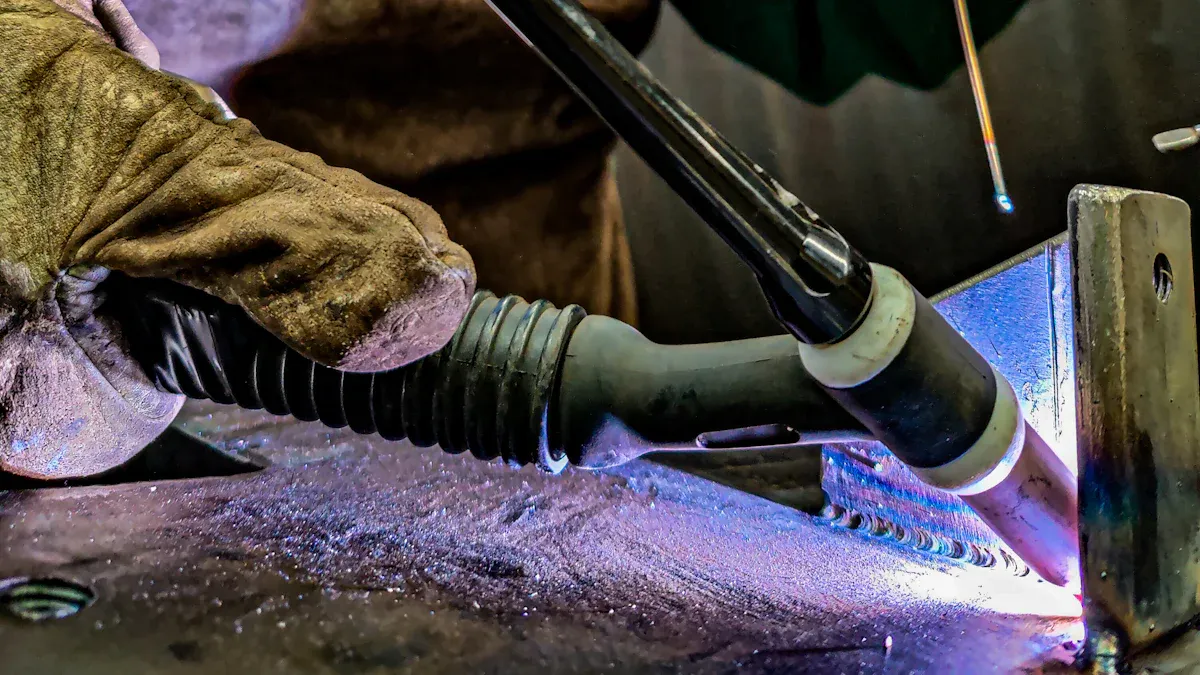
When you choose a welding rod for galvanized steel, you set the foundation for a strong weld. Galvanized steel has a zinc coating that protects it from rust, but welding releases zinc oxide fumes. These fumes can make you sick with metal fume fever. You might feel chills, fever, or muscle pain a few hours after welding. To protect your health, always use proper safety gear and good ventilation when working with galvanized steel.
Metal fume fever is not life-threatening, but repeated exposure can make symptoms worse. There is no real antidote—protect yourself from the start.
Welding Rod for Galvanized Steel: What to Use and Why
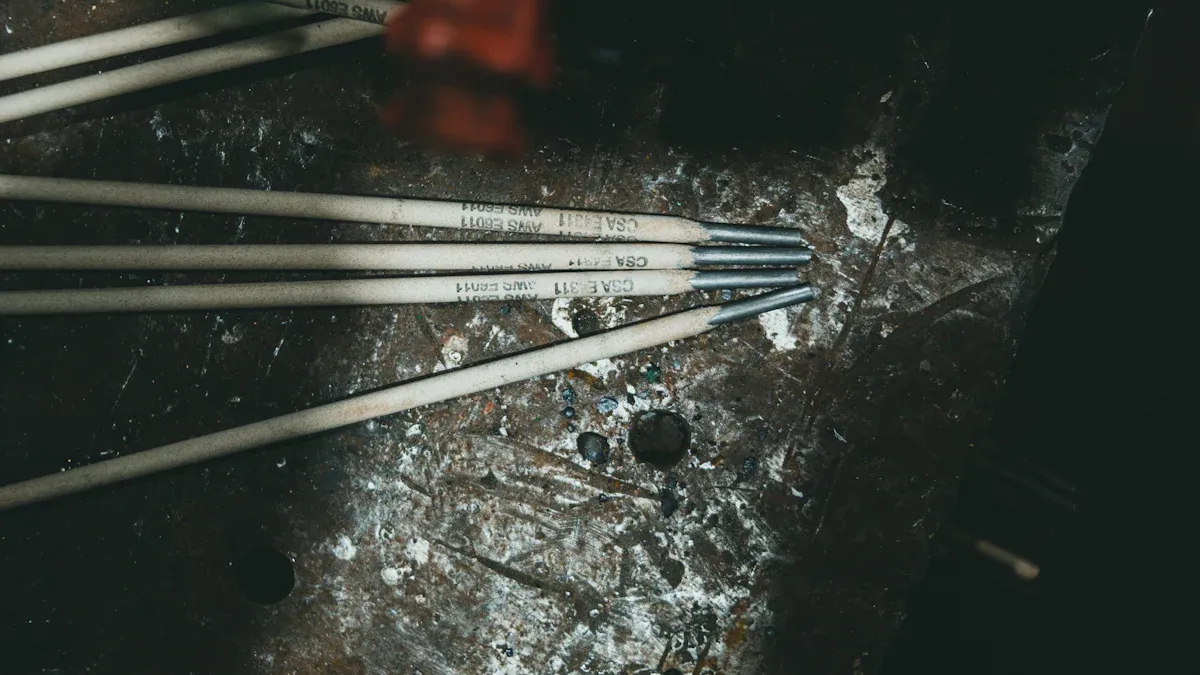
When you start a galvanized steel welding project, choosing the right welding rod for galvanized steel is one of the most important steps. The rod you select affects the strength, appearance, and safety of your welds. Industry experts and organizations like the American Galvanizers Association and ESAB recommend specific rods and wires for different welding processes. For example, ESAB suggests the OK AristoRod 38 Zn for mig welding galvanized steel. This wire helps reduce spatter and porosity, which are common problems when you weld galvanized steel. The American Galvanizers Association also recommends rods with low silicon content to keep the zinc coating strong and even.
E6011 and E6010 Rods Explained
You will often see E6011 and E6010 rods used for galvanized steel welding. These rods have a cellulosic flux covering, which helps them burn through the zinc coating and any surface dirt. Both rods offer deep penetration and work in all positions. E6011 rods can run on both AC and DC machines, making them a good choice for home welders. E6010 rods work only with DC+ power and need a heavy-duty machine.
Here is a table to help you compare these rods with E7018:
| Electrode | Résistance à la traction | Penetration | Slag Type | Welding Positions | Special Applications |
|---|---|---|---|---|---|
| E6010 | 60,000 psi | Deep | Light, flaky | All positions | Root pass, dirty/oily/painted/galvanized surfaces |
| E6011 | 60,000 psi | Deep | Light, flaky | All positions | Root pass, dirty/oily/painted/galvanized surfaces, AC/DC capable |
| E7018 | 70,000 psi | Shallow/Medium | Thick | All positions | High-carbon steels, low-alloy/high-strength joints |
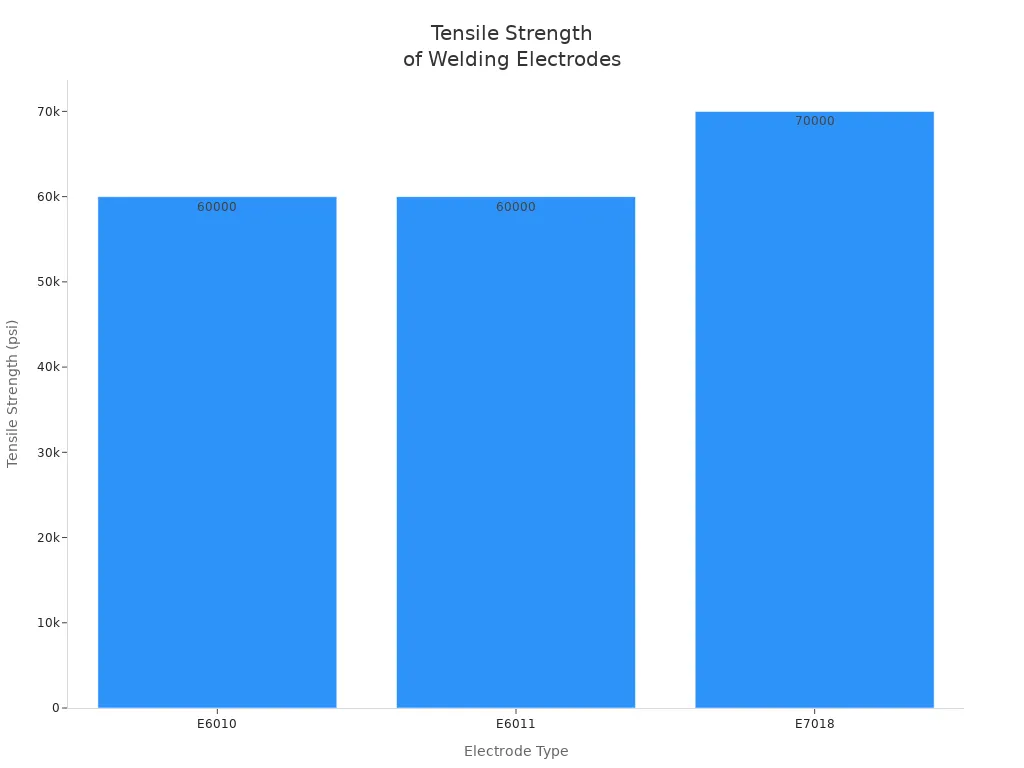
E6011 and E6010 rods give you strong arcs and deep penetration. They can handle poorly prepared or rusty steel, which is common with galvanized materials. The light slag is easy to remove, and both rods support the whip and pause technique. This helps you burn off the zinc coating and avoid weld defects. E6011 rods are especially good for home projects because they work with smaller machines and both AC and DC power. E6010 rods are better for heavy-duty jobs, like pressurized pipes, but need a DC+ machine.
E7018 Rods and Their Benefits
E7018 rods are another popular choice for galvanized steel welding. These rods have a low hydrogen coating, which helps prevent cracking. They also offer higher tensile strength—up to 70,000 psi—making them ideal for structural steel and high-strength joints. You can use E7018 rods in all welding positions, and they produce a smooth, stable arc with very little spatter. This means your welds will look cleaner and need less finishing work.
Here are some key benefits of E7018 rods:
- High tensile strength for strong welds
- Low hydrogen content reduces cracking risk
- Works in all positions (flat, vertical, overhead, horizontal)
- Smooth arc and minimal spatter for clean welds
- Good for structural applications like bridges and pipelines
- Performs well in cold environments
- Easy slag removal
You must keep E7018 rods dry. If they absorb moisture, you may see weld defects. Store them in a dry place or use a rod oven if possible.
Choosing the Right Rod for Your Project
You need to think about several factors when picking a welding rod for galvanized steel. The right choice depends on your project needs and the type of steel you are joining. Here are some important points to consider:
- Material thickness: Thicker steel may need a rod with higher penetration, like E6011 or E6010.
- Welding position: Some rods work better in certain positions. E6011 and E7018 are both good for all positions.
- Power source: E6011 works with AC and DC, while E6010 needs DC+.
- Base metal composition: Match the rod to your steel for the best results.
- Joint fit-up: Poorly prepared or rusty joints may need E6011 for better penetration.
- Service conditions: Think about where the welded steel will be used. Structural jobs may need E7018 for extra strength.
- Electrode storage: Keep rods dry and clean to avoid weld problems.
- Safety: Always follow safety guidelines and use proper ventilation.
Industry standards, such as those from the American Welding Society, recommend using rods with low silicon content for galvanized steel welding. This helps keep the zinc coating even and prevents rough surfaces. If you use coated electrodes, make sure to remove all flux residues after welding. For mig welding, wires like OK AristoRod 38 Zn are designed to reduce common problems like spatter and porosity.
Tip: Always match your welding rod for galvanized steel to your project’s needs. This ensures safe and effective metal joining and helps you avoid costly mistakes.
Galvanized Steel Welding Challenges
Zinc Coating and Fume Hazards
When you work with galvanized steel, you face unique hazards. The zinc coating on galvanized steel protects it from rust, but it creates problems during welding. Zinc melts and vaporizes at a much lower temperature than steel. As you weld, the zinc coating turns into fumes. These fumes contain zinc oxide and sometimes lead oxide, which are toxic fumes that can harm your health.
Breathing in these fumes can cause metal fume fever. You might feel chills, fever, nausea, or muscle aches a few hours after welding. In some cases, you may also experience cough, breathing trouble, or even lung damage if you get exposed for a long time. The symptoms usually go away in a day or two, but repeated exposure can make things worse. Some people may also develop more serious problems like pneumonia or nervous system issues.
Always use proper ventilation and wear a respirator when welding galvanized steel. This helps keep you safe from toxic fumes.
Here are some important steps to protect yourself:
- Make sure your workspace has good airflow.
- Wear personal protective equipment like gloves, helmets, and respirators.
- Clean and degrease the steel before welding.
- Remove the zinc coating from the area you plan to weld.
- After welding, apply zinc-rich paint to restore corrosion protection.
Effects on Weld Quality
Understanding galvanized steel helps you avoid common welding problems. The zinc coating can cause several issues that affect weld quality. When you weld galvanized steel, the zinc vapor can make the arc unstable. You may notice more spatter, porosity, and even cracks in the weld. The zinc can also block the weld from bonding well with the base steel, leading to weak spots.
- Zinc vapor can cause the arc to jump or flicker, making it hard to control.
- Thick zinc coatings make these problems worse, especially if you do not remove the coating before welding.
- If you weld two galvanized steel pieces together, zinc trapped in the joint can create gaps or bubbles in the weld.
You can improve weld quality by removing the zinc coating from the weld area and using the right welding rod. Some types of galvanized steel, like galvannealed steel, are easier to weld because they have a thinner, more stable coating. Always clean the steel and use proper welding techniques to get strong, safe welds.
Essential Welding Safety Tips
Ventilation and Fume Extraction
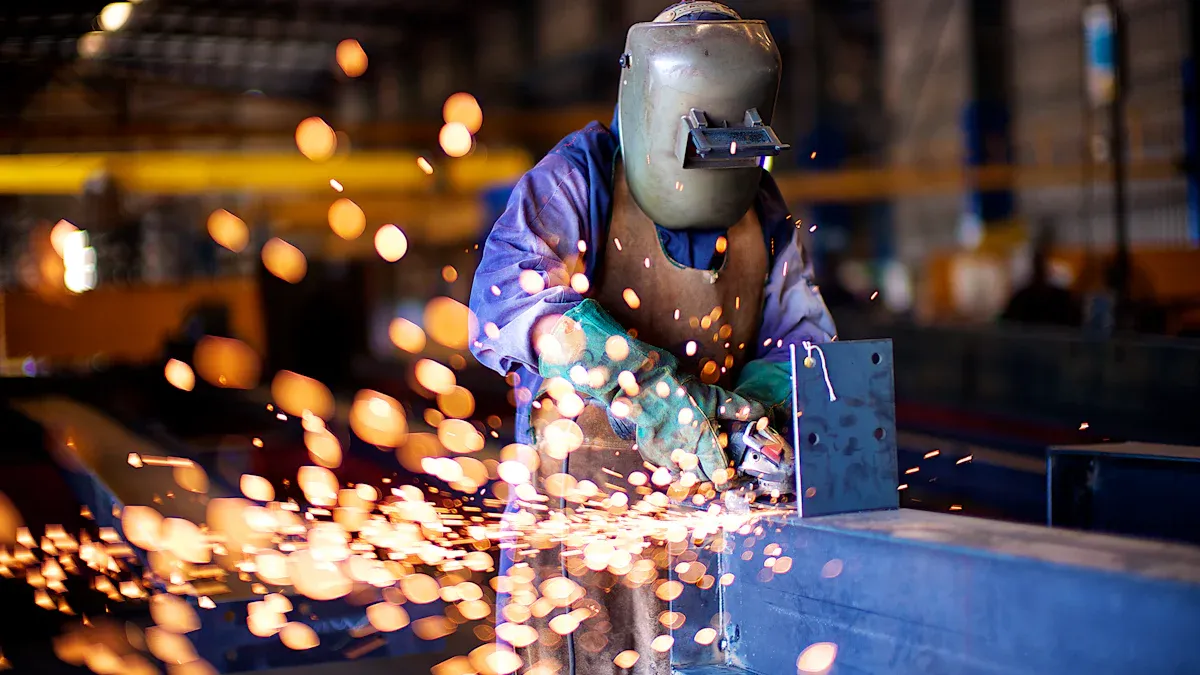
You must always pay attention to ventilation when welding galvanized steel. Good ventilation keeps the air clean and helps remove dangerous fumes. If you weld in a well-ventilated area, you lower the risk of breathing in zinc fumes. You can use different types of fume-extracting systems to make your workspace safer.
- Use local exhaust ventilation systems close to the welding spot. These systems pull fumes away before you can breathe them in.
- Choose high vacuum/low volume fume extraction systems for the best results. These systems capture fumes right at the source, which gives you better protection.
- Avoid welding in small or closed spaces. Fumes can build up quickly and make the air unsafe.
- Always check the air quality in your workspace. This helps you know if your safety measures are working.
- Teach everyone in your shop about safety precautions and how to use equipment the right way.
Here is a table that compares two common fume-extracting systems:
| Aspect | Low Vacuum/High Volume Systems | High Vacuum/Low Volume Systems |
|---|---|---|
| Description | Large airflow, captures fumes from a distance | Captures fumes right at the welding arc |
| Typical Airflow (CFM) | 600-900 (arms), 1000+ (hoods) | 35-100 (extraction guns or nozzles) |
| Capture Distance | 10-15 inches | Within 4 inches |
| Effectiveness | Moderate | High |
High vacuum/low volume systems, like extraction guns, work best for reducing zinc fume exposure. They keep the air cleaner and help you stay safe.
Protective Gear and Respirators
You need the right personal protective equipment for welding galvanized steel. This gear keeps you safe from heat, sparks, and fumes. Always wear flame-resistant clothing, welding gloves, and a helmet with eye protection. For extra safety, use a respirator with a high-efficiency filter, such as a P3-rated or N100 filter. These filters block over 99.95% of metal particles, including zinc fumes.
Full-face respirators made for welding give you strong protection. They cover your whole face and filter out harmful gases and particles. Half-face respirators with P100 filters also work well, especially for arc welding. Some advanced options, like powered air respirators, offer even more safety in tough environments.
A recent study shows that respirators above the N95 standard lower the amount of metal fumes you breathe in. Always use proper ventilation along with your respirator for the best protection. Remember, safety comes first. Make sure your gear fits well and is in good condition before you start welding.
Step-by-Step Guide to Weld Galvanized Steel
Surface Preparation and Zinc Removal
You must start every galvanized steel welding project with careful surface preparation. This step helps you avoid weld defects and keeps you safe from harmful fumes. The zinc coating on galvanized steel protects it from rust, but it creates problems during welding. When you heat the zinc, it turns into toxic fumes. You need to remove the zinc coating from the weld area before you begin.
Follow these steps for proper galvanized steel welding procedures:
- Clean the steel with a degreaser. This removes oil, dirt, and paint from the surface.
- Use a wire brush or grinder to remove the zinc coating around the weld zone. You can use hand tools for small jobs (SSPC-SP2 standard) or power tools for larger areas (SSPC-SP3 standard).
- For small parts, you can use acid pickling, but always take safety precautions. Abrasive removal works best for most projects.
- After removing the zinc, clean the area again to get rid of dust and debris.
- Make sure you wear gloves, a respirator, and flame-resistant clothing. Good ventilation is essential because some zinc may remain even after grinding.
Tip: Removing the zinc coating helps you avoid porosity, cracking, and weak welds. It also reduces your exposure to zinc oxide fumes.
After you finish welding, apply a zinc-rich paint or cold galvanizing spray to the weld and nearby areas. This step restores corrosion protection to your steel.
Welding Machine Setup
Setting up your welding machine correctly is important for strong welds on galvanized steel. You need to match your settings to the thickness of the steel and the type of welding process you use.
Here is a simple guide for beginners:
- Start with the general steel welding settings as your baseline.
- Set the amperage to about 1 amp for every 0.001 inch of steel thickness. For example, use 125 amps for 0.125-inch steel.
- Choose the right wire size. Use 0.023-inch wire for 30-130 amps or 0.030-inch wire for 40-145 amps.
- Calculate the wire feed speed. Multiply the amperage by a factor based on the wire diameter. For 0.030-inch wire, multiply the amps by 2 to get inches per minute.
- Adjust the voltage to get a stable arc. If the arc stubs into the steel, increase the voltage. If the arc is too wild or burns the wire tip, lower the voltage.
- Use Auto-Set™ technology if your machine has it. This feature sets the best parameters for you based on steel thickness and wire size.
- Check your weld bead. A flat bead with good penetration means your settings are correct. If you see too much spatter or a rough bead, adjust your voltage, wire feed, or travel speed.
Note: Always keep your workspace well-ventilated and wear a respirator. Even with good surface prep, some zinc fumes may still form during welding.
Proper Clamping and Positioning
You need to clamp and position your steel parts carefully before you weld galvanized steel. Good clamping prevents gaps and keeps your welds strong.
- Clamp the parts tightly together. This step stops the pieces from moving and helps you avoid poor fusion or distortion.
- Use tack welds to hold the steel in place. Tack welds keep the parts from shifting when you apply heat.
- Position the joint so you can see it clearly. Good visibility helps you control the torch and keep a steady hand.
- Use copper backing bars or heat sinks if you have them. These tools help you control heat and make your welds flatter.
- Weld in short sections. Let the steel cool between welds to manage heat and reduce warping.
- Keep your body in a comfortable position. Good ergonomics help you make precise welds and avoid fatigue.
Pro Tip: Strong clamping and careful positioning make galvanized steel welding easier and safer. You get better results and reduce the risk of mistakes.
By following these steps, you can weld galvanized steel with confidence. Good preparation, correct machine setup, and strong clamping lead to high-quality welds and safer work.
Welding Technique for Beginners
You can achieve strong welds on galvanized steel by using the right welding techniques and following a few simple steps. As a beginner, you should focus on methods that help you control zinc fumes and create clean, solid welds. The table below shows the most recommended welding process options for beginners, along with tips to help you succeed:
| Welding Technique | Why It Works for Beginners | Recommended Electrodes/Wires | Key Tips for Quality Welds on Galvanized Steel |
|---|---|---|---|
| Stick Welding (SMAW) | Best for outdoor use; aggressive arc and flux vaporize zinc; easy to control contamination | 6010, 6011 (cellulose); 6013 (sheet) | Use whip technique with 6010/6011 to burn off zinc; flux creates a protective gas shield |
| Flux Core Welding | Flux cleans the weld puddle; works well outdoors; self-shielding wire is easy to use | E71T-11 (self-shielding wire) | Use knurled rollers and correct polarity; hotter arc needs care on thin steel |
| MIG Welding | Possible but less ideal; needs careful wire and gas choice | ER70S-2, ER70S-3 | Use spray transfer mode; allow gaps for zinc vapor to escape; weld slower or use more heat; use anti-spatter |
| TIG Welding | Not usually recommended unless zinc is removed; needs a clean surface | ER70S-2 filler rod | Hold torch at 70° angle; increase gas flow; use 100% argon; not for outdoor use |
Tip: Always remove the zinc coating from the weld area before you start. This step helps you avoid weld defects and reduces the risk of breathing in zinc fumes.
When you use stick welding, try the whip and pause technique. Move the electrode forward quickly, then pull back slightly. This action burns off the zinc ahead of your weld and keeps the arc stable. For flux core welding, check your machine settings and use the right wire. If you use MIG welding, select a wire with low silicon and use a shielding gas mix with more argon. Always leave a small gap in the joint to let zinc vapor escape. This step helps prevent bubbles and weak spots in your weld.
You should weld slowly and use enough heat to burn away any leftover zinc. Anti-spatter spray can help keep your work area clean. Remember, good preparation and careful technique lead to strong, safe welds on galvanized steel.
Post-Weld Cleaning and Zinc Touch-Up
After you weld galvanized steel, you need to clean the weld and restore the zinc coating. This step protects your steel from rust and keeps your project looking good. Follow these steps for the best results:
- Remove all galvanizing from the weld area and at least 1 inch around it before welding. This step helps you avoid weld defects and keeps fumes low.
- After welding, clean the weld bead. Use a wire brush, grinder, or mild blasting to remove any weld flux, spatter, or dirt.
- Apply a zinc-rich primer or paint to the cleaned area. Use two coats and make sure the primer overlaps the existing galvanizing by at least 1/2 inch. The paint should contain at least 65% metallic zinc by weight or over 92% in the dry film.
- For extra protection, you can use zinc-based solders or metallizing. These methods require more skill and special tools. You must preheat the area for zinc soldering or use a flame or electric arc for metallizing.
- Always check that the repaired coating matches the thickness of the surrounding zinc. If you use zinc-rich paint, make the coating about 50% thicker but not more than 4.0 mils.
Note: Make sure the surface is clean, dry, and free of lumps or loose particles before you apply any touch-up. Avoid painting in high humidity or cold temperatures.
You should always use proper ventilation and wear a mask during post-weld cleaning. Zinc fumes can still be present, so safety comes first. If you have questions about the best touch-up method, talk to your steel fabricator or galvanizer. They can help you choose the right process and coating thickness for your project.
Common Welding Mistakes and How to Avoid Them
Skipping Surface Prep
You might feel tempted to skip surface preparation when you weld galvanized steel. This mistake can lead to poor weld quality and serious safety risks. Contaminants like oil, grease, or rust on the steel surface prevent proper bonding. If you leave the zinc coating on, it will vaporize during welding and create toxic fumes. These fumes can cause metal fume fever and even long-term health problems. Always clean the steel with a degreaser and remove the zinc coating from the weld area. Use a wire brush or grinder for best results. Good surface prep helps you avoid weld defects and keeps you safe.
Tip: Proper surface preparation is a key part of galvanized steel welding best practices. It improves weld quality and reduces hazardous fume generation.
Poor Ventilation Practices
Poor ventilation is a common mistake in welding. When you weld galvanized steel, the heat releases zinc oxide fumes. If you do not have good airflow, these fumes build up fast. Breathing them in can cause metal fume fever, which feels like the flu. Over time, you may develop lung diseases or even cancer. You should always weld in a well-ventilated area. Use fans, fume exhaust hoods, or gun-mounted extractors to keep the air clean. If you work in a small space, wear a respirator or use an air-supplied system. Following safety guidelines protects your health and helps you avoid long-term problems.
Incorrect Welding Rod Selection
Choosing the wrong welding rod can cause weak welds and defects. Not all rods work well with galvanized steel. Some rods do not burn through the zinc coating, which leads to poor fusion and porosity. You need to select rods made for galvanized steel, such as E6011 or E7018. These rods help you get strong, clean welds. Always check the rod type before you start. Using the right rod is a simple way to avoid many welding problems and ensure your project lasts.
Remember: Inspect your welds for defects like porosity or incomplete fusion. Good rod selection and careful checks keep your steel strong and safe.
Key Tips for Galvanized Steel Welding Beginners
Practice on Scrap Metal
Before you start your main project, practice on scrap pieces of galvanized steel. This step helps you get comfortable with your welding machine and the way galvanized steel reacts to heat. You can try different welding rods and settings to see what works best. Practicing on scrap lets you make mistakes without ruining your real project.
- Remove the zinc coating from the weld area on your scrap metal. This gives you a clean surface and helps you avoid extra fumes.
- Clean the finished weld thoroughly. This habit keeps your workspace safe and your welds strong.
- Ask experienced welders for tips. They can show you the best ways to handle galvanized steel and avoid common problems.
Practicing on scrap metal builds your confidence and helps you learn the right techniques before you work on important pieces.
Start with Simple Welds
When you begin, choose simple welds like straight beads or basic joints. These welds help you focus on your hand movement and the way the metal melts. You can use these early projects to test your clamping and positioning skills.
- Use easy-to-handle rods like E6011 or E7018.
- Make sure you remove the galvanizing at least a half-inch around the weld area.
- Repair the zinc coating after welding with a zinc-rich primer that overlaps the old coating.
Simple welds let you see how the metal reacts and help you spot any problems early. As you get better, you can try more complex joints and techniques.
Monitor for Zinc Fume Exposure
Zinc fumes can make you sick, so you need to watch for signs of exposure every time you weld. Always keep your head out of the fume cloud and make sure your workspace has good airflow.
Here are some important tips to help you stay safe:
- Weld outdoors when possible, or open doors and windows to increase ventilation.
- Use local exhaust systems or portable fume extractors to remove fumes at the source.
- Wear a NIOSH-approved respirator if you cannot get enough fresh air.
- Remove the zinc coating from the weld area to reduce fume production.
- Check the air quality in your workspace and adjust your ventilation if needed.
- Avoid welding in small, closed spaces.
- Wash your hands and face after welding and change out of contaminated clothing.
If you feel sick, dizzy, or have flu-like symptoms after welding, leave the area and get fresh air right away.
Following these galvanized steel welding tips will help you stay safe and improve your skills. Always pay attention to your health and the quality of your welds.
You make every weld count when you choose the right welding rod for galvanized steel. Following each step and using safety gear protects your health and keeps the zinc coating strong. Good rod selection and safe practices help you avoid weld defects and keep your steel rust-free for years. These habits lead to successful welding and longer-lasting projects. Keep practicing, learn from each weld, and always put safety first.
FAQ
What happens if you weld galvanized steel without removing the zinc coating?
You will create toxic zinc fumes. These fumes can make you sick. The weld may also have weak spots or cracks. Always remove the zinc coating from the weld area before you start.
Can you use MIG welding on galvanized steel?
Yes, you can use MIG welding. You need to remove the zinc coating first. Use a wire with low silicon content. Make sure you have good ventilation to stay safe.
How do you restore corrosion protection after welding?
Apply a zinc-rich primer or cold galvanizing spray to the weld area. This step helps protect the steel from rust. Cover the weld and a small area around it for best results.
What safety gear should you wear when welding galvanized steel?
You should wear a welding helmet, gloves, flame-resistant clothing, and a respirator. Good safety gear protects you from heat, sparks, and harmful fumes.
Why do you need good ventilation when welding galvanized steel?
Good ventilation removes zinc fumes from your workspace. This keeps the air safe to breathe. You lower your risk of metal fume fever and other health problems.