
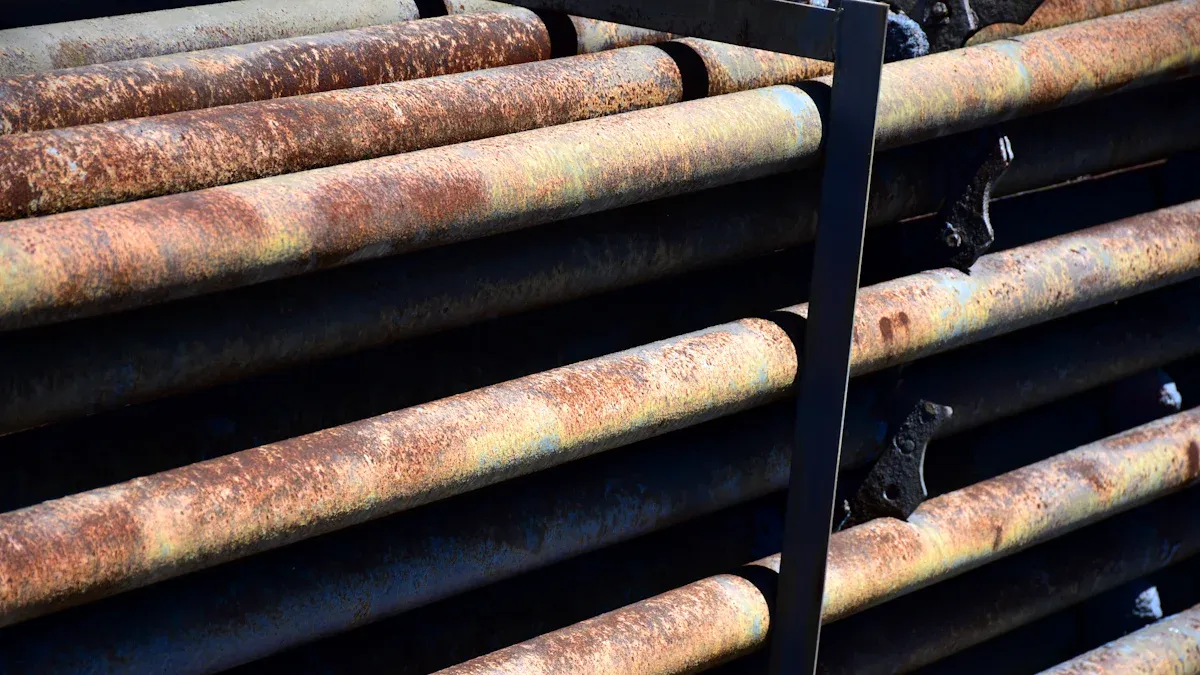
You may wonder, can you rust galvanized steel? Yes, over time, exposure to moisture and air can cause even galvanized steel to lose its shine and develop rust. Quick action helps stop further damage. When you remove rust and apply a zinc-rich primer, you restore both appearance and strength. Studies show that hot dip galvanized steel keeps its fatigue strength and reliability, even under heavy use in bridges and buildings. Restored galvanized steel also improves stiffness and load capacity in structures.
Can You Rust Galvanized Steel?
Why Galvanized Steel Rusts
You might ask, can you rust galvanized steel? The answer is yes. Galvanized steel has a zinc coating that protects the metal underneath. Over time, this coating can wear away or get damaged. When this happens, you can rust galvanized steel, especially in harsh environments.
There are different types of rust on galvanized steel. The most common are white rust and red rust. White rust forms when water sits on the surface, often in humid or wet conditions. Red rust appears when the zinc layer is gone, and the steel underneath starts to corrode.
Tip: You can spot white rust as a powdery, white or gray deposit. Red rust looks reddish-brown and signals deeper damage.
Many factors speed up rusting. Chloride, sulfate, humidity, and temperature all play a role. In places like pools or near the ocean, you can rust galvanized steel much faster. The table below shows how different environments affect the lifetime of galvanized coatings:
| Environment Type | Corrosion Behavior and Lifetime Details |
|---|---|
| Brackish Water | Coating lasts 2-3 years in splash zones, over 5 years in full immersion; sometimes no rust after 11 years. |
| Structures Above Water | Lower corrosion rates; flooding has little effect unless water stagnates; rinsing with fresh water helps. |
| Potable Water | Works well for pH 5-8.5; corrosion changes with impurities; needs NSF certification for drinking water. |
| Wastewater & Water Treatment | Corrosion rates change a lot; some coatings last over 10 years, others fail in 2 years. |
| Pools, Waterparks, Aquatic Facilities | Chlorinated water causes moderate corrosion; indoor use above pools is better; extra coatings help protect. |
You will often see white rust first, but if you ignore it, red rust will follow. Both types of rust on galvanized steel show that the protective layer is failing.
Importance of Prompt Repair
When you see white rust or red rust, you need to act fast. If you wait, the damage gets worse. White rust can spread quickly, especially if water stays on the surface. Red rust means the steel is already exposed and can weaken the metal.
- Zinc protects steel by acting as a sacrificial anode. When the zinc is gone, you can rust galvanized steel much faster.
- Corrosive bacteria and chemicals can speed up the process. High humidity, salt, and pollution all make things worse.
- Corrosion happens in stages. First, you see white rust. Next, red rust forms as the steel starts to break down.
If you repair the damage early, you can stop red rust from spreading. You also keep the steel strong and shiny. Regular checks help you catch white rust before it turns into a bigger problem.
Note: You should always fix white rust and red rust as soon as you see them. Quick repairs save time and money.
Inspect and Assess Before You Repair Galvanized Steel
Identifying Surface Rust vs. Deep Rust
Before you repair galvanized steel, you need to check the type and depth of rust. Start by looking for white rust, red rust, and pitting rust. White rust appears as a powdery, white or gray layer on the surface. It often forms when water sits on the steel. Red rust looks reddish-brown and means the zinc layer is gone. Pitting rust creates small holes or pits in the metal. These pits show that the damage has gone deeper.
You can use a stout knife test to check if the rust is only on the surface or if it has reached the steel underneath. Light scraping removes white rust and some pitting rust. If you see red rust or deep pitting rust, the steel may be damaged below the surface. Surface rust spots are easier to fix. Deep pitting rust or large red rust areas may weaken the steel.
Tip: Always inspect crevices, water pooling spots, and places where different metals touch. These areas often show the first signs of damaged galvanised steel.
Deciding If You Can Repair or Need to Replace
After you find the rust spots, decide if you can repair the damaged area or if you need to replace the part. If you see only white rust or light pitting rust, you can usually repair galvanized steel. Use cleaning and coating methods to restore protection. If you find large areas of red rust or deep pitting rust, the steel may be too damaged. In these cases, replacement is safer.
Industry experts recommend checking coating thickness, surface smoothness, and uniformity. Use magnetic or electronic gauges for thickness. Look for bare spots, blasting damage, or hanging marks. Damaged galvanised steel with many defects may not last long, even after repair.
- Inspection helps you spot damaged areas early.
- Regular checks keep your galvanized steel strong and shiny.
- Proper inspection guides you to the best repair or replacement choice.
A study shows that repair materials differ in corrosion resistance and appearance. Careful inspection helps you pick the right method for each damaged area. This step keeps your steel safe and extends its life.
How to Remove Rust from Galvanized Metal
Cleaning and Preparing the Surface
You need to start with a clean surface before you remove rust from galvanized metal. Dirt, grease, and oil can stop cleaning products from working well. The American Galvanizers Association recommends using safe cleaners like Comet®, Bleach, Goof Off®, Simple Green®, The Must for Rust®, and Stainless Steel Cleaner. These products remove organic contaminants without harming the zinc coating. Always follow the instructions on the label. Scrub with a nylon brush if you see stubborn spots. Rinse the area with water and dry it with a clean cloth.
Tip: Avoid using harsh acids like muriatic acid or ammonia. These can change the look of the coating and may cause more damage.
For wet storage stains, you can use CLR®, lime juice, Naval Jelly® Rust Dissolver, Picklex 10G, or white vinegar. These products help with rust removal and do not harm the protective layer. Good airflow and keeping the steel dry help prevent new stains from forming.
Here is a quick list of tools and materials needed for this step:
- Soft nylon brush
- Clean rags or towels
- Mild cleaning solution (like Simple Green®)
- Water for rinsing
Manual and Power Tool Methods
After cleaning, you can use manual or power tools to remove rust from galvanized metal. Manual methods include wire brushes and sandpaper. These work well for small spots or light rust. Power tools, such as angle grinders or rotary brushes, help with larger areas or deeper rust.
Industry studies show that power tools, especially laser cleaning, work faster and remove more rust than manual methods. The table below compares the results:
| Method | Cleaning Time | Fe Content After Cleaning | Oxygen Content After Cleaning | Corrosion Resistance Performance |
|---|---|---|---|---|
| Laser Cleaning (250 W) | ~10 seconds | >90% | 2%-3% | Significantly better, slower rusting |
| Angle Grinder (Manual) | Not specified (longer) | ~68% | ~27% | Poorer corrosion resistance, faster rusting |
Laser cleaning gives you a cleaner surface and better corrosion resistance. Manual grinding takes longer and leaves more oxygen on the surface, which means rust can return faster. If you use an angle grinder, work gently to avoid removing too much of the zinc layer.
Note: Always wear gloves, goggles, and a mask when using power tools. Safety comes first.
Using Chemical Rust Removers Safely
Chemical rust removers can make rust removal easier, especially for hard-to-reach spots. Products with sodium hypochlorite (NaClO) work well at the right concentration. Studies show that using about 70 mg/L of sodium hypochlorite can reduce corrosion rates by up to 96%. This treatment helps form a protective layer on the steel.
| Parameter | Condition/Concentration | Result/Value | Interpretation |
|---|---|---|---|
| Corrosion Rate (CR) in wastewater without NaClO | 0 mg/L NaClO | 568.7 m/y | High corrosion rate without treatment |
| Corrosion Rate (CR) with NaClO | 70 mg/L NaClO | 22.94 m/y | Significant reduction in corrosion rate (~96% efficiency) |
| Inhibition Efficiency (IE%) | 70 mg/L NaClO | 95.96% | Maximum efficiency observed at this concentration |
| Effect of pH on Corrosion Rate (CR) | pH 5.0 | 54.36 mm/y | Higher corrosion rate in acidic conditions |
| Effect of pH on Corrosion Rate (CR) | pH 8.0 | 20.39 mm/y | Lower corrosion rate in alkaline conditions, indicating passivation |
You should always follow the instructions on chemical rust removers. Wear gloves and eye protection. Do not use too much product, as high concentrations can damage the steel. Rinse the area with water after treatment and dry it well.
Alert: Never mix different chemicals. Some mixtures can create dangerous fumes.
When you use the right cleaning steps, tools, and chemicals, you can remove rust from galvanized metal and prepare it for repair or painting. This process helps keep your steel strong and shiny for years.
Restore Galvanised Metal with Proven Repair Techniques
Neutralizing Rust and Chemicals
After you remove rust, you need to neutralize any leftover chemicals. This step is important in the effective process of restoring galvanised steel. If you used phosphoric acid or other rust removers, you should apply a baking soda solution. The fizzing tells you the acid is being neutralized. Rinse the area with clean water to wash away all residues. Dry the surface quickly to stop flash rust from forming. This method helps you keep the steel safe and ready for the next repair techniques. A case study showed that using this process on old machinery preserved details and prevented new rust.
Tip: Always wear gloves and goggles when handling chemicals. Work in a well-ventilated area.
Applying Zinc-Rich Primer or Cold Galvanizing Compound
Once the surface is clean and neutralized, you can start the application of zinc-rich primer or a cold galvanizing compound. This step helps you repair galvanized steel by restoring the zinc layer that protects the metal. Use a brush or spray to cover the bare spots. Zinc-rich primers bond well and create a strong barrier against moisture. For small areas, cold galvanizing is cost-effective. For larger parts, hot-dip or electro-galvanizing may work better. These repair techniques help you restore galvanised metal and prevent future rust.
- Always follow the product instructions.
- Let the primer dry fully before moving to the next step.
- Check for even coverage to ensure the best protection.
Adding a Protective Topcoat
After the primer dries, you need to apply a protective coating or topcoat. This layer seals the surface and boosts corrosion resistance. Topcoat application is a key part of repair techniques for long-lasting results. Tests show that a quality topcoat like Rust Grip® can protect steel for up to 30 years, even in harsh conditions. The topcoat penetrates the surface, strengthens weak spots, and keeps out water and chemicals. Duplex systems, which combine paint or powder coating with galvanized steel, can increase service life by up to 2.3 times compared to single coatings. This approach gives you a durable protective coating and reduces future maintenance.
Note: Always choose a topcoat made for metal and outdoor use. Regular inspection and touch-ups help keep your protective coatings strong.
Maintenance and Long-Term Protection for Repaired Galvanized Steel
Regular Cleaning and Inspection
You can keep your repaired galvanized steel looking new with a good cleaning and inspection routine. Start by removing dirt and salt every week using fresh water. This step helps stop corrosion before it starts. Use a pH-neutral cleaner once a month to wash away stubborn grime. Avoid rough brushes or harsh tools, as these can scratch the protective coating.
Set up a schedule for regular inspections and maintenance. Check high-stress areas every month for signs of rust or damage. Every three months, look closely at the coating to see if it is still strong and even. Once a year, ask a professional to test the coating thickness and check for hidden problems. Keep a record of each cleaning and inspection. This habit helps you spot patterns and plan future care.
Tip: Use a simple table or notebook to track your cleaning and inspection dates. This record makes it easy to see when your steel needs extra attention.
Spot Repairs and Preventive Care
If you find a scratch or chip in the protective coating, fix it right away. Clean the damaged spot with a soft brush and water. Dry the area, then apply a zinc-rich paint or cold galvanizing compound. Let it cure fully before touching or using the steel. This quick repair stops rust from spreading.
For extra protection, you can add another layer, such as epoxy or polyurethane. These coatings work well in tough environments and help your steel last longer. In places with saltwater or chemicals, this extra step can make a big difference. Galvanized steel can last 10 to 15 years in harsh areas if you follow a good maintenance plan.
Keep all your repair and cleaning notes in one place. This record helps you see how well your protective coating works over time. It also helps you plan future repairs and save money.
Restoring rusted galvanized steel does not have to be difficult. You can bring back the shine by removing rust, cleaning the surface, and applying the right coatings. Quick repairs protect your steel from future damage. Regular cleaning and inspection help you catch problems early.
Remember: Consistent care keeps your galvanized steel strong and looking new for years. 🛠️
Preguntas más frecuentes
How often should you inspect galvanized steel for rust?
You should check your galvanized steel every three months. Look for white or red rust, scratches, and chips. Early detection helps you fix problems before they get worse.
Can you paint over repaired galvanized steel?
Yes, you can paint over repaired galvanized steel. Use a zinc-rich primer first. Let it dry, then add a metal topcoat. This process gives you extra protection and a fresh look.
What should you avoid when cleaning galvanized steel?
Avoid harsh acids, steel wool, and abrasive pads. These can damage the zinc coating. Use mild cleaners and a soft brush. Rinse with water and dry the surface.
Is it safe to use vinegar to remove rust from galvanized steel?
You can use white vinegar for light rust. Apply it with a cloth, then rinse and dry the area. Do not soak the steel for long. Vinegar can harm the zinc layer if left too long.
How long does a cold galvanizing compound last?
A cold galvanizing compound can protect steel for several years. The exact time depends on the environment. Regular cleaning and touch-ups help you keep the coating strong.