
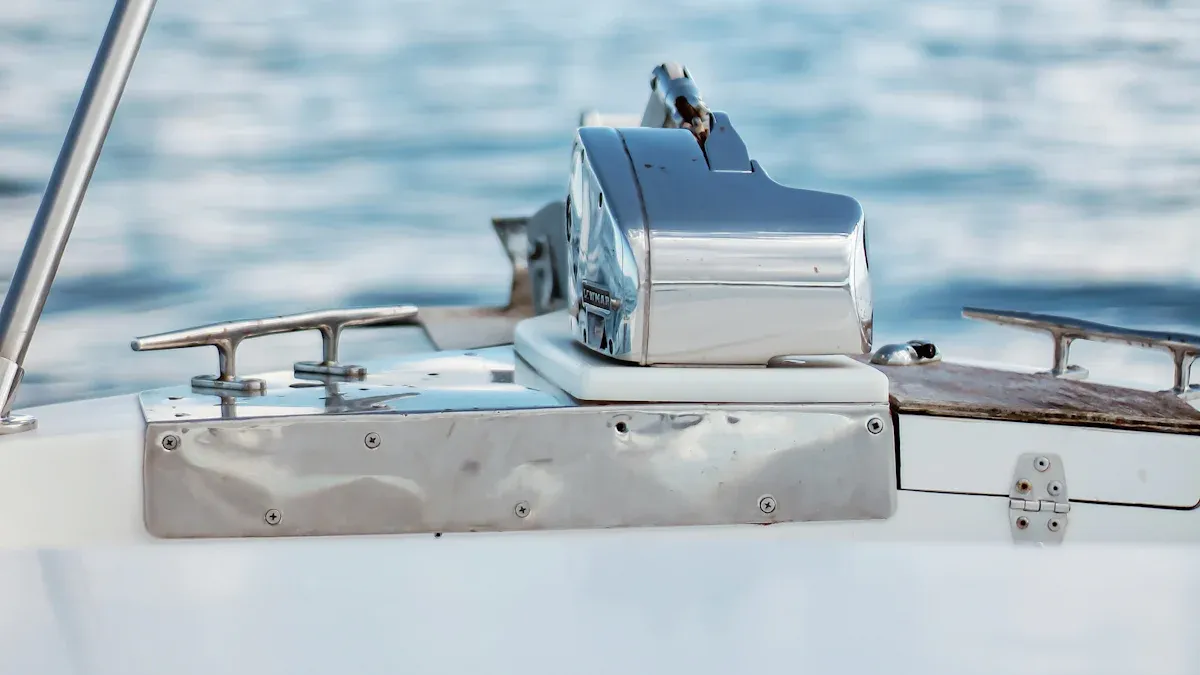
You need strong protection for your equipment in marine environments. Over 30% of marine equipment failures happen because of corrosion in saltwater. 316 stainless steel stands out with its unmatched durability and resistance to harsh conditions. The material’s self-healing layer shields your investment from damage. Compared to galvanized steel stainless steel, 316 stainless steel keeps marine hardware strong and reliable. You get longer-lasting performance and less maintenance, making 316 stainless steel the smart choice for any marine project.
When you want safety and durability, 316 stainless steel is the answer for marine use.
The Challenge of Corrosion Resistance in Marine Environments
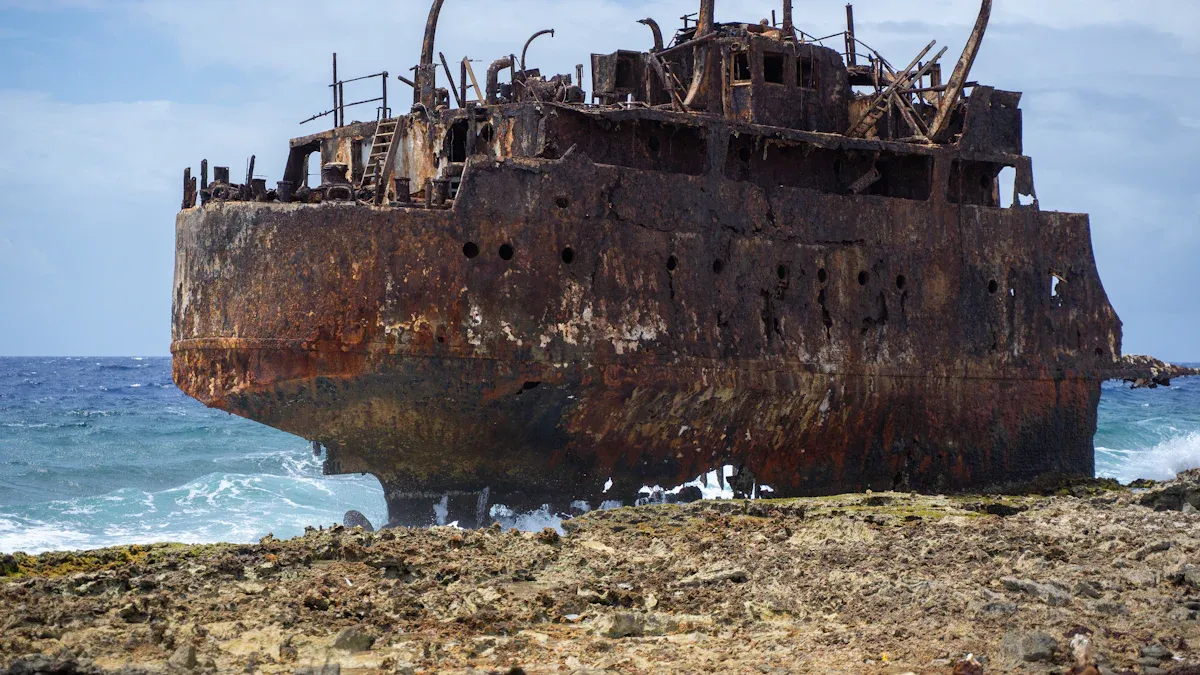
Why Saltwater Accelerates Corrosion
You face a tough challenge when you use metals in marine environments. Saltwater speeds up corrosion much more than freshwater. This happens because saltwater contains many corrosive agents that attack metals quickly. Here are the main reasons why corrosion resistance in saltwater is so important:
- Saltwater has high levels of salts, especially sodium chloride. These salts dissolve and form electrolytes, which increase the water’s conductivity. This allows corrosion reactions to happen faster.
- Chloride ions in saltwater are very aggressive. They break down the protective layers on metals and cause pitting and crevice corrosion.
- Moisture in the air and water acts as a medium for these reactions. It helps the corrosion process move quickly.
- Oxygen in saltwater helps form metal oxides. These oxides weaken the metal and make it more likely to fail.
- Pollutants like sulfur dioxide and nitrogen oxides mix with moisture to form acids. These acids speed up corrosion even more.
- When you use different metals together, saltwater acts as an electrolyte and causes galvanic corrosion. This type of corrosion happens when electrons move between metals, making one metal corrode faster.
If you compare saltwater to freshwater, you will see that saltwater causes much higher corrosion rates. The high salt content and conductivity in saltwater lead to faster and more severe damage. In contrast, freshwater has lower salt levels and slower corrosion, but it can still cause problems over time.
| Factor | Saltwater (Seawater) | Freshwater |
|---|---|---|
| Salinity | High, increases conductivity | Low, lower conductivity |
| Corrosion Rate | Higher, especially pitting corrosion | Lower, but still present |
| Chloride Ion Concentration | High, breaks down protective layers | Low, less aggressive |
| Corrosion Mechanisms | Pitting, galvanic, crevice corrosion | Oxidative, microbial corrosion |
Common Failures of Galvanized Steel Stainless Steel in Saltwater
You might think galvanized steel stainless steel can handle saltwater, but it often fails in these conditions. The zinc coating on galvanized steel stainless steel wears away quickly because chloride ions attack it. Once the zinc is gone, the steel underneath starts to rust. You will notice red or brown discoloration, flaking, and swelling. These are signs that the material is losing its resistance and strength.
Other common problems include:
- Surface bubbling and flaking, which show that the protective layer is breaking down.
- Structural weakening, making the hardware unsafe for use.
- Fast corrosion in splash and tidal zones, where saltwater hits the metal often.
- Higher temperatures speed up the reaction between zinc and oxygen, causing the coating to disappear even faster.
If you see large scratches on galvanized steel stainless steel, you need to repair them right away. Scratches let saltwater reach the steel, which leads to rapid corrosion. In marine environments, you cannot rely on galvanized steel stainless steel for long-term corrosion resistance. You need a material with better resistance to salt and corrosion, like 316 stainless steel.
316 Stainless Steel: Superior Properties for Marine Environments
The Role of Molybdenum in Corrosion Resistance
When you choose marine grade stainless steel, you get a material designed for harsh saltwater conditions. The secret behind its superior performance lies in its chemical makeup. Grade 316 contains 16-18% chromium, 10-14% nickel, and 2-3% molybdenum. This special blend gives you outstanding corrosion resistance, especially in environments filled with chlorides like seawater.
Molybdenum plays a key role in protecting your equipment. It helps form a self-healing chromium oxide layer on the surface. This layer acts as a shield, blocking corrosive elements and providing long-lasting rust protection. You will notice that marine grade stainless steel resists pitting and crevice corrosion, which are common problems in saltwater. The molybdenum also boosts the material’s ability to stay strong when exposed to temperature changes and harsh chemicals.
Tip: If you want your marine hardware to last, always look for grade 316. The molybdenum content makes a big difference in durability and resistance.
Here is a quick look at the main elements in 316 stainless steel:
| Elemento | Nominal Percentage (%) |
|---|---|
| Nickel (Ni) | 12.00 |
| Chromium (Cr) | 17.00 |
| Molybdenum (Mo) | 2.50 |
| Iron (Fe) | Balance |
| Silicon (Si) | 1.00 |
| Manganese (Mn) | 2.00 |
| Carbon (C) | 0.080 |
| Phosphorus (P) | 0.045 |
| Sulfur (S) | 0.030 |
This composition gives marine grade stainless steel its edge over other materials. You get better corrosion resistance and longer-lasting performance in every marine application.
316 vs. 304 Stainless Steel in Saltwater
You might wonder how 316 stainless steel compares to 304 stainless steel in marine environments. Both are popular choices, but only one stands out for saltwater use. Grade 316, known as marine grade stainless steel, contains molybdenum. This addition gives it superior resistance to chlorides and harsh chemicals.
When you use 304 stainless steel in saltwater, you risk faster corrosion. 304 lacks molybdenum, so it cannot protect against pitting and crevice corrosion as well as 316. In immersion tests, 316 stainless steel shows a corrosion rate of about 0.0019 mm/year in normal seawater. Under tougher conditions, the rate rises but still stays much lower than 304. If you use both grades together, 304 will corrode faster due to galvanic corrosion.
Let’s compare their mechanical properties and performance:
| Property | Acero inoxidable 304 | Acero inoxidable 316 |
|---|---|---|
| Ultimate Tensile Strength | ~73,200 psi | ~79,800 psi |
| Límite elástico | ~31,200 psi | ~34,800 psi |
| Hardness (Rockwell B) | 70 | 80 |
| Elongation at Break | 70% | 60% |
| Resistencia a la corrosión | Excellent | Superior (especially against chlorides) |
| soldabilidad | High | Good |
| Formability | Very Good | Good |
| Machinability (annealed) | Fair (better than 316) | Fair |
| High Temperature Resistance | High | High |
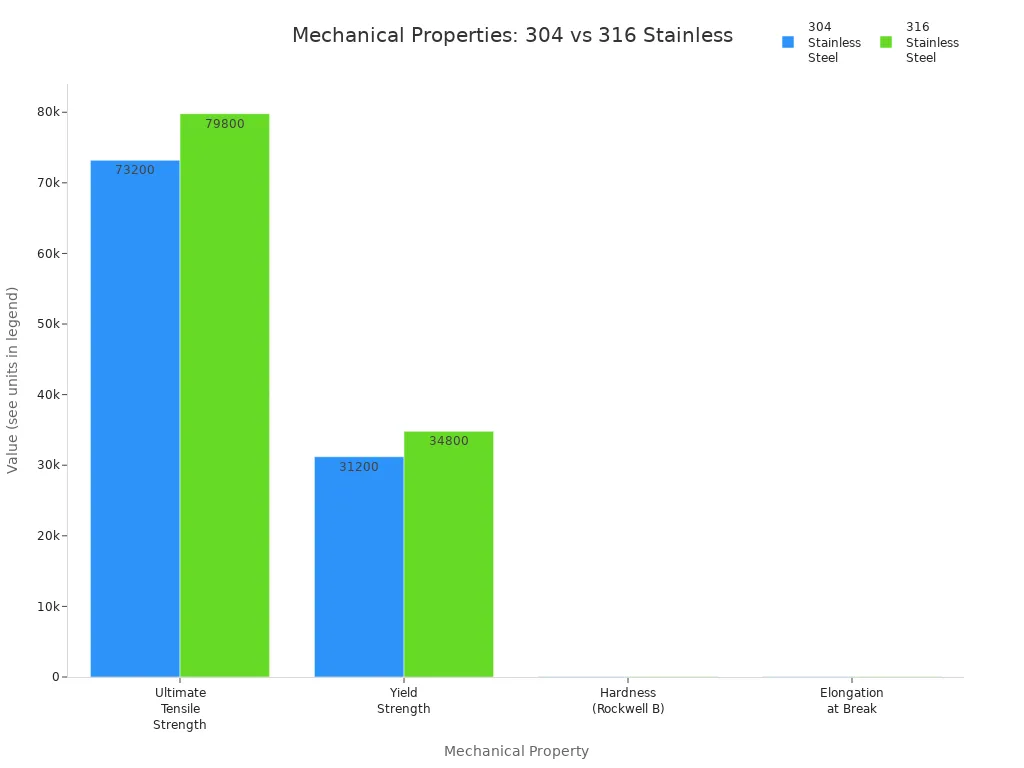
You get higher strength and better corrosion resistance with marine grade stainless steel. This means your equipment lasts longer and performs better in saltwater. If you want true durability and resistance, grade 316 is the clear winner for marine use.
316 Stainless Steel vs. Galvanized Steel and Other Materials
You may see galvanized steel stainless steel used in some marine projects. However, it cannot match the durability or corrosion resistance of marine grade stainless steel. Galvanized steel stainless steel relies on a zinc coating for protection. In saltwater, this coating wears away quickly, leaving the steel underneath exposed to rapid corrosion.
Salt spray tests show the difference clearly. Marine grade stainless steel shows no rust even after 2,000 hours. Galvanized steel stainless steel starts to show red rust between 500 and 1,000 hours. The passive layer on 316 stainless steel repairs itself, while the zinc coating on galvanized steel stainless steel degrades and cannot recover.
| Property / Metric | Acero inoxidable 316 | Hot-Dip Galvanized Steel |
|---|---|---|
| Salt Spray Test Duration (ASTM B117) | No rust for over 2,000 hours | Red rust appears between 500-1,000 hours |
| Corrosion Protection Mechanism | Passive chromium oxide layer (self-repairing) | Sacrificial zinc coating (degrades faster) |
| Resistance to Pitting and Crevice Corrosion | Excellent resistance, low risk | More vulnerable to localized corrosion |
| Typical Lifespan in Marine Environments | 25 to 50+ years | Less than 10 years without maintenance |
| Corrosion Rate in 3.5% NaCl (mm/year) | Less than 0.005 | 0.15 – 0.30 |
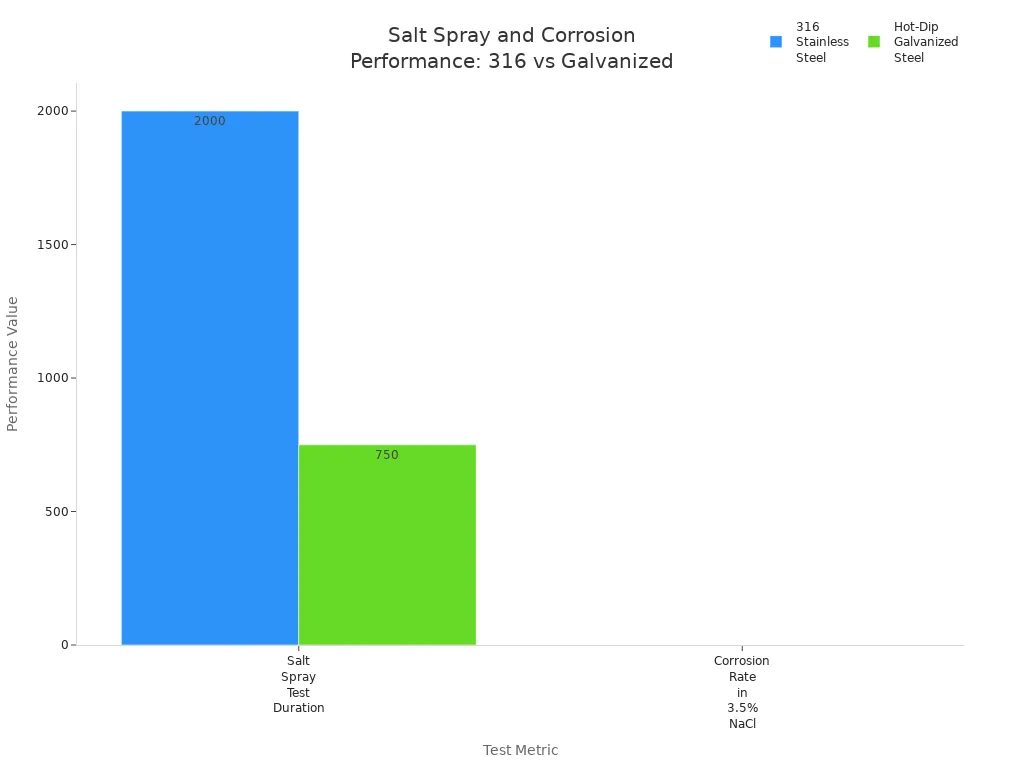
Note: For the best marine performance, always choose marine grade stainless steel. You get unmatched durability, resistance, and long-term value.
When you invest in 316 stainless steel, you protect your equipment from the harshest marine conditions. You avoid costly repairs and replacements. Marine grade stainless steel gives you the confidence that your hardware will last, even in the toughest saltwater environments.
Practical Benefits of 316 Stainless Steel in Marine Environments
Long-Term Durability and Strength
When you choose 316 stainless steel for your projects in coastal areas, you invest in unmatched durability. This material stands up to harsh salt, moisture, and humidity that often cause other metals to fail. You can rely on its strength and long-term performance, even in high-traffic places like outdoor showers or public beach facilities. The molybdenum in 316 stainless steel boosts its corrosion resistance, so it keeps its structural integrity and appearance for years.
You will notice that 316 stainless steel performs well in salt spray tests. It shows no signs of corrosion after 100 hours in a 5% salt spray environment. This makes it ideal for coastal areas where salt exposure is constant. The Pitting Resistance Equivalent Number (PREN) of 24.2 means you get better protection against pitting than with 304 stainless steel. If you need even more durability, you can use coatings like diamond-like carbon to extend the service life in harsh marine conditions.
Here is a quick comparison of tensile strength between common marine materials:
| Property | Acero inoxidable 304 | Acero inoxidable 316 |
|---|---|---|
| Ultimate Tensile Strength | ~73,200 psi | ~79,800 psi |
| Tensile Yield Strength | ~31,200 psi | ~34,800 psi |
You get higher strength and superior durability with 316 stainless steel. This means your equipment will last longer and perform better in coastal environments.
Low Maintenance and Easy Cleaning
You want materials that save you time and effort. 316 stainless steel offers low maintenance, which is a huge benefit in coastal areas. Its corrosion resistance means you do not need to paint or coat it like other metals. You only need to rinse it with freshwater to remove salt deposits. This simple step helps maintain its protective layer and keeps it looking new.
Follow these easy steps to keep your 316 stainless steel in top shape:
- Rinse with freshwater often to wash away salt.
- Limit the time saltwater stays on the surface.
- Make sure your installation has good drainage and ventilation.
- Inspect your hardware at least twice a year, especially in coastal areas.
- Clean fittings and use fresh lubricant to extend their life.
You should avoid harsh acids and abrasive cleaners. Use mild detergents or marine-specific products for best results. If you see tough stains, try citric acid-based cleaners or marine polish. These steps help you keep your equipment in great condition with minimal effort.
316 stainless steel’s low maintenance needs make it perfect for coastal environments. You spend less time cleaning and more time enjoying reliable performance.
Cost-Effectiveness Over Time
You might notice that 316 stainless steel costs more at first. However, you save money in the long run because of its durability and low maintenance. In coastal areas, cheaper materials like aluminum or carbon steel need frequent repairs and replacements. This adds up over time.
Let’s compare the total cost of ownership over a 10-year period:
| Cost Factor | Aluminum | Acero inoxidable |
|---|---|---|
| Initial Material Cost | Lower | Higher |
| Fabrication Cost | Lower | Higher |
| Maintenance Cost | Moderate | Lower |
| Lifespan | 10-15 years | 20-30 years |
| Replacement Frequency | Higher | Lower |
You see that 316 stainless steel lasts much longer in coastal environments. Its superior durability means fewer replacements and less downtime. The higher upfront cost is balanced by long-term performance and savings on repairs.
You also benefit from fewer interruptions and lower labor costs. In coastal areas, 316 stainless steel gives you peace of mind and reliable performance year after year.
Tip: Investing in 316 stainless steel now means you avoid costly repairs and replacements later. You get the best value for your money in coastal settings.
Real-World Applications: Stainless Steel Screws and Marine Hardware
Marine Hardware and Boat Fittings
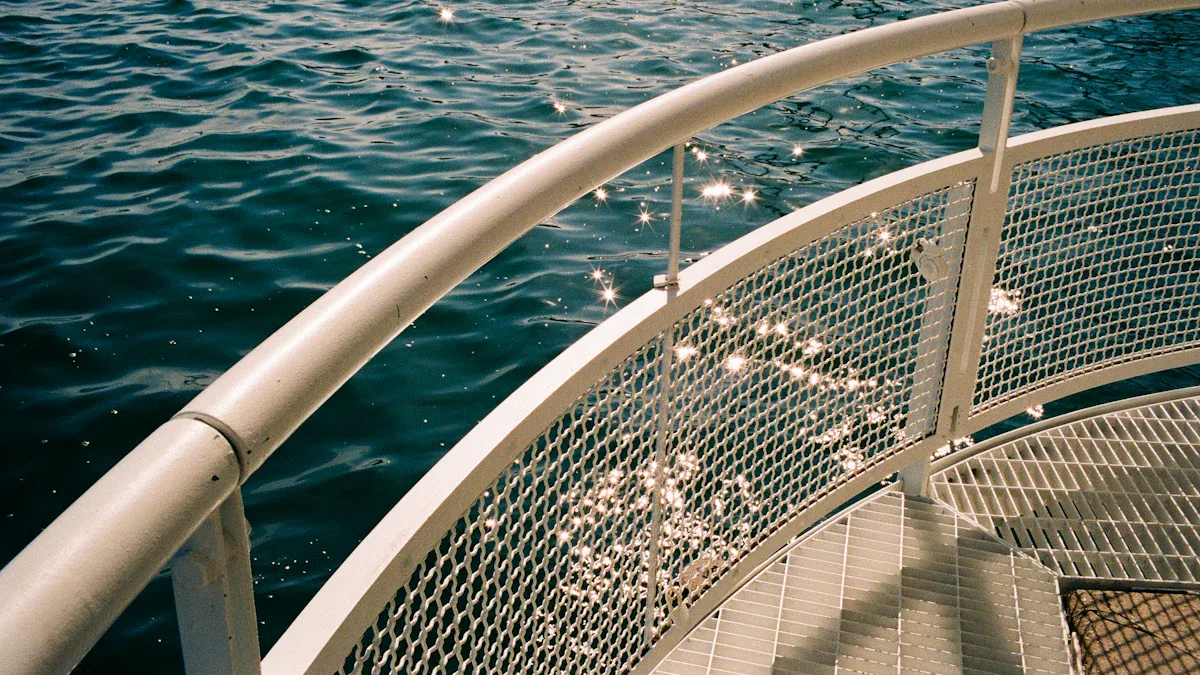
You rely on stainless steel screws every time you step onto a boat or handle marine hardware. These screws hold together safety handles, railings, cleats, and ladders. Marine grade stainless steel gives you the best protection against saltwater. The molybdenum in this alloy forms a shield that keeps your boat fittings strong and rust-free. You get peace of mind knowing your hardware will not fail, even after years in coastal areas or offshore conditions.
Stainless steel screws also keep your boat safe during rough weather. They resist vibrations and mechanical stress, so you avoid sudden failures. You can use them for commercial-grade outdoor showers on yachts or for durable outdoor showers at marinas. Their polished finish makes cleaning easy, which is important for safety and appearance. You will find these screws in offshore oil and gas equipment, where only the highest corrosion resistance screw can survive.
Tip: Always choose marine grade stainless steel screws for any marine or coastal project. You get unmatched reliability and safety.
Docks, Piers, and Coastal Structures
You see stainless steel screws everywhere in coastal areas. They hold together decking boards, ledger boards, and framing on docks and piers. These screws work well for walkways, jetties, and even fences near the shoreline. Their corrosion resistance screw design keeps structures safe from salt spray and humidity.
Here is a quick look at common uses for stainless steel screws in coastal and offshore environments:
| Application Area | Description of Use | Recommended Stainless Steel Screws |
|---|---|---|
| Coastal Decks | Decking boards, ledger boards, rim joists, framing components | Eagle Claw’s 316 SS deck screws |
| Wharves or Piers | Structural connections needing strong, corrosion-resistant fasteners | Strong-Drive SDS Heavy-Duty Hex Connector Screws |
| Floating Docks | Holding main parts stable, assembling hinges and brackets | SDWS Structural Stainless Steel Screws |
| Walkways | Attaching decking boards to frames with strong thread design | DWP Stainless Steel Wood Screw 316 Grade |
| Jetties | Securing decking, framing, support beams, brackets, and joist hangers | SDWS Structural and SDS Heavy-Duty Hex Connector |
You can use these screws for outdoor furniture, boardwalks, pergolas, and gates in coastal areas. Even bathrooms and kitchens near the shore benefit from stainless steel screws because of high humidity.
Saltwater Pipelines and Aquariums
You need reliable fasteners for saltwater pipelines and aquarium systems. Stainless steel screws made from 316 stainless steel perform well in these settings. They form a protective chromium oxide layer that keeps corrosion low, even after months in saltwater. You get a good balance of cost and performance, especially in coastal areas with low chlorine levels.
| Material | Corrosion in Saltwater | Mechanical Performance | Suitability for Saltwater/Aquarium Systems |
|---|---|---|---|
| 316 Stainless | Minor surface cracks, protective layer forms | Maintains strength, some loss of ductility | Good for low chlorine, reliable in coastal areas |
| 321 Stainless | Severe corrosion, pitting, fissures | Loses resistance and ductility | Not recommended |
| Duplex 14462 | No corrosion, minor scratches | Maintains resistance and elongation | Best for high chlorine, higher cost |
You can trust stainless steel screws to keep aquarium frames, saltwater pumps, and pipeline supports secure. They last longer than other materials, so you avoid frequent replacements in coastal and offshore environments.
Addressing Concerns About 316 Stainless Steel in Marine Environments
Maintenance and Cleaning Tips
You want your stainless steel screws to last as long as possible in saltwater. Regular care helps you get the best performance and low maintenance from your hardware. Start by rinsing your stainless steel screws with fresh water after exposure to saltwater. Use mild soap and a soft cloth to clean away salt and dirt. Avoid harsh chemicals like bleach or abrasive tools, which can damage the protective layer.
Check joints, seams, and crevices often. These areas trap water and salt, which can lead to corrosion. Make sure your installation allows for good drainage. If you see any discoloration or pitting, clean the area right away. You can also use special coatings or passivation treatments to boost protection. Always use non-abrasive cleaners made for stainless steel screws.
Tip: Store your stainless steel screws in a dry place and keep them away from other metals to prevent galvanic corrosion.
Longevity and Performance Expectations
You can expect excellent durability and performance from 316 stainless steel screws in marine environments. With proper care, these screws can last 50 to 100 years, even in harsh saltwater. The molybdenum in 316 stainless steel gives you better resistance to pitting and crevice corrosion than 304 stainless steel. Still, no material is completely immune to corrosion. High temperatures, biofilms, and poor installation can shorten the lifespan.
To keep your stainless steel screws working well, inspect them regularly. Look for signs of rust, pitting, or cracking. Address any problems early to avoid bigger issues. Routine cleaning and protective coatings help you maintain top technical performance and extend the life of your hardware.
Justifying the Investment
You might wonder if the higher cost of 316 stainless steel screws is worth it. The answer is yes. The superior corrosion resistance and durability mean you spend less on repairs and replacements. Over time, the low maintenance needs save you money and effort. You also help the environment because these screws are nearly 100% recyclable.
Here is a quick comparison to help you see the value:
| Factor | 316 Stainless Steel Screws | 304 Stainless Steel Screws |
|---|---|---|
| Durabilidad | Superior in saltwater | Good, but less in saltwater |
| Performance | Excellent | Good |
| Low Maintenance | Yes | Sometimes |
| Cost | Higher upfront | Lower upfront |
| Lifespan | 50-100 years | 10-20 years |
You get peace of mind knowing your investment will last and perform well in marine conditions.
You get the best protection in saltwater when you choose 316 stainless steel. Its mix of chromium, nickel, and molybdenum forms a strong shield against rust and pitting. You spend less time on repairs and cleaning because this material lasts much longer than others.
- 316 stainless steel resists harsh marine conditions better than 304 stainless steel.
- Él higher upfront cost pays off with fewer replacements and lower maintenance.
For reliable results in tough saltwater environments, always pick 316 stainless steel.
Preguntas más frecuentes
What makes 316 stainless steel better for marine environments than galvanized steel stainless steel?
You get superior durability and corrosion resistance in saltwater with 316 stainless steel. The self-healing chromium oxide layer protects your equipment. Galvanized steel stainless steel loses its coating quickly in marine environments, so it cannot match the long-term performance or rust protection of grade 316.
Can I use stainless steel screws for docks and durable outdoor showers in coastal areas?
Yes, you can use stainless steel screws for docks, durable outdoor showers, and even commercial-grade outdoor showers in coastal areas. These screws offer excellent corrosion resistance screw properties and strength. You will see superior performance and low maintenance, even with constant exposure to salt and moisture.
How does the molybdenum in marine grade stainless steel help with corrosion resistance in saltwater?
Molybdenum in marine grade stainless steel boosts corrosion resistance in saltwater. It helps form a self-healing chromium oxide layer. This layer blocks salt and other corrosive agents. You get better resistance to pitting and longer technical performance in marine and offshore conditions.
Why is 316 stainless steel a good investment for offshore oil and gas equipment?
You want long-term performance and strength in offshore oil and gas equipment. 316 stainless steel gives you superior durability and resistance to corrosion. It stands up to harsh marine environments, salt, and humidity. You save money over time because you avoid frequent repairs and replacements.