
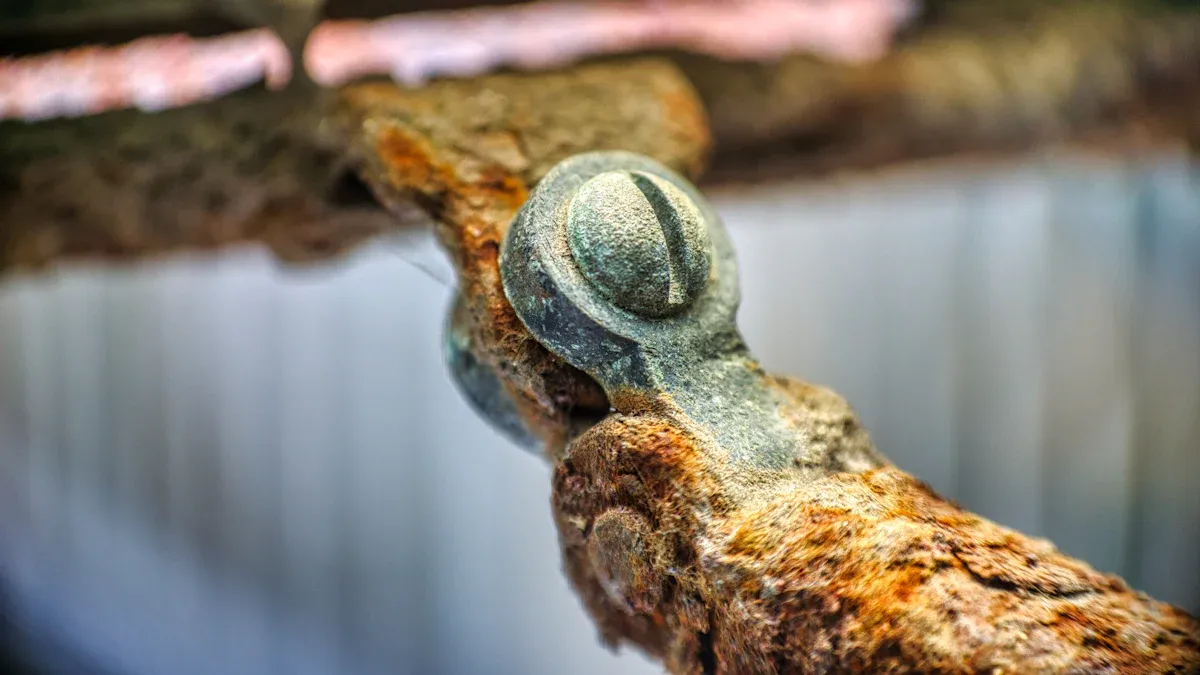
Galvanized steel for plumbing gives you a mix of benefits and drawbacks. You get strong pipes that often last 25 to 40 years, thanks to a zinc coating that helps prevent rust. Many homes still use galvanized steel pipe, but over time, corrosion can lead to water quality problems. Pipes may release metals like lead and iron as the protective layer breaks down. Weigh the pros and cons of galvanized steel pipe carefully so you can choose the right plumbing solution for your needs.
What Are Galvanized Steel Pipes?
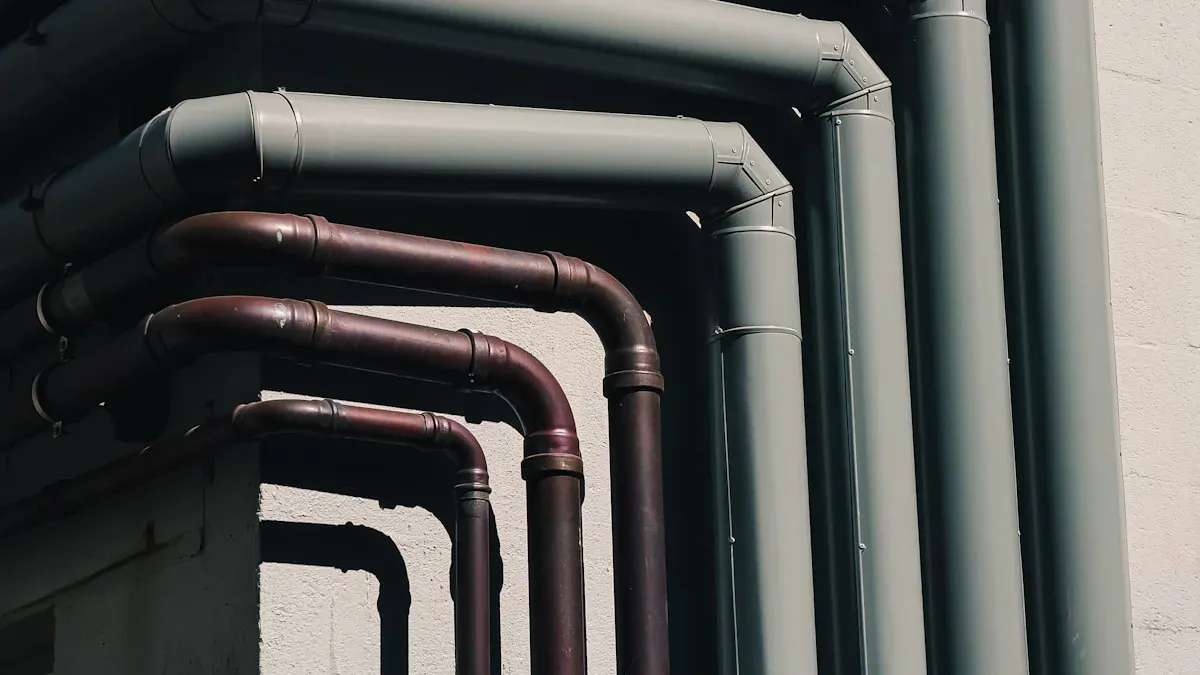
How Galvanized Steel Pipes Are Made
You might wonder how galvanized steel pipes are created. Manufacturers start by melting raw materials like iron ore and coke in a furnace. They remove carbon from the molten steel using oxygen blasting. The steel then gets poured into molds to form ingots. These ingots are rolled into blooms or slabs, which are further processed into billets or thin strips called skelp.
To make welded pipes, workers heat the skelp, curl the edges, and weld the seam. They use high-pressure rollers to shape the pipe. Welded pipes can be produced very quickly—up to 1,100 feet per minute. For seamless pipes, billets are heated and rolled into a cylinder with a hollow center. After shaping, the pipes are straightened, cut to length, and threaded for easy installation. The final step is galvanizing, where the pipes get a zinc coating. This coating protects the pipes from rust and corrosion. Major companies like Atkore, Zekelman Industries, and Nucor Tubular Products use advanced technology to make sure the pipes are strong and last a long time.
Technological advances in machinery and automation help improve the quality and durability of galvanized steel pipe, making them a reliable choice for many plumbing projects.
Common Uses of Galvanized Steel for Plumbing
You will find galvanized steel pipes in many types of plumbing systems. These pipes are common in both residential and commercial buildings. In homes, you might see them used for water supply lines, fence posts, or handrails. In larger projects, such as factories or infrastructure, hot-dip galvanized steel pipe is chosen for its strength and ability to resist corrosion.
Here is a table showing where you might see galvanized steel for plumbing:
| Application Type | Usage Example | Reason for Use |
|---|---|---|
| Residential | Water supply, handrails, fence posts | Moderate corrosion resistance |
| Commercial & Industrial | Water supply, infrastructure, factories | Superior durability and corrosion resistance |
Galvanized steel for plumbing stands out in regions with rapid urban growth, such as Asia Pacific and North America. These pipes help supply water in harsh environments. However, you should know that galvanized steel pipes can increase magnesium ion concentrations in water and may lead to more microbial contamination compared to other types of plumbing pipes like PVC. Scale formation and surface roughness inside the pipes can also affect water quality and supply.
Pros and Cons of Galvanized Steel Pipes
When you look at galvanized steel pipes for plumbing, you find both strengths and weaknesses. Understanding the pros and cons helps you decide if these pipes fit your needs. Let’s break down the advantages and disadvantages so you can make an informed choice.
Advantages of Galvanized Steel Pipe
Galvanized steel pipes offer several benefits that make them a popular choice in many plumbing systems. The zinc coating on these pipes helps prevent rusting and gives them a long lifespan. You can use them in outdoor, marine, and farm environments because they resist corrosion and rust. This resistance to corrosion means you do not have to worry about rusting as quickly as with regular steel pipes.
- Galvanized steel pipes last between 20 and 50 years, depending on water quality and soil conditions. In ideal situations, you can expect a long lifespan of up to 50 years.
- The zinc coating provides up to 20% higher corrosion resistance than standard requirements, which helps prevent rusting and keeps your plumbing system strong.
- You can save up to 25% on lifecycle costs for water delivery systems because these pipes need less frequent replacement.
- Galvanized steel pipes are recyclable, which supports sustainable building practices and reduces construction waste.
- These pipes are available in larger diameters, making them suitable for outdoor and farm use where you need to move more water.
- You get strong pipes that do not shrink, warp, or deform. They withstand extreme weather and pests better than wood framing.
Note: Galvanized steel for plumbing meets safety and regulatory standards for water and gas transport, ensuring safe and leak-resistant systems.
Here is a table comparing galvanized steel pipe with other common plumbing materials:
| Aspect | Galvanized Steel Pipe | Copper Pipe | PVC Pipe |
|---|---|---|---|
| Lifespan | ~40 years (outdoor use) | Over 50 years (mostly interior) | Shorter lifespan |
| Cost | Less expensive than copper, more than PVC | More expensive | Least expensive |
| Durabilidad | Durable, corrosion-resistant due to zinc coating | Durable, long-lasting | Less durable |
| Size/Versatility | Available in larger diameters, preferred for outdoor/farm use | Limited larger sizes | Limited size options |
| Weight | Heavy, harder to handle | Moderate | Ligero |
| Maintenance | Prone to mineral buildup, requires proactive maintenance | Less prone to buildup | Minimal maintenance |
| Repair/Replacement | Damaged pipes usually replaced (zinc coating weakens) | Can be repaired | Can be repaired |
| Health Concerns | Potential lead leaching in water systems | Generally safe | Generally safe |
You can see that galvanized steel pipes stand out for their durability, resistance to corrosion and rust, and cost efficiency compared to stainless steel. Laboratory studies show that the zinc layer on these pipes protects against rusting and corrosion, especially in harsh environments. Real-life projects in the Midwest prove that galvanized steel pipes can resist severe weather for over a decade without showing signs of rust or wear.
Disadvantages of Galvanized Steel Pipe
While galvanized steel pipes have many strengths, you also need to consider their drawbacks. The pros and cons of these pipes become clear when you look at their performance over time and in different environments.
- Galvanized steel pipes can have a higher initial cost than some alternatives, such as PVC.
- These pipes are heavy and thick, making installation and repairs more difficult and expensive. You may face higher labor costs.
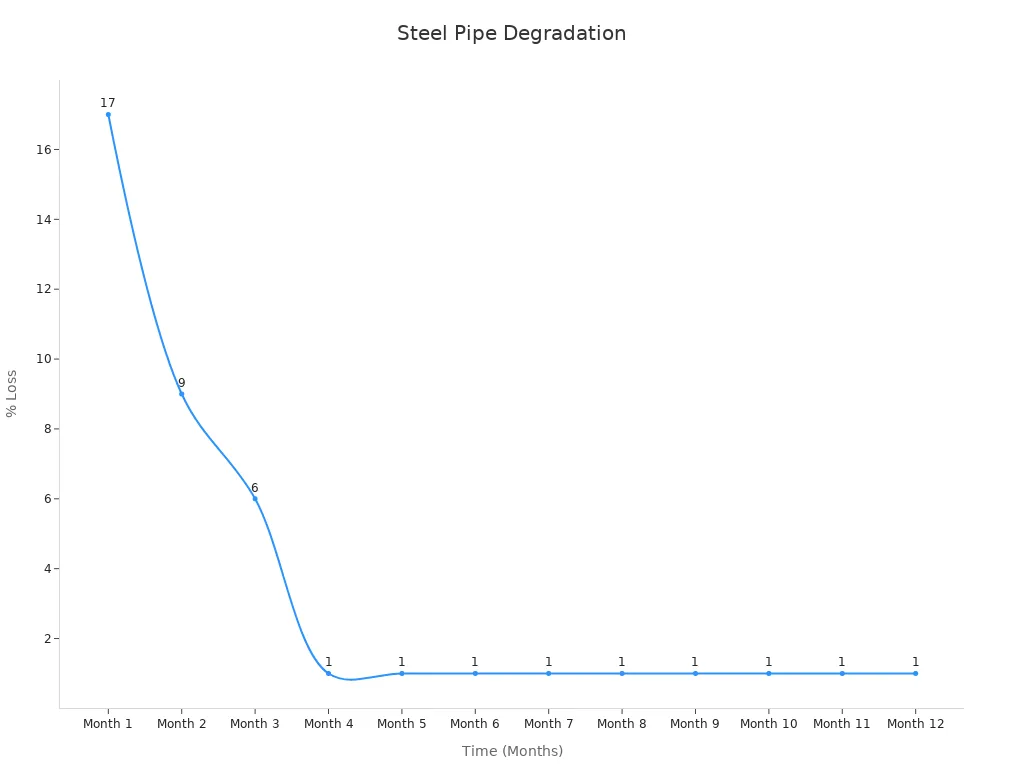
- Over time, the zinc coating wears away, especially in hot water systems or areas with high oxygen, chloride, or sulfate ions. This leads to faster rusting and corrosion.
- Once the zinc layer is gone, the steel underneath starts to rust quickly. This can cause leaks, blockages, and even pipe failure.
- Galvanized steel pipes are prone to mineral buildup inside, which can reduce water flow and affect water quality.
- In older systems, these pipes may leach lead into the water, raising health concerns about contamination.
- Él lifespan of galvanized steel pipes drops to just 2-3 years in hot water systems, compared to up to 50 years under ideal conditions.
Here is a chart showing how quickly the zinc coating can degrade over time:
- Galvanized steel pipes have the highest failure rates in both urban and rural areas, especially in wet or corrosive soils.
- Corrosion and rust are the main reasons for pipe failure, leading to more frequent repairs and replacements.
- In fire sprinkler systems, the moist environment prevents the protective zinc layer from forming, causing rapid rusting and leaks. Failures can happen as soon as 12-18 months after installation.
Tip: Always check the water quality and environment before choosing galvanized steel pipes for plumbing. Poor conditions can shorten their lifespan and increase maintenance needs.
When you weigh the advantages and disadvantages, you see that galvanized steel pipes offer good durability and resistance to corrosion and rust, but they also come with risks of rusting, buildup, and contamination. The pros and cons depend on your specific plumbing needs, water quality, and maintenance plans.
Galvanized Steel Pipe vs. Other Plumbing Materials
Galvanized Steel Pipe vs. Copper
When you compare galvanized steel pipes to copper, you notice some clear differences. Galvanized steel pipe is stronger and more rigid, so it can support longer spans in your plumbing system. However, it becomes prone to rust once the zinc coating wears off. Copper pipes are softer and easier to bend, but they can dent more easily. Copper resists corrosion better because it forms a protective oxide layer, but it can still be damaged by acidic or chlorinated water.
Here is a table to help you see the differences:
| Feature | Galvanized Steel Pipes | Copper Pipes |
|---|---|---|
| Fuerza | Strong and rigid; supports long spans; rusts after zinc wears off | Softer, malleable, can dent easily |
| Resistencia a la corrosión | Good at first; rusts when zinc is gone | Excellent; forms protective layer, but can corrode in some water |
| Lifespan | 40-50 years, shorter if zinc coating fails | Over 50 years with little maintenance |
| Installation | Heavy, needs special tools and supports | Lighter, easier to install and bend |
| Maintenance | Needs more care due to rust risk | Needs less care, mostly water checks |
| Cost | Lower material cost, higher labor and upkeep | Higher material cost, lower labor and upkeep |
If you connect copper and galvanized steel pipes directly, you risk faster corrosion. Using special connectors called dielectric unions can help, but they add cost and may leak. Many plumbers recommend switching to copper or PEX to avoid these problems.
Galvanized Steel Pipe vs. PVC and PEX
PVC and PEX are popular plumbing materials today. They are lighter and easier to install than galvanized steel pipes. PVC pipes resist corrosion and chemical damage, so you do not have to worry about rust. PEX pipes are flexible, which makes them easy to fit around corners and through walls.
Here is a table comparing these options:
| Pipe Material | Average Lifespan (years) | Installation Cost Range (USD) | Notes on Failure and Installation |
|---|---|---|---|
| Galvanized Steel | 20 – 50 | $5,000 – $15,000 | Prone to rust and leaks; harder to install |
| PVC | 25 – 40 | $2,500 – $5,000 | Few corrosion issues; easy to install |
| PEX | 40 – 50 | $4,000 – $6,000 | Flexible, resists scale and chlorine |
Plastic pipes like PVC and PEX need less maintenance because they do not rust. They also cost less to install. Galvanized steel pipes need regular checks and cleaning to prevent rust and buildup.
Note: PVC pipes can last over 50 years with good installation. They also have a much lower impact on the environment compared to galvanized steel pipes.
Where Galvanized Steel for Plumbing Stands Out
You might wonder when galvanized steel pipes are the best choice. These pipes work well in places with high moisture, such as outdoor plumbing or farm systems. The zinc coating protects the steel from rust, even if the surface gets scratched. Galvanized steel pipe is strong and can handle high pressure and heavy use. It is a good option for plumbing systems that need to last a long time and face tough conditions.
- Galvanized steel pipes offer rare rusting compared to iron pipes.
- The zinc layer acts as a shield, making these pipes last up to 50 years with proper care.
- Hot-dip galvanizing creates a strong bond between the zinc and steel, giving extra protection in harsh environments.
If you need plumbing materials that can handle physical stress and resist damage, galvanized steel pipes are a solid choice. They may cost more at first, but you save money over time because they need fewer repairs.
Where Galvanized Steel for Plumbing Falls Short
You may notice that galvanized steel pipes do not always perform well in every plumbing system. In some cases, these pipes fail much sooner than expected. For example, a large new building had to replace its plumbing after only two years. The cost of this replacement reached over $10 million. The main problem came from using both copper and galvanized steel together in hot water recirculating systems. This combination goes against expert recommendations.
When you mix copper and galvanized steel, you create a system that is prone to corrosion. Laboratory tests show that when copper is present, galvanized steel pipes release two to three times more zinc and iron. Even after six months, the release of these metals stays three to four times higher than normal. This means the pipes continue to corrode and rust long after the initial exposure.
Field studies reveal more problems. Pipe samples from failed systems show visible rust and copper deposits on the inside surfaces. The buildup of copper in the scale can reach up to 3%. Hot water systems with both metals see the worst corrosion. You may also find that mixed-metal plumbing, often used to save money on large pipes, leads to more frequent failures than copper-only systems.
If you use copper upstream, such as with copper sulfate treatments, you increase the risk of rusting and corrosion in galvanized steel pipes. These conditions make the pipes more likely to fail early. Once you have a damaged galvanized steel pipe, you may face leaks, water quality issues, and expensive repairs.
Tip: Avoid mixing copper and galvanized steel in your plumbing. This step helps prevent rust, corrosion, and early pipe failure.
Galvanized steel pipes are strong, but they are prone to corrosion and rust, especially in mixed-metal systems. You should consider these risks before choosing galvanized steel for your plumbing needs.
When to Use or Avoid Galvanized Steel for Plumbing
Best Situations for Galvanized Steel Pipes
You should consider galvanized steel pipes when you need strong supply lines in outdoor or industrial settings. These pipes work well in highway construction, municipal engineering, irrigation, and railway projects. If you follow industry standards and use high-quality galvanization, you can expect a lifespan of 40 to 70 years. Proper installation and good water quality help prevent rusting and support long-term durability. Galvanized steel pipes offer reliable supply in places where you need resistance to corrosion and physical stress. You will see the best results when you use them for non-residential supply systems that demand longevity and strength.
- Galvanized steel pipes perform best in infrastructure projects with stable water quality.
- You can trust them for supply lines that face heavy use and need to prevent rusting.
- Regular maintenance extends their lifespan and keeps your supply system safe.
When to Consider Alternatives to Galvanized Steel Pipe
You should avoid galvanized steel pipes in homes built before 1960 or where water quality is poor. Millions of older homes still use these pipes, but many now show corrosion, rust, and low water pressure. Health risks increase as the zinc coating breaks down, sometimes releasing lead into the supply. Regulatory guidelines and modern plumbing codes do not allow new galvanized steel pipe installation because of these hazards. Insurance companies and real estate agents often require you to replace old galvanized plumbing before selling a home. Cities have replaced entire supply systems after finding lead contamination from old pipes.
- Galvanized steel pipes in residential plumbing often exceed their safe lifespan.
- Health authorities warn that these pipes pose risks similar to lead pipes.
- Professional replacement is safest, especially during removal.
Here is a table to help you compare alternatives:
| Material | Initial Cost | Maintenance Cost | Lifespan | Environmental Impact |
|---|---|---|---|---|
| Acero inoxidable | High | Low | 25+ years | Medium |
| Aluminum | Medium | Low | 20+ years | Low |
| Engineered Plastics | Medium-High | Minimal | 15-20 years | Variable |
| Powder Coated Steel | Medium | Medium | 15-20 years | Low |
Key Factors to Consider Before Choosing Galvanized Steel for Plumbing
You need to weigh several factors before choosing galvanized steel pipes for your supply system:
- Check the water quality and minerals in your area. Poor water quality speeds up corrosion.
- Think about the expected lifespan of your supply lines. Many older pipes have already reached their limit.
- Consider your budget for installation and future maintenance.
- Look at the weight and formability needs of your supply system. Aluminum may be better for lighter supply lines.
- Review environmental impact and sustainability goals.
- Make sure your project meets all industry and safety codes.
Tip: Always match your supply needs with the right material. Galvanized steel pipes offer durability and resistance to corrosion, but only when conditions are right.
You have seen that galvanized steel pipes offer both strengths and weaknesses. The table below highlights the main pros and cons:
| Aspect | Details / Metrics |
|---|---|
| Lifespan | 40–100 years, depending on water quality and corrosion exposure |
| Resistencia a la corrosión | Zinc coating slows corrosion about 100 times compared to bare steel |
| Cost | $2–$5 per linear foot; cost-effective for many projects |
| Health Concerns | Older pipes may contain lead, posing risks for drinking water |
| Maintenance | Needs regular inspection; mineral buildup can reduce water flow |
When you choose plumbing materials, consider your water quality, project type, and long-term needs.
- Galvanized steel works well for industrial, commercial, or rural projects where durability matters.
- For homes, especially those built before the 1960s, or areas with hard water, you should seek alternatives like PEX or copper.
- Regular inspections and water testing help maintain safety and performance.
Preguntas más frecuentes
What is the main reason galvanized steel pipes rust?
You see rust when the zinc coating wears away. Water and air then reach the steel. This causes corrosion. Hot water and poor water quality speed up this process.
Can you drink water from galvanized steel pipes?
You should test your water first. Old pipes may release lead or iron. This can affect taste and safety. Many experts suggest using filters or replacing old pipes.
How do you know if your galvanized pipes need replacing?
Look for signs like low water pressure, rusty water, or leaks. You may also see stains on sinks or tubs. If you notice these, call a plumber for an inspection.
Are galvanized steel pipes safe for outdoor use?
Yes, you can use them outdoors. The zinc coating protects against rain and weather. You still need to check for rust and damage over time.
What is the best way to maintain galvanized steel pipes?
You should inspect pipes every year. Clean out mineral buildup if you see it. Fix leaks right away. Regular checks help your pipes last longer.