
When you compare stainless steel vs galvanized, you notice clear differences in performance. Many users find stainless steel offers better corrosion resistance, especially when facing rust and corrosion in tough environments. Galvanized steel attracts those who want lower costs for less demanding projects. You often see stainless steel last longer because of its durability and high resistance. Galvanized steel, while popular, may need more maintenance in areas with high corrosion. By weighing corrosion resistance and cost, you can choose the right material for your needs.
Stainless Steel in Residential Construction
Project Overview
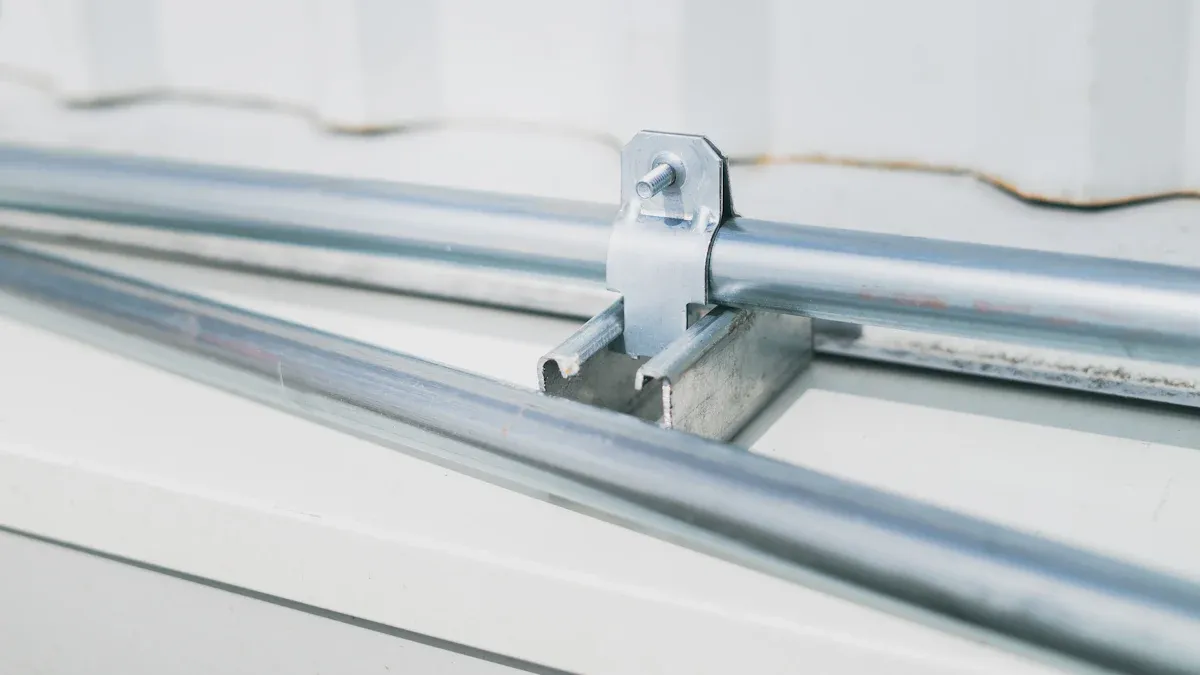
You see stainless steel used in many modern homes, especially in places where durability and corrosion resistance matter. Several residential buildings in New York City, such as 245 10th Ave and Central Park Tower, use Type 316L stainless steel for their exteriors. These buildings face harsh weather and exposure to deicing salts. The Via building, with over 700 units near the Hudson River, chose stainless steel for both its façade and structural sections. This choice helps the building last longer and need less maintenance. Many architects and builders select stainless steel because it offers a long service life and supports sustainable construction. You also find that lifecycle assessments show stainless steel provides environmental benefits over time.
- Many high-rise apartments use stainless steel for balconies, railings, and exterior panels.
- Stainless steel stands up well to rain, snow, and pollution.
- Builders often choose stainless steel for effort-critical parts, like connectors and fasteners, because of its high resistance to stress.
User Experience
When you use stainless steel in your home, you notice the benefits right away. Homeowners often choose stainless steel balustrades and fixtures because they look good and last a long time. Surveys and customer feedback show that people feel satisfied with stainless steel products, even after years of use. For example, stainless steel litter boxes keep their shape and resist odors for three to five years, with only minor scratches. Most users report high satisfaction rates, above 90%. You spend less time on maintenance, and you do not worry about rust or stains. The corrosion resistance of stainless steel means you can trust it in kitchens, bathrooms, and outdoor spaces.
Pros and Cons
Tip: Think about your project’s needs before choosing a material. Stainless steel works best where strength and long-term performance matter most.
| Pros | Cons |
|---|---|
| High resistance to corrosion | Higher upfront cost |
| Larga vida útil | Can be harder to cut or drill |
| Low maintenance | Requires skill for welding stainless steel |
| Attractive appearance | Heavier than some alternatives |
| Good for effort-critical applications |
You find that common uses for stainless steel include railings, kitchen appliances, and exterior panels. Stainless steel offers strong resistance to both weather and mechanical stress. If you need to join pieces, welding stainless steel gives you strong, lasting connections, but you may need special skills or tools.
Outcome
When you choose stainless steel for your home, you invest in long-term value. Many homeowners report that stainless steel features, like railings and kitchen fixtures, still look new after several years. You do not need to worry about rust or stains, even in areas with high humidity or near the ocean. Stainless steel stands up to rain, snow, and pollution. You spend less time and money on repairs or replacements.
You also find that stainless steel adds to your home’s appearance. The clean, modern look fits many design styles. Builders often recommend stainless steel for balconies and outdoor stairs because it resists weather damage. You can trust stainless steel to keep its strength and shape, even when exposed to harsh conditions.
Note: If you plan to join pieces, welding stainless steel gives you strong and lasting connections. You may need a skilled worker, but the results last for years.
Many users say that stainless steel costs more at first, but you save money over time. You do not need to paint or coat it. You avoid frequent maintenance. Stainless steel works well in kitchens, bathrooms, and outdoor spaces. You can clean it easily with simple products.
Here are some key outcomes you can expect when you use stainless steel in residential construction:
- Long-lasting performance in all weather
- Low maintenance and easy cleaning
- Modern and attractive appearance
- High resistance to corrosion and stress
- Good value over the life of your home
Stainless steel proves itself in real homes. You see fewer problems with rust and damage. You enjoy a home that stays strong and looks good for many years.
Galvanized Steel in Commercial Construction
Project Overview
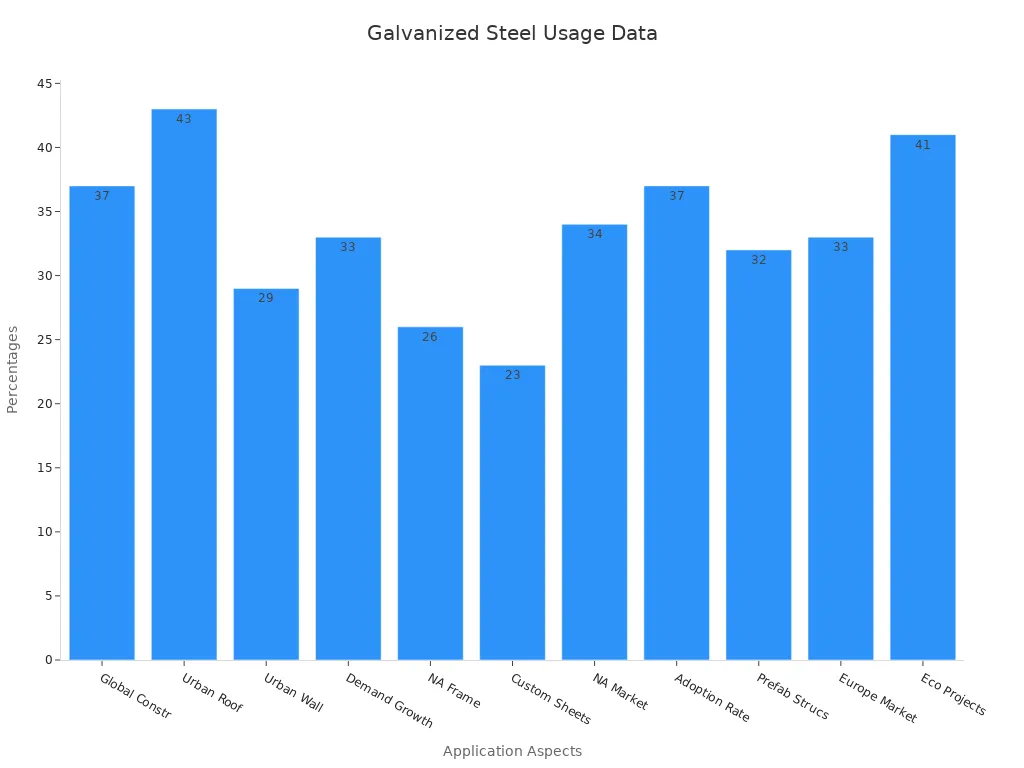
You see galvanized steel used in many commercial buildings around the world. This material stands out for its strength and ability to resist corrosion. Builders often choose galvanized steel for roofing, wall panels, and framing. The protective zinc coating helps the steel last longer and reduces the need for repairs. In fact, commercial and residential construction together account for 37% of global galvanized steel usage. In urban housing, 43% of roof panels and 29% of wall studs use galvanized steel. You also notice a rise in demand for galvanized steel frames in North America, with a 26% increase due to easy fabrication and fire resistance. Many eco-friendly projects in Europe rely on galvanized steel because it supports sustainability.
| Aspect | Data / Insight |
|---|---|
| Global Usage in Construction | Commercial and residential construction account for 37% of global galvanized steel usage |
| Urban Housing Usage | 43% of roof panels and 29% of wall studs use galvanized steel |
| Demand Growth | 33% increase in smart homes and eco-buildings |
| North America Frame Usage | 26% surge in galvanized steel frames due to ease of fabrication and fire resistance |
| Custom-coated Sheets | 23% share in commercial construction projects for architectural panels |
| North America Market Growth | 34% rise in demand for corrosion-resistant galvanized steel in residential and commercial projects |
| Adoption Rate | Over 37% of North American construction companies use hot-dip galvanized steel for outdoor framing |
| Prefabricated Structures | 32% of steel in prefabricated warehouses and storage units is galvanized steel |
| Europe Market Growth | 33% boost in prefabricated steel homes, especially in Scandinavia and Central Europe |
| Eco-friendly Projects | 41% of galvanized steel demand in Europe comes from green building and sustainability-driven projects |
User Experience
When you work with galvanized steel in commercial construction, you notice several benefits. The installation process is quick and quiet, which helps in sensitive places like hospitals. Products like RealWall™ use galvanized steel backs to reduce noise by up to 50%. These walls earn a Sound Transmission Class (STC) rating of 21, which means less noise travels through them. You also find that the lift-and-drop connection method makes installation easy and less disruptive. Many users report high satisfaction because galvanized steel helps create a calm and efficient work environment. You spend less time worrying about repairs, and the material’s long lifespan means fewer replacements.
Pros and Cons
Tip: Always match the material to your project’s environment and needs.
| Aspect | Pros of Galvanized Steel | Cons of Galvanized Steel |
|---|---|---|
| Suitability | Works well in animal confinement and non-coastal outdoor uses | Not suitable for coastal areas; saltwater can cause rust |
| Formability | Easy to bend and shape for custom parts | |
| Price | Competitive price point for most projects | Can be about 6% higher than Galvalume |
| Resistencia a la corrosión | Zinc coating protects steel core | Once coating is damaged, rust spreads quickly |
| Maintenance | Reduces need for frequent repairs | Needs periodic checks for corrosion |
| Longevity | Lasts 15-20 years in most settings | Shorter lifespan than some alternatives |
| Environmental Suitability | Supports recycling and reuse | Not ideal for highly corrosive environments |
You find that galvanized steel offers a good balance of cost and performance. It supports circular economy goals by allowing reuse and recycling. However, you need to check for rust, especially if the zinc coating gets damaged. Galvanized steel works best in non-coastal areas and for projects where you want a strong, affordable material. Some common uses for galvanized steel include roofing, wall panels, and framing in commercial buildings.
Outcome
When you choose galvanized steel for commercial construction, you see strong results. Offices, shopping malls, and hotels use this material because it stands up to harsh weather and needs little care. You do not have to worry about frequent repairs. This saves you time and money over the life of your building.
Galvanized steel offers long-term durability. You find that it resists rust and corrosion, even in tough environments. Many builders use galvanized sheets for visible parts of buildings. These sheets do not need extra paint or coatings. You get a clean look and strong protection at the same time.
You also notice that galvanized steel is lightweight and easy to work with. This makes construction faster and less costly. You can shape and install it without much trouble. Many projects finish on time because of this advantage.
Tip: Galvanized steel supports green building goals. You can recycle it and use it again in new projects.
In large infrastructure projects, like bridges and highways, galvanized steel rebar shows great performance. It lasts longer and needs fewer repairs. This means less downtime and lower costs for maintenance. You help keep roads and bridges safe for many years.
Here are some key outcomes you can expect when you use galvanized steel in commercial construction:
- Lower repair and replacement costs
- Strong resistance to corrosion and weather
- Fast and easy installation
- Flexible design options for architects
- Support for sustainability and recycling
You see why so many builders and owners trust galvanized steel. It gives you a reliable, cost-effective solution for many types of commercial buildings.
Stainless Steel vs Galvanized in Industrial Applications
Project Overview
You often see acero inoxidable and galvanized steel used in factories, chemical plants, and large infrastructure. These materials help you build tanks, pipelines, bridges, and machinery that must last for years. Many industries choose stainless steel for its strong corrosion resistance and long service life. Galvanized steel remains popular for its lower cost and good performance in less aggressive environments.
Recent projects show how both materials keep improving.
- Galvanized steel now uses alloy coatings like Zn-Mg and Zn-Al to boost corrosion resistance.
- Thin-film galvanizing, such as electrogalvanizing, creates even zinc layers for car parts and building panels.
- Some galvanized steel products last over 50 years with dual-layer zinc-polymer coatings.
- Stainless steel now features nano-structured surfaces for better durability and hygiene, which helps in food and medical industries.
- Smart stainless steel can include sensors that track the health of bridges and pipelines.
- 3D printing lets you create custom stainless steel parts for aerospace and medical uses.
- Duplex stainless steels work well in oil platforms and chemical plants because they are strong and resist corrosion.
- Both materials now use greener manufacturing, like electric arc furnaces and advanced recycling.
Side-by-Side User Feedback
When you compare acero inoxidable vs galvanized in real industrial settings, you notice clear differences. Users in marine and chemical plants report that stainless steel lasts longer and needs less maintenance. A study measured corrosion rates for both materials in salty water. You see that stainless steel keeps its strength and shape much better than galvanized steel, especially after long exposure. Galvanized steel works well at first, but its zinc coating wears down faster in harsh conditions. You may need to replace galvanized steel parts more often if you face high salinity or chemicals. Users in factories and bridges say that stainless steel helps avoid rust and corrosion, saving time and money on repairs.
Key Differences
You can see the main differences between stainless steel and galvanized steel in this table:
| Characteristic | Acero inoxidable | Galvanized Steel |
|---|---|---|
| Corrosion Protection Mechanism | Contains 10.5-18% chromium forming a self-healing passive oxide layer | Zinc coating via hot-dip galvanization providing sacrificial protection |
| Resistencia a la corrosión | Superior, especially in marine and chemical environments; service life >30 years in aggressive conditions | Coating life: >50 years rural, 25-35 years urban; corrodes at 1/30th rate of unprotected steel |
| Coating Thickness Requirement | N/A | >100 microns in coastal environments |
| Initial Cost Ratio (Galv : SS) | N/A | 1 : 3.5 |
| Maintenance Cost Ratio (Galv : SS) | N/A | 4 : 1 |
| Total Lifecycle Cost Ratio (Galv : SS) | N/A | 1.2 : 1 |
| Replacement Frequency | Minimal to none | 1-2 times over 20 years |
| Environmental Suitability | Preferred in aggressive, marine, chemical, and high-temperature (>200°C) environments | Suitable for moderate industrial, rural, and soil contact; limited in coastal salt spray and high temp |
| Maintenance Needs | Minimal | Higher, requiring regular inspections and edge protection in harsh environments |
Tip: If you need the best corrosion resistance and low maintenance, choose stainless steel for harsh industrial settings. For moderate environments, galvanized steel gives you a good balance of cost and performance.
Outcome
When you choose materials for industrial projects, you want to see real results. Many users report that stainless steel gives you the best long-term value in harsh environments. You see less rust and fewer repairs when you use stainless steel in factories, chemical plants, or near the ocean. This material keeps its strength and shape, even after years of exposure to chemicals or saltwater.
You may notice that galvanized steel works well in less aggressive settings. It protects equipment and structures from rust for many years. However, if you work in a place with lots of moisture or chemicals, you might need to replace galvanized steel parts more often. The zinc coating can wear away, which leads to faster corrosion.
Here are some outcomes you can expect when you use these materials:
- Stainless steel helps you avoid costly shutdowns for repairs.
- You spend less time on maintenance.
- Your equipment lasts longer, which saves money over time.
- Galvanized steel gives you a lower upfront cost for moderate environments.
- You can recycle both materials, which supports green goals.
Note: If you want the best performance in tough conditions, stainless steel stands out. You get peace of mind knowing your structures will last.
A user in a chemical plant shared that switching to stainless steel reduced their maintenance costs by half. Another user in a bridge project said that stainless steel cables stayed strong and rust-free, even after ten years. These stories show that your choice of material can make a big difference in safety and cost.
You should always match the material to your environment. Stainless steel works best in places with high corrosion risk. Galvanized steel fits well in dry or less demanding areas. When you pick the right material, you protect your investment and keep your operations running smoothly.
Key Takeaways from Stainless Steel vs Galvanized User Stories
Main Findings
When you look at real user stories, you see that the choice between stainless steel and galvanized steel depends on more than just price or appearance. You need to consider how each material performs in different situations. Here are the main findings from user experiences:
- Users notice big differences in how stainless steel vs galvanized performs, especially in harsh environments.
- Some users report that stainless steel anchors can drag more than galvanized ones, showing that design and balance matter as much as material.
- Quality control is important for both materials. One failure does not mean all products have problems.
- Galvanized steel often shows higher strength in some products, like anchor stocks, compared to competitors.
- You should avoid making quick judgments based only on rust or a single failure. Look at the whole picture, including design, manufacturing, and how you use the product.
- Design changes in stainless steel products, made to improve strength, can sometimes affect how well the product works.
- You need to think about all factors—material properties, design, and manufacturing—before choosing the best option.
Remember: Always look at the full story, not just one detail, when comparing materials.
Material Strengths by Situation
You find that both stainless steel and galvanized steel have unique strengths. The right choice depends on where and how you use them. Here is what research and user stories show:
- Welding conditions change how strong and reliable each material is. Laser welding of thin stainless steel and galvanized iron sheets shows that the way you weld affects the final strength.
- Él chemical makeup and how you process the steel decide its ductility, tensile strength, corrosion resistance, and durability.
- Acero inoxidable forms a passive oxide layer. This gives it strong corrosion resistance, especially in places with lots of moisture or chemicals.
- Galvanized steel uses a zinc coating to protect against corrosion. This works well in less aggressive environments.
- When you put steel under plastic tensile stress, it corrodes faster and loses strength more quickly than when it is not stressed.
- If you weld galvanized steel to stainless steel, zinc can cause problems like cracking. This happens because molten zinc can get into cracks and make the joint weaker.
- You need to pay attention to how you join these materials. The way you weld or connect them can change their strength and resistance to corrosion.
| Situation | Best Material Choice | Reason |
|---|---|---|
| Marine or chemical environments | Acero inoxidable | Superior corrosion resistance |
| Budget-friendly, dry environments | Galvanized steel | Good strength and lower cost |
| High-stress welded joints | Stainless steel (with care) | Less risk of cracking if welded properly |
| Mixed-material welding | Special care needed | Zinc can cause cracking in stainless steel |
Tip: Always match the material to your environment and how you plan to use it.
Practical Recommendations
You want to make the best choice for your project. Here are some practical tips, based on industry research and user feedback:
- Choose stainless steel if you need high corrosion resistance, durability, and a clean look. This works best in harsh or hygienic places, like food processing, medical devices, or high-end buildings.
- Stainless steel costs more at first, but you save money over time because it needs less maintenance and lasts longer.
- Pick galvanized steel for projects where you need good strength and lower cost. It works well for outdoor structures, roofs, and frames where extreme corrosion resistance is not needed.
- Galvanized steel needs regular checks and easy maintenance, especially if the zinc coating starts to wear off.
- Think about the environment. If your project faces lots of moisture, chemicals, or salt, stainless steel is the safer choice.
- New technology has made galvanized steel stronger and more durable. Surface coatings and alloying can improve its resistance, but these features may be harder to control in large projects.
- Always talk to an expert before making your final choice. Consider the full lifecycle cost, not just the price you pay at the start.
Note: The versatility of both materials means you can find a solution for almost any project. Just make sure you match the material to your needs.
You should weigh durability, maintenance, and cost when selecting materials for your project. Case studies show that stainless steel, while more expensive at first, offers longer service life and lower maintenance. Galvanized steel remains a smart choice for standard construction where budget matters most. The NJDOT life-cycle cost analysis highlights how stainless steel can save money over time in demanding environments.
| Bar Type | Initial Cost ($/lb) | Replacement Interval (years) | Life-Cycle Cost ($M) |
|---|---|---|---|
| Epoxy-Coated | 3.00 | 40 | 3.53 |
| Galvanized | 3.27 | 45 | 3.45 |
| Chromium-Alloyed | 4.09 | 75 | 2.45 |
| Acero inoxidable | 6.10 | 80 | 2.53 |
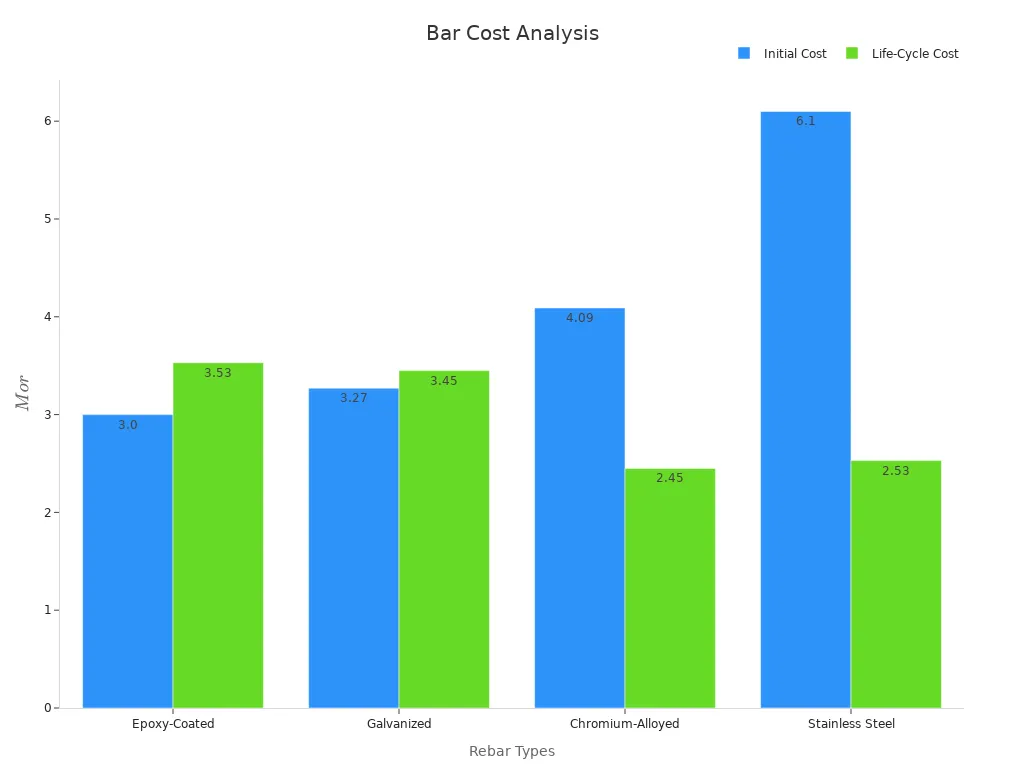
For critical or exposed applications, choose stainless steel. For general, budget-friendly projects, galvanized steel works well.
Preguntas más frecuentes
What is the main difference between stainless steel and galvanized steel?
Stainless steel contains chromium, which forms a protective layer. Galvanized steel has a zinc coating that protects the steel underneath. You get better corrosion resistance from stainless steel, especially in harsh environments.
Can you use galvanized steel outdoors?
You can use galvanized steel outdoors in most areas. It works best in dry or mild climates. In coastal or salty environments, you may see rust appear faster. Always check the coating for damage.
Is stainless steel worth the higher cost?
You pay more for stainless steel at first. Over time, you save money because it needs less maintenance and lasts longer. For critical or exposed projects, stainless steel gives you better value.
How do you clean stainless steel and galvanized steel?
You clean stainless steel with mild soap and water. For galvanized steel, use a soft brush and gentle detergent. Avoid harsh chemicals. Regular cleaning helps both materials last longer.
Can you weld stainless steel and galvanized steel together?
You can weld these metals, but you need special care. Welding galvanized steel releases zinc fumes, which are harmful. Always use proper ventilation and safety gear. Stainless steel needs skilled welding for strong joints.