
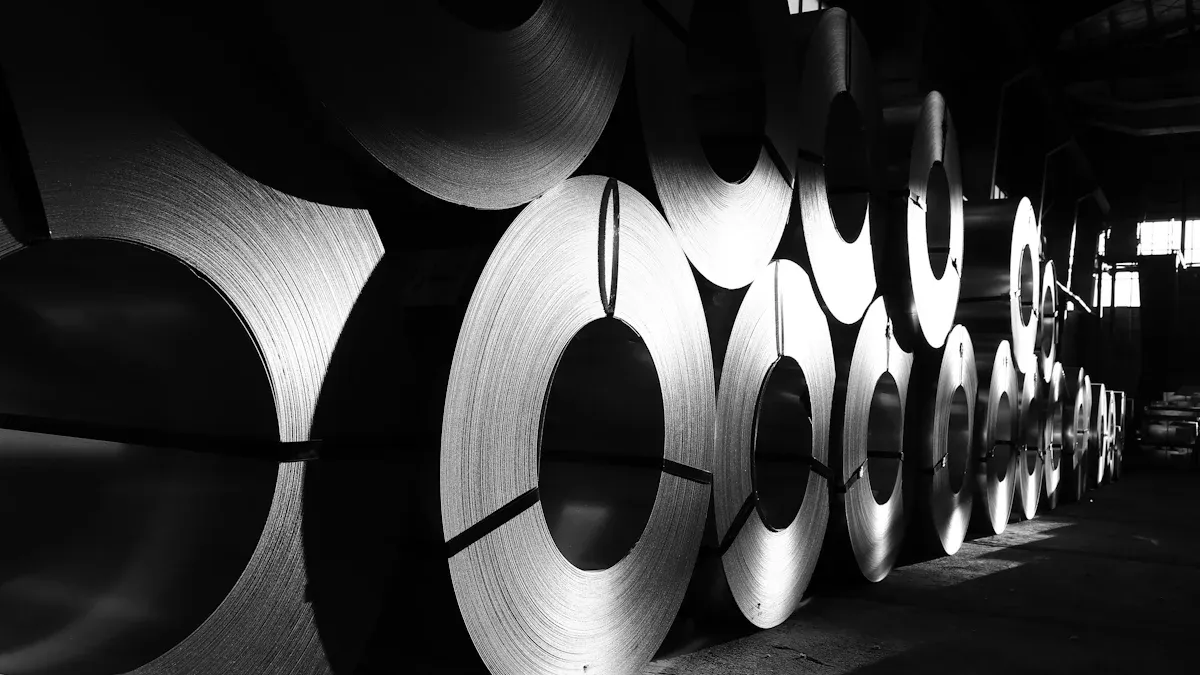
When you choose materials for a project, corrosion resistance matters. Galvanized steel stands out because its protective zinc coating shields it from rust and oxidation. This coating delays corrosion, letting galvanized steel tolerate chloride levels four to five times higher than black steel. You get up to ten times better corrosion resistance in tough environments. Black steel, without this layer, cannot match this rust resistance. That is why black steel vs galvanized steel often comes down to where you need the best rust resistance.
Black Steel vs Galvanized Steel: What’s the Difference?
Composition and Manufacturing
When you look at black steel vs galvanized steel, you notice both start with a low-carbon steel core. This means both materials have similar strength and flexibility. The main difference comes from what covers the steel. Black steel pipes have a dark, matte finish. This finish forms naturally as black iron oxide during manufacturing. You do not get any extra protection on black steel pipes.
Galvanized steel, on the other hand, gets an extra step. After forming, manufacturers dip the steel into molten zinc. This process, called hot-dip galvanization, creates a shiny, silver coating. The zinc layer acts as a shield. It protects the steel from rust and corrosion. You can see the difference in the table below:
| Component | Black Steel | Galvanized Steel |
|---|---|---|
| Steel Core | Low-carbon steel | Low-carbon steel |
| Surface Layer | Black iron oxide (no extra coating) | Zinc coating (from hot-dip galvanization) |
| Korrosionsbeständigkeit | Low | High |
Das zinc coating on galvanized steel pipes works as a sacrificial layer. It takes the damage from moisture and air, so the steel underneath stays safe. Black steel pipes do not have this protection, so they rust faster, especially outdoors.
Difference Between Galvanized and Black Pipe
You will find more differences when you compare black steel vs galvanized steel in pipe form. Black steel pipe has no coating, so it is best for gas lines and indoor uses. Galvanized steel pipe has a zinc layer, making it better for water supply and outdoor projects.
Here is a quick comparison:
- Black steel pipes: dark finish, easy to weld, lower cost, but rust easily.
- Galvanized steel pipes: shiny surface, resist rust, last longer, but cost more.
The difference between galvanized and black pipe also shows in their uses. You use black steel pipes for gas transport and fire sprinkler systems. You use galvanized steel pipes for water lines and places with lots of moisture. Hot-dip galvanization gives galvanized steel pipes their strong, rust-resistant finish.
Tip: Always choose galvanized steel for outdoor or wet environments. Use black steel where corrosion is not a big problem.
Corrosion Resistance: How Do They Compare?
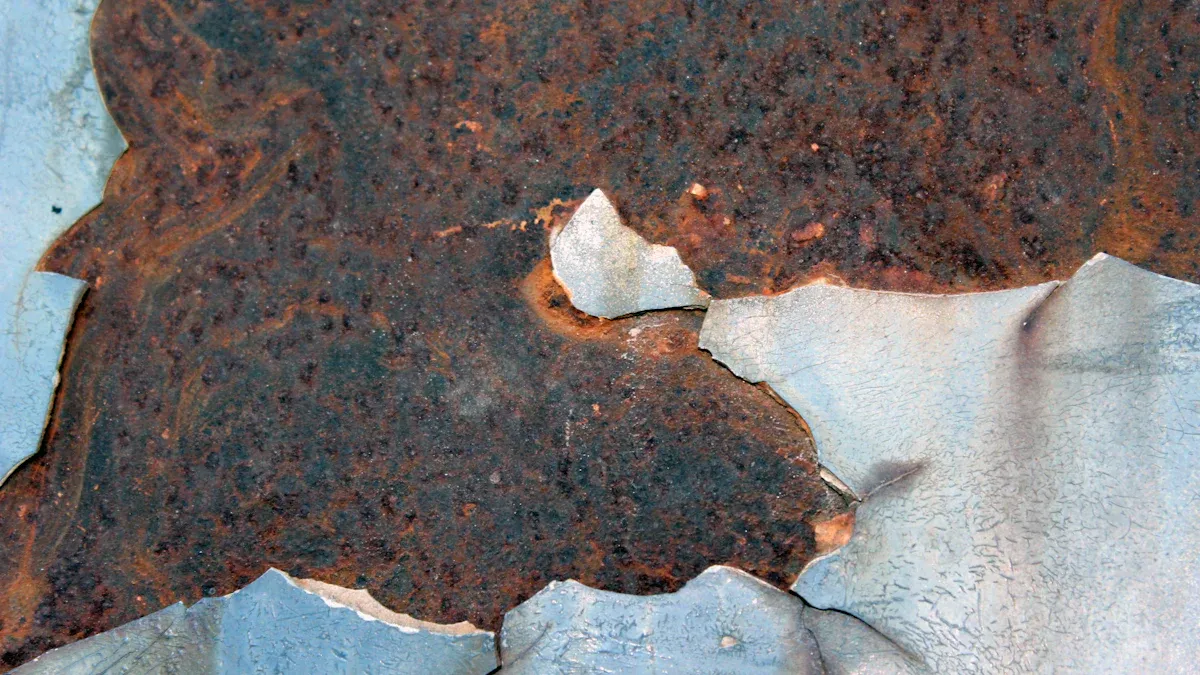
Corrosion Resistance Coatings and Their Role
You want your steel to last as long as possible, especially when facing moisture or harsh chemicals. Corrosion resistance coatings play a big part in this. Galvanized steel stands out because it has a thick zinc coating. This zinc layer acts as a barrier, stopping water and air from reaching the steel. When you use galvanized steel, the zinc coating also works as a sacrificial shield. It corrodes first, so the steel underneath stays safe until the zinc is gone. This is why galvanized steel shows high corrosion resistance in many environments.
The thickness of the zinc coating matters a lot. Hot-dip galvanizing creates a zinc layer about 50 microns thick. This thick layer forms a tough zinc carbonate shell that protects the steel both physically and electrochemically. If you use a thinner zinc layer, like from painting or electroplating, you get less protection. Thicker coatings from hot-dip or double dipping can make galvanized steel last over 70 years, even in tough conditions. In some soils, a hot-dip galvanized steel pile can last up to 140 years, while black steel might only last 55 years.
Other corrosion resistance coatings exist, too. Epoxy coatings offer the highest corrosion resistance for steel, especially in places with lots of salt or chlorides. Zinc primer coatings also help, but not as much as epoxy. Red-oxide coatings and some nickel-phosphorus alloys provide some protection, but they do not match the performance of zinc or epoxy. Newer coatings, like self-healing polymers, can repair themselves if damaged, making them a smart choice for the future.
You can see how corrosion resistance changes over time in laboratory tests. The table below compares black steel and galvanized steel using corrosion current density, which measures how fast corrosion happens:
| Test Method / Parameter | Time (days) | Black Steel Corrosion Current Density (i_corr, µA/cm²) | Galvanized Steel Corrosion Current Density (i_corr, µA/cm²) | Environment | Notes |
|---|---|---|---|---|---|
| Linear Polarization Resistance (LPR) | 4 | ~0.28 (without chlorides), up to 1.3 (with chlorides) | ~0.73 (without chlorides), up to 2.0 (with chlorides) | Concrete with/without chlorides | Initial higher corrosion for galvanized steel due to zinc dissolution in alkaline concrete pore solution (pH > 13.3). |
| LPR | 74 | 0.27 (without chlorides), 0.71 (with chlorides) | 0.14 (without chlorides), 1.16 (with chlorides) | Concrete with/without chlorides | Corrosion current densities slightly decreased; zinc corrosion still active in galvanized steel. |
| LPR | 792 (~2 years) | 0.35 (without chlorides), 0.01 (with chlorides) | 0.29 (without chlorides), 0.34 (with chlorides) | Concrete with/without chlorides | Corrosion inhibited on black steel by rust layer; zinc corrosion slowed by corrosion product accumulation. |
| Electrochemical Impedance Spectroscopy (EIS) | 4, 74, 792 | Capacitive behavior with increasing charge transfer resistance over time | Slightly smaller impedance semicircle diameter initially; passivation behavior observed at 74 days | Concrete with/without chlorides | Zinc coating dissolution in alkaline pore solution; corrosion product layers affect impedance spectra. |
| Microscopic Observations | 792 | Thick corrosion product layer on black steel rebar | Corrosion products of zinc coating present | Concrete with chlorides | Corrosion products limit oxygen and moisture access, inhibiting further corrosion. |
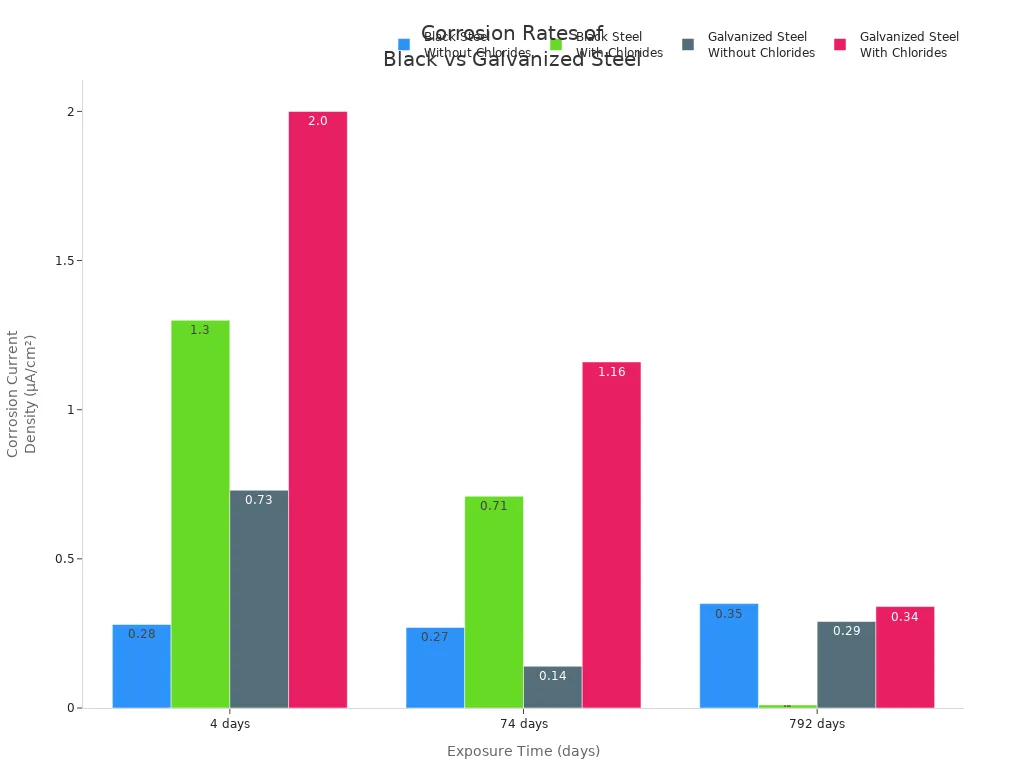
Note: The zinc coating on galvanized steel dissolves first, especially in alkaline or salty environments. This gives you strong corrosion resistance around chlorinated water and even better corrosion resistance around saltwater, until the zinc is used up.
Performance in Moisture and Outdoor Environments
When you use steel outdoors or in damp places, corrosion issues become a big concern. Galvanized steel performs much better than black steel in these situations. The zinc coating slows down rust formation, giving you excellent rust resistance. In high-humidity or outdoor environments, galvanized steel can last for decades without significant corrosion. Black steel, on the other hand, starts to rust quickly when exposed to moisture.
Field studies show that galvanized steel keeps its corrosion resistance even at moderate temperatures, like 50 °C. The zinc layer forms a protective shell of zinc oxide (ZnO), which helps prevent significant corrosion. If the zinc layer gets damaged or if temperatures rise above 70 °C, the protection drops, and corrosion can speed up. Black steel does not have this extra layer, so it suffers from corrosion issues much sooner.
You can see how long it takes for rust to appear on galvanized steel in different conditions:
| Steel Type | Environmental Condition | Average Time to Visible Rust Formation |
|---|---|---|
| Galvanized Steel | Wet or soaked environment | Approximately 10 years |
| Galvanized Steel | 100% relative humidity | Approximately 34 years |
| Galvanized Steel | Below 60% relative humidity | Over 200 years |
| Black (bare) Steel | Outdoor conditions (general) | Data not available from retrieved sources |
Tip: If you want high corrosion resistance for outdoor projects, always choose galvanized steel. It gives you much better rust resistance and a longer lifespan than black steel.
Industry standards, like ASTM A123, do not set exact corrosion rates. Instead, they focus on how long galvanized steel should last in different environments. In rural areas, galvanized steel can last 100 to 150 years. In places with lots of salt or pollution, like near the ocean, it can still last 50 to 100 years. The thicker the zinc coating, the longer your steel will resist corrosion.
You should also know that if galvanized steel touches black steel or other metals, galvanic corrosion can happen, especially in salty or wet places. To avoid this, use isolation materials or make sure all parts are galvanized.
Recent advances in corrosion resistance coatings, like self-healing polymers, offer even more protection. These new coatings can repair themselves if scratched, giving you extra durability and less maintenance.
Remember: Galvanized steel gives you the best corrosion resistance in most outdoor and moist environments. Black steel works best indoors or in dry places where exposure to water is low.
Durability and Maintenance Needs
Expected Lifespan of Black Steel vs Galvanized Steel
When you choose between black steel and galvanized steel, you should think about how long each material will last. Black steel pipes usually have a lifespan of 20 to 50 years. You often see black steel used for gas lines or fire sprinkler systems because it does not need to handle water. If you use black steel pipes for water supply, they rust much faster. This makes them a poor choice for plumbing where water is always present.
Galvanized steel lasts longer because of its zinc coating. In most homes, galvanized steel pipes can last from 40 to 100 years. The zinc layer protects the steel from rust, so you get more years before you need to replace the pipes. Over time, even galvanized steel will start to rust, but it gives you much better protection than black steel. You will find that galvanized steel works well for water supply lines and outdoor projects where moisture is common.
| Pipe Type | Typical Lifespan | Corrosion Resistance & Usage |
|---|---|---|
| Black Steel | 20 to 50 years | Prone to rust; mainly used for gas lines and fire sprinkler systems; not for water supply |
| Galvanized Steel | 40 to 100 years | Zinc coating protects against rust; good for water supply lines and outdoor use |
Tip: If you want your pipes to last longer in wet places, galvanized steel is the better choice.
Maintenance Requirements for Each Material
You need to think about how much work each type of steel will need over time. Black steel needs little care in dry places, but in damp or harsh environments, you must check it often. Rust can form quickly on black steel pipes, so you may need to paint them or use other protective coatings. If you skip these steps, black steel can fail and cause leaks or damage.
Galvanized steel needs less maintenance because the zinc coating keeps rust away. You should still check the pipes from time to time to make sure the coating is not damaged. If you see any scratches or worn spots, fix them right away to keep the protection strong. Avoid using harsh cleaners on galvanized steel, as they can wear down the zinc layer. In tough places like coastal or industrial areas, you might add extra coatings to make galvanized steel last even longer.
For black steel:
- Inspect often in moist areas
- Apply protective coatings if needed
- Expect higher repair costs if rust forms
For galvanized steel:
- Inspect the zinc coating regularly
- Repair any damage to the coating quickly
- Use gentle cleaning methods
Note: Galvanized steel usually needs less work and fewer repairs, which saves you time and money in the long run.
Real-World Applications and Best Uses
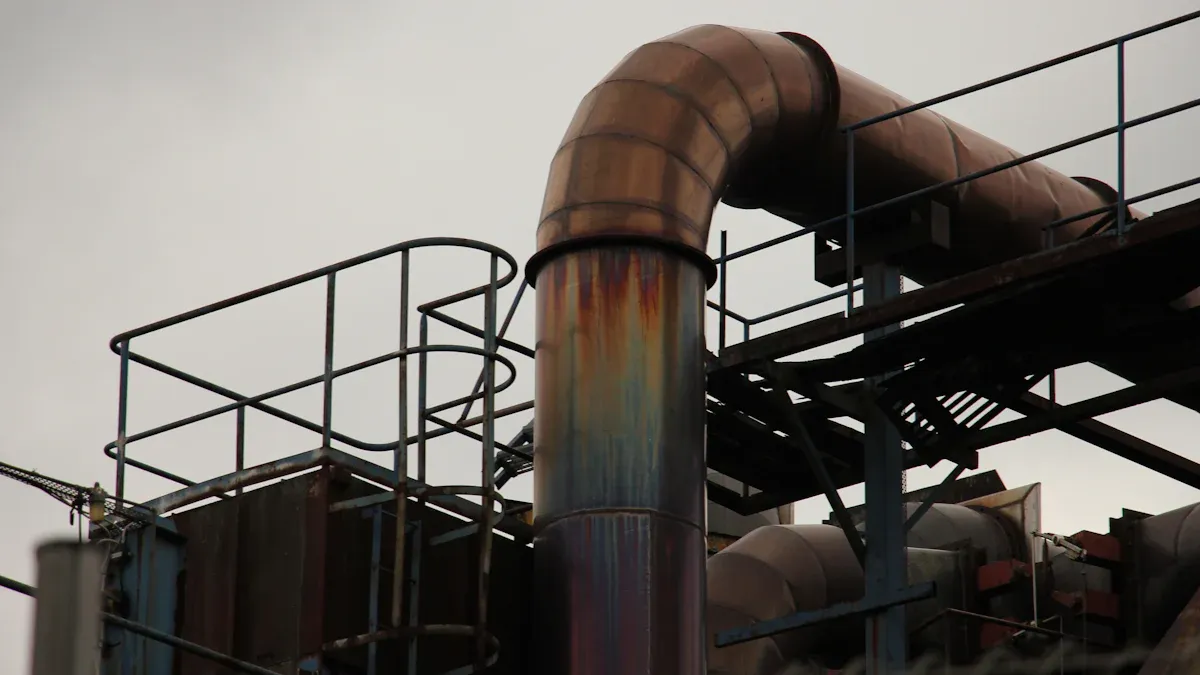
Where Black Steel Excels
You often see black steel used in places where water and moisture are not a problem. Black steel works best for transporting dry gases, such as natural gas or propane. You find black steel pipes in gas lines for homes and businesses. Fire sprinkler systems also use black steel because it handles heat well and does not have a coating that can flake off. Black steel is easy to weld and cut, which makes it a good choice for custom projects.
Black steel fasteners and pipes cost less than galvanized steel. If you work indoors or in dry areas, black steel gives you strong performance without extra expense. You do not need to worry about zinc flaking or blockage in gas lines. Black steel does not have a coating, so you avoid problems with coating damage or special cleaning needs.
Note: Black steel can fail if exposed to water for long periods. Internal rust and pitting can cause leaks. If you connect black steel to brass or copper, galvanic corrosion may happen, so always use proper fittings.
Where Galvanized Steel Excels
Galvanized steel shines in places where corrosion is a big risk. The zinc coating on galvanized steel pipes and galvanized steel fasteners protects them from rust, even in harsh conditions. You see galvanized steel used in outdoor railings, fences, and building frames. Marine environments, like seawater aquaculture water supply networks, rely on galvanized steel because it resists high chloride levels that quickly destroy black steel.
Chemical plants use galvanized steel fasteners and pipes to move acids and bases with pH between 3 and 11. Underground pipelines also use galvanized steel because the zinc layer fights off corrosion from soil moisture and chemicals. Galvanized steel fasteners hold up well in outdoor construction, bridges, and highway guardrails.
- Common uses for galvanized steel:
- Water supply lines
- Outdoor structures and railings
- Marine and coastal projects
- Underground pipelines
- Chemical plant piping
Galvanized steel fasteners last longer in wet or salty air. You get fewer repairs and longer service life. However, if the zinc coating gets damaged or if you connect galvanized steel to copper or brass, galvanic corrosion can occur. Always check for coating damage and avoid mixing metals when possible.
Tip: Choose galvanized steel fasteners and pipes for any project exposed to water, salt, or chemicals. You will get better protection and longer-lasting results.
Cost, Value, and Suitability
Material and Installation Costs
When you plan a project, cost is often one of your first questions. Black steel usually costs less than galvanized steel at the start. For example, black steel rebar costs between $0.40 and $1.25 per linear foot for general sizes. If you need commercial sizes, the price can go up to $4.50 per linear foot. Galvanized steel rebar costs about 10% to 15% more, with prices ranging from $1.20 to $1.60 per linear foot. This higher price comes from the zinc coating that protects galvanized steel from rust.
Here is a quick comparison:
| Material Type | Average Cost (per linear foot) | Commercial Size Cost (per linear foot) |
|---|---|---|
| Black Steel Rebar | $0.40 – $1.25 | $0.90 – $4.50 |
| Galvanized Steel Rebar | $1.20 – $1.60 | About 10%–15% higher than black steel |
Installation costs for both types are similar, usually between $1.00 and $1.75 per square foot. Total costs, including materials, range from $1.40 to $4.00 per square foot. The main difference comes from the material cost, not the labor.
Tip: If you want to save money upfront, black steel may look better. However, you should also think about how long each material will last.
Long-Term Value and Project Suitability
You need to look beyond the initial price when choosing between black steel and galvanized steel. Galvanized steel gives you a much longer service life, especially in places with moisture or chemicals. The zinc coating acts as a barrier, so you do not need to replace or repair it as often. Black steel, on the other hand, can start to rust in just a few years if exposed to water.
Here is a table to help you compare:
| Factor | Galvanized Steel | Black Steel |
|---|---|---|
| Service Life | 15–50 years (depends on environment) | 3–8 years |
| Corrosion Protection | Zinc coating shields steel | Prone to rust and corrosion |
| Maintenance Frequency | Inspections every 2–5 years | Frequent painting and repairs |
| Maintenance Cost | Low | High |
| Replacement Frequency | Low | High |
| Cost-effectiveness | Higher over time | Lower at first, but higher later |
| Environmental Adaptability | Good in harsh or wet places | Not stable in tough environments |
- Galvanized steel systems last longer and need fewer repairs.
- You can replace only damaged sections of galvanized steel, which saves money.
- Black steel often needs full replacement when it fails.
- Trying to save money with black steel can lead to expensive repairs later.
You should also think about sustainability. Both black steel and galvanized steel are highly recyclable. Almost all structural steel comes from recycled materials. The zinc used in galvanized steel can also be recycled many times without losing its quality. This makes galvanized steel a smart choice if you care about the environment.
Remember: Galvanized steel costs more at first, but you save money and time in the long run. You also help the planet by choosing a material that is easy to recycle.
Choosing the Right Steel: A Simple Guide
Key Factors to Consider
You need to look at several important factors before you choose between black steel and galvanized steel. Each project has unique needs. The table below helps you compare the main points:
| Factor | Black Steel Pipe | Galvanized Steel Pipe |
|---|---|---|
| Project Requirements | Good for gas transport; handles high pressure | Best for water lines; zinc coating fights corrosion |
| Environmental Conditions | Works indoors or in dry places | Handles moisture and outdoor use |
| Corrosion Risk | Rusts easily in wet areas | Resists rust due to zinc layer |
| Budget | Lower upfront cost | Higher upfront cost, but lasts longer |
| Long-term Cost Effectiveness | Needs more repairs and replacements | Needs less maintenance, longer service life |
| Operating Temperature & Pressure | Handles high pressure | Good for normal plumbing conditions |
| Safety Concerns | Common for gas lines | Preferred for water supply |
| Installation & Maintenance | Standard process | Coating makes installation easier |
You should also think about the environment. Black steel works well in dry, indoor spaces. Galvanized steel stands up to rain, humidity, and outdoor weather. If your project faces moisture or chemicals, galvanized steel gives you better protection. For indoor gas lines or fire systems, black steel is often enough.
Tip: Always match the steel type to your project’s environment and safety needs. This helps you avoid costly repairs later.
Quick Decision Guide
You can use this simple checklist to help you decide:
- Is your project indoors and dry?
Choose black steel for gas lines or fire sprinkler systems. - Will the steel face water, humidity, or outdoor weather?
Pick galvanized steel for water pipes, fences, or outdoor frames. - Do you need to save money now?
Black steel costs less at first, but may need more repairs. - Do you want less maintenance and longer life?
Galvanized steel lasts longer and needs fewer repairs. - Are you working with high pressure?
Black steel handles higher pressure, good for gas transport. - Is corrosion a big risk?
Galvanized steel’s zinc coating protects against rust.
Here is a quick comparison of how long each type can last in different conditions:
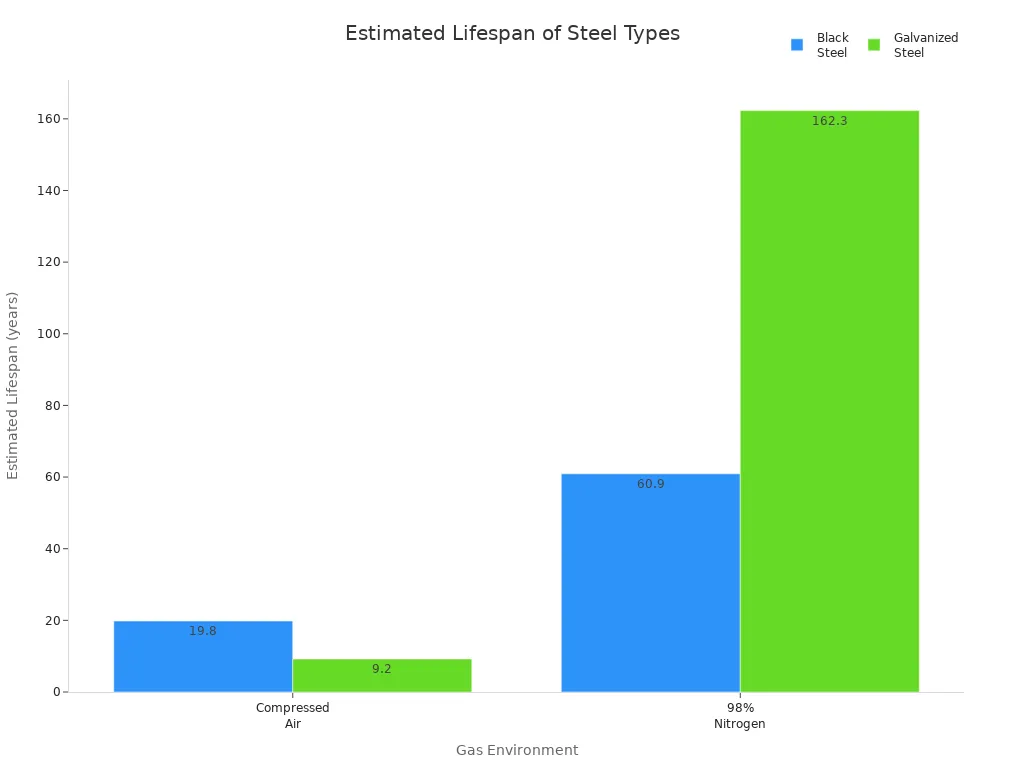
Note: Using nitrogen instead of air can make both types last longer, but galvanized steel with nitrogen gives the best results.
When you balance cost, environment, and safety, you can pick the right steel for your project. If you are unsure, talk to a supplier or engineer. They can help you choose the best option for your needs.
You get the best corrosion resistance when you choose galvanized steel for outdoor or wet projects.
- Galvanized steel lasts longer because its zinc coating protects against rust, even in harsh or salty conditions.
- Black steel works well indoors or in dry places where corrosion resistance is less important and cost matters more.
Remember: Always match your choice to the environment, your budget, and how much maintenance you want to handle. For moisture or tough weather, galvanized steel gives you a safer, longer-lasting result.
FAQ
What is the main reason galvanized steel resists corrosion better than black steel?
The zinc coating on galvanized steel acts as a shield. It protects the steel from water and air. This barrier stops rust from forming. Black steel does not have this protection, so it rusts faster.
Can you use black steel pipes for water supply lines?
You should not use black steel pipes for water supply. Water causes black steel to rust quickly. This rust can clog pipes and cause leaks. Galvanized steel works better for water lines because it resists corrosion.
How do you maintain galvanized steel to keep it rust-free?
Check the zinc coating for scratches or damage. Clean the surface gently with mild soap and water. Avoid harsh chemicals. If you see bare spots, repair them with zinc-rich paint. Regular checks help you catch problems early.
Is galvanized steel safe for drinking water?
Yes, you can use galvanized steel for drinking water in most cases. The zinc coating is safe. Over time, minerals may build up inside the pipes. You should flush the system if you notice reduced water flow.
What happens if you connect black steel and galvanized steel together?
Connecting black steel and galvanized steel can cause galvanic corrosion. This happens when two different metals touch and water is present. The connection may rust faster. Use proper fittings or isolation materials to prevent this problem.