
Installing 10 ft galvanized steel pipe in plumbing projects requires careful planning and strict attention to safety. You must understand the risks, such as trench collapses, heavy equipment accidents, and injuries from improper handling.
- Always inspect galvanized steel pipes for damage before starting the installation process.
- Use the right protective gear, including hard hats and gloves, when working with galvanized steel.
- Communicate clearly with your team to avoid accidents with heavy steel pipe sections.
By focusing on proper installation, you increase the durability of your galvanized pipes and ensure your plumbing system meets high standards for strength and reliability.
Tools, Materials, and Safety Gear for 10 ft Galvanized Steel Pipe Installation
When you install 10 ft galvanized steel pipes, you need the right tools, materials, and safety gear. This helps you work faster and keeps your project safe and strong.
Essential Tools for Galvanized Steel Pipes
You need several tools to cut, join, and secure galvanized steel pipes. Here is a list to help you get started:
- Pipe cutter or hacksaw for cutting steel pipes to the right length
- Pipe wrench for tightening and loosening pipe connections
- Threading machine for making threads on the ends of galvanized pipes
- Tape measure for accurate measurements
- Level to make sure your pipes stay straight
- Pipe vise to hold pipes steady while you work
Tip: Always check your tools before you start. Sharp and clean tools make your work with galvanized steel pipes easier and safer.
Required Materials for Installation
You must gather all the materials before you begin. This table shows what you need for a typical galvanized steel pipe installation:
| مواد | Purpose |
|---|---|
| 10 ft galvanized steel pipes | Main piping for your project |
| Pipe fittings | Connect and change direction of pipes |
| Pipe sealant or Teflon tape | Prevent leaks at pipe joints |
| Pipe supports and hangers | Hold pipes in place and prevent sagging |
| Protective coating | Add extra protection to galvanized pipes |
Safety Equipment for Galvanized Pipe Work
Safety is very important when you work with steel pipes. You should always wear:
- Safety glasses to protect your eyes from metal shavings
- Heavy-duty gloves to keep your hands safe from sharp edges
- Hard hat if you work in areas where pipes could fall
- Steel-toed boots for foot protection
You should also keep your work area clean. This helps prevent trips and falls when you handle long galvanized pipes.
Planning and Measuring for Galvanized Steel Pipe Installation
Assessing the Installation Site for 10 ft Pipes
You need to check your installation site before you start working with galvanized steel pipes. Look for enough space to handle and move a 10 ft galvanized steel pipe safely. Make sure the area is clear of debris and water. Wet spots can make the ground slippery and unsafe for heavy steel pipe work. If you plan to install pipes underground, check for other plumbing or electrical lines. Mark these areas to avoid accidents. Good planning and measurement help you avoid mistakes and keep your project on track.
Measuring and Marking Galvanized Steel Pipes
Accurate measuring and marking are important steps in any plumbing project. Use a tape measure to find the exact length you need for each steel pipe. Mark the cutting points with a permanent marker or chalk. Double-check your measurements before you cut. This prevents waste and ensures your pipes fit together well. When you measure for water lines, remember to allow space for fittings and joints. A simple table can help you keep track of your measurements:
| Pipe Section | Required Length | Marked? (Yes/No) |
|---|---|---|
| Main Line | 10 ft | |
| Branch 1 | 4 ft | |
| Branch 2 | 6 ft |
Tip: Always measure twice and cut once. This saves time and reduces errors with steel pipes.
Checking Local Codes and Regulations
You must follow local building codes when installing galvanized steel pipes. In 2025, many cities require you to use special fittings for certain connections. For example, the New York City Administrative Code section 605.24.1 says you must use brass or dielectric fittings that meet ASSE 1079 when joining copper and galvanized steel pipe. This keeps your plumbing safe and up to code. The International Fuel Gas Code allows you to use steel and wrought-iron pipe, including galvanized steel pipes, for gas lines if they meet standards like ASME B36.10, ASTM A53/A53M, or ASTM A106, and are at least Schedule 40. Cast iron pipe is not allowed for these uses. These rules help protect your water and gas systems from leaks and corrosion. Always check your local rules before you start your project. Good planning and measurement, along with code compliance, ensure your plumbing system works well and lasts a long time.
Cutting and Preparing 10 ft Galvanized Steel Pipes
Cutting and preparing 10 ft galvanized steel pipes is a key step in any installation project. You need to use the right tools and follow safe methods to get clean, accurate cuts. Proper preparation helps you avoid leaks and ensures your pipes last for years.
Cutting Techniques for Galvanized Pipes
You have several options when you need to cut galvanized steel pipes. The best method depends on your tools and the space where you work. Here are the most effective cutting techniques:
- Use a pipe cutter for clean and precise cuts. Turn the knob to tighten the cutter around the pipe, then rotate it until the pipe separates.
- Try an angle grinder with a 4-inch cutting wheel if you work in a tight space. Run the grinder at full speed before you start cutting. Always wear gloves, goggles, and ear protection.
- Choose a hacksaw with a fine-tooth blade if you do not have a pipe cutter or grinder. Clamp the pipe securely before you saw.
- Use a sawzall with a carbide or diamond grit blade for tough jobs. These blades abrade the metal instead of cutting with teeth.
- Avoid circular saws for pipes over 1/2 inch in diameter. They work best on smaller steel pipes.
Tip: Always secure the pipe with clamps before you cut. Measure twice and mark your cutting line clearly. This helps you avoid mistakes and keeps your work safe.
After you cut the galvanized steel pipes, you must smooth the edges. This step prevents injuries and helps the pipes fit together tightly.
Deburring and Smoothing Pipe Edges
Cutting galvanized steel pipes often leaves sharp edges or burrs. You need to remove these to make sure your pipes fit well and do not cause leaks. Follow these steps to deburr and smooth the edges:
- Use a deburring tool with a conical end. Insert it into the inner diameter of the pipe and rotate it to remove burrs.
- Flip the tool and smooth the outer edge in the same way.
- Check the pipe edges by touch and sight. If you feel rough spots, repeat the process.
- Use a file that matches the pipe’s size and material. File away any remaining burrs with smooth strokes.
- Wrap sandpaper around the edge and rub back and forth for a finer finish.
- For larger pipes, use an abrasive belt on a belt sander. Secure the pipe and apply steady pressure.
- Always wear gloves and eye protection to keep yourself safe from metal shavings.
After you finish deburring, inspect the cut ends for damage to the zinc coating. If you see any bare spots, repair them with zinc paint. This step keeps the galvanized coating strong and protects the steel from rust. Standards like ISO 1461 and ASTM A123-02 guide you in maintaining the zinc layer.
Cleaning and Inspecting Galvanized Pipes
Before you install galvanized steel pipes, you must clean and inspect them. This step removes dirt, oil, and other contaminants that can cause problems later. Industry standards such as SSPC-SP1 and ASTM D6386 describe the best cleaning methods.
- Start by removing dust and loose debris from the pipe surface.
- Use solvent cleaning to get rid of oil and grease. SSPC-SP1 recommends this step for all galvanized steel surfaces.
- For stubborn stains or rust, use hand tools to scrub the pipe. SSPC-SP2 covers this type of cleaning.
- If you see wet storage stain (a white, powdery corrosion), scrub it off with a brush and mild chemical solution. Rinse and dry the pipe well.
- Check the pipe for lumps, rough spots, or other surface problems. Smooth these areas to avoid coating defects.
- Test for any chromate treatments that could affect paint or coating adhesion. Remove them if needed.
- Measure the thickness of the galvanized coating before and after cleaning. Use ASTM E376 to make sure the pipe meets project standards.
Note: Clean the pipes just before installation. Paint or coat the pipes within 1 to 8 hours after cleaning to prevent new contamination.
Careful cleaning and inspection help your galvanized steel pipes last longer and perform better. You reduce the risk of leaks, corrosion, and installation problems.
Positioning and Securing Galvanized Steel Pipes
Laying Out the Pipe Run for Installation
You need a clear plan before you start the installation of galvanized steel pipes. Begin by measuring the area and marking where each pipe will go. This helps you avoid mistakes and makes the process smoother. Follow these steps for an efficient layout:
- Measure and mark the route for each pipe, making sure you allow for uniform spacing and any needed slope for drainage.
- Cut the pipes to the correct length using a pipe cutter, then smooth the edges to prevent injury.
- Place the pipes along your marked layout, using galvanized clamps or brackets to keep them steady.
- Select the right joining method for your project. اللحام gives a permanent hold, but bolting lets you make adjustments if needed.
- Apply sealant and anti-rust paint to joints and cut ends to protect against corrosion.
- Inspect the entire run and test for secure installation and proper alignment.
Tip: Plan your pipe routes with enough flexibility for future repairs or expansions.
Supporting and Anchoring 10 ft Galvanized Pipes
Proper support keeps your galvanized steel pipes from sagging or moving. Use galvanized steel hanger straps for suspending pipes. These straps have high strength and resist corrosion. Measure and cut the straps longer than the pipe’s circumference. Bend them smoothly around the pipe and secure them with bolts or screws. Place supports every 4 to 6 feet, depending on the pipe size. Add pipe clamps or clips to stop sideways movement. Adjustable pipe saddles help you set the right height, especially on uneven surfaces. Fixed saddles give maximum stability when you know the exact elevation.
Aligning Pipes for Proper Flow and Fit
You must align pipes carefully to ensure good water flow and a tight fit. Use a level to check that each pipe sits straight. Make sure joints line up and do not twist. Support horizontal pipes every 6 to 8 feet and vertical pipes at each floor. This prevents stress and keeps the installation strong. Choose joints that match your needs, such as threaded, flanged, or grooved. Always check the alignment before tightening connections. Good alignment reduces leaks and keeps your galvanized steel pipes working well for years.
Joining Methods for 10 ft Galvanized Steel Pipe Installation
When you work with 10 ft galvanized steel pipes, you need strong and reliable ways to connect them. The right joining method helps your installation last longer and keeps your water system safe from leaks. You can choose from several methods, such as threaded connections, flanged joints, and coupled joints. Each method has its own strengths and weaknesses. You should also use the best sealants and tapes to prevent leaks at the joints.
Threaded Connections for Galvanized Pipes
Threaded connections are one of the most common ways to join galvanized steel pipes. You screw the ends of the pipes together using matching threads. This method works well for water and heating lines in homes and buildings. You can easily take the pipes apart and put them back together if you need to make repairs or changes.
Here is a table that shows the main advantages and disadvantages of threaded connections:
| Aspect | Advantages | Disadvantages |
|---|---|---|
| Threaded Connections | Simple to use; reliable; cost-effective; can be disassembled and reassembled | Limited pressure capacity; threads can corrode and leak |
You often need extra parts like unions, tees, clamps, and plugs when joining the pipes with threads. Threaded connections are easy to assemble and take apart, but the process can be slow and sometimes tricky. Joints made this way can leak if you do not tighten them enough or if the threads get damaged. You should always check the threads for rust or wear before you start the installation.
Tip: Always use a pipe wrench to tighten threaded joints. Do not over-tighten, as this can damage the threads and cause leaks.
Flanged and Coupled Joints in Installation
Flanged and coupled joints give you more options for joining galvanized steel pipes, especially in larger or more complex installations. Flanged joints use flat rings, called flanges, that you bolt together at the ends of the pipes. You can use special gaskets between the flanges to make a tight seal. Some popular flange types include slip-on flanges, TDC (Transverse Duct Connector) flanges, and welded flanges. Welded flanges work best for high-strength needs, such as industrial water systems.
Coupled joints use special fittings to connect two pipe ends. You might use round crimped joints, round couplings with beaded centers, or slip/coupling joints. These methods help you line up the pipes and keep them secure. S & Drive joints use slips and drives to lock the pipe sections together. You can use these for static pressures up to 4 inches water gauge.
- Use gaskets made from neoprene or butyl rubber to stop leaks between flanges.
- Fasten flanged joints with bolts, cleats, and corner pieces for extra strength.
- Add tie rods or companion angles if you need more support for your installation.
You should always check the pressure rating and follow the right standards for your project. Flanged and coupled joints help you build a strong, leak-resistant galvanized pipe system.
Using Pipe Sealants and Tapes for Leak Prevention
No matter which joining method you choose, you must seal the joints to stop leaks. The best sealants for galvanized steel pipes are Teflon tape and liquid pipe joint compounds, also called pipe dope. These products fill the tiny gaps between threads and keep water from escaping.
Here are some tips for using sealants and tapes:
- Clean the threads on the pipes before you apply any sealant.
- Wrap Teflon tape around the threads in the same direction you will screw the pipe together.
- Apply pipe dope to the threads if you want extra protection. Some plumbers use both Teflon tape and pipe dope for the best results.
- Tighten the joints with a pipe wrench until they feel snug. Do not force them, as this can damage the threads.
- For high-pressure water systems, use a non-hardening thread sealant like 567 LOCTITE.
- If you have trouble with leaks, try tightening and loosening the joint a few times before sealing. This helps the threads fit better.
Note: Never use PVC glue or cement on galvanized steel pipes. These products do not work on metal and will not stop leaks.
You can also use green ‘creeping’ Loctite as a temporary fix if you cannot take the pipes apart. Always check your joints after installation to make sure there are no leaks. Good sealing keeps your galvanized water pipes working safely and efficiently.
Sealing and Corrosion Protection for Galvanized Steel Pipes
Applying Protective Coatings to Galvanized Pipes
You want your galvanized pipes to last as long as possible. Protective coatings play a big role in sealing and corrosion protection. The zinc layer on galvanized steel acts as a shield. It blocks moisture and air, which helps prevent rust. Hot-dip galvanizing creates a thick, hard layer that protects better than paint alone. In tough environments, you can use a duplex system. This means you paint over the galvanized surface. Duplex systems combine the power of zinc and paint, making your pipes last even longer—sometimes up to 1.5 times more than paint alone.
- Zinc acts as a sacrificial anode, so it corrodes first and saves the steel underneath.
- Hot-dip galvanized pipes can last 30–50 years in normal conditions.
- Duplex systems are great for coastal or industrial areas where corrosion is a big problem.
Tip: If you scratch the zinc layer, use zinc powder or special paint to repair it right away.
Ensuring Leak-Free Joints in Installation
You need tight, leak-free joints for a strong galvanized pipe system. Start by checking all pipes and fittings for damage. Clean the threads and remove any dirt. Always shut off the water before you begin. Use thread sealant tape or pipe joint compound. Wrap the tape clockwise around the threads. Hand-tighten the fittings first, then use a wrench. Do not over-tighten, or you might damage the threads. After you finish, test each joint for leaks. Regular checks help keep your system safe and dry.
- Inspect and clean all parts.
- Use the right sealant.
- Tighten carefully.
- Test for leaks.
Preventing Future Corrosion in Galvanized Pipes
You can take steps to stop corrosion before it starts. Choose hot-dip galvanized pipes for the best protection. These pipes have thick zinc coatings that work well in harsh weather. New eco-friendly coatings, like water-based or plant-based paints, protect the pipes and the environment. Store your pipes in a dry place and keep them clean. For extra safety, use duplex systems or powder-coated galvanized pipes. These new coatings last longer and look good, too.
| Method | Benefit |
|---|---|
| Hot-dip galvanizing | Strong zinc layer, long durability |
| Duplex system (paint + zinc) | Extra corrosion protection |
| Eco-conscious coatings | Safe for the environment, strong shield |
| Dry storage | Stops rust before it starts |
Regular cleaning and quick repairs help your galvanized pipes stay strong for years.
Final Inspection and Testing of Galvanized Steel Pipe Installation
Checking for Leaks and Secure Fittings
You need to make sure your galvanized steel pipes do not leak before you finish your project. Start by looking at every joint and fitting in your plumbing system. Use your eyes to spot any gaps or loose connections. You can use several methods to check for leaks and secure fittings:
- Hydrostatic testing: Fill the pipes with water and watch for drops in pressure.
- Pneumatic testing: Use air instead of water to find leaks.
- Ultrasonic testing: Listen for sounds that show escaping water.
- Magnetic particle testing: Find cracks in the metal.
- Radiographic testing: Use X-rays to see inside the pipes.
- Visual inspection: Look closely at all joints and fittings.
- Leak testing: Spray soapy water on joints and look for bubbles.
You should also check all couplings, elbows, tees, nipples, caps, and unions. These fittings help you build a strong and safe plumbing system. Make sure each one is tight and in the right place.
Pressure Testing the Galvanized Pipe System
Pressure testing helps you know if your pipes can handle the water flow in your plumbing system. First, shut off the water supply. Fill the pipes with water or air, depending on the test you choose. Use a gauge to measure the pressure. Watch the gauge for several minutes. If the pressure drops, you may have a leak. If the pressure stays the same, your pipes are secure. Always follow safety rules during pressure testing. Never stand near the pipes when you add pressure.
Tip: Pressure testing helps you find small leaks before they become big problems.
Documenting the Installation Process
You should keep good records of your work. Write down the tests you performed and the results. Take photos of the pipe layout and fittings. Make a list of all repairs or changes. Good documentation helps you if you need to fix the plumbing system later. It also shows that you followed the right steps to keep the water safe and the pipes strong.
| Step | What to Record |
|---|---|
| Leak Testing | Method used, results |
| Pressure Testing | Pressure level, duration |
| Repairs | Location, type of repair |
| Final Inspection | Date, inspector’s name |
Keeping clear records protects your work and helps others understand your plumbing system.
Choosing the Right 10 ft Galvanized Steel Pipe for Your Application
Factors to Consider: Diameter, Wall Thickness, and Grade
When you choose a 10 ft galvanized steel pipe for your plumbing project, you need to look at three main things: diameter, wall thickness, and grade. The diameter tells you how much water can flow through the pipe. Wall thickness, often called “schedule,” shows how strong the pipe is and how much pressure it can handle. For example, Schedule 40 pipes are common in plumbing because they balance strength and cost. The grade, such as ASTM A53 Grade B or API 5L Grade B, tells you about the pipe’s strength and what jobs it can do. These grades have a minimum yield strength of 35,000 psi and a tensile strength of 60,000 psi, making them strong enough for most water supply lines and plumbing needs. The zinc coating on galvanized pipes helps stop corrosion, so your plumbing system lasts longer.
| Pipe Feature | What It Means | Why It Matters for Plumbing |
|---|---|---|
| Diameter (OD) | Size of the pipe’s outside | Controls water flow rate |
| سمك الحائط | How thick the pipe walls are | Affects pressure and strength |
| صف دراسي | Pipe’s material and strength rating | Matches pipe to plumbing needs |
Application-Specific Recommendations for Galvanized Pipes
You need to match the pipe to your job. For home plumbing, smaller diameters and Schedule 40 pipes work well for water lines. If you install pipes in a factory or for heavy-duty water transport, pick larger diameters and thicker walls. Always check if the pipe grade fits your water temperature and pressure. Galvanized pipes are great for outdoor plumbing or places with lots of moisture because the zinc coating fights corrosion. If you want a long-lasting plumbing system, use pipes that meet standards like ASTM A53 or API 5L. This helps your water stay clean and your pipes last for years.
Tip: Always think about the water flow and pressure in your plumbing system before you choose a pipe. This helps you avoid leaks and keeps your water safe.
Sourcing Quality 10 ft Galvanized Steel Pipes in 2025
You want to buy your 10 ft galvanized steel pipe from a trusted supplier. In 2025, top companies like Chinh Dai Steel, Metal Zenith, and Independent Pipe and Supply Corp. offer high-quality pipes for plumbing and water projects. These suppliers have strong quality checks, good customer service, and products that meet international standards. When you pick a supplier, look for these things:
- The supplier meets ASTM or API standards.
- They offer clear product tracking and documentation.
- They have strong technical support and fast delivery.
- Their pipes have a good zinc coating to stop corrosion.
If you follow these steps, you will get the right pipe for your plumbing needs and build a system that lasts.
Best Practices and Product Recommendations for Galvanized Pipe Installation
Tips for a Smooth Installation Process
You can make your plumbing project easier and more reliable by following a few best practices. These steps help you avoid mistakes and keep your galvanized pipes strong for years.
- Measure your installation area carefully. Plan your pipe layout to reduce waste and keep everything stable.
- Cut your galvanized pipes with the right tools. Smooth the edges to prevent injury. Apply zinc-rich primer to cut ends to stop rust.
- Place your pipes according to your plan. Use clamps or brackets to hold them in place and keep them from moving.
- Choose welding for permanent joints or bolting for easier changes. Always protect welded areas with zinc spray.
- Seal all joints with zinc-based sealants or anti-rust paint. Use rubber washers in bolted connections to prevent leaks.
- Inspect every connection and test the system under pressure. Fix any weak spots before you finish.
Following these steps helps you build a durable, weather-resistant plumbing system with galvanized pipes.
Recommended Brands and Suppliers for 10 ft Galvanized Steel Pipes
You want to choose reliable brands for your plumbing needs. Top suppliers in 2025 offer quality, support, and strong warranties. Here is a table to help you compare:
| Supplier / Brand | Key Advantages | Application Scenarios | Notes / Cons |
|---|---|---|---|
| Herrick Corporation | Fast delivery, innovative design, large projects | Stadiums, commercial plumbing | Higher cost |
| American Cast Iron Pipe | Affordable, high-quality steel, wide range | Water supply, industrial plumbing | Limited to larger orders |
| Mueller Industries | Wide selection, international reach | Residential and commercial plumbing | Some products may have long lead time |
| U.S. Steel | Reliable, strong warranty, USA-made | All plumbing applications | Higher price |
| Totten Tubes Inc. | Long-lasting zinc coating, ASTM standards | Construction, marine, fencing, plumbing | Limited sizes |
| Steel Supply LP | Many sizes, quick processing | Fabrication, construction, plumbing | Custom cuts non-returnable |
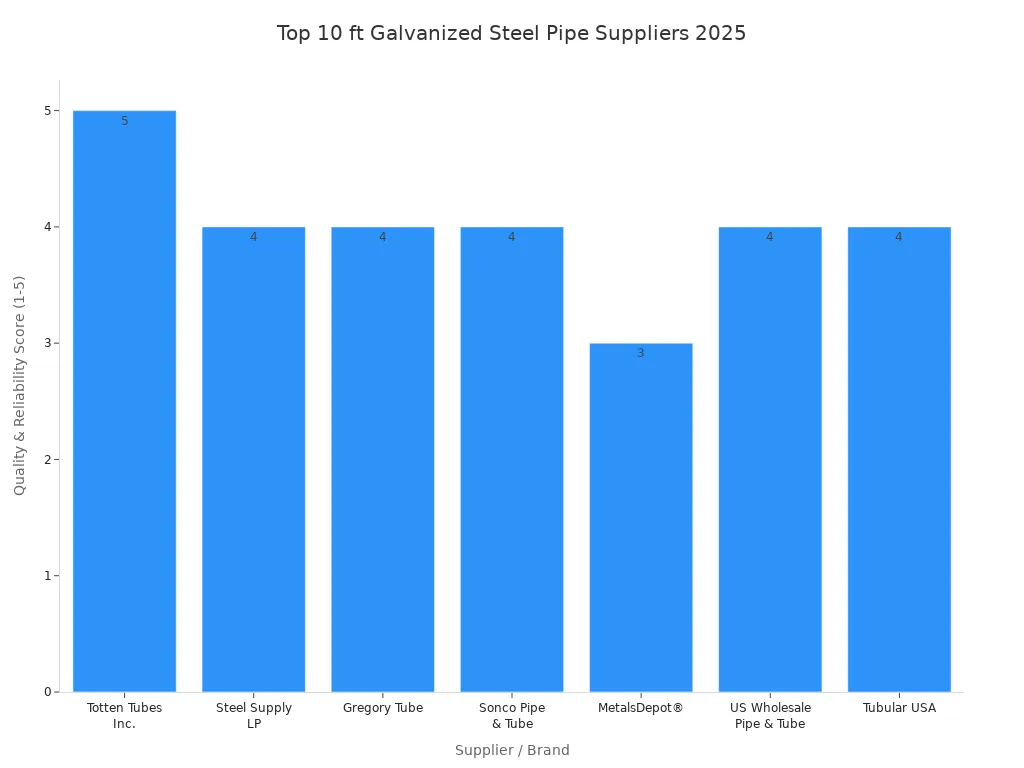
Totten Tubes stands out for its zinc coatings that can protect pipes for decades. Their galvanized pipes meet strict ASTM standards, making them a smart choice for many plumbing projects.
Special Considerations for Galvanized Pipe Installation in 2025
You need to pay attention to new rules and technologies when you install galvanized pipes in 2025. Always select pipes with the right size and wall thickness for your plumbing system. Hot-dip galvanization gives the best protection against rust and can make pipes last over 50 years. Make sure your pipes meet standards like ASTM A53 and NSF/ANSI 61, especially for drinking water. Choose steel grades such as Q235 or Q345 for strength and flexibility.
- Use thicker zinc coatings or special alloy treatments for harsh environments.
- Install expansion joints if your plumbing system faces temperature changes.
- Apply proper insulation to reduce heat loss and protect people.
- Inspect your galvanized pipes often, especially in fire sprinkler or gas systems.
- Follow local codes for gas and HVAC plumbing, as some areas limit galvanized steel for indoor gas lines.
New green building standards and smart infrastructure projects may require you to use pipes with improved corrosion resistance and lower environmental impact.
You can achieve a safe and durable 10 ft galvanized steel pipe installation by following each step with care. Remember these best practices:
- Check local codes and NEC rules before you begin.
- Choose premium materials for longer life.
- Use proper installation methods and support pipes every 10 ft.
- Prevent corrosion by using dielectric fittings and avoiding contact with dissimilar metals.
- Document your installation process with photos and maps.
- Schedule regular inspections to catch problems early.
- Consult professionals for complex projects or site-specific needs.
Stay informed about new standards in 2025 to keep your system reliable.
التعليمات
How do you know if a galvanized steel pipe is safe to use?
You should check for rust, dents, or cracks. Look for a smooth zinc coating. If you see white powder or flaking, the pipe may have corrosion. Always buy pipes from trusted suppliers.
Can you cut galvanized steel pipes with a regular saw?
You can use a hacksaw with a fine-tooth blade. Secure the pipe before cutting. For faster results, use a pipe cutter or angle grinder. Always wear gloves and safety glasses.
What is the best way to prevent leaks at pipe joints?
Wrap Teflon tape around the threads. Apply pipe joint compound for extra protection. Tighten the joints with a pipe wrench. Do not over-tighten. Test for leaks after installation.
How often should you inspect galvanized steel pipes?
Inspect your pipes once a year. Look for leaks, rust, or loose fittings. Early checks help you fix small problems before they become big issues.
Are galvanized steel pipes good for drinking water?
Galvanized pipes work for drinking water if they meet NSF/ANSI 61 standards. Make sure the pipes have a strong zinc coating. Replace old pipes if you see rust or low water flow.