
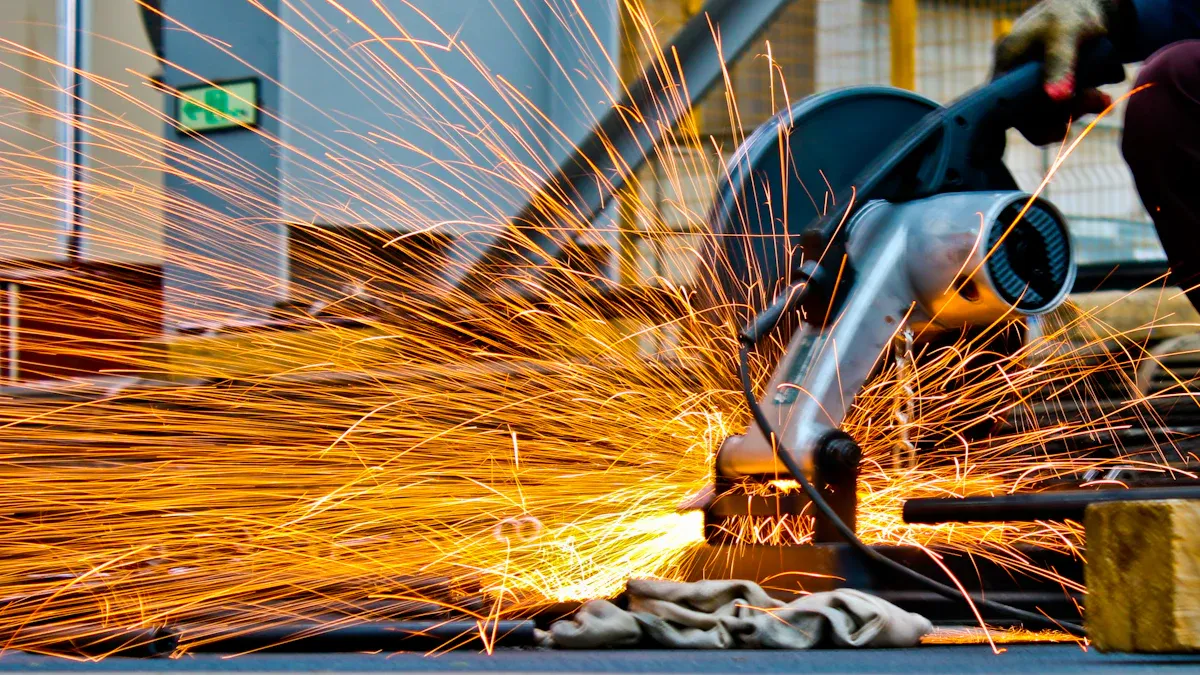
When you cut galvanized steel, you expose the steel beneath the layer of zinc. This can start localized corrosion, especially if you use the wrong method. The way you cut galvanized steel changes how well the hot-dipped galvanization protects the metal. Safety also matters, as poor cuts can weaken adhesive bonds and make structures less secure. Take a look at the table to see how your choice of cutting galvanized steel impacts key factors:
| Aspect | How Cutting Method Impacts Galvanized Steel |
|---|---|
| المقاومة للتآكل | Exposes steel, disrupts zinc, changes edge durability |
| Safety | Affects adhesive bonds, can reduce structural safety |
| Efficiency | Good methods lower maintenance and environmental impact |
Learning how to cut galvanized steel properly helps you keep your project safe, strong, and long-lasting.
Why Choosing the Right Method to Cut Galvanized Steel Matters
Impact on Galvanized Steel Quality
When you cut galvanized steel, you change more than just the shape of the metal. The zinc coating protects the steel from rust. If you use the wrong method, you can crack or remove this coating. For example, tin snips or a guillotine can bend the metal and damage the zinc layer. This makes the steel more likely to rust at the edges. Some methods, like abrasive wheels, help keep the zinc coating in place. You should always think about how to cut galvanized steel in a way that keeps the coating strong. Sometimes, you need to add paint or another layer after cutting to protect the exposed steel.
Tip: Choose a method that keeps the zinc coating as undamaged as possible to help your project last longer.
Safety When Cutting Galvanized Steel
Safety is very important when you cut galvanized steel. High-speed tools like grinders and torches can make dangerous zinc oxide fumes. Breathing these fumes can make you feel sick, like you have the flu. Sparks, sharp edges, and heat are also common hazards. You should always wear safety gear, such as gloves, eye protection, and a mask. Good ventilation or fume extraction helps keep the air safe. If you use tin snips for thin sheets, you lower the risk of fumes, but you still need to watch out for sharp edges. Always follow safety precautions for cutting galvanized steel to protect yourself and others.
- Wear a respirator or dust mask
- Use gloves and eye protection
- Make sure the area has good airflow
- Handle sharp edges with care
Cost and Efficiency of Cutting Methods
You have many choices for cutting galvanized steel, and each one affects your time and budget. Manual tools like aviation snips and hacksaws cost less and work well for small jobs, but they take more time and effort. Power tools, such as angle grinders and portable band saws, cut faster and handle thicker steel, but they cost more and need more safety steps. Laser cutting gives you the fastest and most precise cuts, but the machines are expensive and best for big projects. The table below shows how different methods compare:
| Cutting Method | Cost | Speed & Precision | Best Use |
|---|---|---|---|
| Manual Tools | Low | Slow, less precise | Home/small projects |
| Power Tools | Moderate | Faster, moderate | Small shops, DIY |
| Laser Cutting | High | Very fast, very precise | Industrial, large jobs |
When you pick a method, think about the size and thickness of your steel, how fast you need to finish, and your budget. The right choice helps you save time, money, and effort.
Manual Tools for Cutting Galvanized Steel
Hacksaw and Tin Snips Overview
When you want to cut galvanized steel by hand, you often reach for a hacksaw or tin snips. Tin snips work well for thin sheets. You can use them to make straight or slightly curved cuts. Hacksaws have a fine-toothed blade that lets you cut through small pipes or rods. Both tools are easy to use and do not need electricity. You can mark your cut line with a marker, then follow it closely with your tool. These methods help you cut galvanized steel in small projects or tight spaces.
Strengths of Manual Cutting Tools
Manual tools give you several advantages when you cut galvanized steel.
- You get good control over your cuts, which helps you make precise shapes.
- Tin snips are light and easy to handle, so you can use them for quick jobs.
- You do not need much setup or special equipment.
- You can clamp the steel to keep it steady, which makes your cuts even more accurate.
- These tools are safe and simple, so you can focus on your work without worrying about complex machines.
Tip: Always mark your cut line clearly and use clamps to keep the steel from moving. This will help you get the best results.
Weaknesses of Manual Cutting Tools
Manual tools also have some disadvantages.
- Tin snips only work well on thin, soft metals. If you try to cut anything thicker than 20-gauge steel, you will struggle.
- You may find it hard to cut curves or complex shapes, especially in thicker galvanized steel.
- If you use the wrong technique, you can bend or distort the metal edge.
- Manual shears do not cut through the middle of a sheet easily.
- For thicker steel, you often need power tools because manual tools have limited strength.
If you plan to cut galvanized steel that is thick or has a complex shape, you should look at other methods.
Best-Use Scenarios for Manual Tools
You might wonder when you should pick up a pair of tin snips or a hacksaw instead of a power tool. Manual tools shine in certain situations, especially when you need control and precision. Experts recommend manual tools for many tasks because they help you protect the zinc coating and make clean, accurate cuts.
Here are some common scenarios where manual tools work best:
- You need to cut individual galvanized steel siding panels. Tin snips or aviation shears let you follow drawn lines and make detailed cuts without damaging the coating.
- You want to make curved or diagonal cuts, such as around gables or corners. Manual tools give you the control needed for these shapes.
- You must break panels across butt edges or snip through bottom locks. Tin snips handle these jobs well and keep the steel from bending.
- You plan to score and break the face of a panel. Utility knives or aviation shears help you do this with accuracy.
- You work on small or delicate projects where power saws might be too aggressive. Manual tools let you work slowly and avoid mistakes.
- You need to avoid heat that could damage the galvanized coating. Manual tools do not generate heat, so they are suitable for cutting galvanized steel without harming the protective layer.
- You work in tight spaces or tricky conditions. Manual tools fit where larger machines cannot reach.
Tip: Always use sharp, well-adjusted manual tools. Dull blades can crush or tear the metal, making your job harder and risking damage to the zinc coating.
Manual tools give you better control and help you keep the steel’s protective layer intact. For many small or detailed jobs, they are the best choice.
Using an Angle Grinder to Cut Galvanized Steel
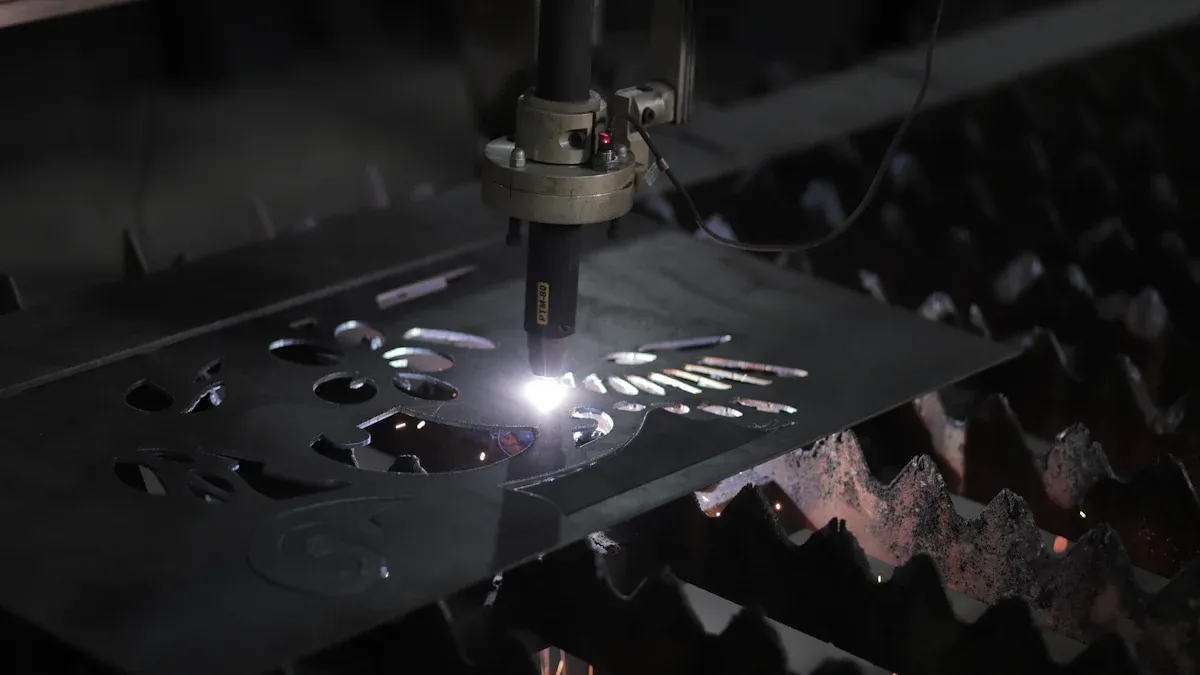
Angle Grinder Method Overview
You can use an angle grinder to cut galvanized steel quickly and efficiently. This tool has a high-speed motor and a rotating disc that slices through metal with ease. You hold the grinder with both hands for better control. Many angle grinders have adjustable side handles, so you can work in tight or awkward spaces. You can switch out the cutting disc for different tasks, making this tool very flexible. Cordless models let you move around freely, which helps when you work in different locations. Angle grinders work well for straight cuts and trimming edges, especially when other methods feel too slow.
Strengths of Angle Grinder Cutting
Angle grinders offer several important benefits when you cut galvanized steel:
- You can use different blades for various jobs, so you do not need many separate tools.
- The high-speed motor lets you cut through steel in seconds, much faster than manual tools.
- Ergonomic designs, such as two-handed grips and side handles, give you better control and reduce fatigue.
- Cordless options allow you to work anywhere, even if you do not have access to power outlets.
- You can switch blades quickly, which saves time and increases your efficiency.
Tip: Always check that your cutting disc matches the job. Using the right disc helps you get a cleaner cut and keeps you safe.
Weaknesses of Angle Grinder Cutting
Angle grinders also have some disadvantages you should know before you start. The cutting wheel can shatter if it is cracked or corroded, which may cause injury. Sparks from the grinder can reach very high temperatures and may start fires if they land on flammable materials. You will see flying metal particles and fumes, so you need good ventilation to avoid breathing in harmful substances. Always wear safety glasses, gloves, and other protective gear to shield yourself from debris and sparks. Using the wrong disc or a damaged one increases the risk of accidents. Kickback at the end of a cut can make you lose control of the tool. Cutting galvanized steel releases hazardous fumes from the zinc coating, so keep the area well-ventilated and use proper PPE. Keep a fire extinguisher nearby in case sparks ignite something.
Note: Angle grinders work best when you follow all safety steps and use the right methods for your project.
Best-Use Scenarios for Angle Grinders
You might wonder when you should use an angle grinder for cutting galvanized steel. Angle grinders work well in many situations. You can use them for both home projects and professional jobs. If you need to cut thin metal sheets or thicker pieces like bolts, an angle grinder gives you the power and speed you need. Many people choose this tool when they want quick results and do not want to spend a lot of money on special machines.
Angle grinders are suitable for cutting galvanized steel in projects that require fast and flexible cuts. You can use them to trim roofing panels, cut fence posts, or shorten metal pipes. If you work with steel that is too thick for tin snips but not thick enough for heavy-duty saws, an angle grinder fits perfectly. You can also use this tool when you need to make straight cuts or remove rough edges from metal.
Here are some common scenarios where you might pick an angle grinder:
- You need to cut galvanized steel panels for a shed or garage.
- You want to trim down metal fence posts or rails.
- You must cut bolts or rods to size for a building project.
- You need to remove sharp edges after making a rough cut.
- You work in a place where you need a portable tool.
Tip: Always use the side support handle on your angle grinder. This helps you keep control and stay safe while cutting.
Angle grinders give you a balance of speed, control, and affordability. You can use them for many types of galvanized steel, from thin sheets to moderate thickness. This makes them a smart choice for both quick fixes and larger jobs.
Power Shears and Nibblers for Cutting Galvanized Steel
Power Shears and Nibblers Overview
When you need to cut galvanized steel quickly and cleanly, power shears and nibblers are two great options. Power shears use two sharp blades that move past each other, slicing through the metal like scissors. Nibblers work differently. They punch out small pieces of metal as they move along your cut line. Both tools run on electricity and help you finish large jobs faster than manual tools. You can use them for straight lines, curves, and even detailed shapes.
Here is a quick comparison to help you understand how these tools work on galvanized steel:
| Aspect | Power Nibblers (e.g., Hercules Nibbler) | Electric Shears |
|---|---|---|
| Cutting Mechanism | Punch-and-die nibbling removes small bits of material | Opposing scissor-like blades slice material |
| Edge Quality | Slightly serrated edge with minimal burring; usually acceptable as-is; quick filing if needed | Often leaves distorted edges requiring finishing |
| Cutting Speed | About 3-4 feet per minute on 18-gauge steel; moderate pace, precise | Faster on straight cuts; less capable on curves |
| Cutting Capability | Excels at curves and interior cutouts | Best for straight or gently curved lines |
| Material Distortion | Minimal bending or warping | Can cause bending or warping |
| Thickness Handling | Slight advantage on thicker materials | Similar thickness capacity |
| Waste Production | Produces small metal chips (kerf) | No waste except at start of cut |
| Application on Galvanized Steel | Clean edges with minimal distortion advantageous for galvanized steel | May require more edge finishing due to distortion |
Strengths of Power Shears and Nibblers
You will find that both power shears and nibblers offer strong advantages for cutting galvanized steel, especially on big projects. Power shears cut fast and handle thick steel well. You can use them for long, straight cuts or gentle curves. They work best when you need to cut many sheets or repeat the same cut over and over. Nibblers shine when you need to cut complex shapes or tight curves. They make precise cuts without bending the metal. You can use nibblers for detailed work and for cutting out holes or patterns.
| Tool Type | Main Strengths for Cutting Galvanized Steel |
|---|---|
| Power Shears | Efficiently handle thicker materials; suitable for large projects; fast and powerful for straight or curved cuts; ideal for repetitive or large-scale tasks |
| Nibblers | Specialized for cutting complex shapes and contours; precise cutting without deforming metal; effective on various thicknesses; excellent for detailed and repetitive work |
Tip: For large jobs or when you need to cut many sheets, power shears and nibblers save you time and effort.
Weaknesses of Power Shears and Nibblers
You should also know the limits of these tools. Power shears can struggle with tight curves and may leave jagged or sharp edges. Sometimes, they bend or warp the metal, especially on thin sheets. Nibblers punch out small chips of metal, which can scratch the zinc coating and lead to rust. These chips can also get stuck on the floor and cause scratches if you step on them. Nibblers have a limit on how thick the steel can be and how tight a curve they can cut. Some nibblers feel uncomfortable to use if the handle design is poor.
- Power shears have trouble making tight curves.
- Power shears can leave sharp or jagged edges.
- Power shears may bend or warp the metal.
- Power shears do not work well on corrugated steel.
- Nibblers punch out small chips that can damage the zinc coating.
- Metal chips from nibblers can cause scratches and rust if left on the floor.
- Nibblers have limits on thickness and curve radius.
- Some nibblers are uncomfortable to hold for long periods.
Note: Always clean up metal chips after using a nibbler to protect your workspace and your galvanized steel from damage.
Best-Use Scenarios for Power Shears and Nibblers
You will find power shears and nibblers especially useful in many real-world jobs. These tools help you cut galvanized steel quickly and with less effort. You can use them in both industrial and construction settings.
Power shears work best when you need to trim or shape large sheets of galvanized steel. Construction companies often use hand-held pneumatic shears for tasks like duct work, trimming panels, and cutting sheet metal for building projects. Sheet metal shops rely on power shears for fast, smooth cuts. Auto body repair shops also use them to shape and fit panels. The ergonomic design and variable speed control make power shears easy for both skilled and new workers.
Nibblers shine when you need to make detailed or curved cuts. You can use nibblers for metal fabrication, such as creating brackets, frames, or custom parts. Roofing jobs often require nibblers to cut metal roofing sheets, flashing, and gutters. HVAC technicians use nibblers to shape ductwork and vents. In automotive repair, nibblers help you replace panels or build custom exhaust systems. Metal furniture makers and artists use nibblers for intricate designs and decorative panels. Shipbuilders use them to cut hull and deck plates. You can also use nibblers for temporary works, like cutting formwork, barriers, or scaffold panels. Electricians use nibblers to create access points and ventilation holes in enclosures.
Tip: Choose power shears for long, straight cuts and large projects. Pick nibblers when you need to cut curves, shapes, or make detailed designs.
Here is a quick list of common scenarios where you might use these tools:
- Cutting and shaping ductwork in construction
- Trimming metal roofing sheets and gutters
- Fabricating custom metal parts in a shop
- Repairing or customizing car panels
- Creating decorative metal furniture or art
- Cutting panels for shipbuilding or scaffolding
- Making holes in electrical enclosures
You can see that power shears and nibblers give you flexibility and speed for many types of galvanized steel projects.
Plasma Cutting Galvanized Steel
Plasma Cutting Method Overview
Plasma cutting uses a jet of hot plasma to slice through metal. You guide a torch along your cut line, and the machine sends an electric arc through a gas. This arc heats the gas until it turns into plasma, which melts the metal. A high-velocity stream blows away the molten metal, leaving a clean cut. Plasma cutting works well for galvanized steel with thicknesses from about 1/4 inch up to 1 inch. You can use lower-powered machines for thinner sheets and higher-powered ones for thick plates. This method handles a wide range of thicknesses, making it one of the most advanced cutting methods for galvanized steel.
Strengths of Plasma Cutting
You get many benefits when you use plasma cutting on galvanized steel. Plasma cutters work much faster than oxy-fuel torches, especially on steel under 1/2 inch thick. The plasma arc reaches very high temperatures, so you can cut quickly and save time. The narrow cut, or kerf, gives you precise and clean edges. You see less warping because plasma cutting creates a small heat-affected zone. This helps keep the zinc coating in better shape and protects the steel from rust. Modern plasma cutters use features like height control and CNC systems, so you can make detailed and accurate cuts. You can cut both simple shapes and complex patterns with ease.
Tip: Plasma cutting is a great choice when you need speed, accuracy, and minimal damage to the galvanized coating.
Weaknesses of Plasma Cutting
Plasma cutting also has some risks and drawbacks. When you cut galvanized steel, the heat vaporizes the zinc coating and releases toxic zinc oxide fumes. Breathing these fumes can make you sick with symptoms like fever and chills. You must use good ventilation and wear a respirator or mask. Plasma cutters use high voltage, so there is a risk of electric shock if cables or connections are damaged. The process creates hot sparks and molten metal, which can cause burns or start fires. You need to wear flame-resistant clothing, gloves, and eye protection. Always keep flammable materials far from your work area and check your equipment for damage before you start.
- Zinc oxide fumes can cause metal fume fever.
- High voltage can lead to electric shock.
- Sparks and molten metal may cause burns or fires.
- Always use proper safety gear and ventilation.
Best-Use Scenarios for Plasma Cutting
Plasma cutting stands out as a top choice when you need to cut galvanized steel in certain situations. You get the most value from this method when you work with thick materials or need fast, accurate cuts. Plasma cutters use a high-velocity stream of ionized gas to melt and remove metal. This process gives you precise control and clean edges.
You should consider plasma cutting in these scenarios:
- You need to cut galvanized steel sheets or plates that are thicker than what manual tools or shears can handle.
- Your project involves large pieces, such as structural beams, heavy-duty panels, or industrial parts.
- You want to finish your work quickly without losing accuracy.
- You need to make straight cuts, angled cuts, or even complex shapes.
- You have access to a CNC-controlled plasma cutter for automated and repeatable cuts.
- You work in a shop or industrial setting where speed and efficiency matter.
Plasma cutting works well for a wide range of thicknesses. You can use it on thin sheets, but it truly shines with thicker materials. Plasma cutters can handle galvanized steel up to about 1.5 inches thick. This makes them more versatile than many other cutting methods. If you compare plasma cutting to laser cutting, you will see that plasma works better for thicker metals and simpler shapes. Laser cutting is best for thin materials and very detailed designs.
Here is a quick table to help you decide if plasma cutting fits your project:
| Project Type | Is Plasma Cutting a Good Fit? |
|---|---|
| Thin sheet metal (<1/8″) | ✅ Yes, but not always needed |
| Medium thickness (1/8″-1/2″) | ✅ Excellent choice |
| Thick plate (1/2″-1.5″) | ✅ Best method |
| Detailed, thin designs | ❌ Laser cutting is better |
| Large, industrial projects | ✅ Ideal |
Tip: Always use proper safety gear and ventilation when plasma cutting galvanized steel. This keeps you safe from fumes and sparks.
Plasma cutting gives you speed, power, and flexibility. You can tackle big jobs or thick steel with confidence. If your project demands fast, clean cuts on galvanized steel, plasma cutting is often your best option.
Oxy-Acetylene Torch for Cutting Galvanized Steel
Oxy-Acetylene Torch Method Overview
You can use an oxy-acetylene torch to cut galvanized steel by heating the metal with a flame until it reaches its ignition temperature. The torch mixes oxygen and acetylene gas to create a very hot flame, which can reach up to 3500°C. Once the steel is hot enough, you press a lever to release a stream of pure oxygen. This oxygen reacts with the steel, causing it to burn and form molten iron oxide. The force of the oxygen blows away the melted metal, creating a clean cut.
When you use this method, you must follow strict safety steps. The zinc coating on galvanized steel vaporizes at high temperatures, releasing toxic fumes. These fumes can cause metal fume fever and other health problems. Always work in a well-ventilated area or wear a respirator rated for welding fumes. Remove the zinc coating from the area you plan to cut if possible. Keep your work area free of flammable materials and have fire protection equipment nearby. Store gas cylinders upright, away from heat, and close valves when not in use.
Tip: Always use proper eye protection and gloves when working with an oxy-acetylene torch.
Strengths of Oxy-Acetylene Torch Cutting
The oxy-acetylene torch stands out for its ability to cut very thick steel. You can cut steel sections over 200 mm thick, which is not possible with most other tools. The torch is light and portable, so you can use it in many locations, even outside a workshop. You do not need much effort to operate it, and it works quietly compared to angle grinders. The process is also cost-effective, making it a good choice for heavy industry and repair jobs.
- Cuts steel from 1 mm up to 1200 mm thick
- Produces clean, sharp edges with a narrow kerf
- Works faster than many other cutting tools on thick steel
- Portable and easy to use in different settings
- Lower investment cost than laser or waterjet cutting
If you need to cut thick galvanized steel, you can use a larger torch tip and increase the gas flow to keep the flame strong and efficient.
Weaknesses of Oxy-Acetylene Torch Cutting
Using an oxy-acetylene torch on galvanized steel brings several risks. The biggest danger comes from the zinc coating. When heated, zinc turns into toxic fumes that can cause metal fume fever. You might feel chills, fever, or body aches a few hours after breathing these fumes. The torch also produces intense heat and light, which can injure your eyes and skin. In confined spaces, you risk asphyxiation because the torch uses up oxygen. Burns from the flame or hot slag are also common hazards.
You must always use proper ventilation, wear personal protective equipment, and check your workspace for fire risks. The fumes may also contain other toxic metals, such as lead oxide, which can cause long-term health problems. If you do not remove the zinc coating before cutting, you increase the risk of weld splatter and corrosion on the exposed steel.
Note: Never cut galvanized steel with an oxy-acetylene torch unless you have the right safety gear and a safe work area. Your health and safety depend on it.
Best-Use Scenarios for Oxy-Acetylene Torch
You might wonder when you should use an oxy-acetylene torch to cut galvanized steel. This tool works best in certain situations where other methods fall short. You can rely on it for heavy-duty jobs that need power and flexibility.
Here are some common scenarios where you should choose an oxy-acetylene torch:
Cutting Thick Steel Sections:
You can use the torch to slice through steel beams, plates, or pipes that are too thick for manual tools or even plasma cutters. The torch handles steel over 1 inch thick with ease.Outdoor or Remote Work:
You do not need electricity to run an oxy-acetylene torch. If you work on a construction site, farm, or in the field, you can bring the torch and gas tanks with you. This makes it perfect for repairs far from a workshop.Demolition and Salvage:
You can quickly cut apart old structures, scrap metal, or machinery. The torch lets you break down large items into smaller pieces for recycling or disposal.Emergency Repairs:
When you need to fix something fast, like a broken fence or damaged equipment, the torch gives you a quick way to cut and shape steel on the spot.Heavy Industry and Shipyards:
Workers in shipbuilding, railroads, and factories often use oxy-acetylene torches for maintenance and fabrication. The torch handles large, tough materials that other tools cannot cut.
Tip: Always check your work area for good airflow. The torch creates fumes that can harm your health. Wear a respirator and keep a fire extinguisher nearby.
Table: When to Use an Oxy-Acetylene Torch
| Scenario | Why the Torch Works Well |
|---|---|
| Thick steel beams/plates | Cuts through heavy material easily |
| Outdoor job sites | No need for electricity |
| Demolition/salvage | Fast, powerful cutting |
| Emergency field repairs | Portable and quick to set up |
| Industrial maintenance | Handles large-scale steel projects |
You should pick an oxy-acetylene torch when you need power, portability, and the ability to cut thick galvanized steel. Always put safety first and follow best practices to protect yourself and your project.
Laser Cutting Galvanized Steel
Laser Cutting Method Overview
Laser cutting uses a focused beam of light to slice through galvanized steel. You guide the laser along your chosen path. The laser melts or vaporizes the metal, creating a narrow and precise cut. You can use different assist gases, such as nitrogen or oxygen, to help remove melted metal and improve edge quality. The power of the laser and the type of gas you choose affect how thick a piece of steel you can cut and how smooth the edge will be.
Here is a table that shows how laser power, assist gas, and thickness work together:
| Laser Power | Maximum Thickness (Galvanized Steel) | Assist Gas | Precision/Quality Notes |
|---|---|---|---|
| 1.5 kW | Up to 4 mm | Nitrogen or air | Efficient cutting at this thickness |
| 3 kW | Up to 8 mm | نتروجين | Best edge quality with nitrogen |
| 6 kW | Up to 12 mm | Nitrogen/Oxygen mix | Optimal precision and quality at or below 12 mm |
| 12 kW+ | 16-20 mm (with taper) | Pure oxygen | Quality degrades at higher thickness |

Tip: For the best results, keep your material flat and use the right focus and gas pressure.
Strengths of Laser Cutting
Laser cutting gives you many advantages when working with galvanized steel:
- You get smooth, dross-free edges that often need no extra finishing.
- Nitrogen as an assist gas keeps edges oxide-free, making them ready for welding or painting.
- High-powered lasers cut faster and keep the edge quality high, even on thicker steel.
- Automation features, like automatic nozzle changes and real-time monitoring, help you keep cuts consistent and speed up production.
- Modern lasers adjust power and speed automatically, so you get clean corners and less scrap.
You can cut complex shapes and fine details with great accuracy. Laser cutting works best for steel up to 12 mm thick, where you see the highest precision and quality.
Weaknesses of Laser Cutting
Laser cutting also has some challenges you should know:
- The zinc coating on galvanized steel vaporizes at high temperatures, releasing toxic fumes. You must use good ventilation and wear a respirator to stay safe.
- The zinc layer can reflect the laser beam, which may lower cut quality.
- You need to pick the right assist gas. Oxygen cuts faster but can cause rust. Nitrogen gives cleaner edges but works slower on thick steel. Compressed air is cheap but makes rougher cuts on thick pieces.
- Cutting thick steel (over 12 mm) can lead to lower quality and may need extra finishing.
- Laser cutting machines cost a lot to buy and run.
Note: Always follow safety rules and use the right gas for your job. This helps you get the best results and keeps you safe.
Best-Use Scenarios for Laser Cutting
Laser cutting works best when you need clean, precise cuts on galvanized steel. You should choose this method if your project needs detailed shapes or smooth edges. Laser cutting gives you high accuracy, so you can make complex patterns or small holes without trouble.
Here are some situations where laser cutting is the top choice:
Custom Metal Signs and Art:
You can create letters, logos, or detailed artwork from galvanized steel. The laser follows your design exactly, so every piece looks sharp and professional.Sheet Metal Fabrication:
If you work in a shop or factory, you often need to cut many parts that must fit together perfectly. Laser cutting helps you make these parts quickly and with little waste.Electrical Enclosures and Panels:
You may need to cut holes for switches, buttons, or wires. Laser cutting makes these openings smooth and accurate, which helps with assembly.Automotive and Aerospace Parts:
You can use laser cutting for brackets, covers, or panels that need tight tolerances. The process keeps the edges clean, so you do not need much finishing.Prototyping and Small Batches:
When you test a new design, you want fast results. Laser cutting lets you change your design and cut new parts quickly.
Tip: Laser cutting works best on galvanized steel up to 12 mm thick. For thicker steel, you may see rougher edges or slower speeds.
| Project Type | Why Laser Cutting Works Well |
|---|---|
| Custom signs/art | High detail and smooth edges |
| Sheet metal parts | Fast, repeatable, low waste |
| Electrical panels | Precise holes and cutouts |
| Automotive/aerospace | Tight tolerances, clean finish |
| Prototyping | Quick changes, fast turnaround |
You should pick laser cutting when you want speed, accuracy, and a professional finish. This method helps you save time and get the best results for your galvanized steel projects.
Water Jet Cutting Galvanized Steel
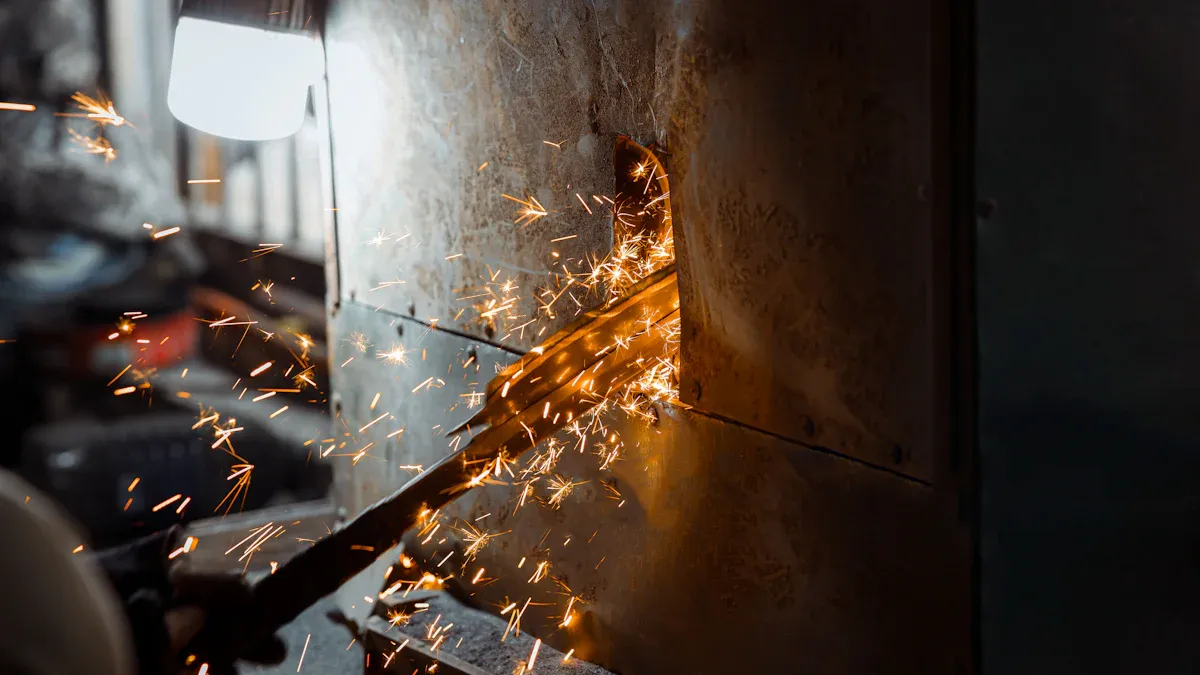
Water Jet Cutting Method Overview
You can use water jet cutting to slice through galvanized steel with a high-pressure stream of water mixed with abrasive particles. The machine pushes water through a tiny nozzle at speeds faster than a jet plane. The abrasive, often garnet sand, helps the water cut through metal. You control the machine with a computer, so you can make straight lines, curves, or even detailed shapes. Water jet cutting does not use heat, so the steel and zinc coating stay cool during the process.
Tip: Water jet cutting works well for both thin and thick galvanized steel. You can cut sheets, plates, or even complex parts.
Strengths of Water Jet Cutting
Water jet cutting gives you many advantages when you work with galvanized steel:
- You avoid heat, so you do not damage the zinc coating or create heat-affected zones.
- You get clean, smooth edges that need little finishing.
- You can cut almost any thickness, from thin sheets to thick plates.
- You can make detailed shapes and tight curves with high accuracy.
- You do not create toxic fumes, so the process is safer for your health.
Here is a table that shows why water jet cutting stands out:
| Feature | Benefit for Galvanized Steel |
|---|---|
| No heat | Zinc coating stays strong |
| Precise cuts | Clean edges, less finishing needed |
| Versatile thickness | Cuts thin or thick steel |
| No fumes | Safer work environment |
Water jet cutting helps you keep the steel’s corrosion resistance and makes your project safer.
Weaknesses of Water Jet Cutting
Water jet cutting also has some drawbacks you should consider:
- The machines cost a lot to buy and maintain.
- The process takes longer than plasma or laser cutting, especially for thick steel.
- You need a large, flat workspace for the machine.
- The water and abrasive can make a mess, so you must clean up after cutting.
- You may see some edge roughness if you cut very thick steel.
Note: Water jet cutting works best for projects where you need clean edges and want to protect the zinc coating, but it may not fit every budget or timeline.
Best-Use Scenarios for Water Jet Cutting
You might wonder when water jet cutting stands out as the best choice for galvanized steel. This method works well in situations where you want to keep the zinc coating strong and avoid heat damage. You can use water jet cutting for many types of projects, from small custom parts to large industrial jobs.
Here are some scenarios where water jet cutting shines:
Cutting Thick or Multi-Layered Steel:
You can slice through thick plates or several sheets stacked together. The water jet does not lose power as the steel gets thicker.Protecting the Zinc Coating:
You want to keep the zinc layer safe. Water jet cutting uses no heat, so the coating stays strong and protects against rust.Making Detailed or Complex Shapes:
You need to cut curves, holes, or patterns. The water jet follows your design closely and leaves smooth edges.Working in Sensitive Environments:
You work in places where fumes or sparks are a problem. Water jet cutting creates no toxic gases or fire hazards.Handling Large or Heavy Parts:
You have big sheets or plates that are hard to move. The water jet machine can handle large materials with ease.
💡 Tip: Choose water jet cutting if you want clean edges and need to avoid heat or fumes.
Table: When to Use Water Jet Cutting for Galvanized Steel
| Scenario | Why Water Jet Cutting Works Well |
|---|---|
| Thick or stacked steel | Cuts through all layers cleanly |
| Detailed shapes or patterns | High accuracy, smooth edges |
| No heat damage allowed | Zinc coating stays intact |
| No fumes or fire risk needed | Safe for indoor or sensitive areas |
| Large or heavy materials | Handles big sheets and plates easily |
You can see that water jet cutting gives you flexibility and safety. You get clean results and protect your galvanized steel from damage. If your project needs these features, water jet cutting is a smart choice.
Best Tool to Cut Galvanized Steel: Comparison Table
Choosing the best tool to cut galvanized steel depends on your project needs. You want to look at speed, cost, safety, and how well each method protects the zinc coating. Each tool has its own strengths and weaknesses. Some work better for thick steel, while others shine on thin sheets. You also need to think about how much cleanup or finishing you want to do after cutting.
Here is a table that helps you compare the main cutting methods:
| Method | Speed | Cost | Safety Needs | Zinc Coating Preservation | Cut Quality | Best For |
|---|---|---|---|---|---|---|
| Manual Tools | Slow | Low | Basic PPE | Good on thin steel | Clean, but limited | Small, thin pieces |
| Angle Grinder | Fast | Moderate | Eye, hand, fume protection | Can burn or chip coating | Rougher, needs cleanup | Medium thickness, quick jobs |
| Power Shears | Fast on straight cuts | Moderate | Eye, hand protection | May bend edges | Good, some distortion | Large sheets, straight lines |
| Nibblers | Moderate | Moderate | Eye, hand protection | Minimal bending, chips coating | Clean, curved cuts | Curves, detailed shapes |
| Plasma Cutter | Fast on thick steel | Moderate | Fume extraction, PPE | Blasts through coating | Rougher, needs touch-up | Thick steel, industrial work |
| Laser Cutter | Very fast on thin | High | Strict fume extraction | Heat can damage coating | Precise, smooth edges | Thin sheets, detailed designs |
| Oxy-Acetylene | Fast on thick steel | Low/moderate | Fume extraction, fire risk | Destroys coating at cut | Rough, needs finishing | Thick steel, outdoor jobs |
| Water Jet | Moderate | High | Minimal, wet area caution | Excellent, no heat damage | Smooth, clean edges | Any thickness, coating intact |
🛠️ Tip: If you want the best tool to cut galvanized steel, match your choice to your steel’s thickness, your safety needs, and the finish you want. For thick steel, plasma or oxy-acetylene work well. For thin, detailed work, laser or water jet cutting give you clean results. Manual tools fit small, simple jobs.
You can see that no single tool fits every job. Think about your project’s size, your budget, and how much you want to protect the zinc coating. This table helps you pick the right method for your next galvanized steel project.
You have many ways to cut galvanized steel. Each method has its own strengths and weaknesses. Manual tools give you control for small jobs. Power tools and machines work faster and handle thick steel. Always think about safety before you start. Choose a tool that matches your project size and your skill level. Check the steel type and thickness. Focus on safety to protect yourself and keep your project strong.
التعليمات
What is the safest way to cut galvanized steel at home?
You should use manual tools like tin snips or a hacksaw. These tools do not create sparks or fumes. Always wear gloves and eye protection. Work in a well-lit area. Keep your hands away from sharp edges.
How do you protect the zinc coating when cutting?
You can use manual tools or water jet cutting to keep the zinc layer strong. If you see bare steel after cutting, apply zinc-rich paint or a cold galvanizing spray. This helps stop rust from starting at the cut edge.
Can you cut galvanized steel with a regular saw?
You can use a fine-toothed hacksaw for small jobs. Power saws work, but they may damage the zinc coating and create sparks. Always use the right blade for metal. Wear safety gear to protect yourself from sharp edges and flying chips.
What should you do if you breathe zinc fumes while cutting?
Move to fresh air right away. Drink water and rest. If you feel sick, like you have the flu, tell an adult or seek medical help. Always use good ventilation and a mask to avoid breathing fumes next time.
Which method gives the cleanest edge on galvanized steel?
Laser cutting and water jet cutting give you the smoothest edges. These methods use precise control and do not leave rough spots. You get a clean finish that often needs no extra work.