
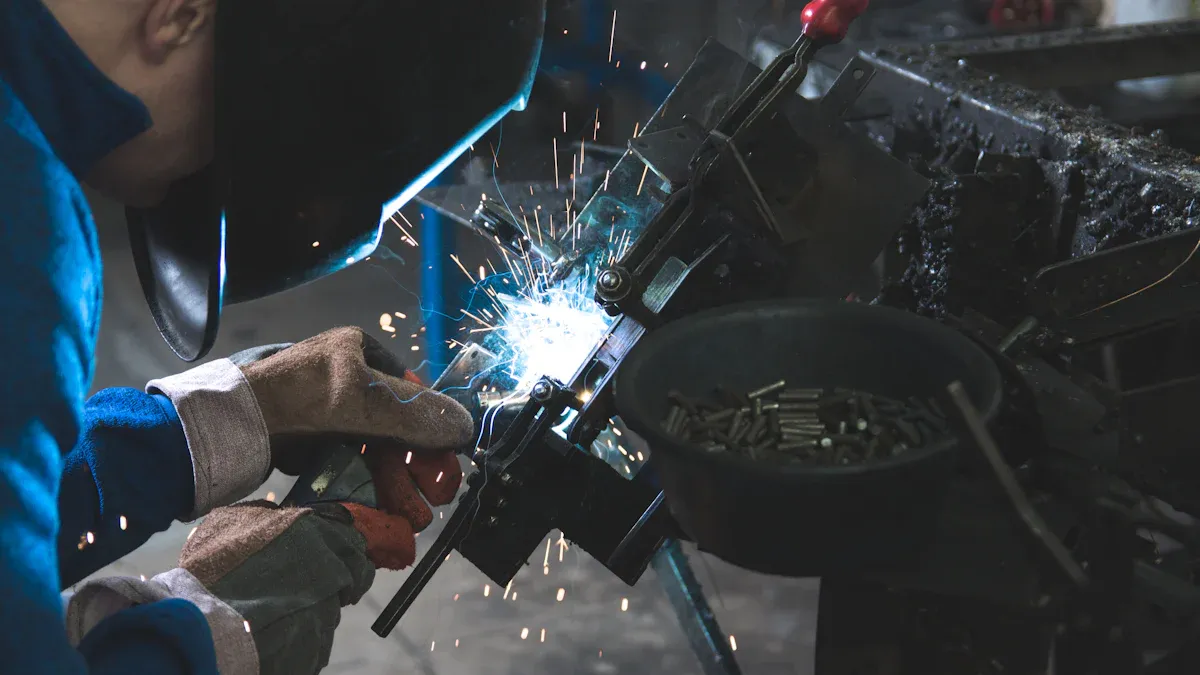
Can you mig weld galvanized steel? Many welders ask this question before starting a project. You face real risks when you try mig welding on galvanized steel. The zinc coating creates fumes and can cause weld defects like porosity or burn-through.
| Aspect | Benefits | Risks and Challenges |
|---|---|---|
| Productivity | Faster welding, less spatter | — |
| Weld Quality | Stronger welds with pulsed mig welding | Porosity, defects from zinc oxide, uneven surfaces |
| Arc Stability | More stable arc with metal-cored wires | Spatter, instability in some settings |
If you want to know, “can you mig weld galvanized steel safely and well?”—you must understand both the dangers and the tools that help you succeed with mig welding.
Can You MIG Weld Galvanized Steel? Real Challenges
Toxic Fumes and Health Hazards
When you ask, “can you mig weld galvanized steel,” you must first think about safety. The gmaw welding process on galvanized steel creates toxic zinc fumes. These fumes form because the zinc coating vaporizes at high temperatures. You breathe in zinc oxide particles if you do not use proper protection.
Note: Zinc fumes can cause metal fume fever. You may feel chills, fever, nausea, a metallic taste, or fatigue. These symptoms often appear a few hours after exposure and can last for days. Chronic exposure may lead to lung problems, asthma, or even neurological issues.
Many welders recommend grinding off the zinc coating before starting the welding process. You should always work in a well-ventilated area or outdoors. Use a respirator if you cannot avoid the fumes. Even with fans or open doors, some workplaces still have poor ventilation. Always follow safety guidelines from OSHA or NIOSH to protect your health during gmaw.
Weld Quality Issues and Spatter
The gmaw welding process on galvanized steel brings unique weld quality problems. Zinc coatings increase spatter during mig welding. You will notice more molten metal sticking to your parts, which means more cleanup after the welding process. The zinc layer also causes porosity. This happens when zinc vaporizes and traps gas pockets in the weld pool. Porosity weakens the weld and makes it look rough.
- Grinding off at least a quarter inch of the zinc coating around the weld area helps reduce spatter.
- Cleaning the surface with acetone after grinding prepares the metal for the gmaw process.
- If you skip these steps, you will see more spatter and poor weld appearance.
The thinness of galvanized steel adds another challenge. Too much heat during the welding process can cause burn-through. You must control your gmaw settings carefully to avoid damaging the base metal.
Inconsistent Results and Common Frustrations
You may find that results vary every time you use the gmaw welding process on galvanized steel. Many welders report common frustrations:
- Porosity often appears because of trapped gas from zinc vaporization or poor shielding gas coverage.
- Burn-through happens easily on thin galvanized steel if you use too much heat during the welding process.
- Spatter builds up and requires extra post-weld cleanup. This can damage robotic tooling or sensors if you use automated gmaw systems.
- Weld bead shape changes if you do not set the right voltage, wire feed speed, or travel speed during mig welding.
- Crater cracks can form at the end of welds if you do not fill the weld pool properly.
These issues make the welding process on galvanized steel unpredictable. You may spend more time fixing mistakes or cleaning up after each gmaw weld. Many welders feel frustrated by the extra work and the difficulty of achieving consistent, high-quality results.
MIG Welding Safety: What Welders Insist On
Dangers of Zinc Fumes and Metal Fume Fever
When you use the gmaw welding process on galvanized steel, you face a serious health risk from zinc fumes. The zinc coating vaporizes during mig welding, creating toxic zinc oxide fumes. You might see yellowish-green smoke or a white powdery residue near your weld. These are signs that zinc fumes are present. Breathing in these fumes can cause metal fume fever, also called galvanize poisoning.
Symptoms of metal fume fever often feel like the flu. You may experience fever, chills, nausea, headache, and fatigue. Some welders report muscle aches, joint pain, cough, and chest pain. You might notice a metallic taste in your mouth or a dry, irritated throat. These symptoms usually start a few hours after the gmaw welding process and can last up to two days. In severe cases, you could have burning sensations, vomiting, or even changes in blood pressure. If you weld galvanized steel often, you risk long-term lung problems or asthma. Studies show that up to 35% of welders have had metal fume fever at some point. You must take these dangers seriously every time you use the gmaw process.
Tip: Always watch for visible signs of zinc fumes and stop the welding process if you feel sick. Seek medical help if symptoms become severe.
Essential Ventilation and Protective Gear
You need strong safety measures to protect yourself during mig welding of galvanized steel. The gmaw process produces hazardous fumes, so you must use proper ventilation. Local exhaust ventilation (LEV) systems work best. These systems capture fumes right at the source, near the welding arc. You can use adjustable fume extraction arms or fixed booths to pull fumes away from your breathing zone. In small or closed spaces, mechanical ventilation with high airflow helps keep the air safe.
Personal protective equipment (PPE) is just as important. You should wear a welding helmet with a powered air-purifying respirator (PAPR) to filter out toxic particles. Heavy, flame-resistant gloves protect your hands from burns and electric shock. Flame-resistant clothing and steel-toed boots keep your body and feet safe from sparks and splatter. Safety glasses with side shields protect your eyes from flying debris. Hearing protection helps in noisy shops. Always check that your respirator fits well and works before you start the gmaw welding process.
| Safety Gear | Purpose |
|---|---|
| Welding helmet (with PAPR) | Protects eyes, face, and filters fumes |
| Flame-resistant gloves | Shields hands from burns and electric shock |
| Flame-resistant clothing | Prevents burns from sparks and splatter |
| Steel-toed boots | Protects feet from falling objects |
| Safety glasses | Shields eyes from debris |
| Hearing protection | Reduces risk of hearing loss |
Note: Always keep your workspace clean and free of clutter. This reduces the risk of accidents during the gmaw welding process.
How Pros Minimize Exposure
Professional welders follow strict steps to reduce exposure to zinc fumes during the gmaw welding process. First, they remove the zinc coating from at least one to four inches around the weld area. You can use grinding or wire brushing for this step. Removing the coating lowers the amount of zinc vaporized during mig welding.
Next, pros make sure the workspace has good ventilation. They use local exhaust systems or fans to move fumes away from the breathing zone. In some cases, they weld outdoors to get fresh air. You should always position fume extraction arms close to the weld pool for the best results.
Welders also wear the right PPE every time they use the gmaw process. This includes respirators, helmets, gloves, and flame-resistant clothing. They check and maintain their gear often. Keeping the work area clean helps prevent extra fumes from oil, grease, or rust.
You can also control the welding process to reduce fume production. Lowering the voltage and current, while increasing travel speed, helps minimize zinc vaporization. Always adjust your gmaw settings for the safest and cleanest weld.
- Remove zinc coating near the weld area (1-4 inches) before starting the gmaw welding process.
- Use local exhaust ventilation or portable fume extractors to capture fumes at the source.
- Wear a respirator and check that it fits well.
- Keep your workspace clean and organized.
- Adjust welding parameters to reduce heat and fume generation.
Alert: Understanding the health risks of zinc oxide fumes and following these best practices will keep you safer and improve your mig welding results.
Preparing Galvanized Steel for MIG Welding
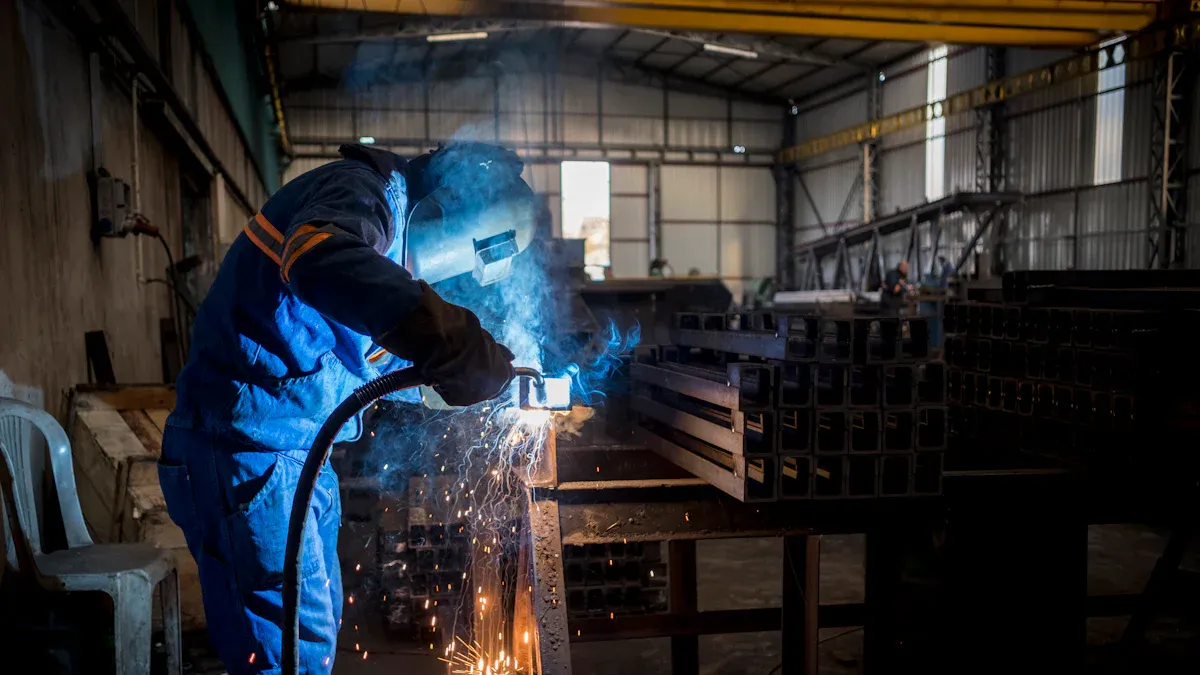
Removing Zinc Coating: Best Methods
You need to remove the zinc coating before starting the gmaw welding process. This step helps you avoid toxic fumes and poor welds. Welding experts recommend several methods:
- Use a power grinder with a grinding disc or a wire brush attachment. This method works fast and removes most of the zinc.
- Try chemical stripping with mild acids like phosphoric acid. This works well for thick coatings but takes more time.
- Heat the galvanized steel with a torch to about 800°F. The zinc softens, and you can brush it off easily.
- For thin coatings, abrasive blasting or even vinegar can help.
- Always work in a well-ventilated area, wear gloves, eye protection, and a P100 respirator. Safety comes first during the gmaw welding process.
Removing the zinc coating around the weld joint prevents porosity, spatter, and cracking during mig welding.
Cleaning and Surface Prep Tips
After you remove the zinc, you must clean the steel surface. Dirt, oil, and rust can ruin the gmaw welding process. Start by degreasing the metal to get rid of oil and grease. Use a wire brush or grinder to remove rust, paint, and debris. Pickling with acid can help remove mill scale and old coatings. Abrasive blasting or power tool cleaning removes any leftover slag or flux.
A clean surface gives you a strong weld. If you skip this step, the gmaw welding process may create weak joints and more fumes. Always check that the area is free from paint and other coatings before you start mig welding.
Setting Up a Safe Workspace
You must set up your workspace before you begin the gmaw welding process. Follow these steps:
- Work outdoors or in a space with good airflow.
- Use local exhaust ventilation or fume extractors to remove fumes at the source.
- Wear a respirator with a P100 filter, gloves, flame-resistant clothing, and a welding helmet.
- Keep a fire extinguisher nearby. Zinc powder can catch fire.
- Make sure your workspace is clean and free of clutter.
- Organize your tools and cables to prevent tripping.
- Store gas cylinders upright and away from heat.
Good lighting and a clear boundary around your welding zone help keep you safe during the gmaw welding process.
MIG Welding Techniques for Galvanized Steel
Choosing Wire and Machine Settings
You need the right wire and machine settings for the gmaw welding process on galvanized steel. The best results come from using a low silicon MIG wire, such as ER70S-6. This wire helps reduce problems with molten pool explosions caused by zinc. You can also use a flux-cored wire like NR211-MP. This wire works well for mig welding galvanized steel without grinding off the coating. It is a good choice for many welding applications.
Set your gmaw machine carefully. Find the sweet spot where you have enough heat for a strong weld, but not so much that you create extra fumes or spatter. Always grind off the galvanized coating if possible. This step improves weld quality and safety during the welding process. Remember to wear a respirator and protective clothing. Zinc fumes are dangerous during any gmaw application.
- Use ER70S-6 wire for most gmaw welding process jobs.
- Try NR211-MP flux-cored wire if you cannot remove the coating.
- Adjust voltage and wire feed speed to match steel thickness.
- Always check your safety gear before starting the welding process.
Adjusting Travel Speed and Angle
Travel speed and torch angle play a big role in the gmaw welding process. Slower travel speeds give zinc more time to burn off. This reduces spatter and helps the weld penetrate better. For the best results, use a torch angle of about 30 degrees instead of the usual 70 degrees. This angle helps burn off zinc and keeps the weld pool clean.
You can use side-to-side or back-and-forth motions with the torch. These movements help you get even penetration and remove more zinc. Avoid weaving or making multiple weld beads. This keeps heat under control and protects the coating on nearby areas.
- Move the torch slowly to let zinc burn off during the welding process.
- Hold the torch at a 30-degree angle for better results.
- Use steady motions to keep the weld pool stable in every gmaw application.
Managing Heat and Preventing Burn-Through
Managing heat is important in the gmaw welding process. Too much heat can cause burn-through, especially on thin galvanized steel. Remove the zinc coating near the weld area by grinding or chemical stripping. This step lowers zinc contamination and fumes during the welding process.
Use a spray transfer mode with a shielding gas mix of 90% argon and 10% CO2. For thicker zinc layers, you can increase CO2 to 20%. Try a pull (drag) technique to reduce weld pool contamination. Keep your travel speed steady. Short weld passes help you control heat and limit zinc vaporization. Adjust voltage and wire feed speed for the steel thickness. Keep a short arc length, about 1/4 inch, for good penetration and less oxidation.
Tip: Always check your machine settings before you start the welding process. This step helps you avoid burn-through and keeps your welds strong.
- Use lower current levels to reduce heat.
- Increase travel speed to keep heat from building up.
- Keep a moderate arc length for a stable arc.
- Use a shallow travel angle to spread heat.
- Make straight line passes to lower burn-through risk.
You can use these techniques in many gmaw welding applications. They help you get strong, clean welds on galvanized steel.
Real Results: What Welders Experience

Examples of Good and Bad MIG Welds
When you use the gmaw welding process on galvanized steel, you can see a big difference between good and bad welds. High-quality welds often come from using metal-cored wire with pulsed gmaw. This method gives you a softer arc and helps prevent burn-through, especially on thin materials. You get better penetration and fewer problems with porosity because the zinc coating vaporizes more effectively. You also see less spatter, which means less cleanup after the welding process.
Bad welds often show porosity. This happens when zinc vapor gets trapped in the weld pool as it cools. You might see small holes or cavities inside the weld. Poor shielding gas coverage and dirty base metal can make this worse. If you use the wrong settings or skip cleaning, you may also see burn-through, lack of fusion, or cold lap. These problems weaken the weld and can make your project unsafe.
| Weld Defect | Description and Cause | Typical Cause in MIG Welding on Galvanized Steel | Remedy/Prevention |
|---|---|---|---|
| Porosity | Gas entrapment causing cavities inside weld metal | Zinc vapor entrapment from galvanized coating | Use pulsed MIG, proper shielding gas, control heat input |
| Burn-through | Weld metal penetrates completely through base metal | Excessive heat input, especially on thin materials | Reduce voltage/wire feed, increase travel speed |
| Lack of Fusion | Weld metal fails to fuse with base or previous bead | Improper gun angle, incorrect travel speed, insufficient heat | Maintain 0-15° gun angle, adjust travel speed, increase voltage/wire feed |
| Cold Lap | Overfilled weld overlapping toes of weld | Incorrect travel speed | Increase travel speed |
| Excessive Spatter | Excessive molten metal droplets around weld | Poor shielding gas, dirty materials, wrong parameters | Ensure proper gas flow, clean materials, adjust parameters |
| Concave/Convex Beads | Improper weld bead shape affecting integrity | Incorrect heat input or travel speed | Adjust voltage, wire feed, travel speed, follow procedures |
Common Mistakes and How to Fix Them
You may run into several mistakes during the gmaw welding process. These mistakes can affect the strength and look of your welds. Here are some common problems and how you can fix them:
- Excessive convexity: Grind off extra weld metal to make a smooth surface.
- Shrinkage cracks or porosity: Remove the bad weld and base metal, then replace it with a sound weld.
- Undercut or undersize welds: Clean the area and add more weld metal.
- Overlap or incomplete fusion: Remove the bad part and weld it again.
- Slag inclusions: Take out the slag-filled weld and replace it with a clean weld.
- Loss of base metal: Clean and restore the area by adding more weld metal with stringer beads.
You should always use a smaller electrode for repairs and clean the surface before you start the welding process again. If you cannot reach the weld or fix it safely, restore the original part or add approved work. If parts do not fit right, cut them apart and weld them again.
Troubleshooting MIG Welding Issues
You can solve many problems in the gmaw welding process by following a few steps. First, check your consumables like liners, contact tips, and nozzles. Replace any that are worn or damaged. Make sure all electrical connections and grounding are tight. This helps prevent burnback and keeps the arc steady.
Adjust the drive roll tension to avoid wire feeding problems. If the wire does not feed, inspect the wire feeder and its parts. Always use the right shielding gas flow. For galvanized steel, an Argon-rich blend works best and reduces spatter in your application.
Set your voltage and wire feed speed to match the thickness of your material. Clean the workpiece well to remove rust, mill scale, and leftover zinc. Watch the temperature of your gun and avoid going over its rated amperage. If you work outside, use wind screens to protect your shielding gas. Try using a MIG gun neck with a 45 or 60-degree bend for better control in your gmaw application.
Tip: Careful setup and regular checks help you avoid most problems in the welding process. This makes your gmaw welding applications safer and more reliable.
Pro Advice: Do’s, Don’ts, and Alternatives
Top Do’s and Don’ts for MIG Welding Galvanized Steel
You need to know the most important rules before you start MIG welding galvanized steel. Welding professionals warn you about the dangers of the zinc coating. When you heat galvanized steel, the zinc releases poisonous and even cancer-causing gases. Breathing these fumes can make you very sick. You might get flu-like symptoms called welding shivers, and in some cases, you could suffer permanent damage. Because of these risks, experts say you should avoid welding galvanized steel if you can. If you must weld it, always use strong ventilation and wear the right protective gear. Never skip safety steps, and never weld in a closed or poorly ventilated space.
Tip: Your health and safety come first. Always protect yourself from toxic fumes.
When to Try Other Welding Methods
Sometimes, MIG welding is not the best choice for galvanized steel. Experts suggest other methods in certain situations:
- You should clean the zinc coating off the steel before welding to reduce hazardous fumes.
- TIG welding works better than MIG if you want fewer fumes and higher weld quality. This method is good when you care about the environment.
- If TIG welding is not possible, you can try friction welding or diffusive welding. These methods do not use flux and create fewer emissions.
- Vacuum soldering uses hydrogen instead of toxic flux, making the process cleaner.
You may also face problems like porosity, cracks, or weak welds when using MIG on galvanized steel. These issues often happen in outdoor or overhead welding, where gas shielding does not work well. In these cases, switching to another method can help you get stronger and safer welds.
Is MIG Welding Galvanized Steel Worth It?
You must weigh the risks and benefits before you decide to MIG weld galvanized steel. Think about these key factors:
- Always use proper ventilation or a local exhaust system to handle dangerous fumes.
- Wear the right personal protective equipment (PPE) to keep yourself safe.
- Make sure you have training on how to weld safely and use PPE.
- Watch out for other risks like electric shock, fire, or explosion.
You should also choose the right welding gun. Water-cooled MIG guns work best for high-power jobs but cost more and need extra equipment. Air-cooled guns are cheaper and easier to use for most jobs, but you must watch the duty cycle to prevent overheating. Pick your equipment based on the job size, cost, and how long you need to weld.
Remember: Your safety and the quality of your work depend on careful planning and the right choices. If the risks seem too high, consider other joining methods or ask a professional for advice.
You face real risks when MIG welding galvanized steel, but you can manage them with the right steps.
- Always remove the zinc coating near the weld to prevent porosity and toxic fumes.
- Use proper MIG wire and control your welding speed to reduce spatter and defects.
- Wear protective gear and set up strong ventilation to protect your health.
Remember:
- Work in a well-ventilated area or use fume extractors.
- Inspect your welds for cracks or porosity.
- Restore the zinc coating after welding to keep corrosion away.
Stay safe and follow these best practices every time you weld.
FAQ
Can you weld galvanized steel without removing the zinc coating?
You can weld without removing the zinc, but you will face more fumes and poor weld quality. Removing the coating near the weld gives you safer and stronger results.
What happens if you breathe zinc fumes while welding?
Breathing zinc fumes can make you sick. You may feel fever, chills, or nausea. This is called metal fume fever. Always use a respirator and good ventilation to protect yourself.
How do you restore corrosion protection after welding galvanized steel?
You should apply a cold galvanizing spray or zinc-rich paint to the weld area. This step helps protect the steel from rust and keeps your project strong.
What is the best wire for MIG welding galvanized steel?
- ER70S-6 solid wire works well if you remove the zinc coating.
- NR211-MP flux-cored wire helps if you cannot remove the coating.
- Always check your wire type before you start welding.